

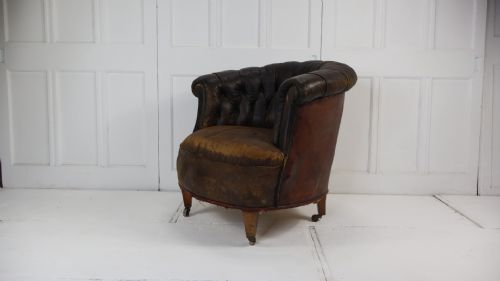
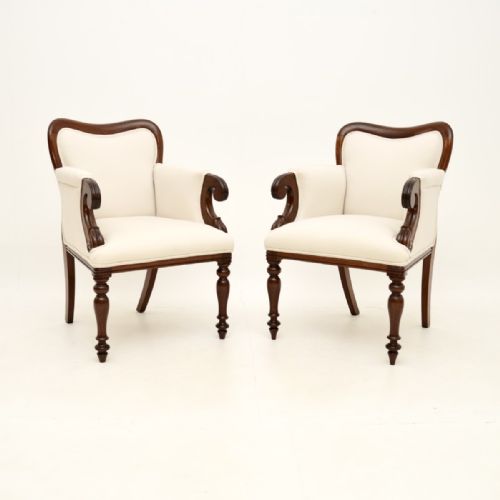
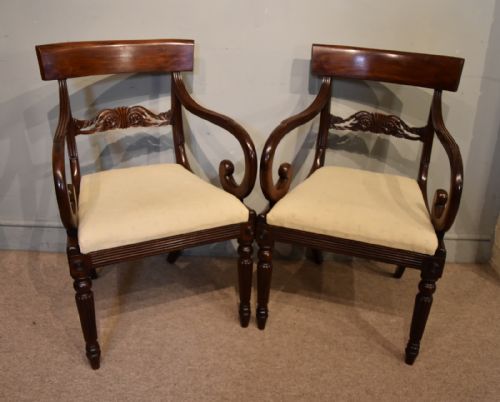
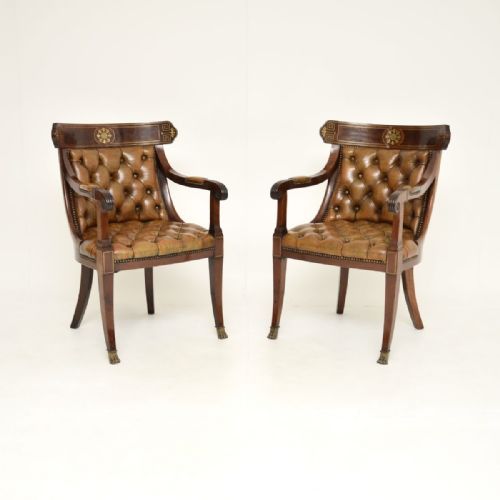
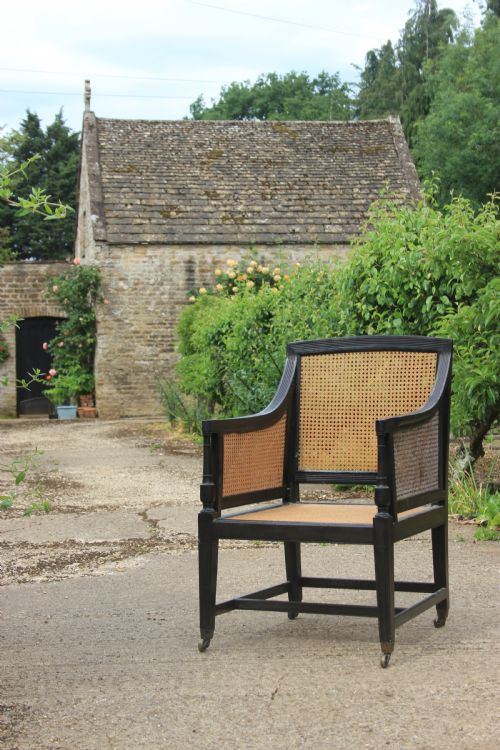


Regency Period Library Chair
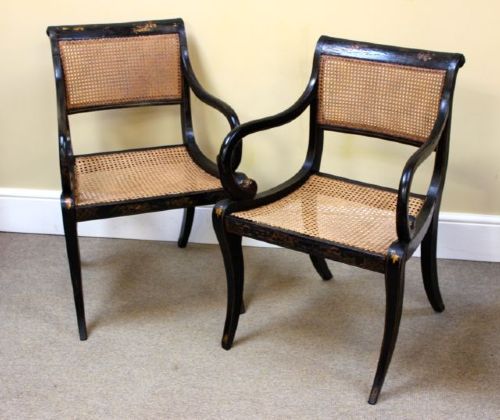
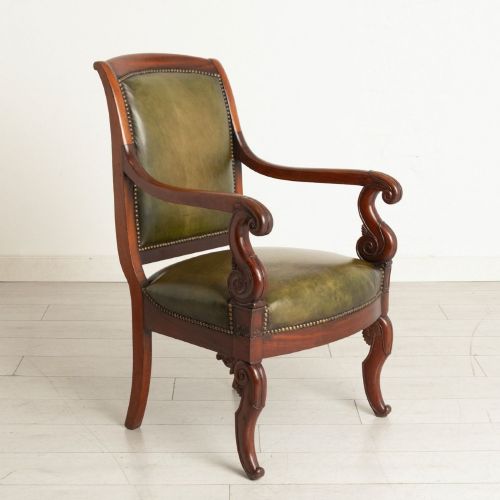
These regency period library chairs combine solid mahogany and rosewood with cane and leather for heavy reading work.
Regency Period Library Chair
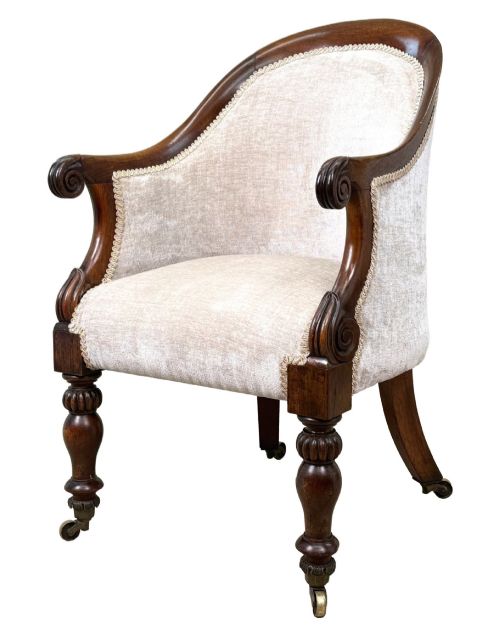
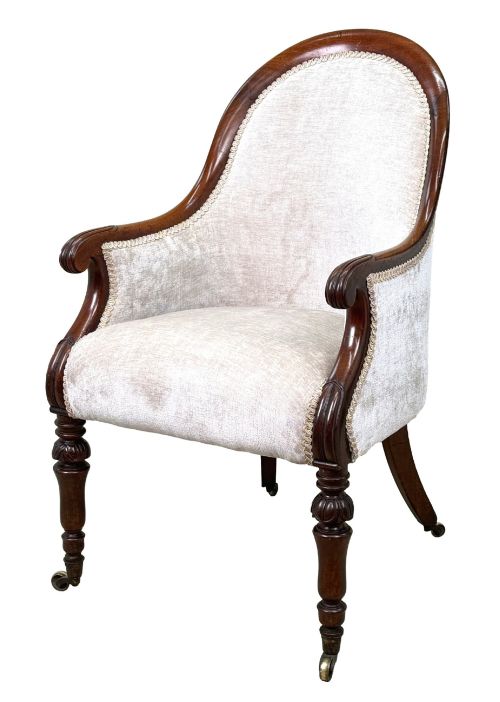
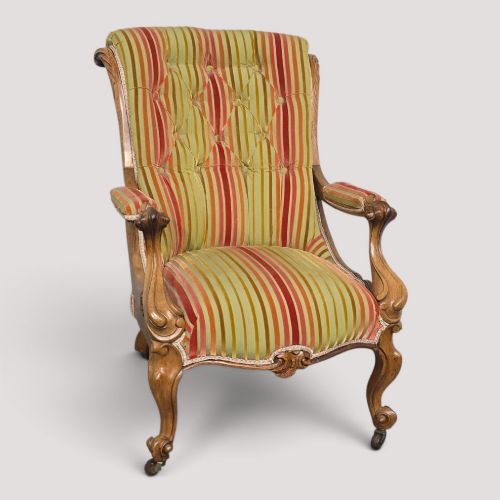
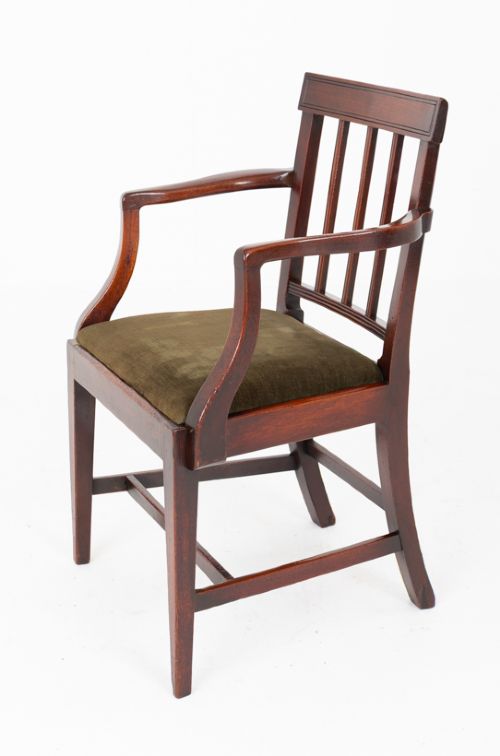
A regency period library chair serves as a substantial seat designed for reading rooms, studies, and offices. The pieces appearing here span armchairs, desk chairs, and library chairs framed in mahogany, rosewood, and oak.
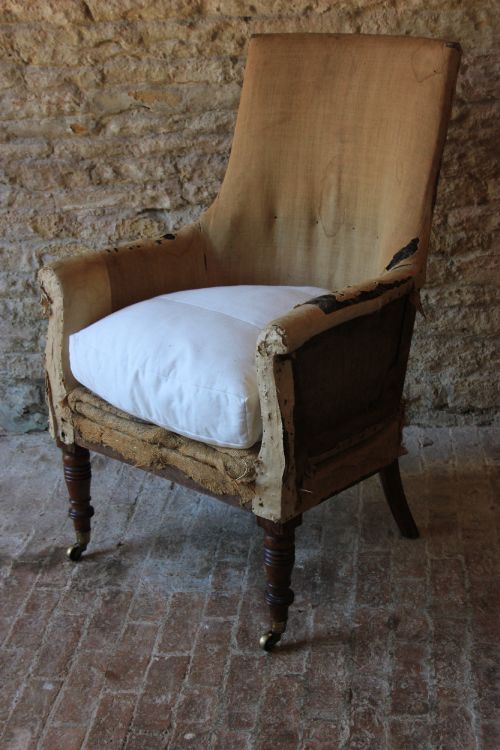
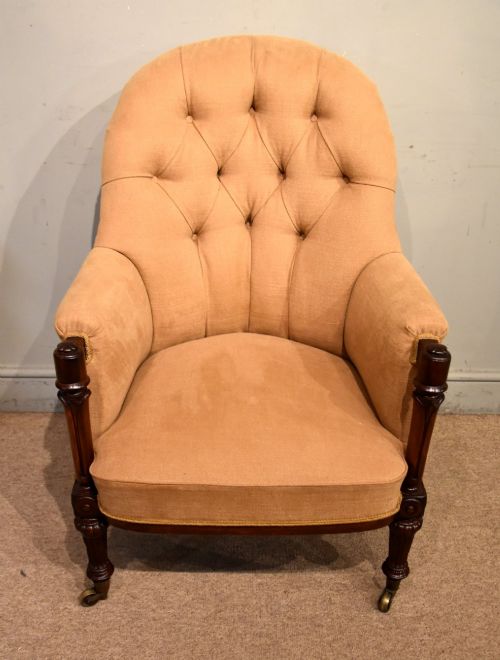
Most examples date from the Regency and William IV periods, featuring open arms, tub forms, or bergere seating with caned panels. Makers built these chairs for prolonged sitting, incorporating generous proportions and scroll arms.
Makers also produced metamorphic designs that convert into library steps alongside sliding versions and desk chairs. Leather upholstery and canework dominate the surviving pieces seen on this page.
How They Were Made
Makers constructed these chairs primarily using solid mahogany, rosewood, and ebony, often adding brass inlay or brass mounts along the frame. Caned panels or bergere work form the back and sides of many examples, supported by turned or sabre legs.
Upholstery relies on leather, velvet, and fabric inserts secured to sprung or stuffed seats. Frames utilise carved details, scroll arms, and ebonised finishes to achieve the distinct Regency and William IV aesthetic.
Listings feature mahogany, rosewood, ebony, oak, brass, leather, cane, and velvet across Regency and William IV periods.
What Varies in Quality
The refinement of the carving and the timber selection determine the grade of a regency period library chair. Pieces displaying crisp reeding, well-drawn scroll arms, and precise brass inlay sit above plain utilitarian seating.
The integration of secondary timbers and the retention of original caning or leather upholstery dictate the standing of an individual chair. Generous proportions combined with balanced framing separate standard production from superior workshop output.
Gillows·Morgan and Sanders
The Regency Period Library Chair Glossary
- Bergere
- An enclosed armchair with a caned back and sides, usually fitted with a loose squab cushion. This form provides lighter visual weight than fully upholstered frames.
- Metamorphic
- Furniture designed to transform into another functional object, such as a chair turning into library steps. These pieces utilise clever hinged mechanisms.
- Sabre leg
- A curved, outwardly tapering chair leg resembling a cavalry sword. This leg style defines many Regency seating designs.
- Tub chair
- An armchair with a continuous curved back and arms forming a circular enclosure. The design offers enclosed support for reading.
- Curule
- A style of X-shaped chair framing derived from ancient Roman magistrate seats. Makers adapted this ancient form during the Regency era.
Regency Period Library Chair: Frequently Asked Questions
What is a regency period library chair?
A regency period library chair is a sturdy wooden seat built for reading and study during the early nineteenth century. These chairs frequently incorporate leather upholstery, caning, and armrests.
Craftsmen utilised mahogany and rosewood to build forms ranging from tub chairs to desk chairs and bergere models. They appear in libraries and studies to provide comfortable seating for prolonged reading.
What woods were used for these chairs?
Makers relied heavily on mahogany, rosewood, and ebony for framing these library seats. Beech and oak also appear in secondary or painted frames.
Craftsmen often enhanced the dark timbers with brass inlay or gilt mounts. Simulated rosewood finishes also occur on beech frames.
Where should I place a bergere chair?
A bergere chair suits studies, living rooms, and bedrooms where its caned sides provide an open silhouette. The low profile works well beside desks or reading tables.
These chairs pair effectively with freestanding furniture because the caned back looks neat from all angles. Placing them away from direct heat sources protects the natural canework.