


Regency Period Dining Sideboard
A regency period dining sideboard organises the formal dining room with architectural presence, storing silver and linen.
Regency Period Dining Sideboard
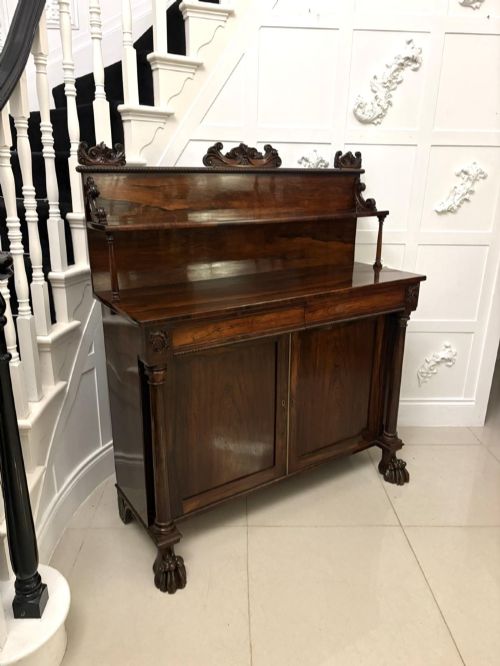
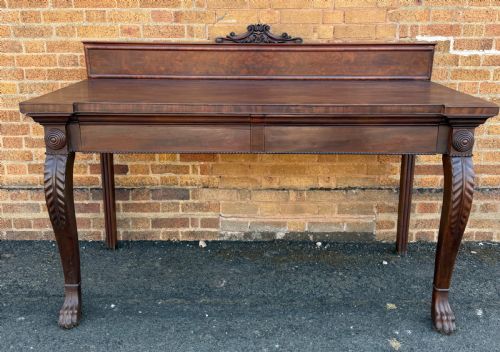
A regency period dining sideboard stands as a formal dining room focal point, designed to hold serving dishes, cutlery, and wine. The pieces appearing in this selection span the Regency, George IV, and William IV eras, alongside broader Georgian and nineteenth-century designations.
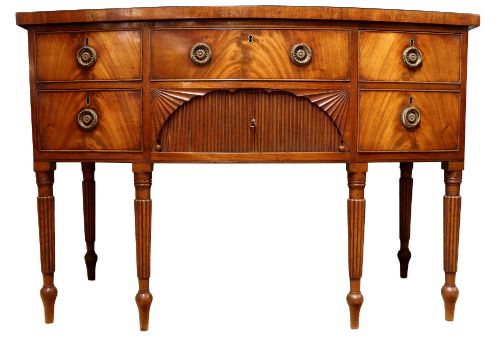
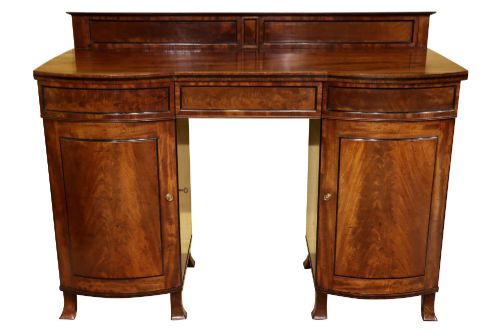
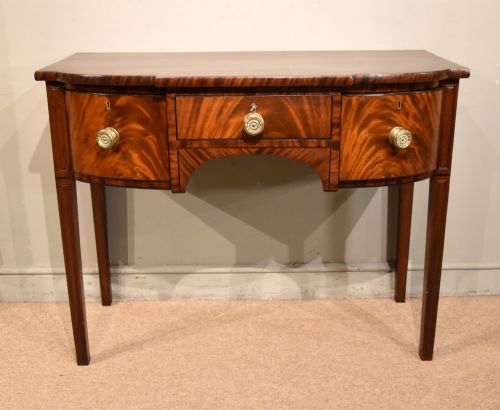
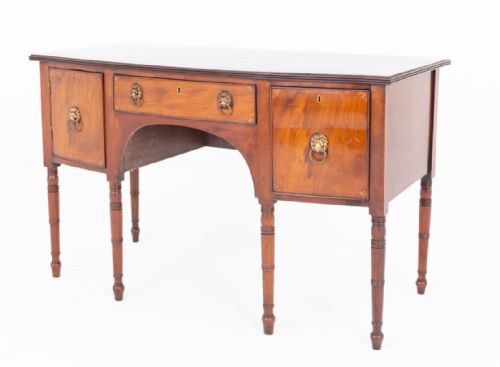
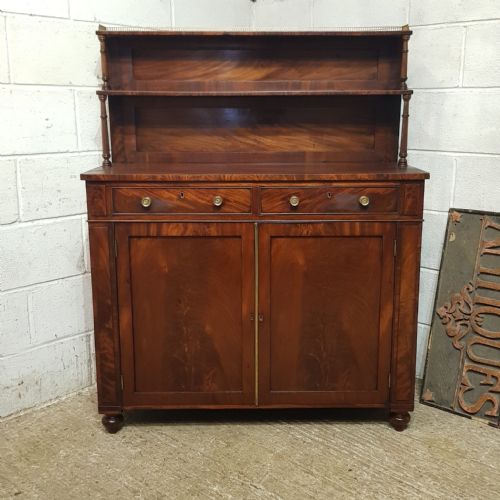
The most common form you will meet is the bow-fronted mahogany sideboard, alongside pedestal sideboards, serving tables, chiffoniers, and side cabinets. These items originate from workshops across Britain and Ireland, occasionally featuring grand proportions or drop-well configurations.
Makers such as Gillows and Mack Williams and Gibton appear in connection with these forms, denoting high cabinet-making standards of the period. Alongside formal dining sideboards, related serving pieces and smaller chiffoniers in rosewood and palisander expand the scope of the dining interior.
Judging quality and craftsmanship
Quality rests in the selection of timber veneers, where symmetrical flame mahogany or richly figured rosewood demonstrates superior material grade. Cabinet work that maintains tight joints and crisp inlay demonstrates the skill of the original maker.
Proportion and scale dictate the distinction between standard production items and important commission pieces. Refined brass galleries, well-turned pedestal supports, and integrated drawer configurations separate utilitarian dining furniture from exceptional examples.
Forms on offer include bow-fronted sideboards, twin pedestal sideboards with drop-wells, serving tables, chiffoniers, and side cabinets.
Gillows·Mack Williams and Gibton
The Regency Period Dining Sideboard Glossary
- Bow front
- A convex curved cabinet front that swells outward from the corners, typical of many sideboard designs. This contour softens the rectangular rigidity of the dining room.
- Chiffonier
- A low cabinet with doors, often featuring shelves or a gallery top, used for storing serving items. It developed as a lighter alternative to the main dining sideboard.
- Flame mahogany
- Timber cut from the fork of the mahogany tree to produce a flickering, flame-like grain pattern. Cabinet makers reserved this veneer for principal visual surfaces.
- Pedestal sideboard
- A sideboard design comprising two distinct pedestal cabinets joined by a central serving table or board. This form often includes a drop-well or tiered superstructure.
- Palisander
- A dense, dark timber akin to rosewood, utilised in nineteenth-century cabinet making for dramatic grain contrast. Its rich coloration suited formal reception rooms.
Regency Period Dining Sideboard: Frequently Asked Questions
How do I date a sideboard?
Examine the secondary woods, construction methods, and hardware style to establish the manufacturing period. Stylistic cues like brass inlay and pedestal bases align with Regency and George IV conventions.
Compare the carcass design against documented pieces from workshops of the early nineteenth century. Regional traits, such as Irish cabinet-making characteristics, also help narrow the timeline.
Where were these sideboards placed?
Sideboards stood against the main dining room wall, positioned near the dining table for efficient service during meals. They held platters, silverware, and decanters between courses.
Smaller chiffoniers served similar functions in adjoining parlours or breakfast rooms. Their surface tops also displayed decorative silver and glassware.
How do I care for mahogany?
Maintain mahogany surfaces by dusting with a soft cloth and avoiding harsh chemical polishes. Keeping the timber away from direct heat sources prevents veneer lifting.
Occasional application of appropriate wax feeds the grain and preserves the historic finish. Regular maintenance protects both solid timber and delicate flame veneers.