


Regency Paper Cut Art
Regency paper cut art comprises delicate silhouette portraits and floral pictures formed from paper, offering a window into early nineteenth-century domestic life.
Regency Paper Cut Art
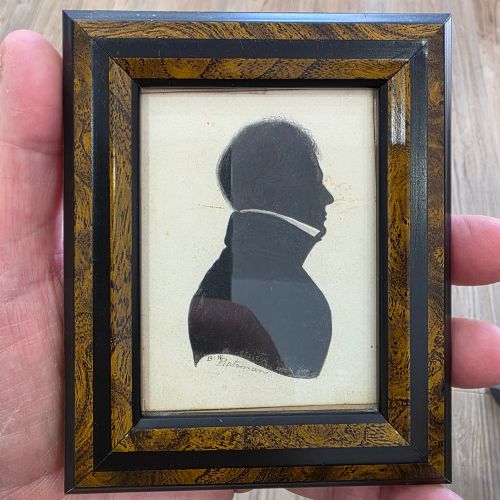
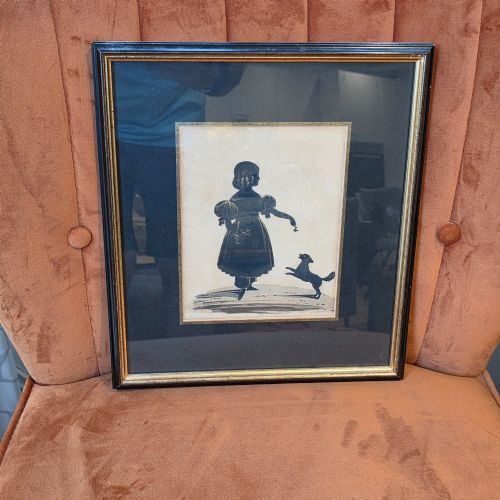
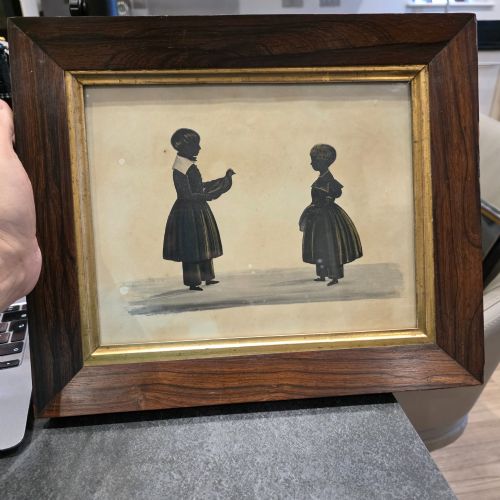
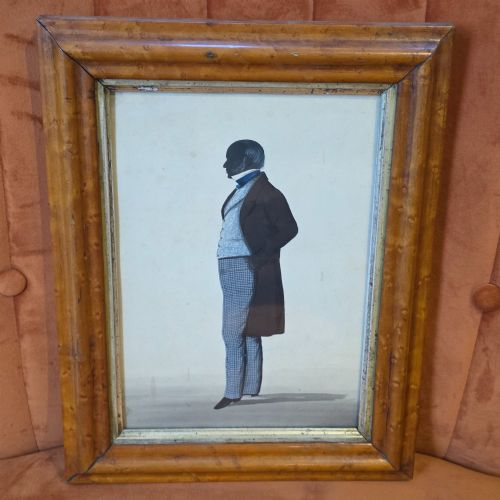
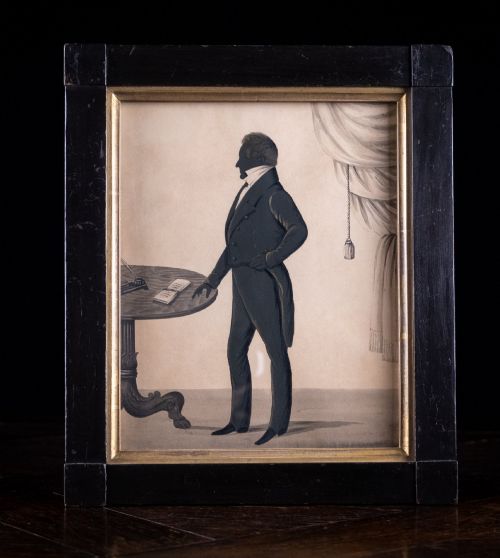
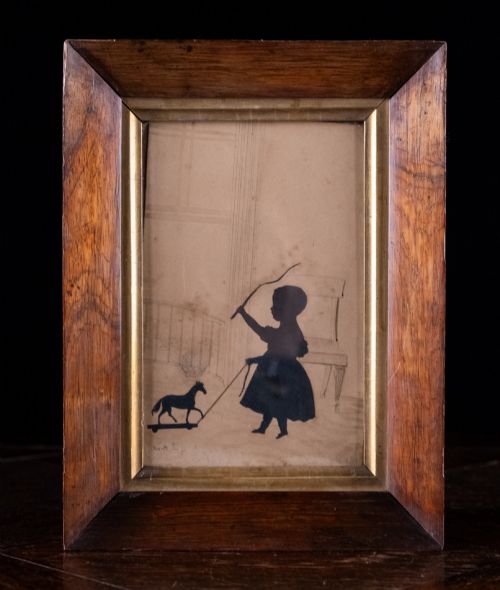
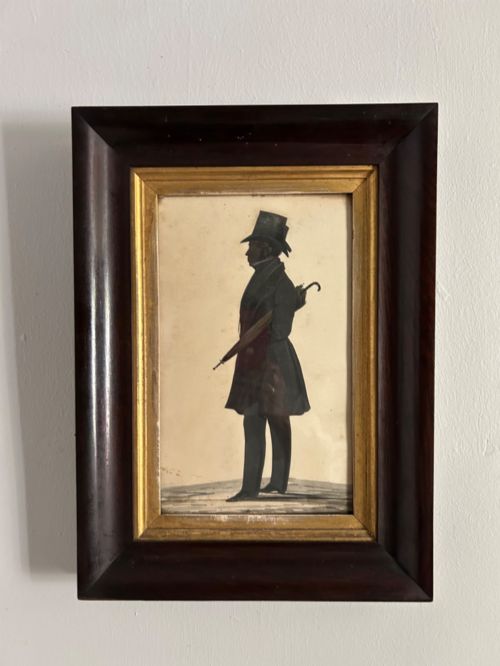
Regency paper cut art principally consists of silhouette portraits and framed pictures created during the nineteenth century, including the Regency and Victorian periods. These works capture full-length or profile figures of gentlemen, ladies, children and animals, alongside occasional floral compositions.
The pieces on this page are predominantly framed wall art, often housed in maple, ebony, or gilt frames behind glass. Subjects range from solitary figures to detailed group scenes featuring children with dogs and birds.
How they were made
Makers utilised paper as the primary medium, often enhancing the cut forms with ink, watercolour, and gold leaf highlights. The silhouettes were meticulously hand-cut with scissors or blades rather than printed, requiring immense precision.
Finished works were secured in wooden frames, sometimes embellished with brass fittings, and protected beneath glass to preserve the fragile paper cutouts.
Several silhouettes depict small dogs patiently waiting beside children, proving that pets have supervised portrait sessions for centuries.
What varies in quality
Original framing adds distinction, particularly when pieces retain period maple or ebony surrounds with contemporary glass, whereas later reframing can alter the character of the piece.
William James Hubard·Augustin Edouart·Frederick Frith
The Regency Paper Cut Art Glossary
- Silhouette
- A portrait or image represented as a solid shape of a single colour, usually black, matched to the outline of the subject. This form gained immense popularity in the Georgian and Regency eras.
- Gilt
- Covered thinly with gold leaf or gold paint. This technique illuminated highlights on clothing or background elements.
- Regency
- Pertaining to the period of the British regency and the wider early nineteenth century style. It is characterised by neoclassical elegance and refinement.
- Maple
- A dense timber used for framing artwork in the nineteenth century. Its distinctive grain added warmth to framed silhouettes.
Regency Paper Cut Art: Frequently Asked Questions
How do I hang paper art safely?
Keep framed paper art away from direct sunlight to prevent the ink and paper from fading over time. Ensure the hanging location remains free from excessive moisture.
Use sturdy picture hooks suited to the weight of the wooden frame, ensuring the glass and backing board remain tightly sealed against dust.
Are these silhouettes original period pieces?
The pieces originate primarily from the nineteenth century, spanning the Regency and Victorian eras. Makers utilised hand-cutting techniques characteristic of this historic period.
Examine the materials, including old paper, ink, and period frames such as maple or ebony, to understand the age of each work.
What subjects appear in these works?
Subjects include individual gentlemen, ladies in turban caps, children, and animals such as dogs and birds. Floral compositions also appear among the cut paper designs.
Some artworks depict group scenes, capturing interactions between children and their pets within domestic settings.
How do I identify a signed piece?
Look along the edge of the paper cutout or the mount for handwritten signatures or studio inscriptions left by the artist. Signatures sometimes attribute the work to notable galleries or profile cutters.
Documentation on the reverse of the frame can also provide clues regarding the maker or the original gallery of origin.