


Georgian Cut Paper Art
Georgian cut paper art comprises intricate paper profiles and botanical pictures framed for the wall, offering a direct window into past lives.
Georgian Cut Paper Art
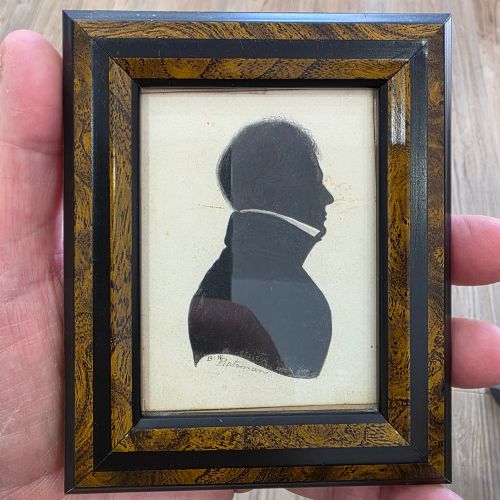
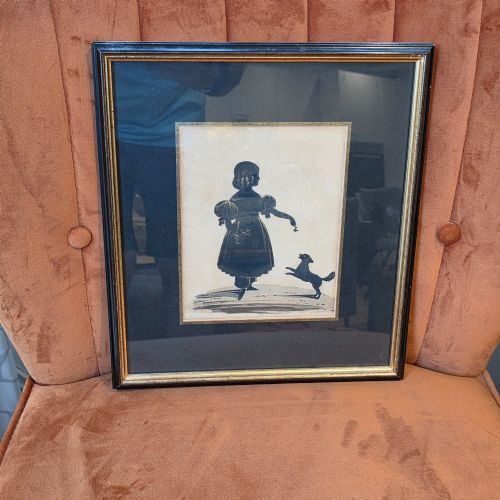
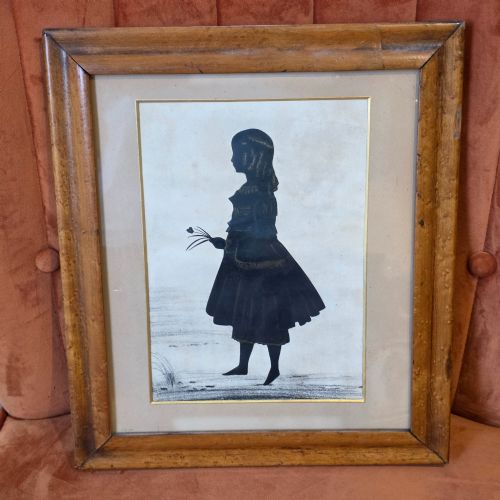
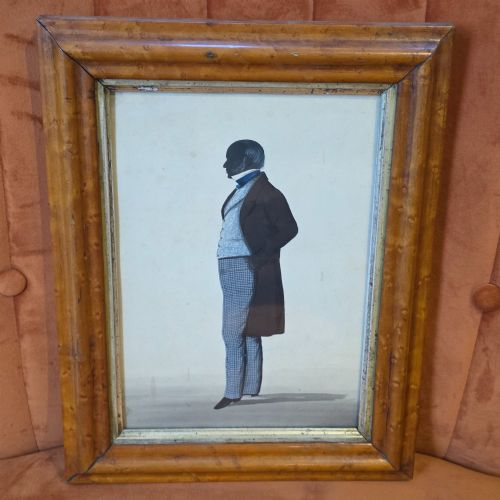
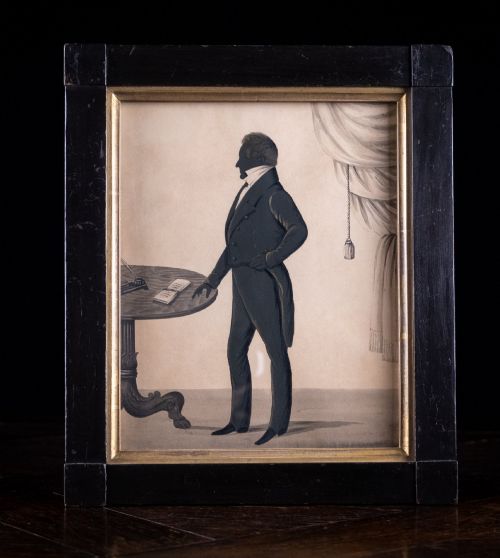
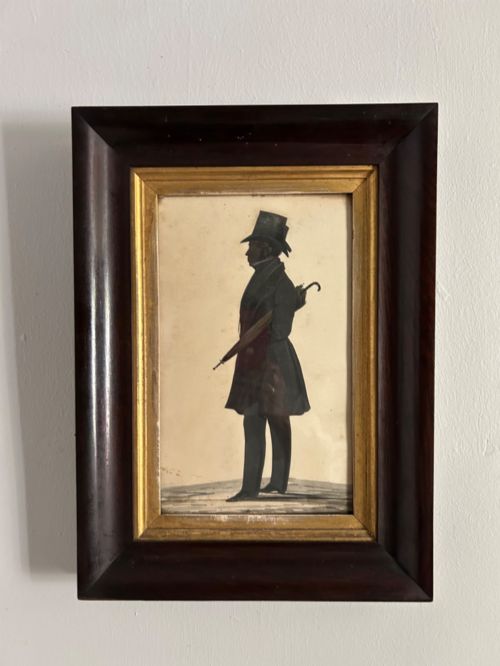
When you search for georgian cut paper art, you encounter silhouette portraits, conversation pieces and botanical compositions framed for display. These pieces capture sitters in profile, children with pets, or delicate floral arrangements executed with scissors and knives.
The versions you are most likely to meet on this page date from the eighteenth and nineteenth centuries, spanning the Georgian, Regency, and early Victorian periods. They appear as framed wall art, utilising maple, ebony or gilded surrounds to protect the delicate paper within.
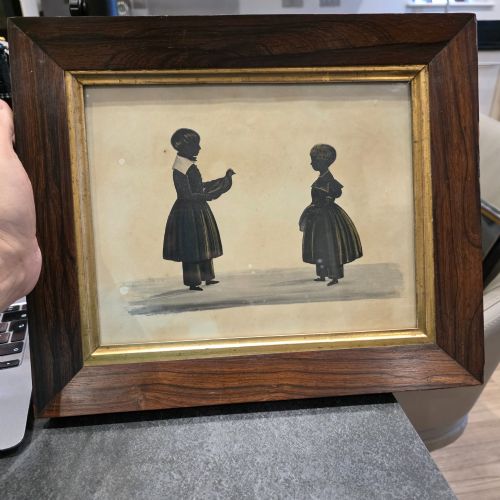
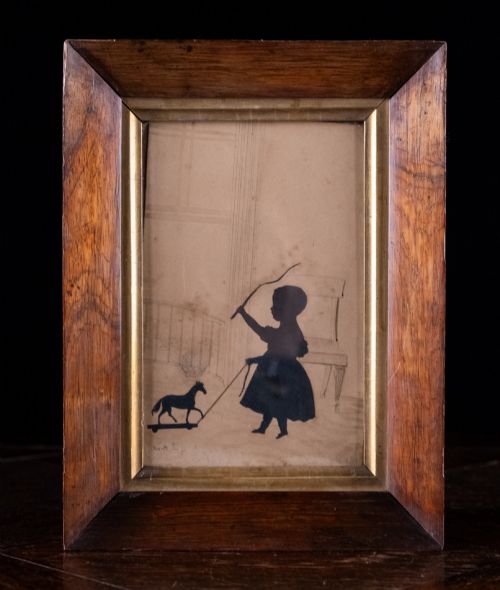
Subjects range from single gentlemen and elegant ladies in turban caps to complex group scenes involving children and animals. Many take the form of full-length silhouette portraits or detailed conversation pieces produced by travelling artists and galleries.
How they were made
Artists frequently combined cut paper with ink, watercolour, pastel and gold leaf to add depth and embellishment to the profile. Highlights were often applied with gold or ink to accentuate lace collars, buttons and floral petals.
Finished works were secured behind glass within wooden frames made of maple, ebony, or brass, sometimes incorporating gilded highlights. These protective mountings preserved the fragile paper and pigment from dust and handling.
Dogs and birds frequently share the paper stage with their human owners, immortalised in profile alongside children.
What varies in quality
The precision of the blade work distinguishes standard examples from exceptional pieces, particularly in the rendering of facial expressions, fingers and textiles. Crisp, confident edges without hesitation marks indicate a skilled hand behind the scissors.
The inclusion of supplementary media such as watercolour washes, ink detailing or gold leaf elevates the visual complexity of the artwork. Compositional ambition, such as full-length figures or multi-subject conversation pieces with children and animals, requires greater technical ability than a simple bust.
Original framing enhances the integrity of the piece, with period materials like maple or ebony surrounds contributing to the overall context. The survival of contemporary signatures, gallery stamps or attribution adds documented historical weight to the work.
Bateman·William James Hubard·Frith·Augustin Edouart·Nathaniel Bermingham
The Georgian Cut Paper Art Glossary
- Silhouette
- A solid profile portrait, typically cut from black paper or painted against a pale background. It gained immense popularity during the eighteenth and nineteenth centuries as an accessible form of likeness.
- Conversation piece
- An informal group portrait showing people engaged in a common activity, often incorporating children, pets and detailed domestic settings. These complex scenes required advanced cutting and composition skills.
- Regency
- The historical period in Britain spanning from 1811 to 1820, characterised by distinct fashions such as turban caps and high-waisted dresses which frequently appear in the silhouettes of the era.
- Gilded silhouette
- A profile enhanced with gold leaf or metallic paint to highlight costume details, jewellery or decorative borders. This technique added a layer of opulence to the monochrome paper cutout.
- Maple frame
- A wooden surround featuring the distinctive grain patterns of maple timber, commonly utilised during the Georgian and Regency periods to house delicate paper artworks.
Georgian Cut Paper Art: Frequently Asked Questions
What is a conversation piece?
A conversation piece is an artwork depicting multiple figures interacting in a domestic or outdoor setting rather than a simple solo bust. In cut paper art, these scenes often show children with pets or family members engaged in daily activities.
These compositions represent the more ambitious end of silhouette artistry, requiring careful spatial arrangement and intricate multi-figure cutting.
How should I hang these artworks?
Paper and watercolour pigments are sensitive to direct sunlight, so position your framed pieces away from windows receiving strong rays. Consistent indoor temperature and low humidity will protect the paper from warping or foxing over time.
Display them at eye level in traditional rooms where the antique maple or ebony frames complement the surrounding decor.
How do I identify the period?
Clothing styles offer the clearest indication of date, such as Regency turban caps, high waistlines, or specific nineteenth-century coats and cravats. Framing materials, backing papers and occasional artist signatures or gallery stamps also help narrow down the decade.
Examining the type of paper and the presence of handwritten ink inscriptions on the reverse provides further clues to the origin.