
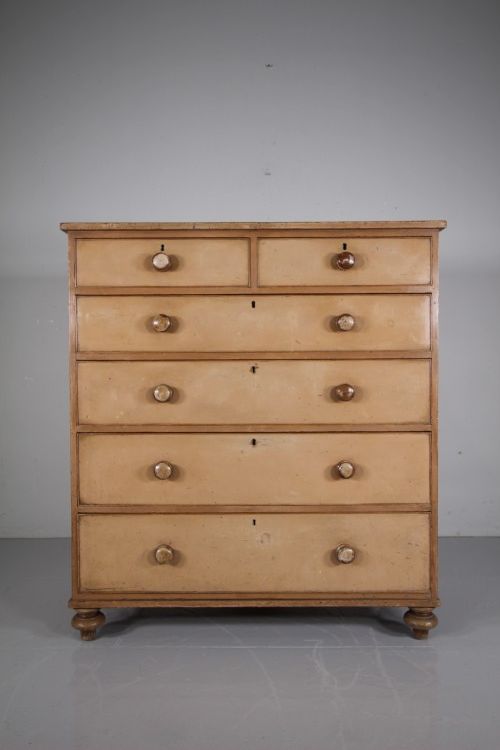
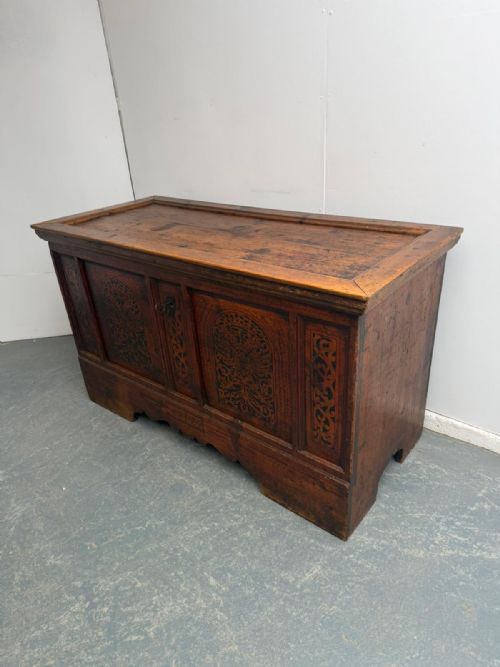


Regency Painted Chest
A regency painted chest brings distinctive colour and character to a room through period craftsmanship and decorative surfaces.
Regency Painted Chest
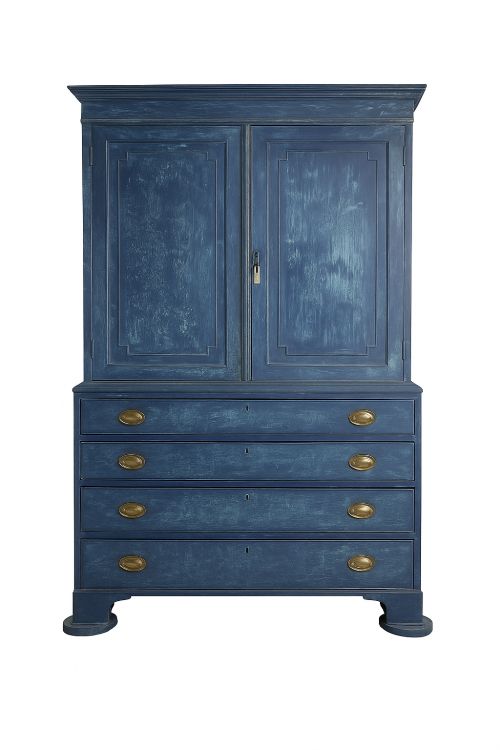
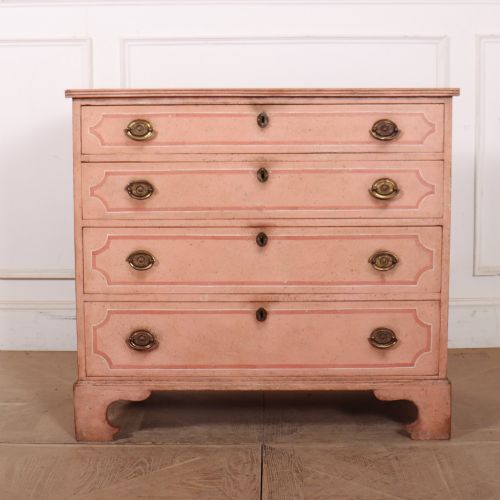
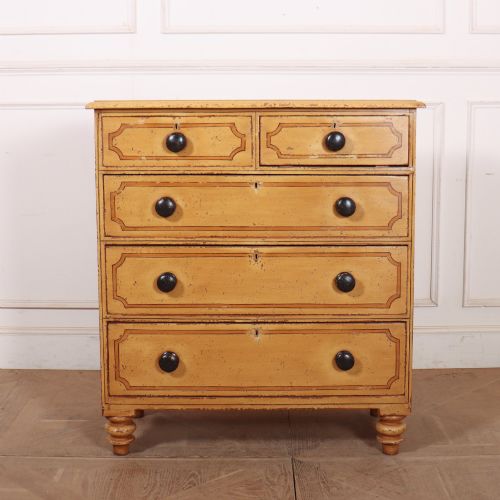
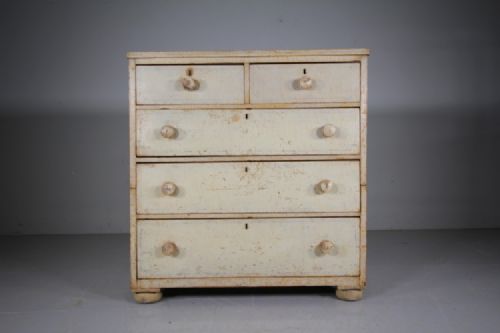
A regency painted chest combines practical storage with decorative painted surfaces, typically taking the form of a chest of drawers or linen press originating from the nineteenth century. Many examples share proportions from the Regency and Georgian eras, often constructed in two parts for ease of movement.
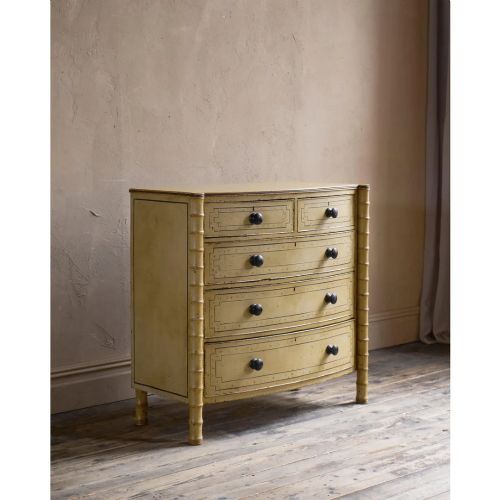
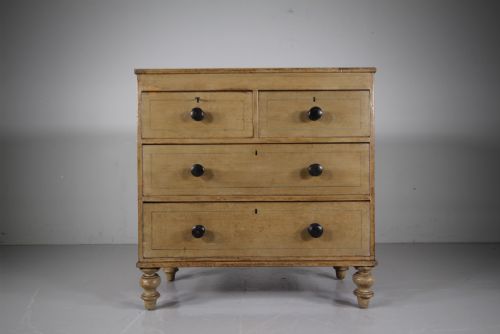
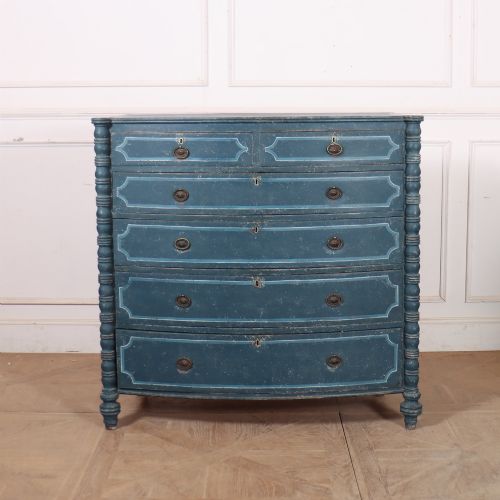
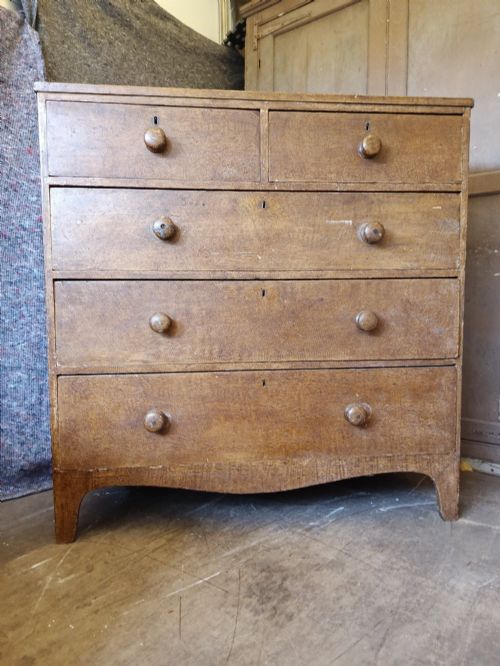
The version most commonly encountered in these records is the painted pine chest of drawers, frequently finished in blue, simulated wood grain or original decorative schemes. Alongside standard drawer configurations, variations include bowfront designs and compact coffer boxes reflecting English and European folk art traditions.
Materials and construction
Makers primarily utilised pine and softwood for carcases, applying paint finishes directly to the wood alongside decorative elements such as simulated bamboo turnings and brass hardware. Construction methods from the period often involved solid timber planking joined with traditional cabinetry techniques.
Surface decoration ranges from flat paint applications to detailed pokerwork, penwork and hand-painted motifs. Iron fittings and brass handles complete the hardware details on pieces spanning English country workshops and continental traditions.
The listings combine pine, softwood, brass and iron materials across Regency, Georgian, Victorian and eighteenth-century periods.
Evaluating quality and condition
The distinction between ordinary and superior pieces rests largely in the survival of original paint surfaces and decorative detail. Examples retaining untouched historical finishes and crisp structural lines command greater interest than those with heavily restored or later overpainted coats.
Proportion and decorative ambition also divide the range, from simple provincial boxes to high quality bowfront chests with sophisticated painted decoration. The integration of period handles, feet and intact interior construction further separates standard utility pieces from finer decorative works.
The Regency Painted Chest Glossary
- Regency
- A style period spanning the early nineteenth century defined by classical restraint and decorative experimentation. It follows the Georgian era and precedes the Victorian period.
- Bowfront
- A curved cabinet front that swells outward in the centre, frequently found on chests of drawers from the Regency and Georgian periods. This shape adds visual softness to rectilinear furniture.
- Linen Press
- A tall double-door storage piece containing sliding trays for textiles above a base of lower drawers. These items often divide into upper and lower sections for transport.
- Pokerwork
- A method of decorating wood by burning designs into the surface with heated metal tools. It creates dark, detailed linear patterns on boxes and small cabinets.
- Simulated Bamboo
- Wood turned and painted to imitate the segmented stalks of natural bamboo. Cabinetmakers utilised this technique during the Regency period to achieve an exotic aesthetic.
Regency Painted Chest: Frequently Asked Questions
What is a regency painted chest?
A regency painted chest is a nineteenth-century storage piece made primarily from pine and finished with decorative paint. These items include drawer chests and coffers dating from the Regency and Georgian periods.
They reflect both English country traditions and broader European decorative styles, often featuring original pigments or simulated wood grain finishes.
How do I identify a Regency period piece?
Identifying a Regency piece involves examining construction methods, proportions and decorative motifs typical of the early nineteenth century. Common indicators include specific drawer configurations, turnings like simulated bamboo, and original paint surfaces.
Cabinetry from this era bridges Georgian classical forms and early Victorian manufacturing methods.
Were these chests always painted?
Many pine pieces received paint finishes originally to protect the softwood and provide decorative colour in domestic interiors. Paintwork could emulate more expensive hardwoods or display folk art patterns.
Plain wood surfaces also existed alongside painted variants during the same periods.
How should I care for original paint?
Preserving original painted surfaces requires stable indoor humidity and protection from direct sunlight to prevent fading and flaking. Dusting with a dry cloth is generally sufficient for routine maintenance.
Harsh chemical cleaners and modern polishes should be avoided to protect the historical layers.