
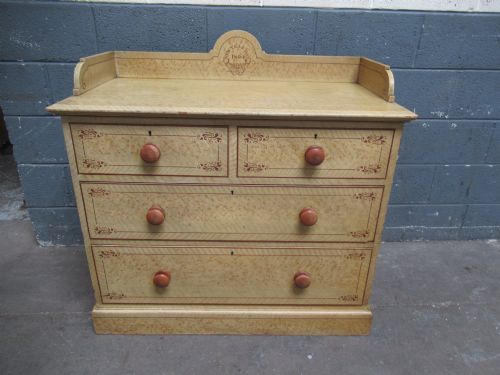
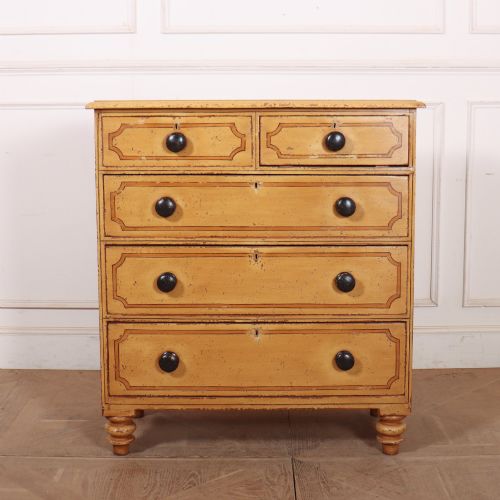
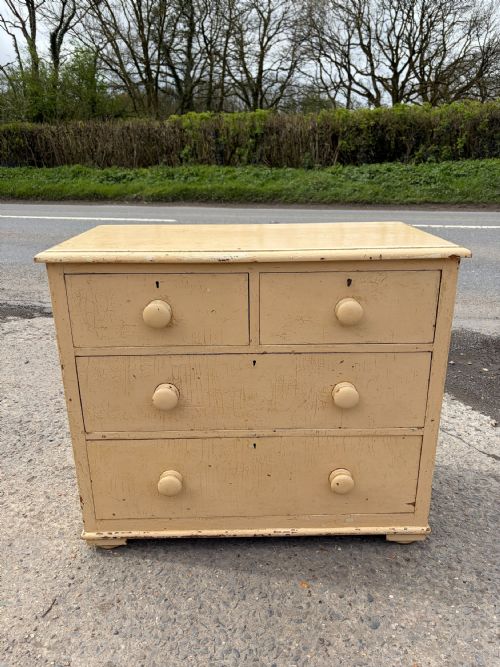
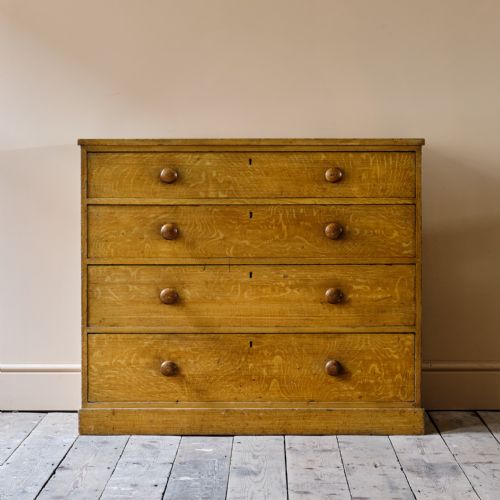


Yellow Painted Pine Chest
A yellow painted pine chest brings warmth and storage together in one piece, offering enduring utility for any room.
Yellow Painted Pine Chest
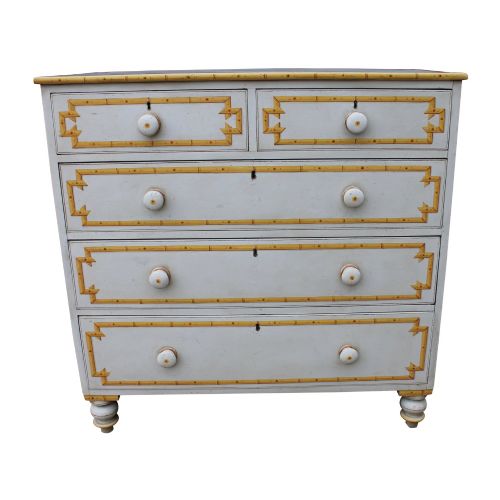
When you search for a yellow painted pine chest, you look at practical wooden storage units finished in bright surface coatings. These pieces emerge from the Georgian, Victorian, and early twentieth-century periods, spanning English and Scandinavian workshops.
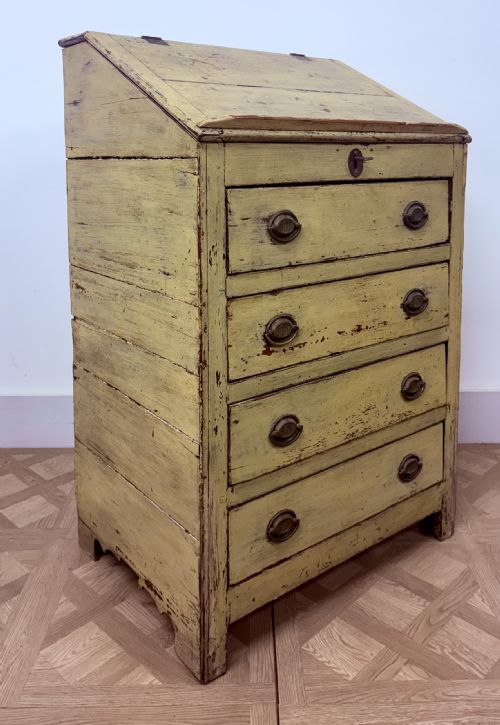
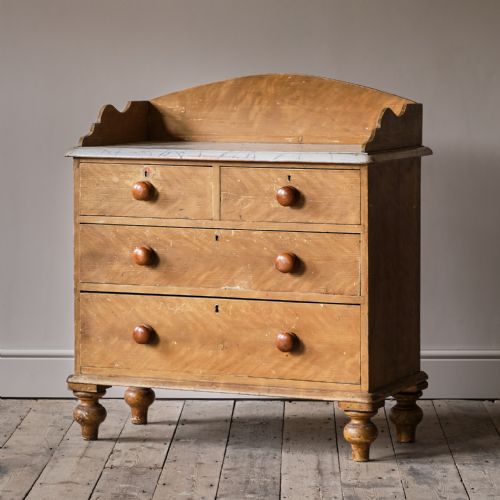
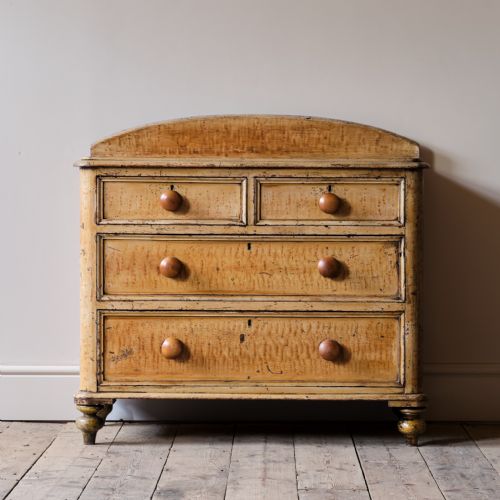
The selections here range from straightforward chests of drawers to specialised forms like writing desks, log bins, and dressing tables. Most examples on this page date from the nineteenth century and display original or scumble painted surfaces upon softwood timber.
How they were made
Joiners constructed these items using pine and softwood timbers, assembling carcases and drawer boxes with traditional joints and iron or brass hardware. Artisans then applied layers of paint, sometimes utilising scumble glazing techniques to create faux wood grain or decorative finishes.
Makers integrated ceramic handles or iron fittings to complete the furniture, leaving visible tool marks and brushwork that evidence hand production from periods like the Victorian era and the Georgian years.
Listings feature pine furniture spanning the Georgian era, the Victorian period, and the early twentieth century, incorporating English and Scandinavian pieces.
What varies in quality
The distinction between ordinary and superior pieces rests in the integrity of the original paint surface and the crispness of the joinery. Patination accumulated over generations on pine boards elevates certain items through depth of colour and honest wear.
Proportion and functional cleverness, such as integrated writing slopes or well-fitted drawers, also mark out the finer examples. Lesser pieces may display unsympathetic later overpainting or compromised timber structures.
The Yellow Painted Pine Chest Glossary
- Scumble paint
- A translucent decorative glaze manipulated with combs or rags over a base coat to imitate finer woods or create textured patterns. This finish appears frequently on nineteenth-century trunks and chests.
- Pine
- A soft softwood timber utilised widely for country furniture due to its availability and workability. Carpenters painted these surfaces to protect the wood and provide decorative colour.
- Original paint
- The initial surface coating applied to a piece of furniture during its period of manufacture, prized for its untouched patination. Finding an item retaining this finish is a key consideration for collectors.
- Coffer
- A heavy wooden chest traditionally used for storing valuables or household goods. Primitive examples often feature simple board construction and joined lids.
Yellow Painted Pine Chest: Frequently Asked Questions
How do I clean a painted pine chest?
Dust the surface regularly with a dry, soft cloth to prevent dirt accumulation on the painted finish. Avoid harsh chemical cleaners or excessive moisture that might damage old paint layers.
Test any mild cleaning solution on a hidden area first if deeper cleaning is necessary. Maintaining a stable room temperature helps preserve the underlying pine timber and surface coating.
What is scumble paint?
Scumble paint involves applying a translucent glaze over a lighter base coat and working it with tools to create decorative patterns. This technique was popular in country houses to give ordinary pine the appearance of exotic woods.
Items finished this way exhibit a distinctive mottled or grained texture. The treatment protected the softwood while adding visual interest to utilitarian furniture.
Are these chests suitable for daily storage?
These chests offer robust storage space for blankets, clothing, and household items. The internal drawer and compartment construction handles regular usage effectively when treated with care.
Ensure that contents remain dry to protect both the interior pine and the exterior painted surfaces. Placing felt pads inside drawers can help preserve the baseboards over time.
How can I tell the age of the chest?
Examine the construction methods, such as dovetail joints on drawers and the type of fixings used. Hand-cut joints and older fastener types typically indicate Georgian or Victorian production.
Wear patterns, nail types, and the composition of the paint layers provide further clues regarding the date of manufacture. Comparing the hardware style with known historical periods helps confirm the age.