


Regency Painted Bench
A regency painted bench brings classic neo-classical restraint and decorative painted surfaces to an interior or garden.
Regency Painted Bench
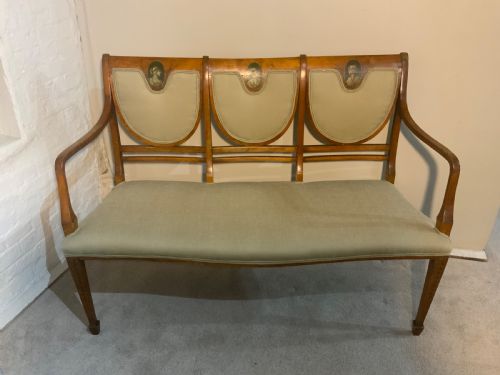
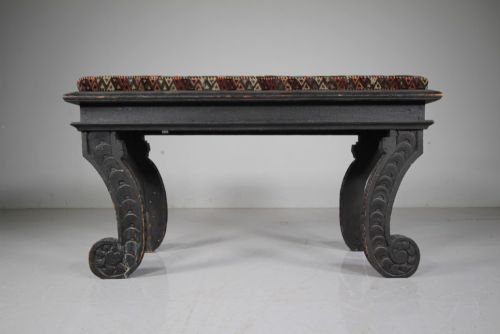
A regency painted bench encompasses a range of seating forms including garden benches, settees, window seats, and stools dating from the Regency period through to later revivals in the nineteenth and twentieth centuries.
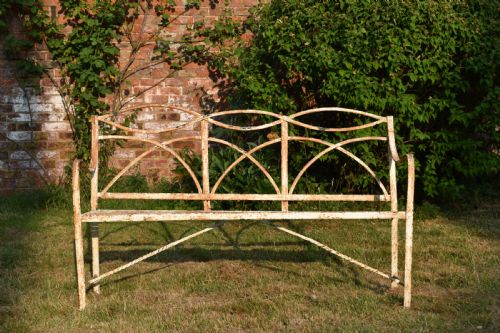
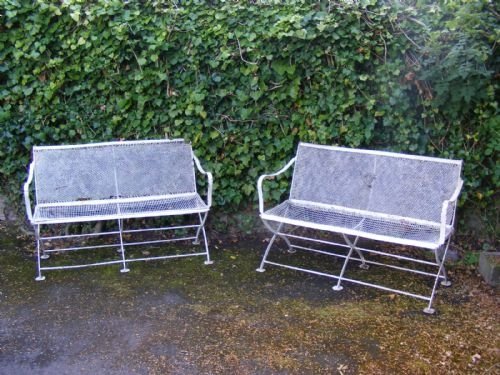
The pieces appearing on this page span formal satinwood settee designs, iron garden seats, and painted pine window seats influenced by French Empire, Italian Empire, and neo-classical styles.
Buyers will encounter both period originals and later interpretations that employ strapwork, caning, and painted wooden frames to achieve the characteristic aesthetic.
How they were made
Makers utilised painted wood, satinwood, and wrought iron, frequently finishing surfaces with applied paint or gold leaf to highlight architectural details.
Seating portions often incorporated caning or textile upholstery alongside structural elements built from pine and other hardwoods.
Several garden benches share an identical white painted iron strapwork design, suggesting a popular nineteenth-century pattern that survived through multiple manufacturing eras.
What varies in quality
Quality is determined by the crispness of the neo-classical carving or strapwork and the integrity of the painted and gilded finishes applied over the wood or iron.
Earlier period examples demonstrate finer joinery and more refined proportions compared to later decorative revivals.
Miles & Edwards
The Regency Painted Bench Glossary
- Regency
- An English design period spanning the early nineteenth century defined by classical restraint and archaeological revival. It draws heavily on Greek, Roman, and Egyptian motifs.
- Satinwood
- A durable timber with a natural golden sheen often used for fine cabinet making and decorative furniture. It accepts paint and polish exceptionally well.
- Strapwork
- An ornament consisting of flattened ribbon-like bands interwoven in geometric or scroll patterns. This detail appears frequently on iron garden furniture.
- Curule
- An ancient chair shape featuring intersecting X-frame legs. It denotes a specific curule footstool form seen in classical antiquity.
- Gilt
- A thin layer of gold leaf applied to the surface of wood or metal. It provides a luminous accent to painted furniture frames.
Regency Painted Bench: Frequently Asked Questions
Where did a window seat go?
A window seat was typically placed in the deep reveal of a Georgian or Regency sash window to provide a spot for reading or needlework.
These pieces were designed to fit narrow spaces while echoing the architectural style of the room.
Can iron garden benches stay outside?
Wrought iron garden benches are built for outdoor use, though historic pieces benefit from sheltered placement during harsh winter months.
Regular maintenance of the painted surface protects the underlying metal from weathering.
How do I spot a later revival?
Later twentieth-century interpretations often utilise modern welding techniques and standardised paints that differ from nineteenth-century material preparation.
Examining the construction joints and the wear patterns on the painted surface helps distinguish original period work from later styles.