


Ebonised Salon Seating
Ebonised salon seating offers dark polished timber and gilt highlights, bringing formal sitting room elegance and historic character to a modern interior.
Ebonised Salon Seating
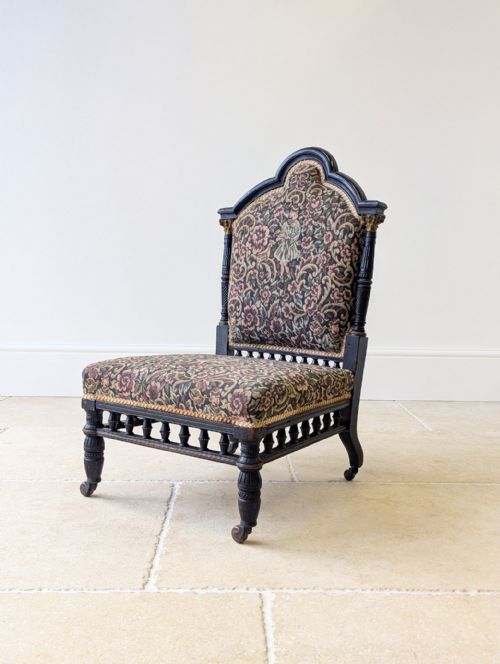
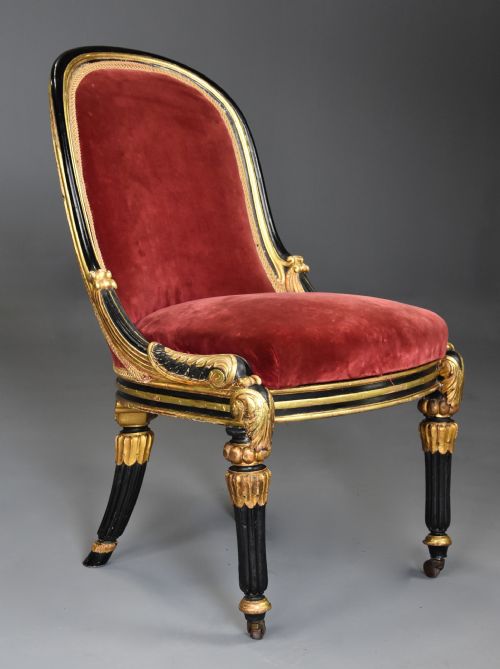
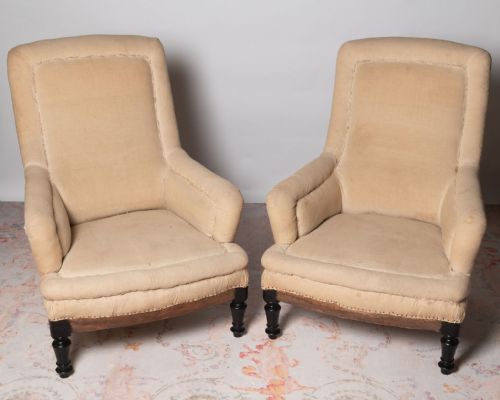
Ebonised salon seating encompasses chairs, armchairs, benches, and window seats designed for nineteenth-century reception rooms and parlours. These items emerge from periods including the Regency era, the Victorian epoch, and around eighteen eighty.
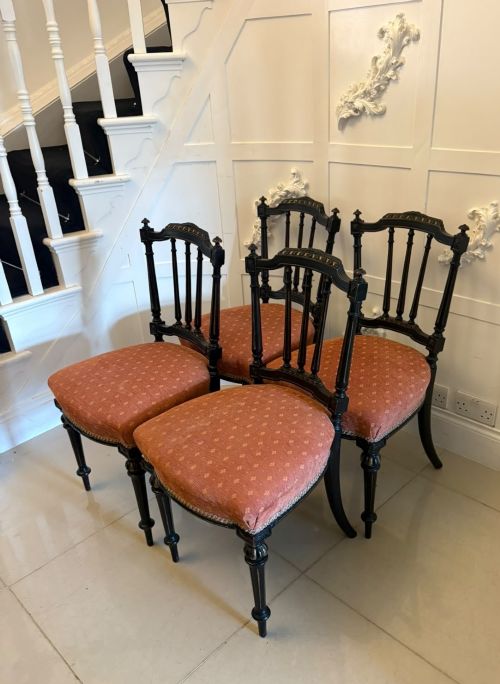
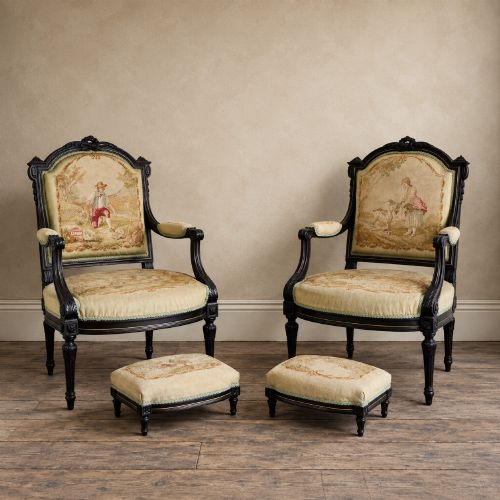
The inventory showcases specific forms such as low salon chairs, dining chairs, side chairs, and desk chairs alongside armchairs and footstools. Stylistic influences span French Louis XVI Revival, Aesthetic Movement, and nineteenth-century English and French designs.
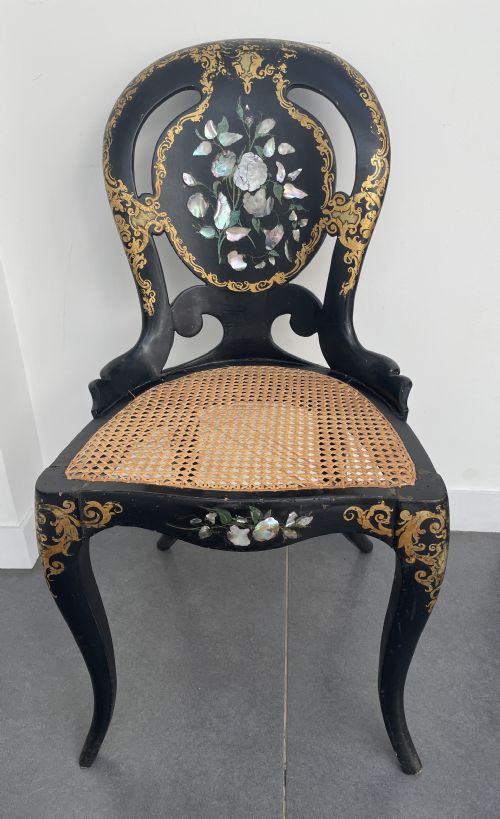
Buyers encounter items featuring ebonised wood alongside cane, velvet, upholstery fabric, calico, and mother of pearl inlay. The selection ranges from single occasional chairs to matched sets of four.
How these pieces were made
Craftsmen utilised timbers such as beech, applying dark ebonising finishes to imitate costly ebony wood. Surfaces often incorporate carved details, brass mounts, and gilt enrichment to contrast against the black finish.
Seating portions incorporate traditional upholstery methods utilising velvet, calico, and fabric. Selected frames integrate woven cane panels within the backrests or seats for texture and lightness.
Materials recorded across the inventory include ebonised wood, beech, brass, gilt, cane, and mother of pearl.
What varies in quality
The refinement of the timber finishing and the crispness of carved wooden ornamentation distinguish standard examples from finer works. The presence of subsidiary materials such as mother of pearl inlay or gilt highlights alters the decorative impact.
Structural integrity of the ebonised frame and the fidelity of revival styles, whether French Louis XVI or Aesthetic Movement, govern the overall distinction of each piece.
The Ebonised Salon Seating Glossary
- Ebonised
- Wood treated with stain or paint to resemble dense black ebony. This finish gained popularity during the nineteenth century for formal reception furniture.
- Aesthetic Movement
- A late nineteenth-century design style emphasising visual beauty over narrative subject matter. Pieces from this movement often feature ebonised surfaces with gilt detailing.
- Louis XVI Revival
- A nineteenth-century French style drawing on eighteenth-century classical symmetry and straight-lined neoclassical motifs. This aesthetic appears on salon armchairs and footstools.
- Cane
- Woven material made from peeled rattan strips, utilised for chair seats and backs. It provides a resilient and breathable surface.
Ebonised Salon Seating: Frequently Asked Questions
What rooms suit ebonised salon seating?
These decorative chairs and benches fit well in drawing rooms, studies, and bedrooms where historic character is desired. Their dark wood tones anchor brighter interior colour schemes.
Pairs or sets of four function effectively around a small table or placed against a perimeter wall as decorative accents.
How do I identify a Victorian piece?
Victorian examples display stylistic traits from the nineteenth century, including Aesthetic Movement or revival motifs. Common indicators involve ebonised finishes paired with velvet or mother of pearl inlay.
Makers of this era frequently produced low salon chairs and matched sets of dining or side chairs.
Were these seats used daily?
Salon seating served formal reception spaces rather than heavy daily lounging. Consequently, surviving examples often retain delicate frames and decorative elements.
They functioned as occasional chairs for guests during parlour gatherings and musical recitals.
What materials are common?
Ebonised wood forms the structural basis for these items, frequently paired with gilt or brass highlights. Upholstery materials include velvet, calico, and various decorative fabrics.
Certain examples incorporate woven cane panels or mother of pearl inlay to enhance the visual surface.