


Regency Mirror with Crest
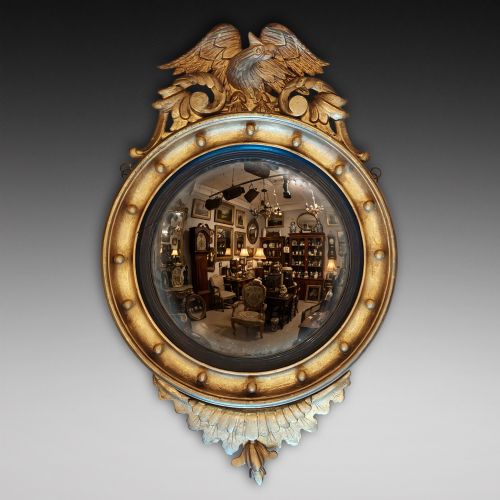
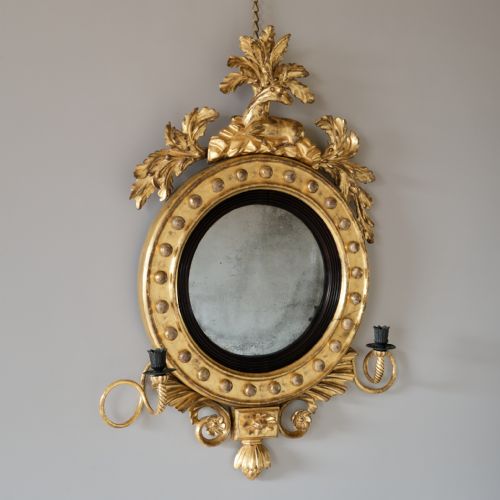
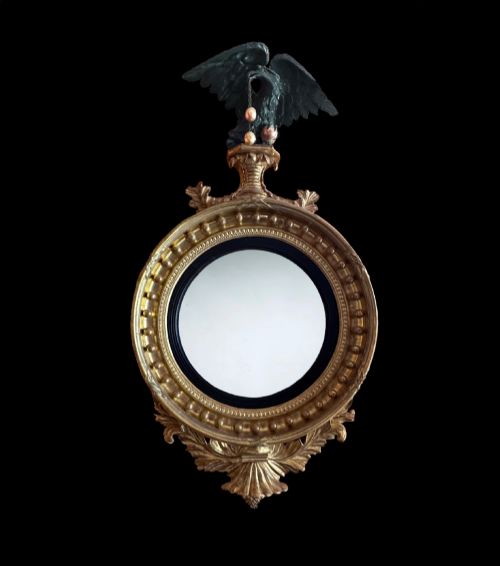
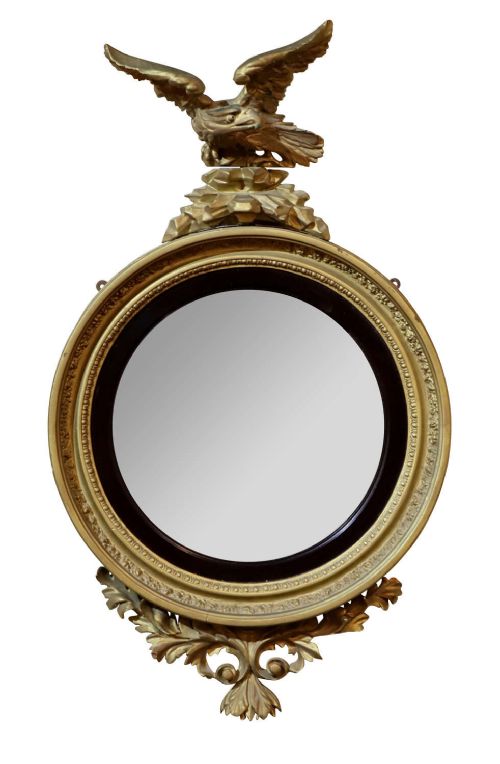
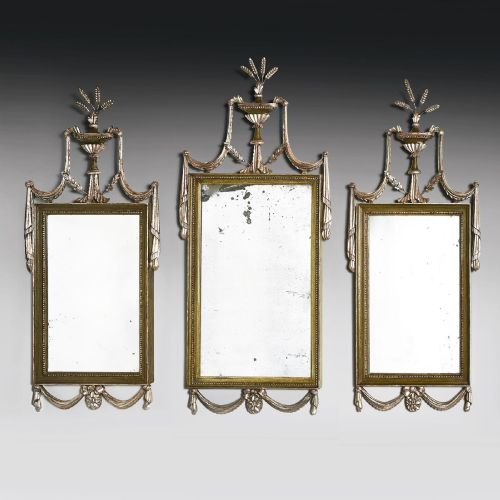
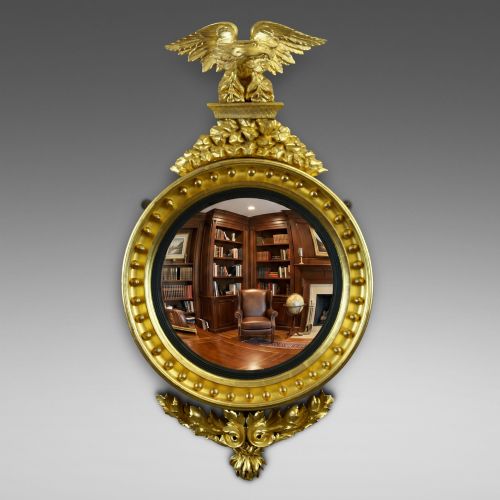
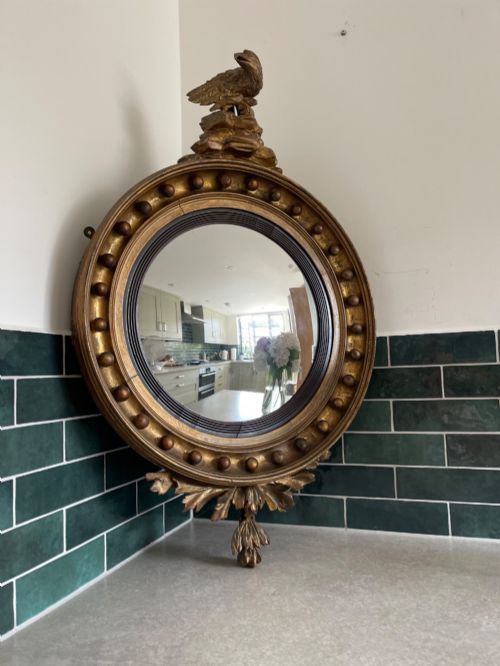
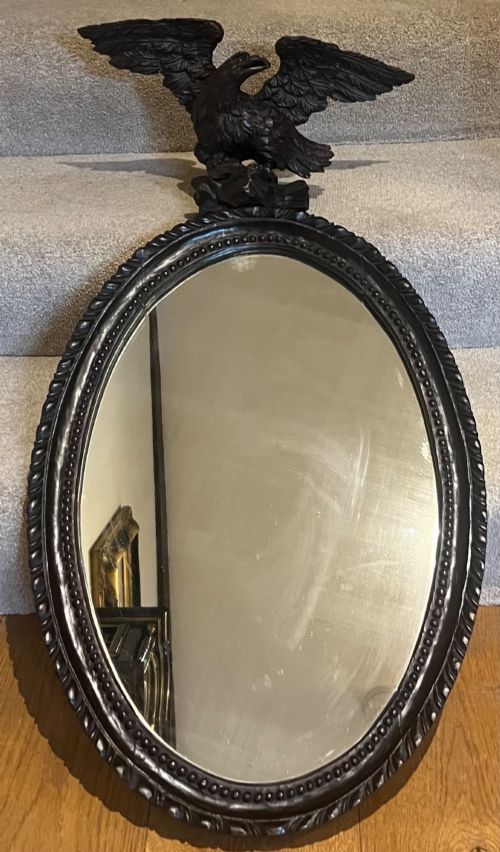
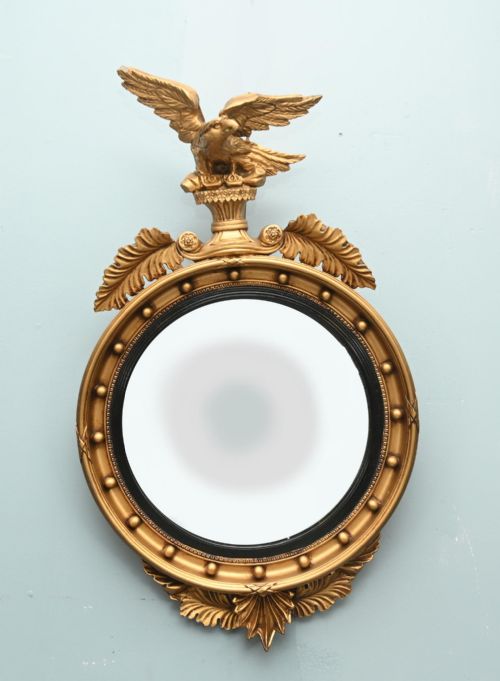
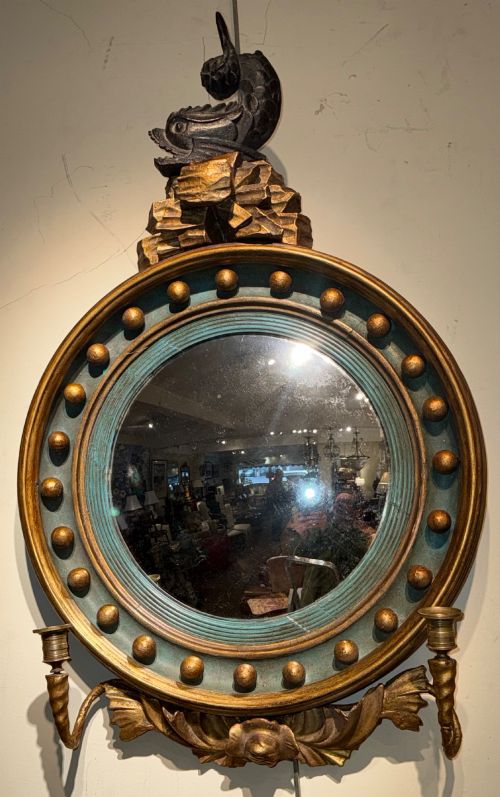
A regency mirror with crest brings bold architectural presence to a room, dominated by carved eagles, birds, and animals.
Regency Mirror with Crest
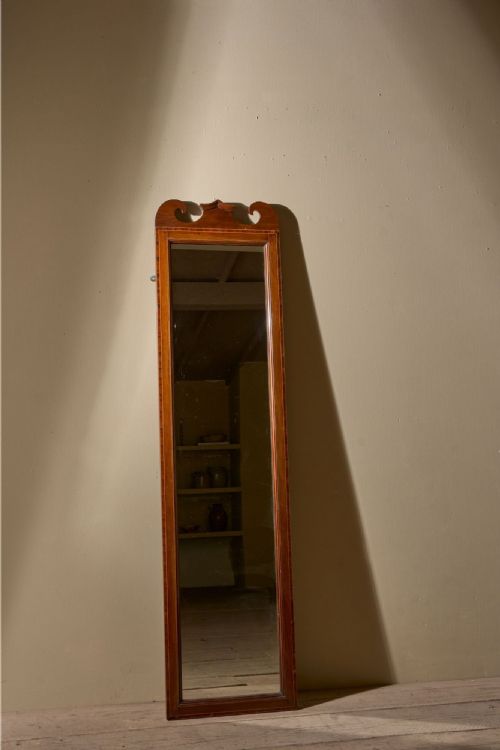
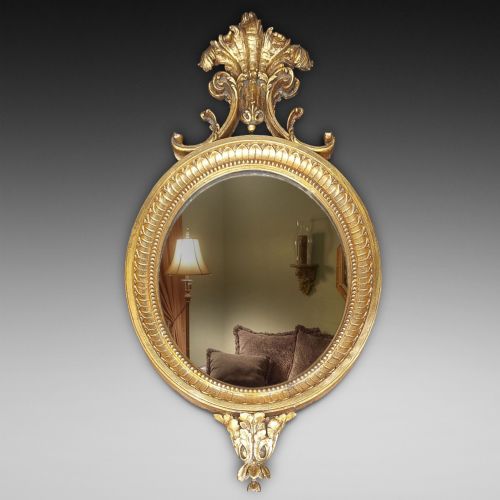
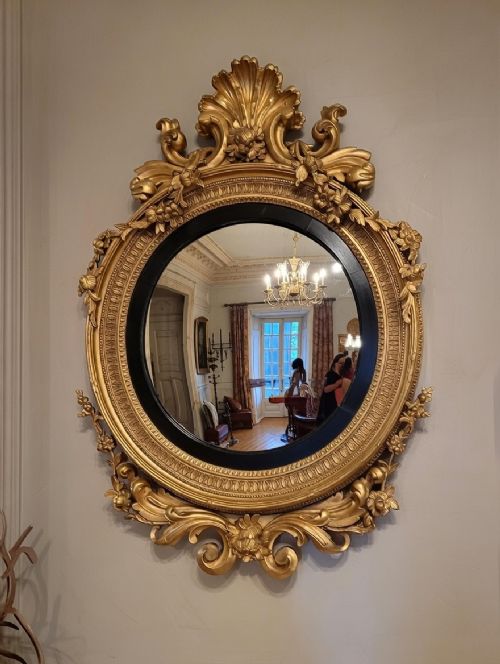
A regency mirror with crest combines classical proportion with striking decorative mounts, mostly taking circular, oval, or rectangular forms for wall hanging and overmantel placement. The evidence shows these pieces span the nineteenth century and the Victorian Regency Revival style.
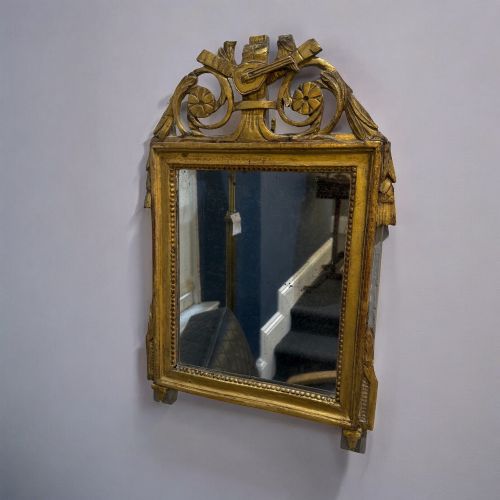
Convex circular mirrors dominate the selections, usually featuring carved eagle surmounts perched upon the frame. Other versions present rectangular formats with Hoho bird crests, dome tops, and hand-carved decoration.
How they were made
Giltwood and gesso form the primary surfaces, providing the golden sheen characteristic of the period. Carved wood creates the structural frame and the detailed animal crests.
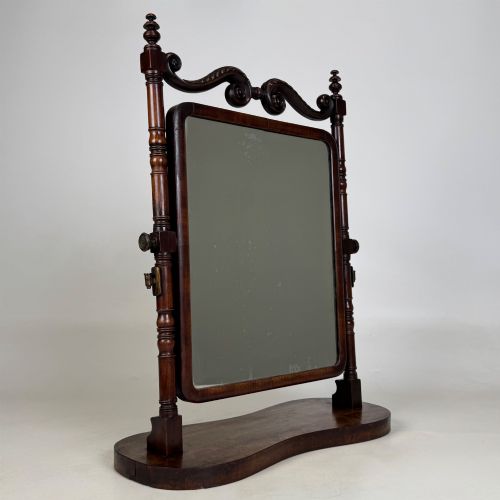
Secondary materials include ebonised wood, mahogany, brass, and ebony, which accent the main gilt finish alongside standard mirror glass and convex mirror plates.
Regency Mirror with Crest Retail Price Guide 2026
Typical asking prices for regency mirror with crest among the pieces listed under this phrase on Sellingantiques today, from the lower quarter to the upper quarter. They describe what is for sale here now, not the wider market.
Materials across the listings include giltwood, ebonised wood, gesso, brass, mahogany, and ebony.
What varies in quality
The sophistication of the hand-carved crest separates standard production from finer work, particularly in the rendering of eagle feathers and animal forms. Crisp detail in the gesso and giltwood moulding dictates the visual impact.
Material selection also defines the tier, with solid mahogany and ebonised details providing contrast against the more common giltwood frames.
The Regency Mirror with Crest Glossary
- Giltwood
- Wood coated with gold leaf or gold paint. This finish creates the bright metallic appearance seen on the majority of these frames.
- Gesso
- A plaster-like mixture applied to wood surfaces before gilding. It allows craftsmen to model intricate low-relief decorations.
- Convex mirror
- A curved glass plate that reflects a wide, distorted field of view. These circular mirrors were popular for monitoring a room.
- Girandole
- A wall mirror featuring attached candle sconces. The candle arms multiply the reflected light.
- Overmantel mirror
- A wide mirror designed to sit directly above a fireplace mantel. These pieces often incorporate architectural details and lattice friezes.
Regency Mirror with Crest: Frequently Asked Questions
Where should I hang a convex mirror?
These pieces suit principal reception rooms and hallways where their wide-angle reflection captures light and movement across the space.
Position the frame at eye level to get the intended perspective from the curved glass.
How do I spot a Regency Revival piece?
Revival items date from the later nineteenth century, such as the Victorian period, rather than the original Regency era.
Look closely at the construction methods and wood ageing to determine the exact period of manufacture.
What is a Hoho bird crest?
The Hoho bird is a mythical Asian phoenix motif adapted by European craftsmen during periods of classical revival.
It appears perched at the top of rectangular wall mirrors as a decorative wooden carving.
Why do some mirrors have animals on top?
Carved creatures like eagles, greyhounds, and birds symbolised status, power, and classical taste in nineteenth-century interiors.
These mounted crests draw the eye upward and add height to the overall composition.