
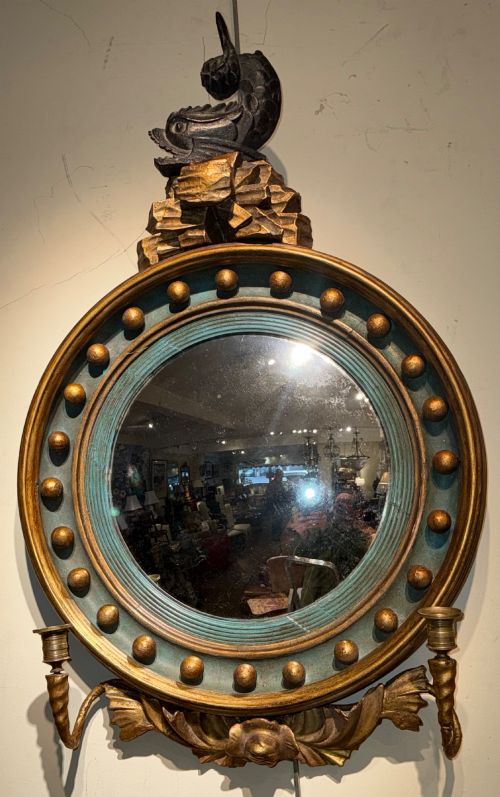


Regency Mirror Sconces
Regency mirror sconces combine reflective glass and candle holders to catch and multiply the flicker of candlelight across a room.
Regency Mirror Sconces
When you search for regency mirror sconces, you encounter wall-mounted lights and girandoles designed to illuminate period interiors. These pieces date principally from the nineteenth century, including the Regency, Georgian, and William IV periods, alongside later twentieth-century interpretations from the nineteen-twenties and nineteen-thirties.
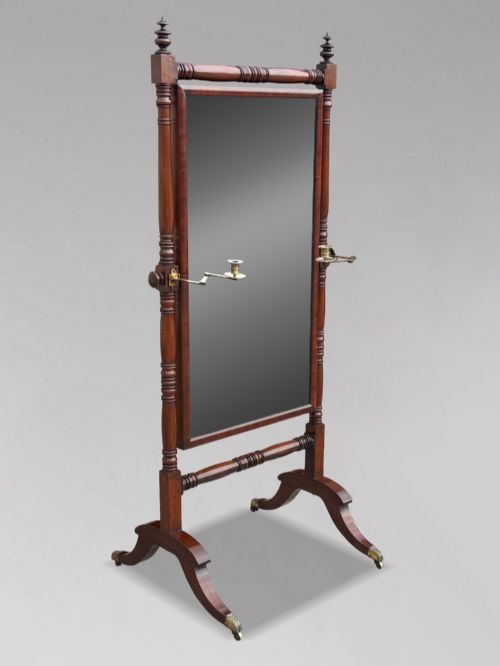
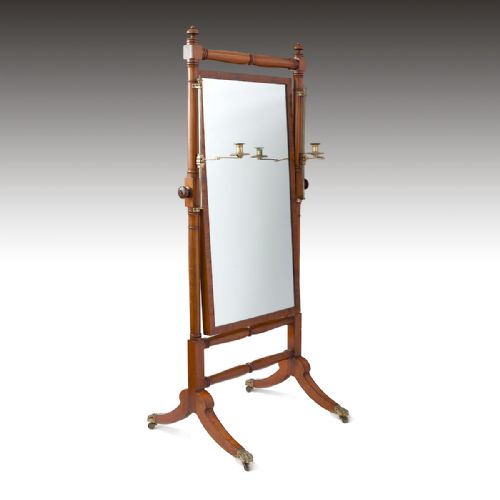
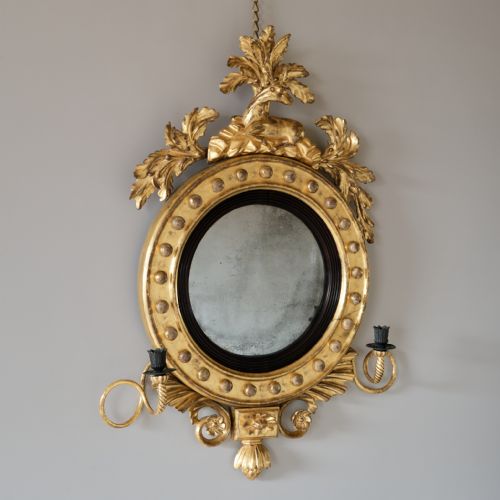
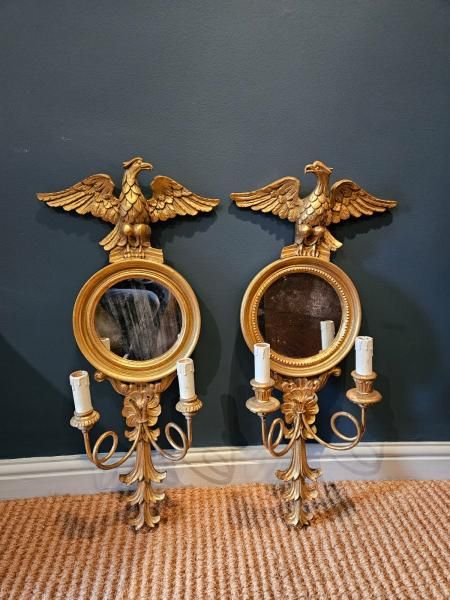
The selection on this page centres on wall sconces with mirror backs, girandoles, and convex mirrors equipped to hold candles. You also find large cheval mirrors in mahogany, some featuring brass articulated candle holders that bridge the gap between standing dressing glass and wall lighting.
Makers and designers of the period produced these items to cast warm light in dimly lit rooms before the arrival of electricity. The surviving examples rely heavily on the aesthetics of the Regency and French Regency styles to create a dramatic focal point on a wall.
How they were made
Cabinet makers and gilders built these pieces using solid timbers such as mahogany and ebonised wood alongside carved giltwood. Frames were often constructed with gesso applied over wood before receiving layers of gold leaf to achieve a reflective, metallic sheen.
Makers integrated brass elements, including metal sconces and articulated candle arms, directly into the timber or mirrored frames. Glass was cut and silvered for the main mirror plates and smaller convex surfaces, while crystal pendants and drops were sometimes added to refract the candlelight.
Listings span the nineteenth century, featuring Regency, William IV, and Georgian periods alongside twentieth-century reproductions from nineteen-twenty and nineteen-thirty.
What varies in quality
The distinction between tiers of quality rests on the crispness of the carved giltwood and the depth of the gilding. Finer pieces display sharply defined ornamentation around the frame and convex plate, whereas simpler versions show softer detailing or later surface repairs.
Materials also dictate the grade of the piece, with dense mahogany frames and heavy brass candle holders sitting above lighter composite constructions. The original integrity of the mirror glass and the retention of period metal fittings further separate standard examples from superior ones.
Gillow
The Regency Mirror Sconces Glossary
- Girandole
- A wall mirror featuring attached candle branches or sconces designed to reflect candlelight. These ornate fixtures typically hung in principal reception rooms.
- Convex mirror
- A round mirror with a curved surface that provides a wide-angle reflection of the interior. They often feature black ebonised reeded inner rings and giltwood frames.
- Cheval mirror
- A freestanding full-length dressing glass mounted on a pivoting frame between four upright pillars. Some examples incorporate brass candle holders attached to the side supports.
- Giltwood
- Timber carved and coated with gold leaf or metallic powder to imitate solid gold. This finish catches and amplifies natural and artificial light.
Regency Mirror Sconces: Frequently Asked Questions
How do I hang a heavy convex mirror safely?
Heavy convex mirrors require secure fixing directly into brickwork or substantial wall studs using appropriate masonry anchors and heavy-duty picture wire or brackets. Because the carved giltwood frames carry considerable weight, relying on standard plasterboard fixings creates a risk of structural failure.
Position the mirror at eye level where it can reflect the room and capture light effectively from windows or fireplaces.
Can I burn real candles in the sconces?
Using real candles is possible provided the metal drip pans and backplates are secure and kept clean from wax accumulation. Ensure that the flame sits at a safe distance from the antique mirror glass and the surrounding timber or gilt frame.
Many owners choose to use modern LED candles to replicate the period atmosphere without exposing the historic materials to heat and smoke damage.
How do I clean antique mirror glass?
Clean antique mirror glass gently using a soft, dry microfibre cloth to remove dust without disturbing the silvering behind the plate. Avoid spraying liquid cleaner directly onto the glass, as moisture can seep behind the edges and accelerate degradation of the original backing.
If liquid is necessary, apply a small amount to the cloth rather than the mirror itself, and keep all moisture away from the giltwood or mahogany frames.
What is the difference between a girandole and a standard wall sconce?
A girandole specifically denotes a wall mirror that incorporates one or more candle sconces attached to its frame or base. Standard wall sconces, by contrast, may feature mirror backs to multiply light but generally focus on the lighting fixture rather than functioning primarily as a decorative mirror.
Both forms served to brighten dark hallways and entertaining spaces during the nineteenth century.