
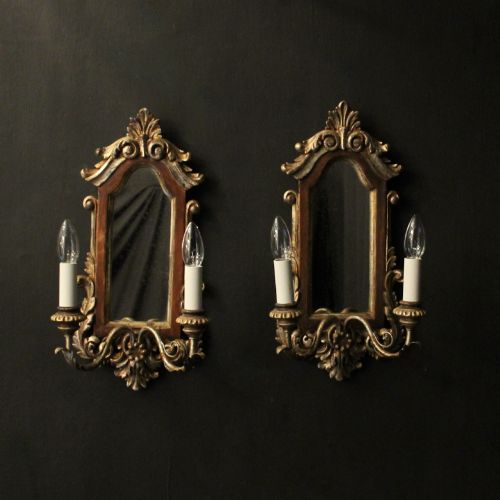
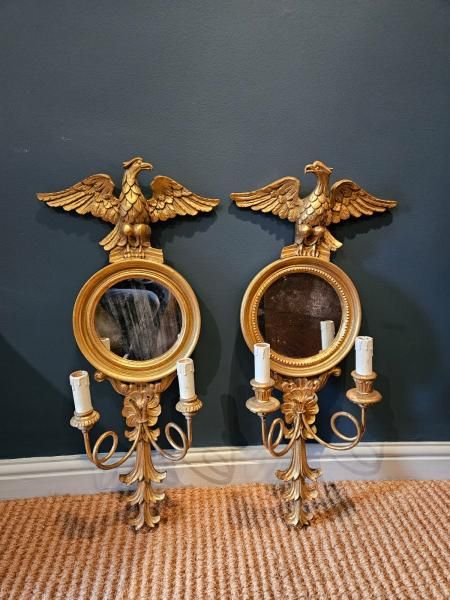
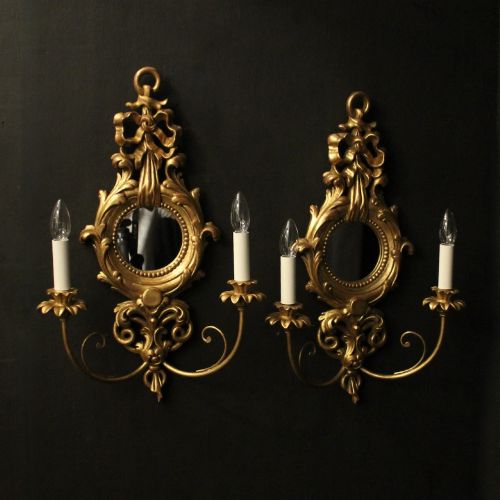
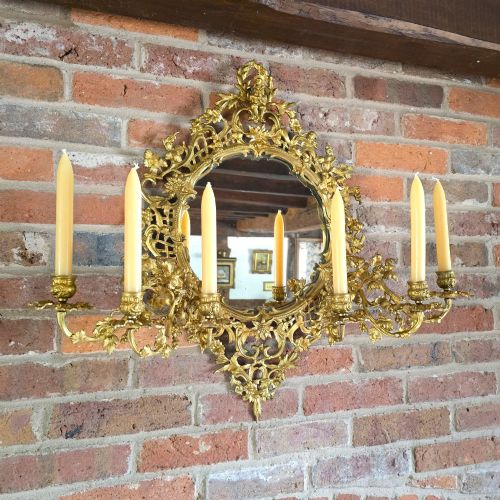
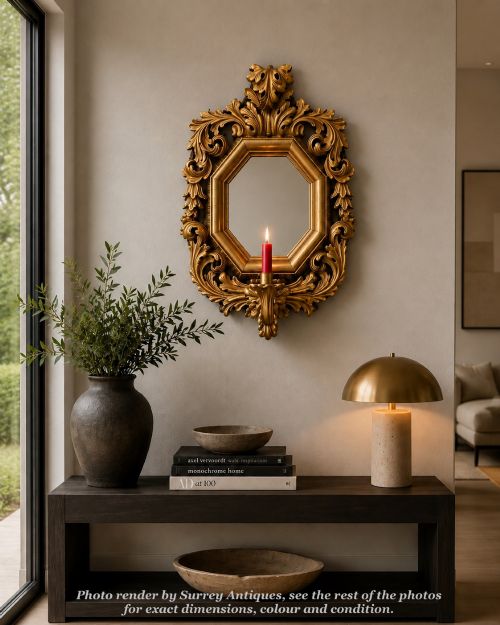


Gilded Mirror Wall Lights
These gilded mirror wall lights catch the candlelight and brighten dark corners with centuries of carved and gilded brilliance.
Gilded Mirror Wall Lights
When you search for gilded mirror wall lights, you are looking at decorative wall pieces that combine reflective glass with illuminated arms or candle sconces. These objects hang in hallways, drawing rooms, and above mantels to bounce warm light around the interior.
The pieces you are most likely to meet on this page span from the eighteenth century into the early twentieth century. They appear as matched pairs of twin-arm girandoles, single wall sconces with mirror backs, and large overmantel mirrors.
Makers and craftsmen from Italy, France, and Britain shaped these items during periods such as the Regency, Victorian, and various revival movements. Their forms range from slender Florentine baroque carvings to grand French rococo compositions.
How they were made
Carvers built the structural foundations of these pieces using timber such as wood and gesso before applying thin layers of gold leaf. Metal variations utilise brass, ormolu, and gilt bronze for the candelabra branches and structural mounts.
Glass was cut and silvered to form the mirror plates that sit behind or between the candle arms. Artisans secured these components with traditional joinery and pinned metalwork to ensure stability on the wall.
Some mirror backs are so heavily foxed they reflect your silhouette like a friendly ghost from eighteen-eighty.
What varies in quality
The depth and crispness of the hand-carved gesso or wood ornamentation separate standard examples from finer works. Sharper botanical details and well-defined moulding indicate a higher grade of craftsmanship.
The preservation of the original gilt surface and the clarity of the antique mirror glass also determine the standing of a piece. Original mercury silvering showing gentle ageing holds distinct appeal compared to modern replacements.
Gerfaux Paris
The Gilded Mirror Wall Lights Glossary
- Girandole
- A branched wall light or candelabra featuring a mirrored backplate. This reflective surface multiplies the illumination cast by the candles.
- Giltwood
- Timber that has been coated with a thin layer of gold leaf. It provides the characteristic bright finish seen on many antique frames.
- Ormolu
- Finely chased and gilt bronze used for decorative mounts and candle branches. The technique creates a rich golden appearance on metalwork.
- Gesso
- A plaster-like mixture applied to wood frames to create a smooth surface for gilding. Carvers sculpt intricate relief patterns directly into this layer.
- Overmantel
- A large mirror designed to hang specifically above a fireplace mantelpiece. These often incorporate integral sconces for additional room lighting.
Gilded Mirror Wall Lights: Frequently Asked Questions
Are the mirror plates original?
Many older pieces retain their original glass, which often exhibits light foxing, minor speckling, and gentle darkening at the edges. These optical traits confirm age rather than diminishing the piece.
Replacement glass usually appears noticeably brighter and lacks the characteristic surface distortion found in historical plates.
How should I clean giltwood frames?
Dust these surfaces gently with a very soft, dry brush to prevent damage to the delicate gold leaf layers. Avoid liquid cleaners, polishes, and abrasive cloths entirely.
Moisture can lift the underlying gesso and cause the gilding to flake away from the carved wooden substrate.
What rooms suit these wall lights?
Entries, dining rooms, and living spaces benefit most from the reflective qualities and ambient candle illumination these items provide. Placing them opposite windows maximises natural daylight in smaller rooms.
They pair well with period interiors as well as contemporary settings that contrast old craftsmanship with modern decor.
How do I date a gilded mirror?
Examine the construction methods visible on the reverse, including the type of wood, screw heads, and assembly marks. Stylistic cues like rococo curves or neoclassical symmetry also point toward specific decades.
Comparing the framing details with dated examples helps narrow down the period of manufacture.