




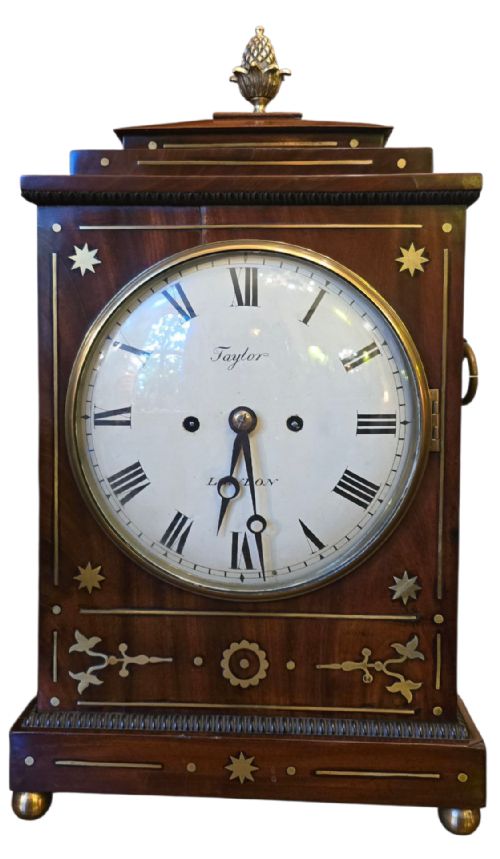


Regency Mantel Timepiece
A regency mantel timepiece is a compact domestic clock designed to sit on a shelf, prized for its mechanical precision and architectural presence.
Regency Mantel Timepiece
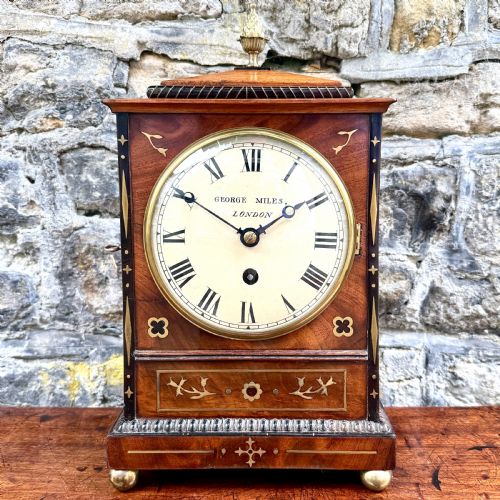
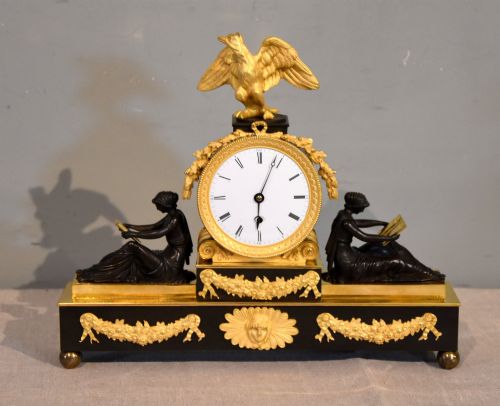
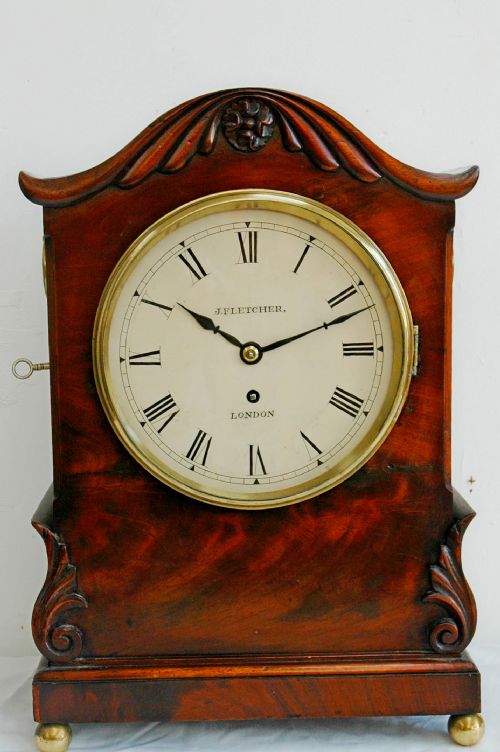
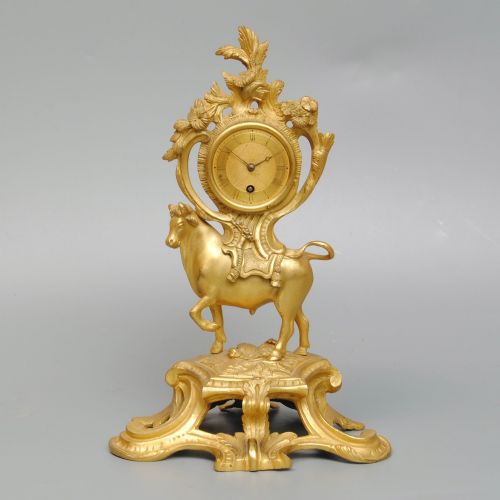
When searching for a regency mantel timepiece, a buyer is looking at small-scale domestic clocks built to keep hours in libraries, drawing rooms, and hallways. The pieces seen here span the Regency and Georgian periods into the nineteenth century, taking the form of library clocks, bracket clocks, and architectural case designs. Mahogany and rosewood cases dominate the selection, alongside ormolu, patinated bronze, and marble variations.
The version most commonly met on this page is the single fusee mahogany mantel clock, often framed with brass inlay or mounted on small feet. English makers such as those working in London feature prominently among the listings, alongside French empire examples cast in gilt bronze. These objects combine timekeeping utility with cabinetmaker craft, serving as functional focal points for a mantelpiece.
Materials and construction
Cabinetmakers constructed the wooden cases of a regency mantel timepiece from dense timbers such as mahogany, rosewood, and ebonised wood, frequently adding fine brass inlay or gilt mounts. Metal cases relied on cast ormolu, patinated bronze, and brass, shaped into architectural details, animal figures, or floral motifs. Dials were formed from enamelled or painted metal, protected behind flat or curved glass panes.
The interior mechanics utilised brass gear trains driven by fusee movements, which distributed even power from the mainspring as it unwound. Verge or anchor escapements regulated the beat, while higher-spec examples incorporated 8-day fusee drives or chain fusee movements. Makers fitted these intricate brass mechanisms tightly inside wooden or cast metal housings, securing them with heavy backplates.
Goats, palm trees, and cherubs clamber across the gilt bronze mounts of Regency mantel timepieces.
Separating the ordinary from the exceptional
The distinction between a standard regency mantel timepiece and a superior example lies in the harmony between the cabinetmaker's carpentry and the horologist's movement. Top-tier pieces display crisply carved ormolu mounts, deeply figured rosewood or mahogany veneers, and finely engraved backplates signed by accomplished London makers. Lesser examples exhibit simpler provincial casework and standard movements without specialised decorative flourishes.
Quality also shows in the architectural proportions of the case and the integration of specialised complications like chain fusee movements or musical strikes. A superior bronze figural clock demonstrates meticulous chasing in the metalwork and balanced composition, whereas ordinary variants rely on mass-produced castings and plain wooden boxes.
Baetens London·Bush of London·Viner London·John Bull of Bedford·Arnold and Frodsham·Taylor of London·Pons de Paul·Hessen Paris·Grimaldi and Johnson·William Hardy London·McCabe London·FB Adams London·Mitchell and Russell·Payne of London
The Regency Mantel Timepiece Glossary
- Fusee
- A conical pulley used in a clock movement to equalize the declining pull of the mainspring. This mechanism ensures consistent power delivery to the gear train for more accurate timekeeping.
- Ormolu
- Gilded bronze produced by applying a mixture of mercury and gold leaf to cast bronze. The technique yields a distinctive matte and bright gold finish characteristic of fine period metalwork.
- Bracket clock
- A portable household clock originally designed to sit on a wall bracket to project sound further into a room. Later versions stood directly on mantelpieces or tables.
- Verge escapement
- An early type of clock escapement mechanism that controls the release of power from the gear train. It works with a balance wheel or pendulum to regulate the ticking pace.
- Ebonised wood
- Timber treated with chemical stains or dark finishes to imitate ebony. This process gives a dense black appearance often used for striking contrast against brass mounts.
Regency Mantel Timepiece: Frequently Asked Questions
What is a fusee movement?
A fusee movement uses a conical pulley connected to the mainspring via a chain or cord to regulate power delivery. As the spring unwinds, the leverage changes to maintain even force on the gears.
This mechanical arrangement helps the clock maintain steady timekeeping as the spring loses tension over several days.
Where should I place a mantel timepiece?
These clocks are built for stable, dry flat surfaces such as mantelpieces, sideboards, or library shelves out of direct sunlight. Placing them away from heat sources protects the antique wood veneers and delicate internal lubricants.
Ensure the surface is level so the pendulum or balance wheel beats evenly without stopping.
How do I wind an antique clock?
Winding requires inserting the appropriate key into the dial winding hole and turning it gently until resistance stops the motion. Care must be taken not to overwind the mainspring, which can cause internal damage.
Most 8-day movements require winding once a week using a steady, measured hand.
How do I distinguish Regency from Georgian pieces?
Georgian clocks tend to feature heavier architectural proportions and restrained mahogany casework derived from earlier classical design traditions. Regency pieces often introduce bolder brass inlay, French influence, and more exotic woods like rosewood.
Overlaps occur because the Regency period falls within the broader Georgian era of British design.
Are these clocks suitable for daily use?
Many of these timepieces remain fully operational and can keep reliable time when properly maintained and serviced by a professional horologist. Regular use benefits the mechanical gear trains by keeping the oils distributed.
Gentle handling during winding and setting ensures the antique components continue to function reliably.