
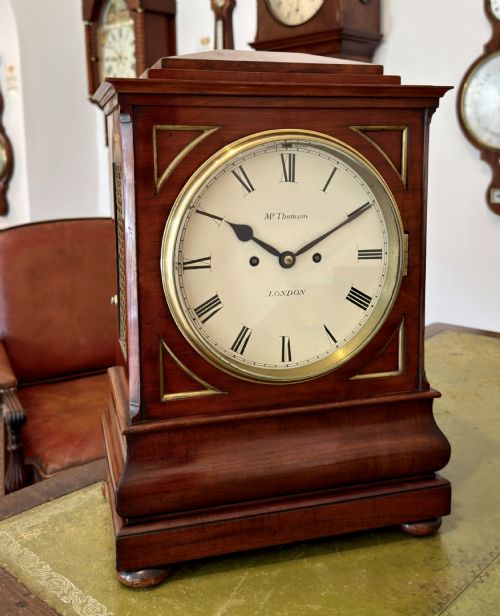
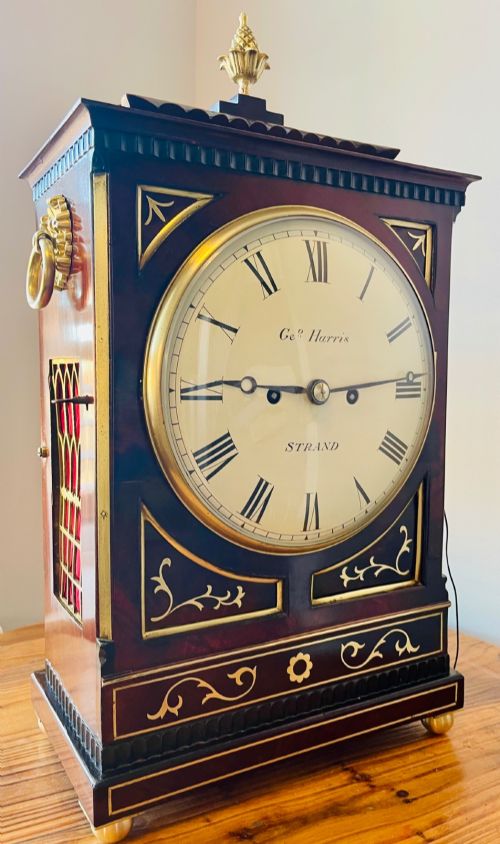
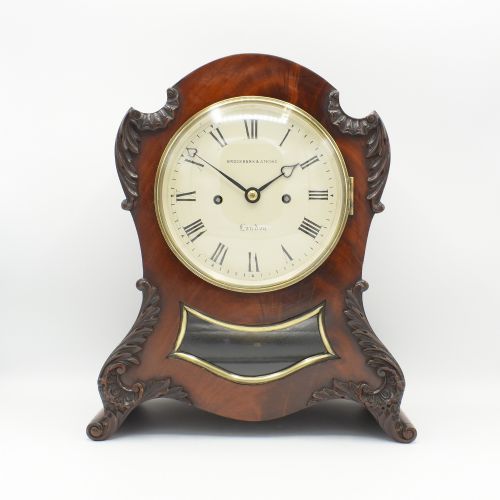
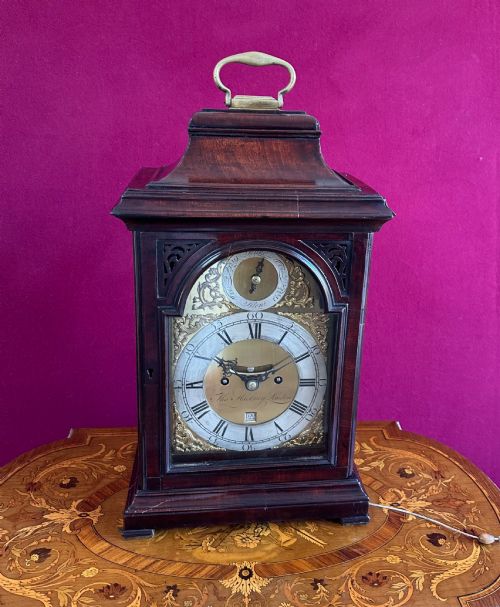
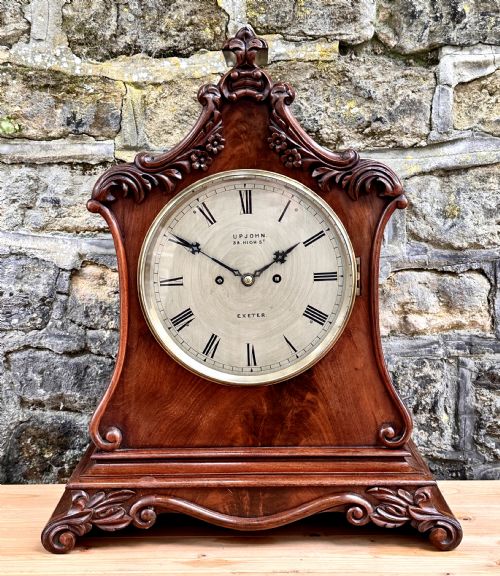

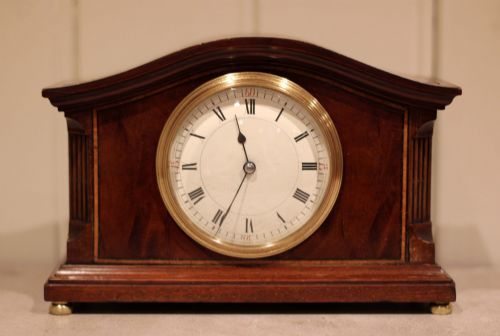
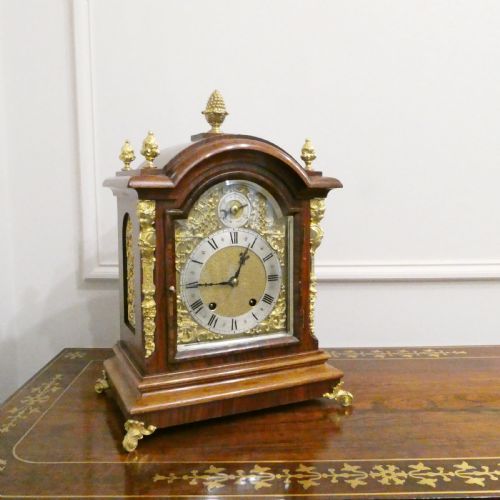


Dark Mahogany Bracket Clock
A dark mahogany bracket clock brings precise mechanical timekeeping and rich cabinetwork into a room.
Dark Mahogany Bracket Clock
When you search for a dark mahogany bracket clock, you examine portable domestic timepieces housed in substantial wooden cases. These objects span periods from the eighteenth century through the Edwardian era, taking the form of mantel clocks, library clocks, and table clocks.
The pieces on this page appear in various styles including Regency, Victorian, and Georgian. They frequently utilise traditional case silhouettes such as bell-top, balloon, and pagoda designs.
Quality Variations
The calibre of the movement distinguishes exceptional examples from standard production pieces. Engraved backplates, complex striking systems, and signed dial work by notable makers elevate an item's standing.
Cabinet execution dictates visual success. Finely figured timber grain, crisp carved mouldings, and original brass feet or handles reflect superior workshop standards.
Some timepieces keep the time with an alarm or chime on a bell, ready to rouse a household from across the room.
Thomson of London·Brockbanks and Atkins·Barwise London·Bush of London·Schneckenburger·Mappin and Webb·Walker·W and H·Barrett London·Junghans·Thomas Connold of Alysham·Winterhalder and Hofmeier·Joseph Jump of London·Budgen Croydon·John Taylor London
The Dark Mahogany Bracket Clock Glossary
- Fusee
- A conical pulley connected to the mainspring by a chain or cord, designed to equalise the force of the spring as it unwinds. This mechanism improves the timekeeping accuracy of the clock.
- Verge escapement
- An early type of escapement mechanism utilising a crown wheel and a rod with pallets. It governs the release of the gear train.
- Silvered metal
- A brass or copper dial plate treated with a silver compound to produce a pale, matte metallic finish. Graduations and maker signatures are typically engraved through this layer.
- Ting tang
- A striking train configuration using two bells of different pitches to sound the quarters. It strikes one bell for the first quarter and two for the second.
- Bell-top
- A case silhouette featuring a curved, stepped upper section resembling the shape of a handbell. This form is common in eighteenth and nineteenth-century English examples.
Dark Mahogany Bracket Clock: Frequently Asked Questions
What is a bracket clock?
A bracket clock is a portable timepiece originally designed to sit on a wall bracket or a furniture surface. Over time, the term came to describe any large portable table or mantel clock housed in a wooden case.
These pieces were constructed to be moved between rooms rather than fixed in one location. Their robust movements and handles facilitated this portability.
How do fusee movements work?
A fusee movement uses a conical pulley connected to the mainspring barrel via a fine chain. As the spring unwinds and loses tension, the chain pulls on a wider part of the cone to maintain even power.
This ingenious mechanical arrangement ensures consistent force reaches the escapement from a fully wound spring down to the final hours before winding.
How do I date a mahogany clock?
Dating relies on stylistic clues, cabinet proportions, and signature details on the dial or movement backplate. Georgian examples display different architectural motifs compared to Victorian or Edwardian pieces.
Makers' records and hallmark dates on brass components also provide precise chronological markers. The integration of specific escapement types helps narrow the manufacturing period.