

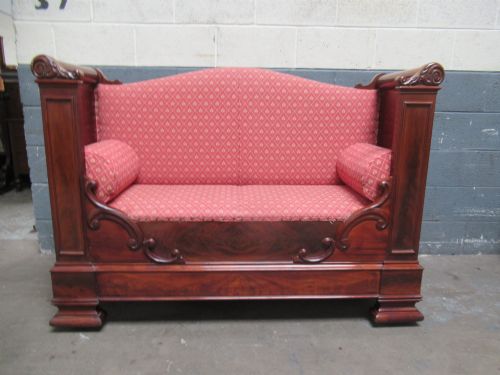


Regency Mahogany Window Seat
A regency mahogany window seat brings refined architectural seating to a light-filled bay or a generous hallway.
Regency Mahogany Window Seat
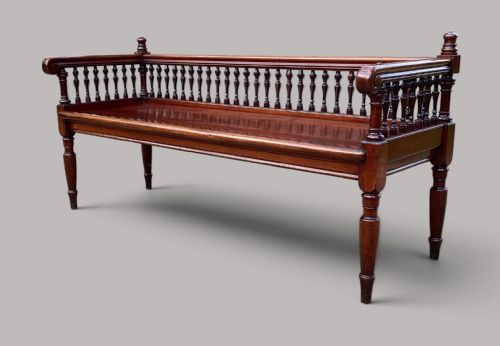
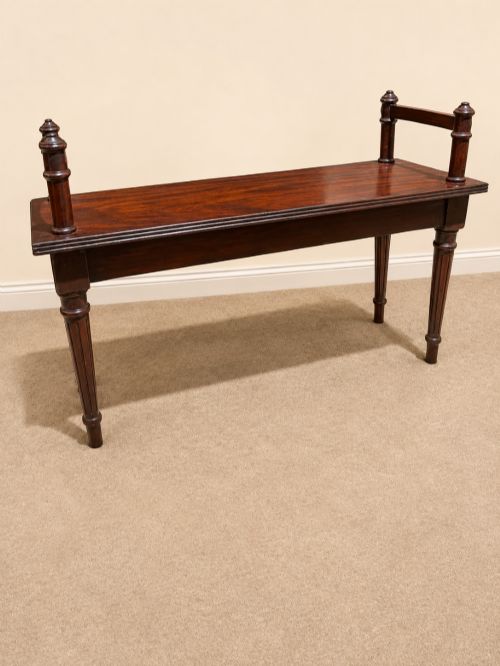
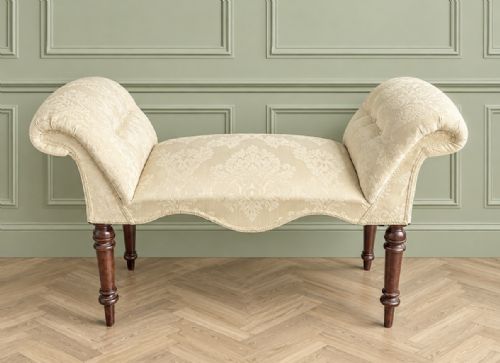
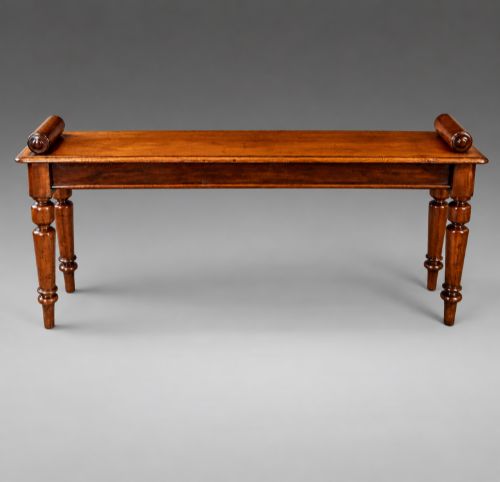
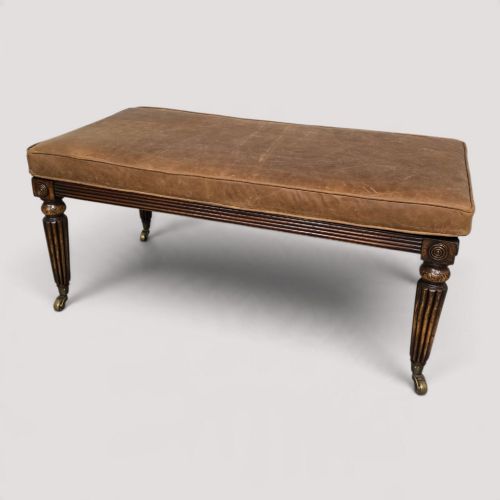
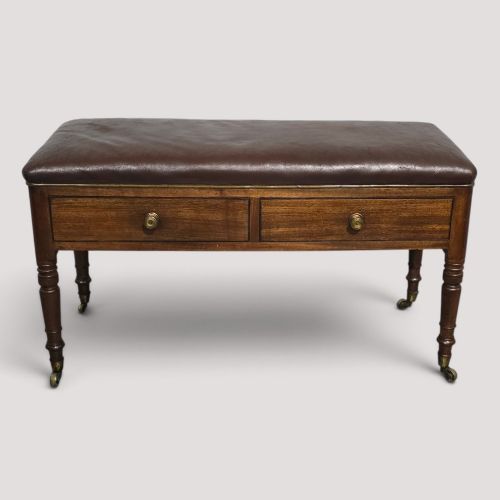
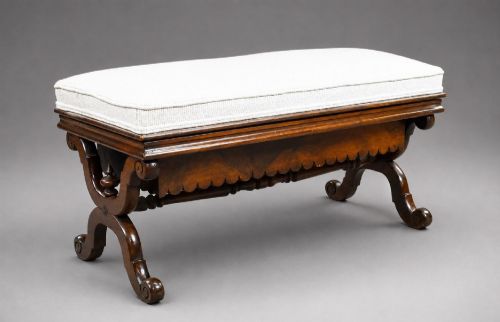
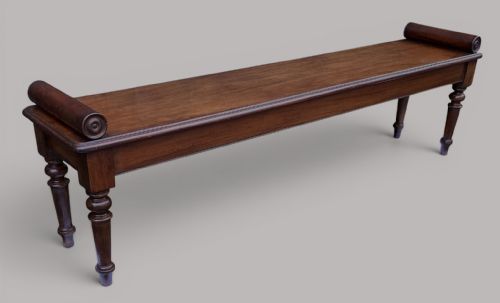
A regency mahogany window seat is a long, low seating form designed specifically for placement beneath a window or along a narrow hall. The pieces seen here span the Regency period itself as well as later revivals, William IV productions, and Georgian precedents.
The silhouettes vary from simple rectangular benches and dressing stools to X-framed supports, cabriole legs, and extended double window sofas. Many pieces double as hall benches, offering sturdy timber frames built for occasional traffic.
Origins stretch across English workshops, including pieces attributed to specific models like St Giles, alongside 19th-century Irish interpretations. Buyers encounter everything from compact single-person stools to six-foot long benches designed for substantial rooms.
Proportion, Timber Depth, and Carving Rigour
The distinction between ordinary and superior examples rests upon timber selection and the crispness of the joinery. Figured flame veneer and dense solid mahogany show deeper visual resonance than plain stock timber.
Proportion and carving depth dictate the success of the design, where sharp reeding on fluted legs or carefully balanced X-frames separate standard production from exceptional cabinet work.
Regency Mahogany Window Seat Retail Price Guide 2026
Typical asking prices for regency mahogany window seat among the pieces listed under this phrase on Sellingantiques today, from the lower quarter to the upper quarter. They describe what is for sale here now, not the wider market.
Listings combine solid mahogany, flame mahogany veneer, brass details, cane panels, and damask upholstery across nineteenth-century and revival periods.
The Regency Mahogany Window Seat Glossary
- Flame Mahogany Veneer
- A sliced timber sheet displaying a distinctive tongue-like flame figure. Makers applied this to prominent surfaces to create dramatic visual movement.
- X Frame
- A structural support formed by two intersecting diagonal members. This configuration provides robust load-bearing strength while maintaining an open silhouette.
- Reeding
- Parallel convex mouldings carved directly into wooden legs or rails. This decorative technique creates texture through linear shadow play.
- Damask
- A reversible patterned fabric traditionally woven on a jacquard loom. It provides a formal, textured surface frequently selected for period upholstery.
- Cane
- Woven rattan strips utilised to form porous seat panels. This material lightens the visual weight of the timber frame.
Regency Mahogany Window Seat: Frequently Asked Questions
Where do you put a window seat?
These long benches fit naturally beneath large sash windows, providing a low perch that avoids blocking natural light.
They also function effectively in hallways and at the foot of a bed as dressing stools.
How do I identify a Regency piece?
Look for dense mahogany timbers, classical restraint in the carving, and architectural motifs such as fluted legs or scroll ends.
Pieces from this era often balance classical antiquity with heavy, solid proportions.
Are these seats comfortable for sitting?
Upholstered variants provide substantial padding through traditional webbing and stuffing, making them suitable for prolonged seating.
Wooden or caned variants offer firm support and are typically paired with loose squab cushions.
What is the difference between a window seat and a hall bench?
Window seats often feature scrolled ends or arms designed to frame a view, whereas hall benches usually maintain open, armless profiles.
In practice, makers and contemporary listings frequently use both terms interchangeably.