



Regency Mahogany Press
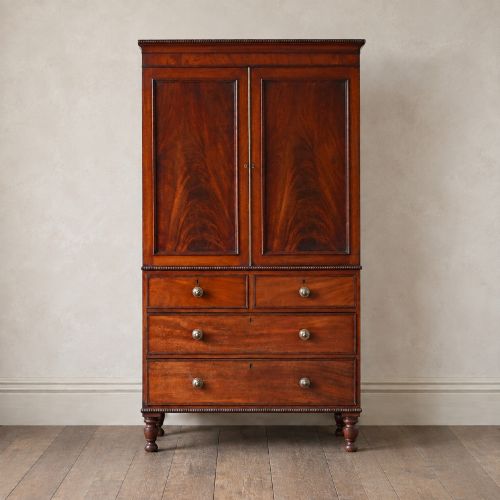
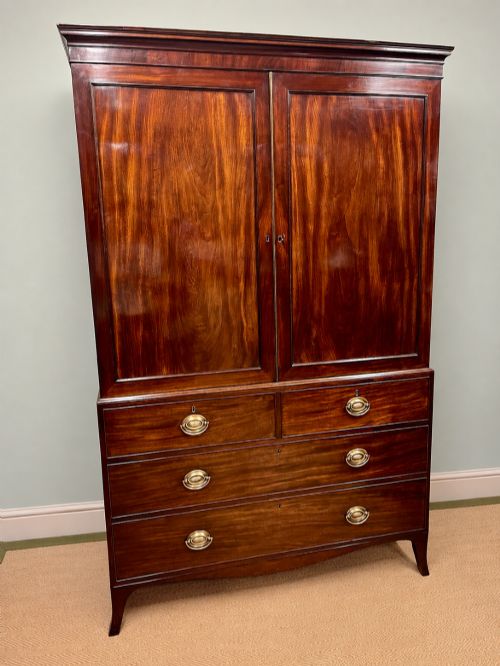
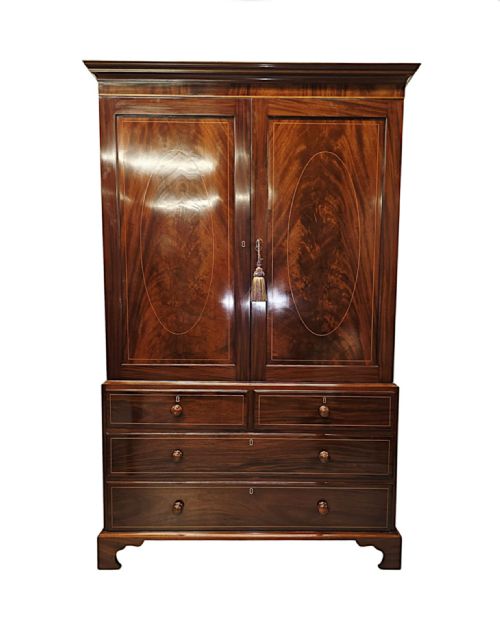
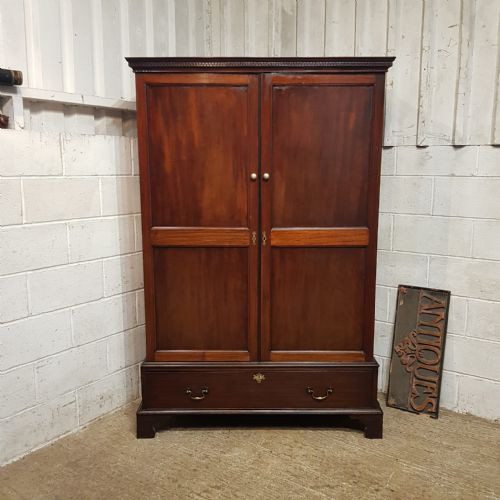
A regency mahogany press is a substantial piece of case furniture designed to store linens and clothes, combining architectural presence with dense tropical timber.

Regency Mahogany Press
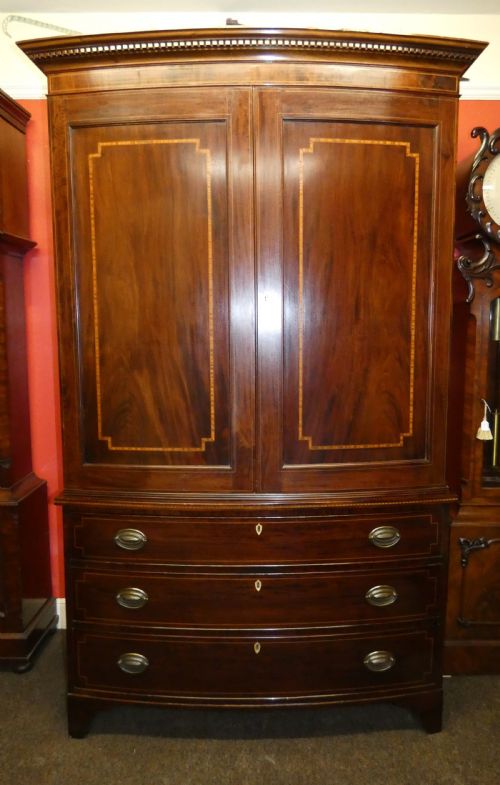
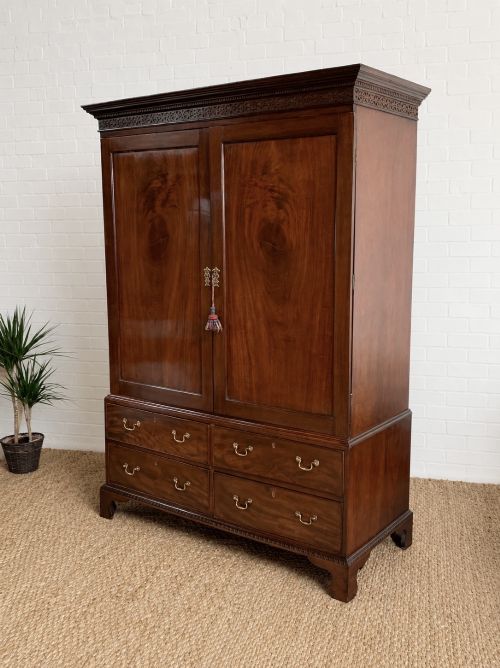
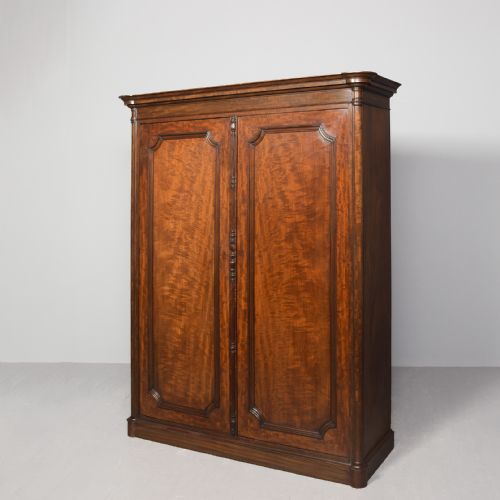
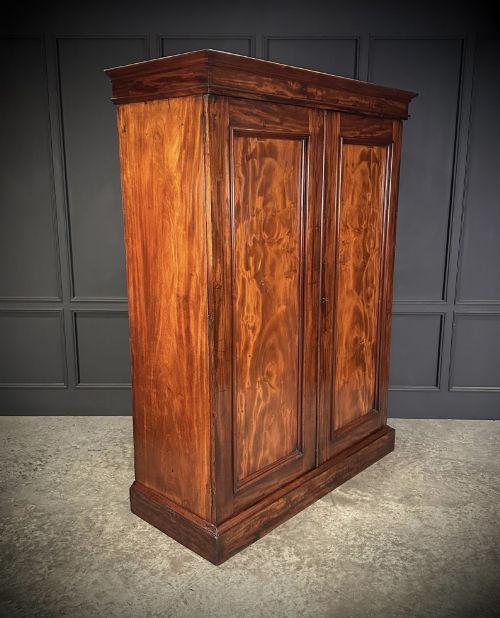
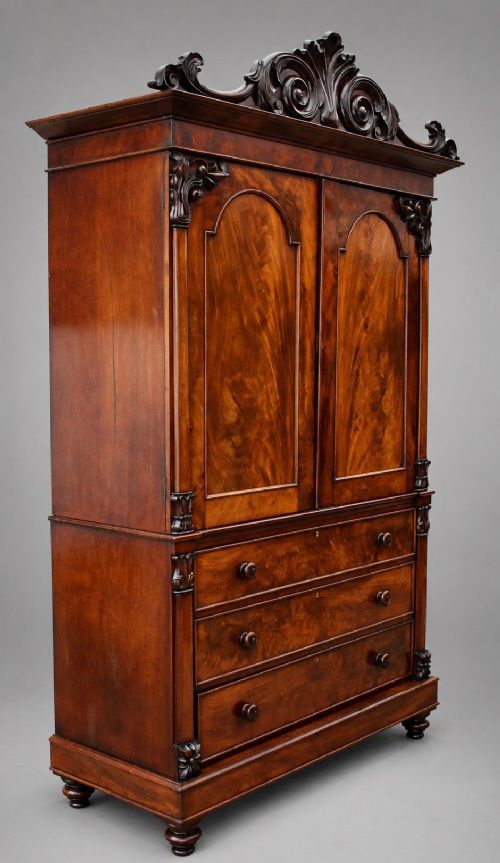
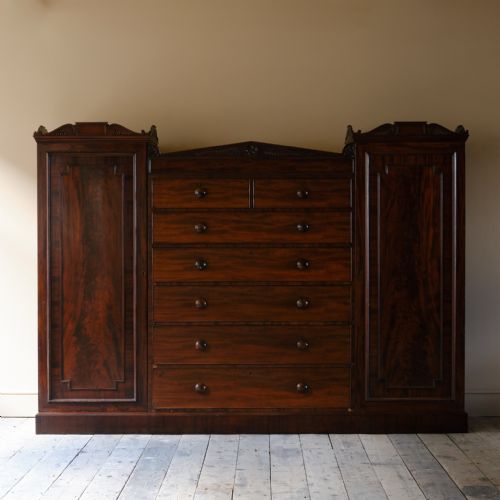
When you search for a regency mahogany press, you encounter large storage furniture originating primarily from the early nineteenth century. These pieces combine an upper section of sliding trays or shelves with a lower base of drawers, though variants include wardrobes, compactums, and bookcases.
The versions most common on this page date from the Regency and William IV periods, constructed with solid carcases and veneered drawer fronts. They stand as prominent examples of domestic case furniture designed for bedrooms and dressing rooms.
Materials and Construction
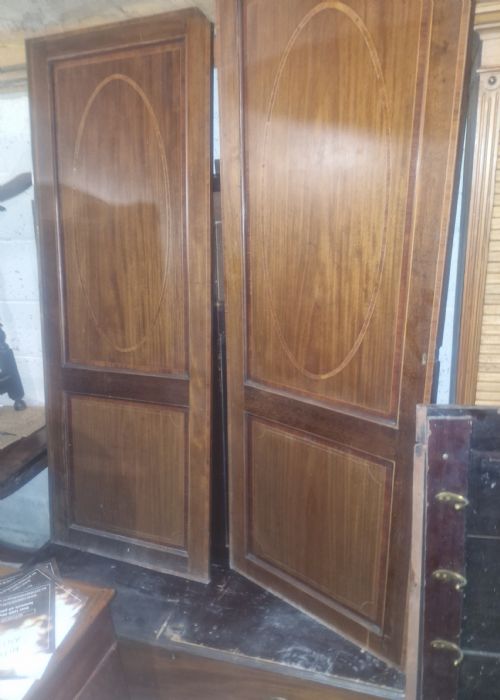
Cabinet makers utilised dense imported mahogany and flame mahogany veneer applied over secondary woods such as pine. These surfaces were frequently embellished with contrasting stringing in boxwood or satinwood to delineate panels and drawer edges.
Structural hardware relied upon cast brass handles, escutcheons, and hinges. Internal sliding trays, often termed slides, were assembled using traditional dovetail joints to withstand regular use.
Listings span periods from the eighteenth century through to the Edwardian era, incorporating mahogany, satinwood, brass, and glass.
Factors of Quality
The hierarchy of quality depends heavily on the selection of timber grain and the precision of the cabinet work. Flame and curl mahogany veneers require exceptional skill to match symmetrically across large double doors and drawer fronts.
Proportion and scale also dictate worth, as smaller dwarf presses or breakfront library examples demand greater joinery refinement than standard tall cupboards. Original brass mounts and untouched internal sliding trays preserve the integrity of the piece.
S & H Jewell·Gillows
The Regency Mahogany Press Glossary
- Press
- A piece of case furniture used originally for storing folded linen or clothes on internal sliding shelves rather than hanging space.
- Flame mahogany
- A veneer cut from the fork of the mahogany tree where the grain twists, producing a distinctive flame-like pattern.
- Compactum
- A multi-functional wardrobe incorporating a combination of drawers, hanging space, and sliding trays within a single unit.
- Stringing
- A narrow inlay of contrasting wood, such as boxwood or satinwood, set flush into the surface to form decorative borders.
- Dovetail
- A traditional wood joint formed by interlocking wedge-shaped fingers, used extensively in drawer construction.
Regency Mahogany Press: Frequently Asked Questions
How do I identify a Regency period piece?
Regency furniture dates roughly from the early nineteenth century, distinguished by classical proportions, architectural cornices, and restrained ornamentation. Cabinet makers of this era favoured figured mahogany veneers and minimal brass mounts.
Later Victorian interpretations often display heavier proportions and different interior fittings compared to these earlier Regency examples.
Why are some examples called dwarf presses?
Dwarf presses are shorter versions designed to fit beneath windows or within smaller dressing rooms without dominating the wall space. They retain the standard two-tier construction of upper doors and a lower drawer base.
Despite their reduced height, these pieces maintain the same timber quality and internal arrangement as their taller counterparts.
How should I care for mahogany veneer?
Mahogany furniture benefits from stable indoor humidity away from direct sunlight, which can fade the rich reddish-brown tones of the timber. Regular dusting with a dry lint-free cloth preserves the polished finish.
Avoid placing damp items directly onto the wood or sliding surfaces to protect the historical polish and underlying veneer.