


Regency Lady Miniature Art
Regency lady miniature art captures delicate female likenesses from the late eighteenth and early nineteenth centuries in intimate painted and silhouette formats.
Regency Lady Miniature Art
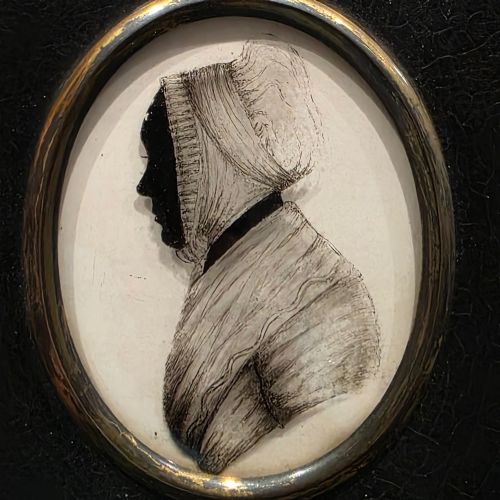
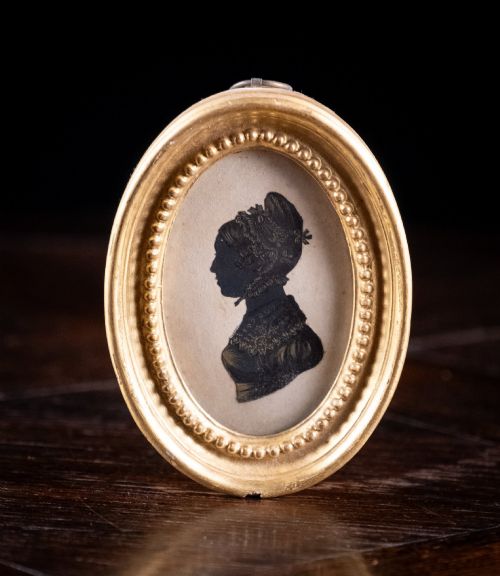
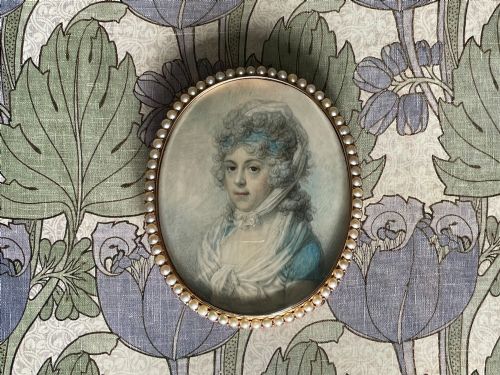
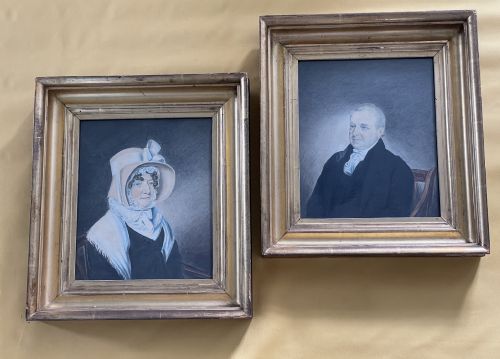
Regency lady miniature art consists of small-scale portraits depicting female subjects executed primarily during the Georgian, Regency, and early Victorian periods. These intimate works encompass delicate painted likenesses on paper, card, and ivory alongside precision silhouettes.
Collectors frequently encounter watercolour paintings, pencil studies with tinting, and reverse-painted glass silhouettes housed within compact frames. The selection on this page centres firmly on British portraiture from the late eighteenth century through the eighteen-thirties.
The prevailing format is the handheld or wall-hung miniature, designed to preserve the likeness of a relative, notable figure, or character of the era. Works range from naive silhouette profiles to finely detailed studies by named professional limners.
Materials and technique
Artists executed these small works using watercolour, gouache, pencil, and pastel on delicate surfaces including paper, card, and thin sheets of ivory. Silhouette variants often employed reverse painting on glass or cut paper mounted against contrasting grounds.
Frames play an integral structural role, utilising ebonised wood, rosewood, brass, and gilt metal, frequently incorporating gilded wood mounts to protect the fragile imagery within. The combination of water-based pigments and sealed glass enclosures ensured the longevity of these delicate colour palettes.
Materials documented across the selection include ebonised wood, rosewood, brass, gilt metal, and paper.
What varies in quality
The distinction between standard works and superior examples rests upon the precision of the draughtsmanship and the subtlety of the facial modelling. Master practitioners captured lifelike expression and intricate details such as ringlets, lace, and textile textures within a very restricted scale.
Framing integrity and the retention of original mounting materials heavily influence the standing of a piece. Works retaining their designated ebonised wood or gilded brass housings provide a more complete historical context than those subjected to later re-framing.
Richard Cosway·Nicolas Freese·George Atkinson·George Hargreaves·Archibald Skirving·Thomas Woolnoth·William Grimaldi·Henry Jacob Burch·Isaac Wane Slater·Jeremiah Steele·George Perfect Harding
The Regency Lady Miniature Art Glossary
- Silhouette
- A solid dark profile likeness, typically cut from paper or painted directly onto card, glass, or plaster.
- Miniature portrait
- A small-scale painting on ivory, vellum, or card, executed with fine brushes and diluted watercolours or gouache.
- Reverse painting on glass
- A technique where the artist paints directly onto the rear side of a glass panel, viewed through the front.
- Ebonised wood
- Timber treated with a dark stain or finish to imitate expensive ebony, commonly used for nineteenth-century frames.
- Giltwood
- Wood that has been coated with a thin layer of gold leaf or gilt gesso, frequently applied to circular or oval picture frames.
Regency Lady Miniature Art: Frequently Asked Questions
How were miniature portraits displayed?
These small works were generally hung in intimate groupings upon walls or kept inside protective travel cases and antechambers.
Owners often wore them as personal mementoes or stored them securely in velvet-lined boxes when not actively viewed.
Why are many miniatures painted on ivory?
Ivory provided a smooth, slightly luminous surface that lent a natural glow to human skin tones when painted with thin watercolours.
Artists capitalized on this translucent quality to create realistic depth in the complexions of female sitters.
How do I identify a Regency period frame?
Regency frames often feature distinct convex mouldings, ebonised timber finishes, or cast brass ornamentation tailored to oval formats.
They are constructed to house small paper or ivory panels securely without standard modern matting boards.