
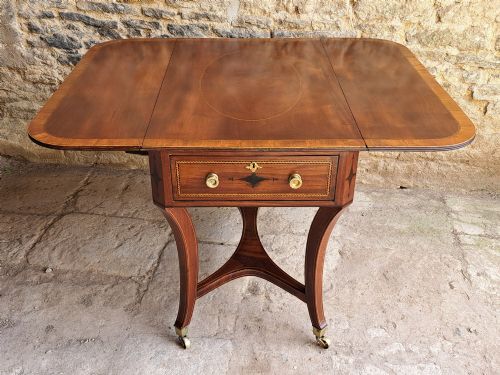
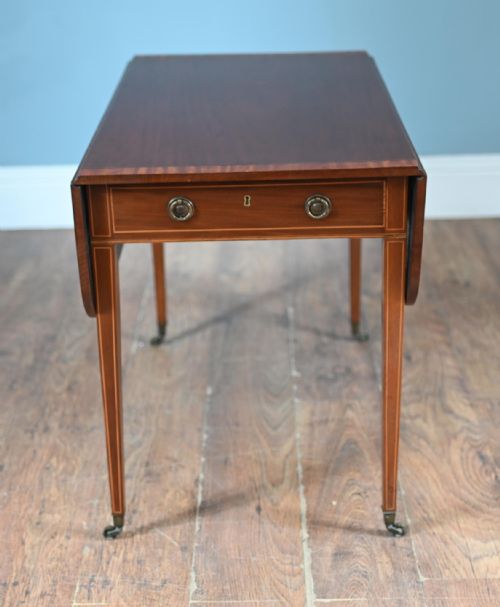


Regency Inlaid Sofa Table
When you search for a regency inlaid sofa table, you enter a world of fine timbers, drop leaves and delicate brass work designed for the centre of the room.

Regency Inlaid Sofa Table
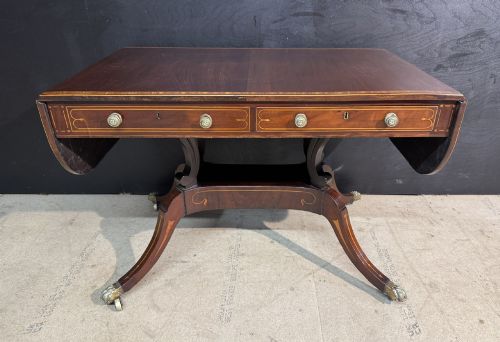
A regency inlaid sofa table stands as a versatile centrepiece, traditionally positioned in front of a sofa with its characteristic drop flaps raised to extend the surface.
The pieces appearing most frequently on this page date from the Regency and Georgian periods, alongside later Victorian and revival interpretations built in the same form.
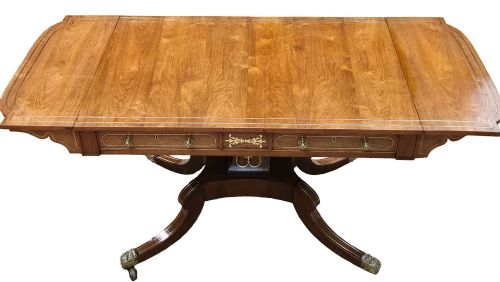
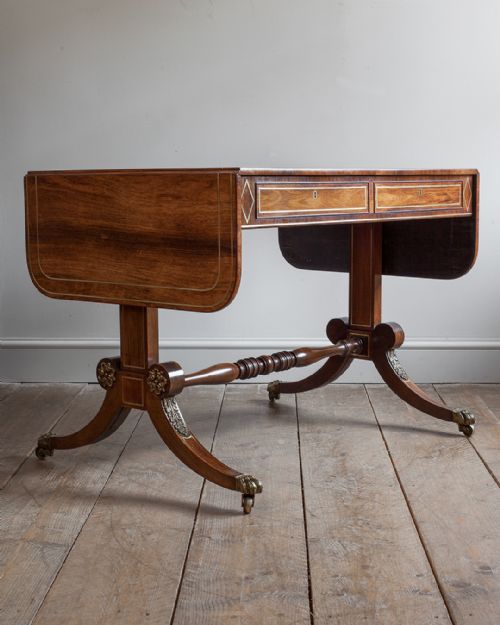
Cabinet makers constructed these tables with twin pedestal ends or trestle supports, often featuring two small drawers fitted into the frieze for storing writing materials or sewing gear.
Materials and Construction
Workshops relied heavily on rich primary timbers such as figured mahogany and dark rosewood, contrasting them with lighter woods for decorative effect.
Inlay work incorporated satinwood, boxwood, ebony and burr yew, frequently laid in geometric bands or delicate stringing lines around the table edges.
Craftsmen embedded finely engraved brass stringing and mounts into the rosewood surfaces, securing the metalwork flush with the polished wood.
Listings feature mahogany, rosewood and satinwood alongside brass and leather details across various periods.
Judging Quality and Execution
The standard of a regency inlaid sofa table rests upon the precision of the timber matching and the crispness of the contrasting inlay work.
Superior examples exhibit thoughtful proportion in the turned stretchers and underframes, alongside well-figured grain selected specifically for the table top and drop leaves.
Gillows·Edwards and Roberts
The Regency Inlaid Sofa Table Glossary
- Crossbanding
- A border of veneer laid with the grain running perpendicular to the edge of the table top, creating a neat framing effect.
- Drop Flap
- A hinged leaf attached to either end of the table that can be raised and supported on swinging brackets.
- Frieze
- The horizontal band beneath the table top that typically houses the small drawers.
- Stringing
- Thin lines of contrasting wood or brass inlaid into channels cut into the surface of the primary timber.
- Freestanding
- Finished on all four sides so the table can sit in the middle of a room rather than against a wall.
Regency Inlaid Sofa Table: Frequently Asked Questions
Where were sofa tables placed?
These tables stood traditionally in the middle of a drawing room, positioned directly behind a sofa or settee for easy access during tea or correspondence.
Their finished backs allowed them to occupy open floor space rather than being pushed against a wall.
How do I spot a later copy?
Examining the timber movement, construction joints and secondary woods helps determine whether a piece dates to the Regency period or a later revival.
Original tables show hand-cut dovetails in the drawer linings and age-related patina across the rosewood or mahogany surfaces.
Can I use these tables for dining?
While shorter meals or tea service function well on these surfaces, the drop leaves are balanced on wooden brackets rather than heavy drop-down legs.
Daily heavy use requires care to protect the delicate brass inlay and veneered edges from impact.
What maintenance do the brass mounts need?
Gentle dusting with a soft, dry cloth preserves both the brass stringing and the surrounding polished timber without disturbing the patina.
Harsh metal cleaners should remain far away from the antique wood veneer surrounding the inlay.