






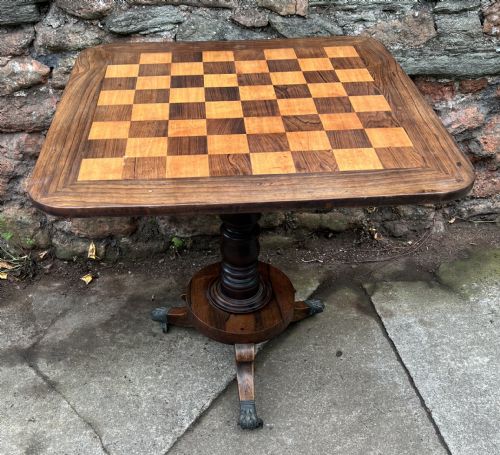
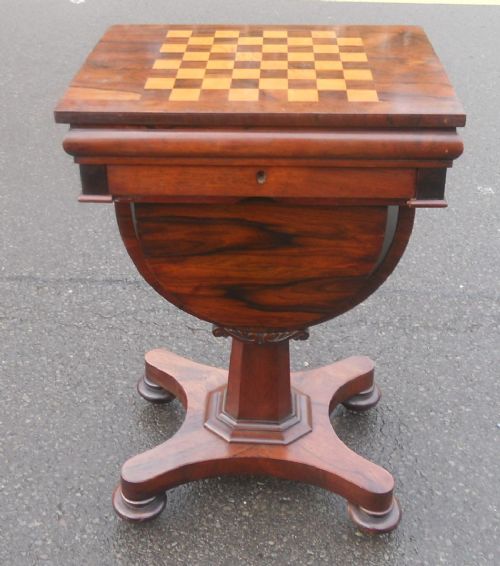


Regency Inlaid Chess Table
These regency inlaid chess table pieces are sophisticated examples of early nineteenth-century craftsmanship designed for leisure and display.
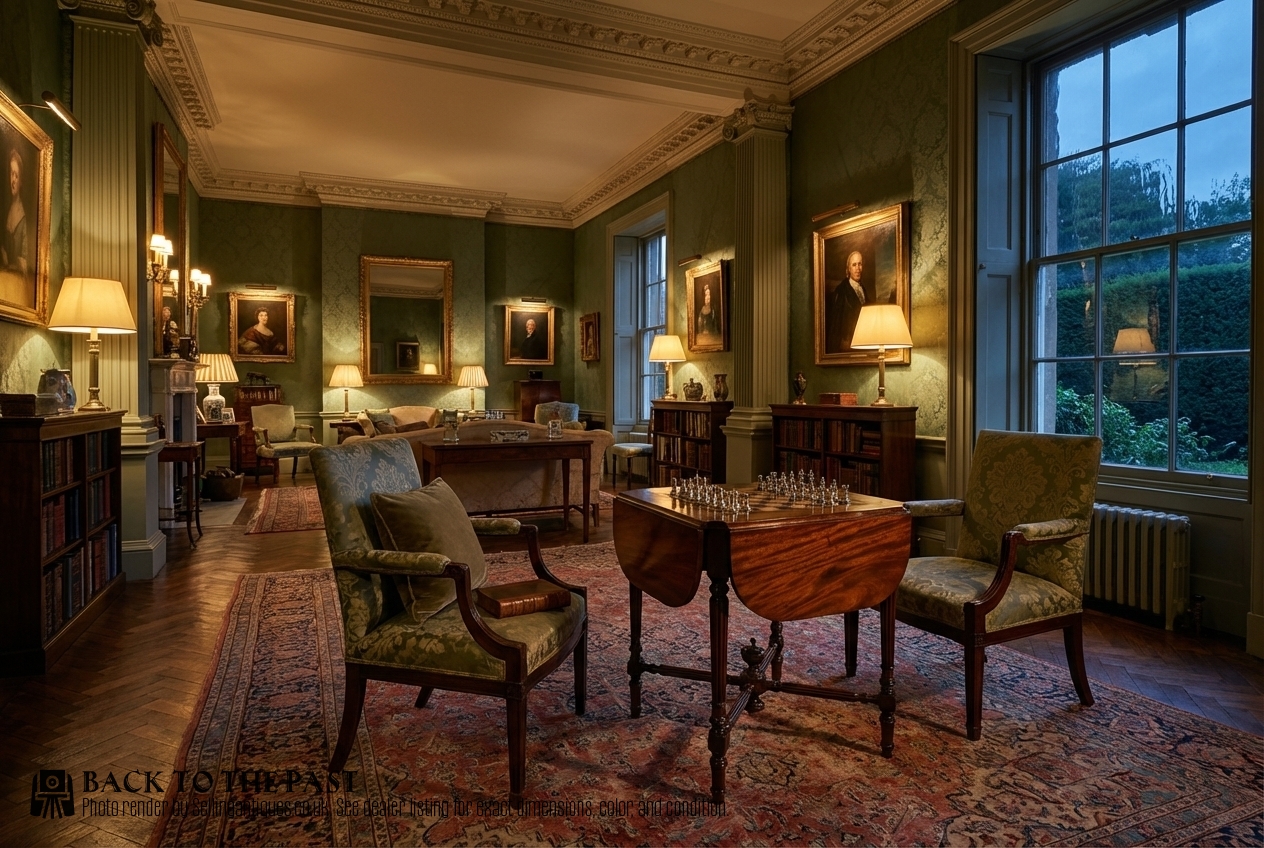
Regency Inlaid Chess Table
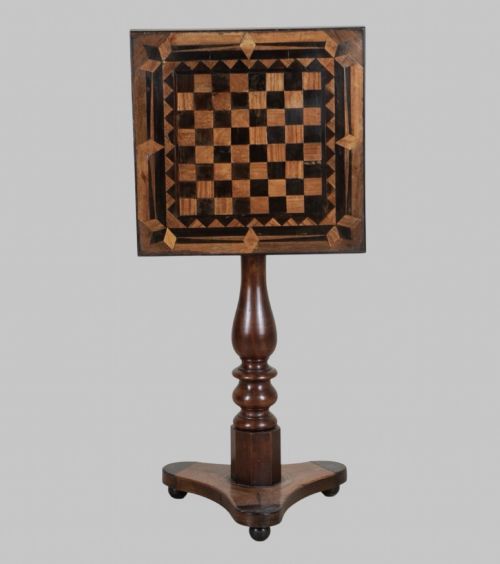
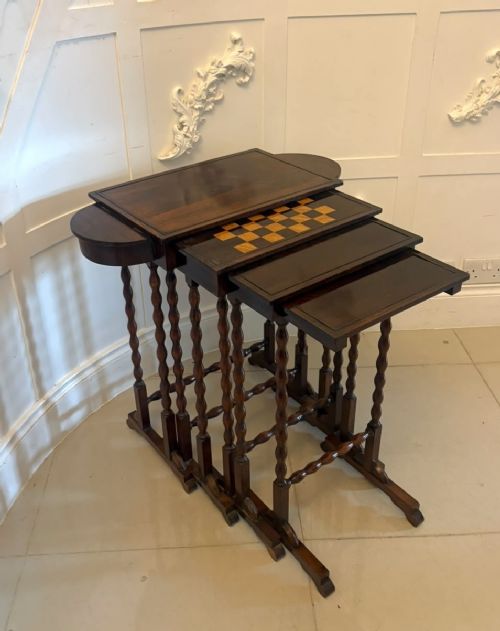
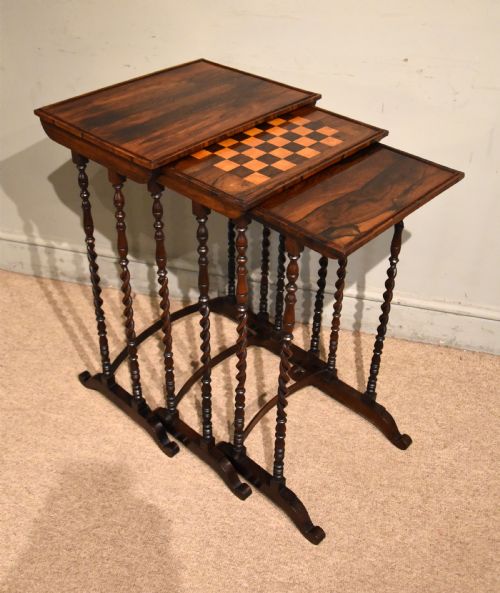
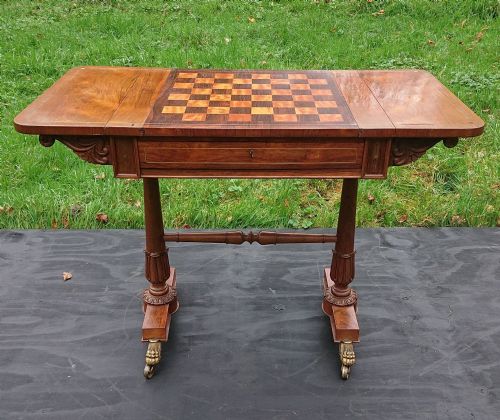
A regency inlaid chess table brings together formal elegance and practical utility from the Georgian and Regency periods. You will encounter various forms on this page, including dedicated games tables, combination worktables, and nests of tables featuring integrated or removable chess boards.
The objects span the nineteenth century, drawing on Regency, William IV, and Georgian styles. Makers and workshops of the era produced these pieces in forms such as octagonal tripod tables, rectangular games tables, and quartetto nests.
Materials and Construction
Cabinetmakers utilised rich dark timbers like rosewood and mahogany for the primary carcases, often incorporating contrasting light and dark elements such as boxwood, ebony, and satinwood for the inlaid chequer-boards. Some examples incorporate specimen woods, marble tops, and brass mountings to elevate the decorative scheme.
Construction techniques balanced stability with refined aesthetics, pairing solid framing with veneered surfaces for the table tops. Specialised worktables integrated textile components alongside fitted compartments for gaming pieces and sewing equipment.
Listings feature rosewood, mahogany, satinwood, boxwood, ebony, and brass across Regency, William IV, and Georgian styles.
Judging Quality
Quality in a regency inlaid chess table rests upon the precision of the timber selection and the accuracy of the geometric inlay. Sharply contrasted squares in boxwood and ebony demonstrate superior attention to detail by the cabinetmaker.
The sophistication of the overall form distinguishes the pieces, from simple occasional tables to complex combination worktables with removable boards and nests. Integrated brass mounts and figured rosewood grain further elevate the standing of an individual piece.
Gillows
The Regency Inlaid Chess Table Glossary
- Regency
- A British design period spanning the early nineteenth century defined by classical restraint and rich materials. It follows the Georgian era and encompasses styles up to the reign of William IV.
- Quartetto
- A matched nest of four tables designed to slide neatly beneath one another. They frequently incorporate gaming tops or work surfaces in Regency iterations.
- Chequer-board
- A squared grid pattern utilised for games such as chess and draughts. In these tables, it is formed through precise wood inlay.
- Specimen wood
- Timber selected for its unique grain, colour, or exotic origin, often arranged in decorative geometric patterns on table tops.
Regency Inlaid Chess Table: Frequently Asked Questions
What is a regency inlaid chess table?
A regency inlaid chess table is a nineteenth-century furniture piece designed for playing board games while serving as a decorative table in a principal room. They often feature contrasting wood inlays forming the playing grid.
These tables frequently combine multiple functions, acting as writing desks, worktables, or occasional tables when the board is not in active use.
How were these tables used originally?
In period homes, they provided a dedicated surface for evening entertainment, specifically games like chess and backgammon. Many examples included drawers or compartments to store gaming pieces and accessories.
Combination pieces also accommodated sewing and needlework, reflecting the versatile nature of domestic furniture during the Regency and William IV eras.
How do I identify a Regency period table?
Regency tables typically date from the early nineteenth century and display classical influences, architectural proportions, and refined details like brass mounts or tripod bases. The primary timbers are frequently rosewood or mahogany.
Construction methods, such as hand-cut dovetails and traditional joinery, help confirm the period alongside stylistic markers shared with Georgian and William IV designs.
How should I care for a rosewood chess table?
Keep the table away from direct sunlight and steady heat sources to protect the delicate rosewood veneers and inlaid boxwood or ebony squares. Sudden environmental changes can cause timber to split or veneer to lift.
Dust the surface gently with a dry, soft cloth and avoid applying modern chemical polishes that might damage the historical finish of the wood.