



Regency Imari Style Ceramics
Regency imari style ceramics bring rich Eastern-inspired palettes to English porcelain and ironstone.
Regency Imari Style Ceramics
Regency imari style ceramics encompass tableware, serving vessels, and decorative objects produced during the Georgian and Regency periods. These pieces bridge traditional English forms with vibrant Japanese-influenced colour schemes derived from original Imari wares.
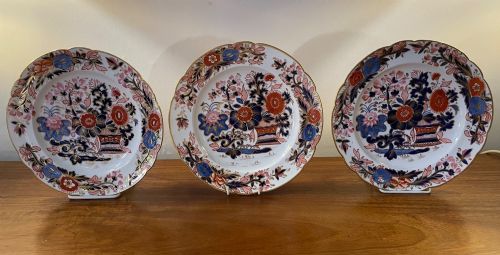
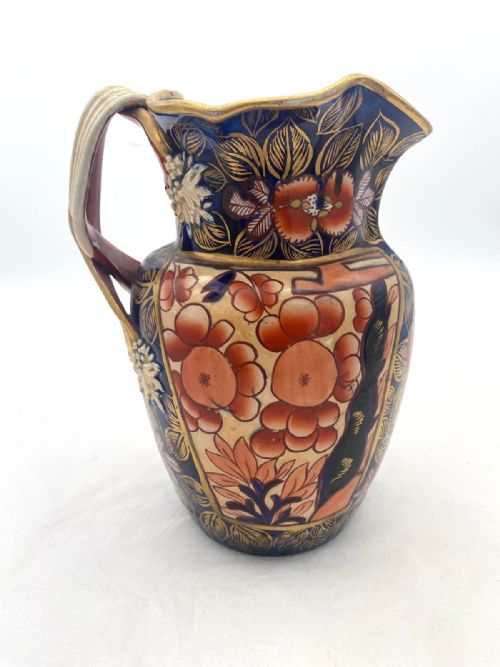
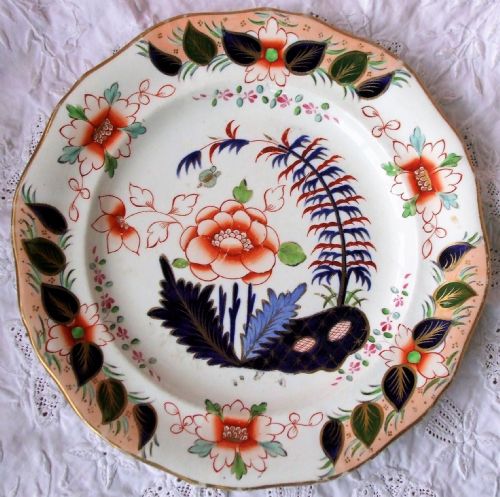
The most common iterations on this page take the form of ironstone plates, dishes, and tureens alongside porcelain dessert services and tea wares. Makers apply cobalt blue underglazes paired with iron red enamels and supplementary gilding to create striking visual contrast.
Objects originate primarily from the early nineteenth century, spanning roughly from eighteen hundred to eighteen thirty. Pieces reflect overlapping stylistic categories including Chinoiserie and English Regency design.
Production Methods and Materials
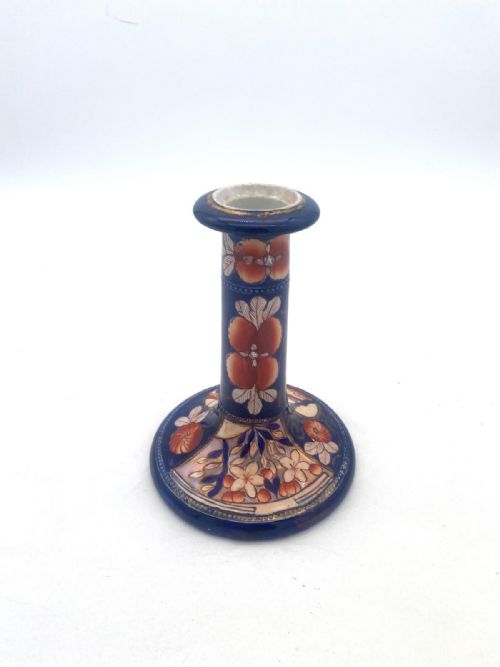
Manufacturers utilise dense ironstone ceramic and refined porcelain bodies as the structural base for these items. Potters shape utilitarian and decorative objects such as candlesticks, ice pails, and inkstands to withstand daily use while maintaining crisp decorative contours.
Decoration relies on hand-applied enamel colours and gold leaf applied over or under the glaze. Cobalt blue pigments provide deep structural tones while iron red and gilt highlights complete the characteristic palette.
Early nineteenth-century makers named one recurring decorative motif the crazy cow.
Assessing Quality and Execution
Quality rests in the crispness of the painted motifs and the precision of the gilding. Superior examples display sharply defined patterns such as schoolhouse or dragon designs without blurring or pigment running.
The weight and purity of the ceramic body also differentiate production standards. Dense ironstone and fine porcelain demonstrate superior manufacturing skill compared to heavier, coarser earthenware bodies.
Masons Ironstone·Chamberlain Worcester·John Davenport·Flight Barr and Barr·Old Derby·Minton
The Regency Imari Style Ceramics Glossary
- Ironstone
- A dense, durable type of earthenware patented in the early nineteenth century. It resists chipping better than soft-paste porcelain while accepting enamel decoration readily.
- Imari palette
- A decorative colour scheme featuring cobalt blue, iron red, and gilt highlights. The style imitates imported Japanese export porcelain from the Edo period.
- Chinoiserie
- European artistic style reflecting Chinese and East Asian artistic traditions. It appears frequently on English ceramics through motifs like bamboo, fences, and exotic birds.
- Gilt
- A thin layer of gold applied to the surface of ceramic pieces. It highlights rims, handles, and painted borders.
- Underglaze
- Pigment applied to a ceramic piece before the transparent glaze is fired. This protects the colour from wear during use.
Regency Imari Style Ceramics: Frequently Asked Questions
What is imari style ceramic?
Imari style ceramics are English tableware pieces decorated with the distinctive red, blue, and gold colour palette originally developed in Japan. Makers applied these vibrant combinations to ironstone and porcelain bodies.
These designs gained immense popularity during the Georgian and Regency periods. Potters adapted traditional Eastern motifs to fit contemporary European dining habits.
How do I date these ceramics?
Dating relies on identifying maker marks, ceramic bodies like ironstone or porcelain, and stylistic indicators such as Regency shapes. Most pieces date from the early nineteenth century.
Changes in pattern numbers and factory names help narrow the production window. Stylistic overlaps with Chinoiserie further confirm the manufacturing era.
Were these pieces used daily?
Many ironstone plates, tureens, and dishes served functional roles in nineteenth-century dining rooms. Durable ceramic bodies allowed them to withstand regular service.
Other items like ice pails and decorative vases remained primarily ornamental. Their survival reflects both utility and careful preservation.
What patterns are common?
Common patterns include schoolhouse, dragon in compartments, grasshopper, and Japan fence designs. These motifs draw heavily from Asian art.
Makers also produced armorial dessert plates and pictorial scenes featuring birds and bamboo. Each pattern utilises the signature cobalt and iron red palette.