

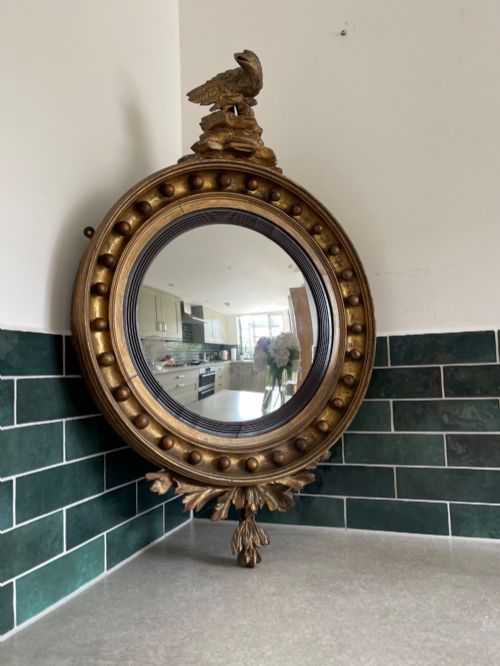


Regency Gilt Eagle
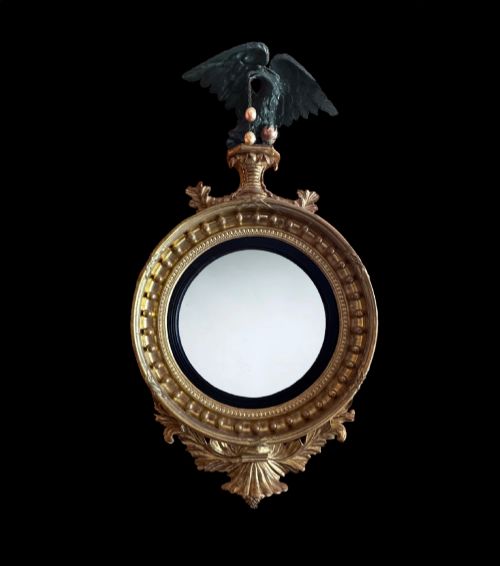
Regency gilt eagle pieces bring together bold circular convex glass and commanding carved birds, offering a strong focal point for any interior.
Regency Gilt Eagle
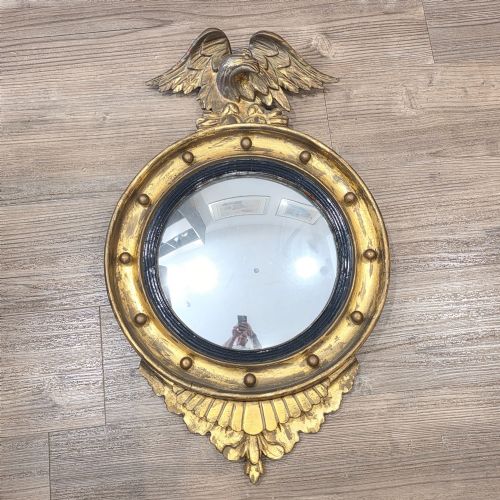
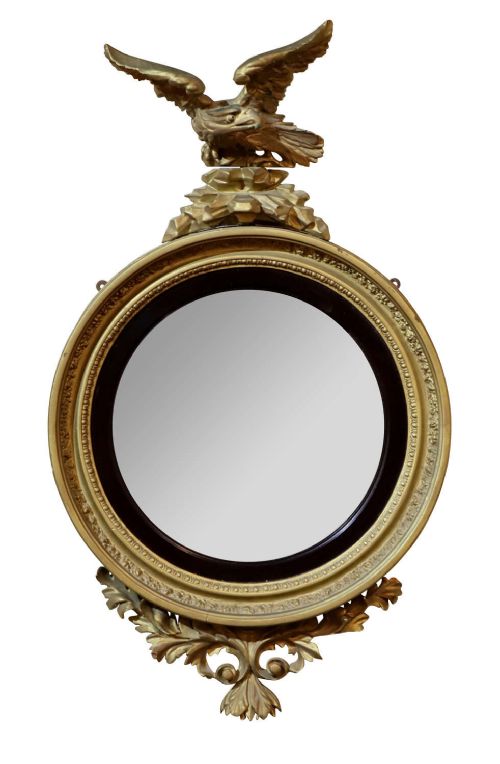
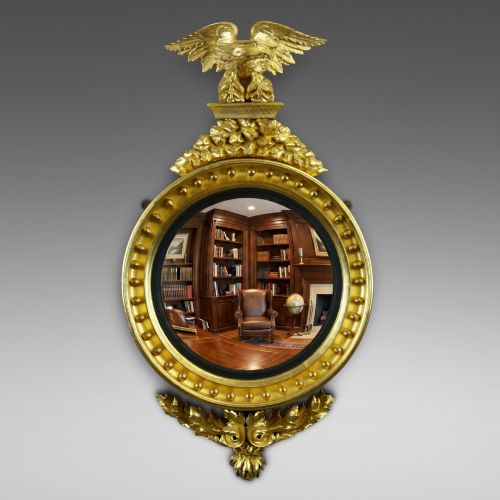
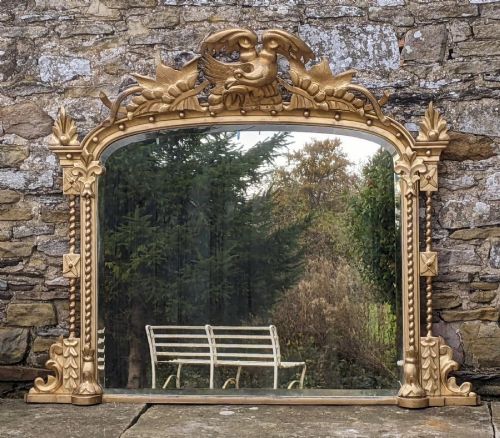
When searching for regency gilt eagle, a buyer encounters a distinct group of circular wall mirrors, girandoles and wall brackets created during the Regency, Georgian and Victorian periods, alongside later revivals. The form most commonly met on this page is the convex mirror, where a spherical glass plate sits within a gilded wooden frame beneath a prominent spread eagle surmount.
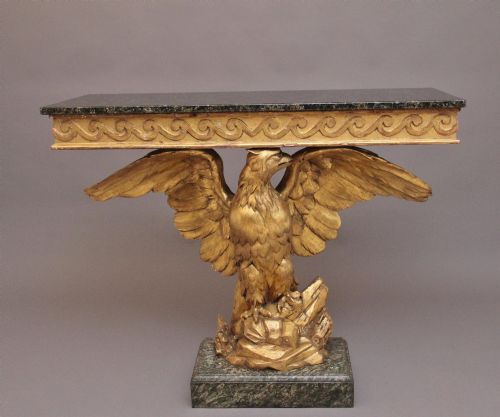
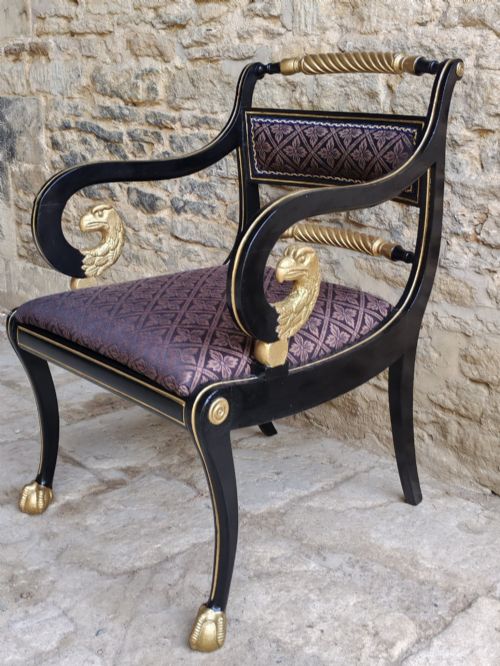
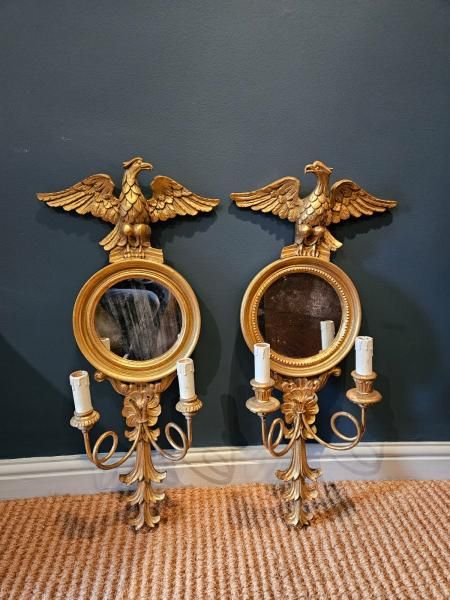
Beyond mirrors, the selection includes wall lights, sconces, console tables and decorative carved figures originating from the early nineteenth century and later. These objects draw heavily on Neoclassical and French Empire aesthetics, utilising rich surface gilding and classical motifs to project authority and elegance.
How they were made
Craftsmen shaped these items primarily from wood and gesso, building up intricate frames and crests before applying thin layers of gold leaf to achieve a brilliant metallic sheen. Ebonised wood and brass details frequently appear alongside the gilding to create sharp visual contrast.
The convex mirror glass itself required specialised blowing and silvering techniques to produce a curved reflective surface that gathered light from across the room. Carved wooden eagles and ornamental brackets demonstrate skilled hand-carving, often integrating detailed wings and talons perched atop the main frame.
Materials recorded across the inventory include giltwood, ebonised wood, gesso, brass and mirror glass.
What varies in quality
The distinction between ordinary and exceptional examples rests in the depth and vitality of the carved eagle surmount, where finely rendered plumage and powerful stances elevate the entire composition. Proportion between the bird, the frame and the convex glass dictates the visual balance of the piece.
Surface preservation also separates pieces, as original gesso relief work and intact gold leaf retain a crispness that heavy restoration or over-gilding tends to obscure. The clarity of the mirror plate and the sophistication of secondary woods like mahogany further define the tier of craftsmanship.
The Regency Gilt Eagle Glossary
- Convex mirror
- A round mirror with an outward-curving glass plate that offers a wide-angle reflection of the interior space. It is frequently referred to as a butler's mirror.
- Giltwood
- Wood that has been coated with thin sheets of gold leaf over a prepared gesso ground. This technique provides a durable and luminous metallic finish.
- Girandole
- A decorative wall mirror fitted with attached candle sconces or branches. The candle arms multiply the reflected light within the room.
- Surmount
- An ornamental feature placed at the very top of a mirror frame or piece of furniture. In this category, the surmount typically takes the form of a carved eagle.
- Gesso
- A plaster mixture applied to wood frames to create a smooth base for carving or gilding. It allows artisans to model fine decorative details before applying gold leaf.
Regency Gilt Eagle: Frequently Asked Questions
Where should I hang a convex mirror?
These mirrors excel in principal reception rooms, hallways and dining spaces where their wide-angle reflection can capture natural light and open up the room.
Because of their optical properties, hanging them at eye level ensures the best visual impact and allows viewers to appreciate the carved eagle detail.
How do I care for giltwood frames?
Giltwood surfaces require gentle dusting with a soft, dry brush to prevent accumulation without disturbing the delicate gold leaf layer.
Avoid using water, chemical cleaners or abrasive cloths, as moisture can soften the underlying gesso and ruin the metallic finish.
What is a girandole mirror?
A girandole is a mirror that incorporates attached candle arms or sconces directly onto the frame or glass surface.
Historically, the candles lit the room while the convex glass reflected and amplified the flickering flame across the walls.
How can I tell a Regency piece from a revival?
Original Regency items show period-specific construction methods, secondary timbers and age-related wear to the gesso and mirror plates.
Revival pieces from later periods often display different wood patination, machine-tooled elements or standardised casting techniques that distinguish them from early nineteenth-century work.