



Regency Gilt Bronze Clock
A regency gilt bronze clock brings domestic precision together with sculptural metalwork, offering the collector a functional centrepiece of striking classical design.
Regency Gilt Bronze Clock
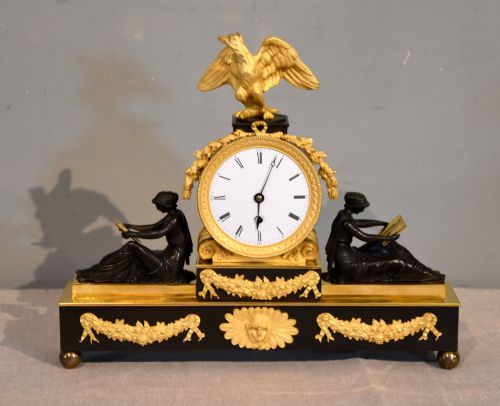
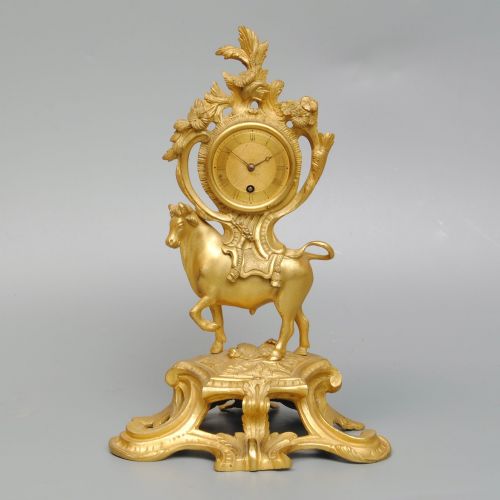
A regency gilt bronze clock is a domestic timekeeper that relies on cast metal cases finished with gold-toned surfaces, often pairing structural architectural forms with sculptural figures. These pieces range from restrained English mantel timepieces to elaborate figural designs incorporating animals, cherubs and classical motifs.
The versions most commonly met on this page belong to the Regency period and the nineteenth century, taking the form of mantel clocks or portico clocks driven by fusee movements. Makers such as London watchmakers and Parisian ateliers produced these objects to mark the hours while serving as prominent decorative items on a mantelpiece.
Makers integrated various materials alongside gilt bronze, including marble, brass and patinated bronze, creating visual contrast within a single case. Whether depicting lions, goats, dogs or classical architectural porticos, each clock reflects the prevailing neoclassical tastes of the era.
Materials and construction
Cases combine gilt bronze and ormolu with patinated bronze, brass, marble and alabaster, relying on metal casting and stone masonry to form the housing. The bright, reflective finish of mercury gilt bronze contrasts against dark patinated figures or polished marble bases.
Mechanical components inside the case utilise chain fusee movements or eight-day striking mechanisms, housed alongside silvered or enamel dials. London and continental makers engineered these brass gear trains to maintain even tension on the mainspring for accurate timekeeping.
Regency Gilt Bronze Clock Retail Price Guide 2026
Typical asking prices for regency gilt bronze clock among the pieces listed under this phrase on Sellingantiques today, from the lower quarter to the upper quarter. They describe what is for sale here now, not the wider market.
Several clocks feature miniature poodles, spaniels, goats and birds amongst their gilt branches, proving that nineteenth-century timekeepers loved a touch of animal company.
Distinctions in quality
Quality rests in the crispness of the bronze chasing and the depth of the gilding, where sharp cast details on figures and mounts distinguish finer workshop output from simpler production. The integration of the movement with the case also matters, as bespoke fitted fusee movements by recorded makers demonstrate higher craftsmanship than standard imported alternatives.
The choice of secondary materials influences the overall standing of a piece, with dense marbles and heavy cast mounts signalling substantial workshop investment. Preservation of the original dial, hands and mercury gilt surface ensures the object retains its intended visual balance.
Baetens London·Viner London·Pons de Paul·Hessen Paris·William Hardy London·James Murray London·Henry Berkeley Square London·FB Adams London·Perigal and Duterrau·Bently and Beck London·Payne of London
The Regency Gilt Bronze Clock Glossary
- Gilt bronze
- Metal alloy treated with a layer of gold, providing a bright and durable metallic finish. This surface treatment is characteristic of high-status decorative objects from the period.
- Fusee
- A conical pulley used in clock movements to maintain constant driving power as the mainspring unwinds. This mechanism improves the timekeeping accuracy of the clock.
- Ormolu
- Finely ground high-carat gold applied to a bronze base using a mercury amalgamation technique. The resulting finish yields a distinctive warm lustre.
- Portico clock
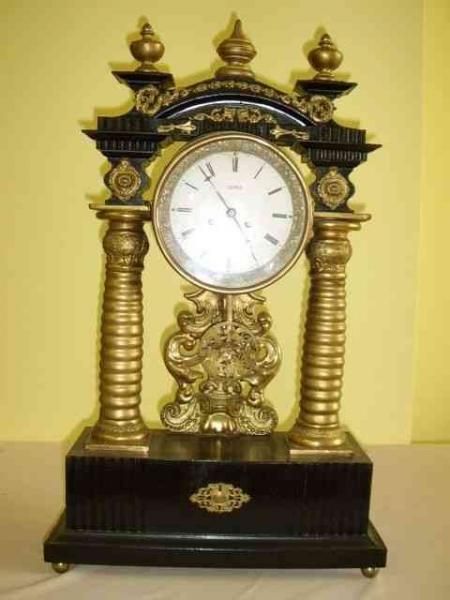
- A mantel clock designed with a tall architectural frame resembling a classical porch, often housing a suspended pendulum within the central opening. These architectural forms frequently incorporate alabaster or mahogany.
- Chain fusee
- A movement driven by a fine steel chain rather than a catgut cord, winding around the fusee cone to regulate power. This represents a robust mechanical standard in English horology.
Regency Gilt Bronze Clock: Frequently Asked Questions
How do these clocks function?
These timepieces rely on mechanical movements, frequently driven by a chain fusee system that uses a spring and a conical pulley to regulate power. An escapement and pendulum control the release of this energy, turning the hands across the enamel or silvered dial.
Many examples feature eight-day striking trains that ring the hours on a small internal bell or gong. Regular maintenance by a horologist ensures these intricate brass gear trains continue to operate correctly.
Where were they placed?
Owners positioned these clocks centrally on mantelpieces above fireplaces, where their reflective gilt surfaces caught the light from surrounding candles or windows. They also stood upon pier tables, sideboards and architectural brackets within principal reception rooms.
Because the heavy bronze and marble cases commanded visual attention, they served as key decorative focal points in domestic interiors during the nineteenth century.
How do I care for a gilt bronze clock?
Keep the clock away from direct sunlight, excessive moisture and sudden temperature fluctuations to protect both the metal case and the internal wooden or brass components. Dust the surface gently with a soft, dry brush, avoiding all chemical cleaning agents that might strip the delicate gilding.
Entrust the mechanical movement to a qualified clock restorer every few years for professional cleaning and lubrication. Moving the clock requires securing the pendulum to prevent damage to the suspension spring.
What is a portico clock?
A portico clock is a distinct architectural mantel clock style featuring twin columns supporting a top entablature, framing a central suspended pendulum. This symmetrical design draws inspiration from classical Greek and Roman temples.
French and English makers constructed these architectural cases using materials such as mahogany, alabaster and gilt bronze to create a sense of monumental proportion on a domestic scale.