


Regency Gilded Tea Trio
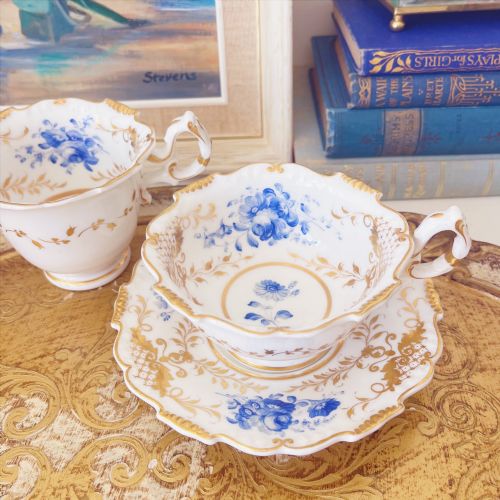
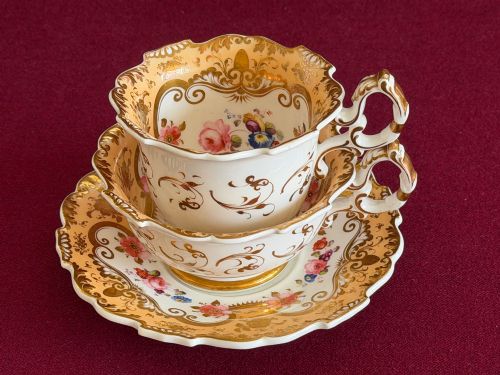
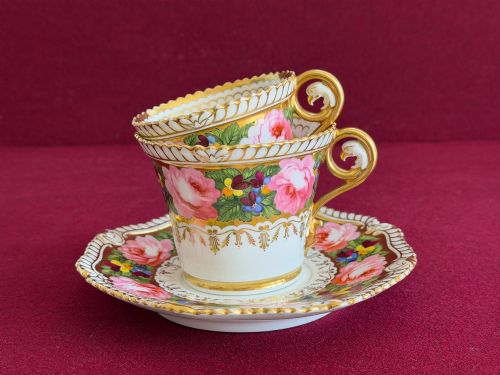
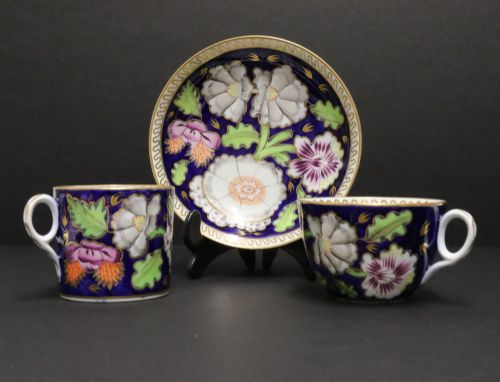
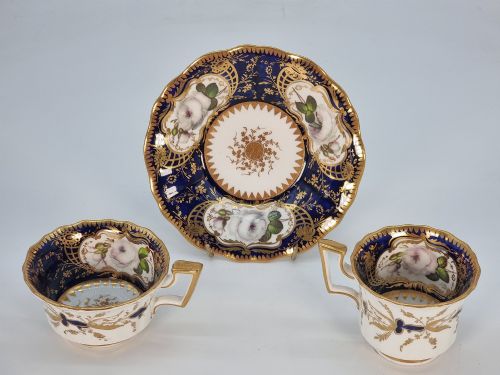
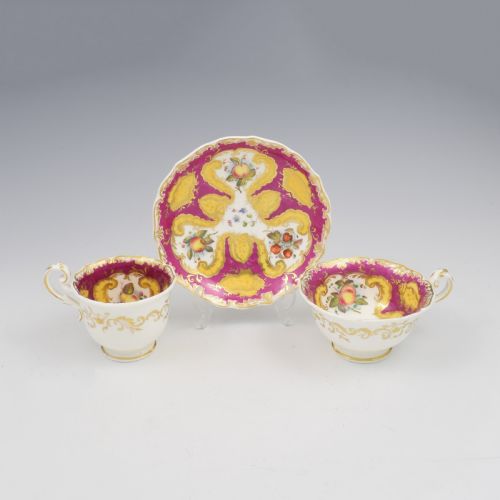
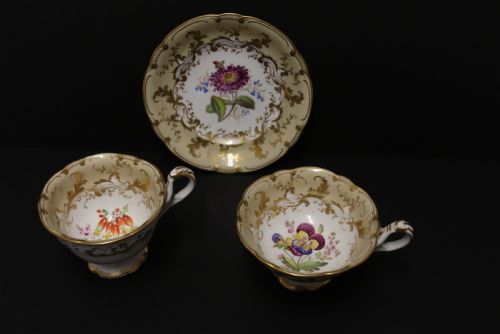
These regency gilded tea trio sets are elegant porcelain breakfast wares designed for refined nineteenth-century tables, offering exceptional handpainted detail and rich gold leaf ornamentation.
Regency Gilded Tea Trio
A regency gilded tea trio comprises a matched teacup, coffee cup, and saucer set designed for sophisticated dining during the early nineteenth century. These pieces reflect the refined domestic habits of the Regency era and the subsequent decades leading up to mid-century.
Most examples found on this page date from the Regency period through the broader nineteenth century, featuring cabinet trios in established shapes like the Shrewsbury form. They combine tea and coffee vessels with a shared saucer, demonstrating the coordinated tableware preferences of the period.
Makers from historic pottery centres produced these sets utilising fine porcelain and bone china bodies. Collectors frequently encounter recognizable patterns from notable English factories that highlight traditional ceramic manufacturing of the time.
Materials and construction
Potters shaped these vessels using fine porcelain and bone china, applying smooth porcelain glaze to create a durable and luminous white foundation. This ceramic base supported intricate handpainted decoration and detailed surface work.
Craftsmen enriched the pieces with gold leaf, gold gilding, and enamel work to achieve opulent metallic highlights and colourful motifs. These decorative elements were fused to the ceramic body through careful firing processes.
Early nineteenth-century coffee cups were often taller and narrower than teacups, reflecting the distinct ways different brews were consumed.
Assessing quality and craftsmanship
The sophistication of the handpainted decoration largely distinguishes superior pieces from standard production. Finer sets display precise brushwork, intricate floral or fruit patterns, and meticulous attention to detail across all three components.
The application and preservation of the gold leaf and gilding also indicate the standard of manufacture. Well-executed gilding remains crisp and dense, enhancing the architectural shapes of the Shrewsbury and cabinet forms without excessive rubbing.
H & R Daniel·Chamberlain Worcester·Newhall·Coalport John Rose·Derby·Spode·Davenport
The Regency Gilded Tea Trio Glossary
- Trio
- A matched set consisting of a teacup, a coffee cup, and a saucer. This combination became popular in the early nineteenth century for formal domestic service.
- Gilding
- The application of gold leaf or gold powder to the ceramic surface for decoration. It provides a reflective metallic finish that defines Regency luxury.
- Porcelain glaze
- A glassy coating fused to the ceramic body during firing. It creates a smooth, impermeable surface suitable for detailed handpainting.
- Bone china
- A type of soft-paste porcelain incorporating bone ash. It produces a strong, slightly translucent body favoured by English potteries.
- Enamel
- A glass-like substance fused to the ceramic body to add colour. It allows for vibrant, lasting decoration alongside gold gilding.
Regency Gilded Tea Trio: Frequently Asked Questions
What is a tea trio?
A tea trio consists of three matched ceramic pieces intended for hot beverages, specifically a teacup, a coffee cup, and a saucer. During the Regency period, these matched sets allowed hosts to serve both tea and coffee using a single coordinated saucer.
Such sets represent the height of early nineteenth-century dining etiquette. They demonstrate how British potteries catered to the specific social rituals of well-to-do households.
How do I date a Regency trio?
Dating these ceramic sets involves examining the factory mark, the shape of the handles, and the painting style. Regency pieces often exhibit distinct neoclassical forms, such as the Shrewsbury shape, alongside characteristic gilded motifs.
Comparing the pattern numbers and paste composition with known factory histories helps narrow the production window. Most examples date from the first three decades of the nineteenth century.
How were these sets used historically?
These porcelain trios were used in polite society for morning breakfast or formal afternoon tea and coffee service. Guests would use the saucer to hold whichever cup was currently in use, or to cool their beverage.
Displaying such decorative wares in cabinets also served as a status symbol for middle and upper-class families. The rich gilding and handpainted scenes were meant to be admired under candle or daylight.
How should I clean antique porcelain?
Antique porcelain and delicate gilding require gentle hand washing in lukewarm water with mild soap. Harsh detergents and modern dishwashers can permanently damage the fragile enamel paints and wear away the gold leaf.
Soft cloths should be used for drying, and pieces ought to be handled individually to prevent chipping. Proper care preserves the historical surface finish for future generations.