
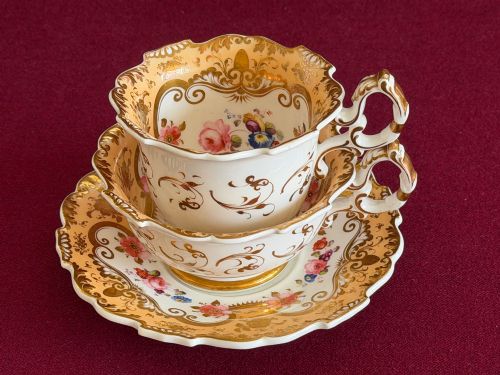
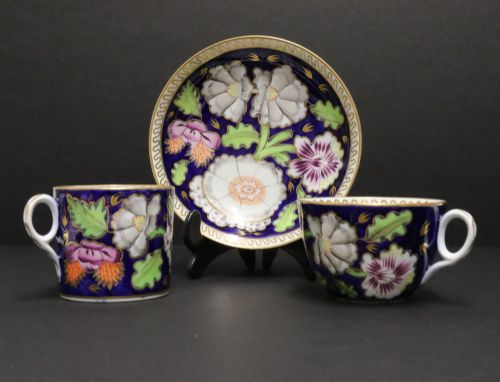
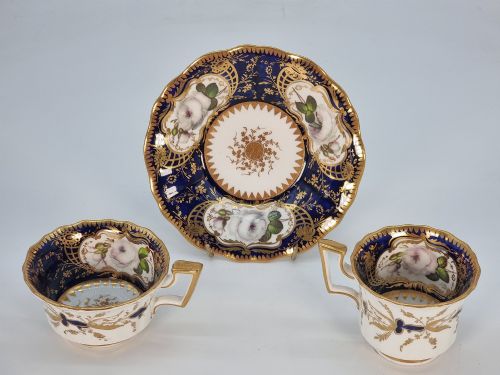


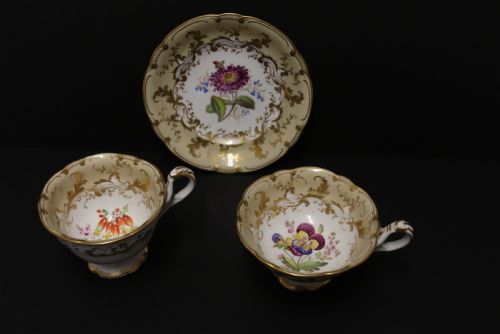


Gilded Ceramic Tea Trio
These gilded ceramic tea trio sets combine porcelain and gold leaf across eras from the eighteenth century to the twentieth.
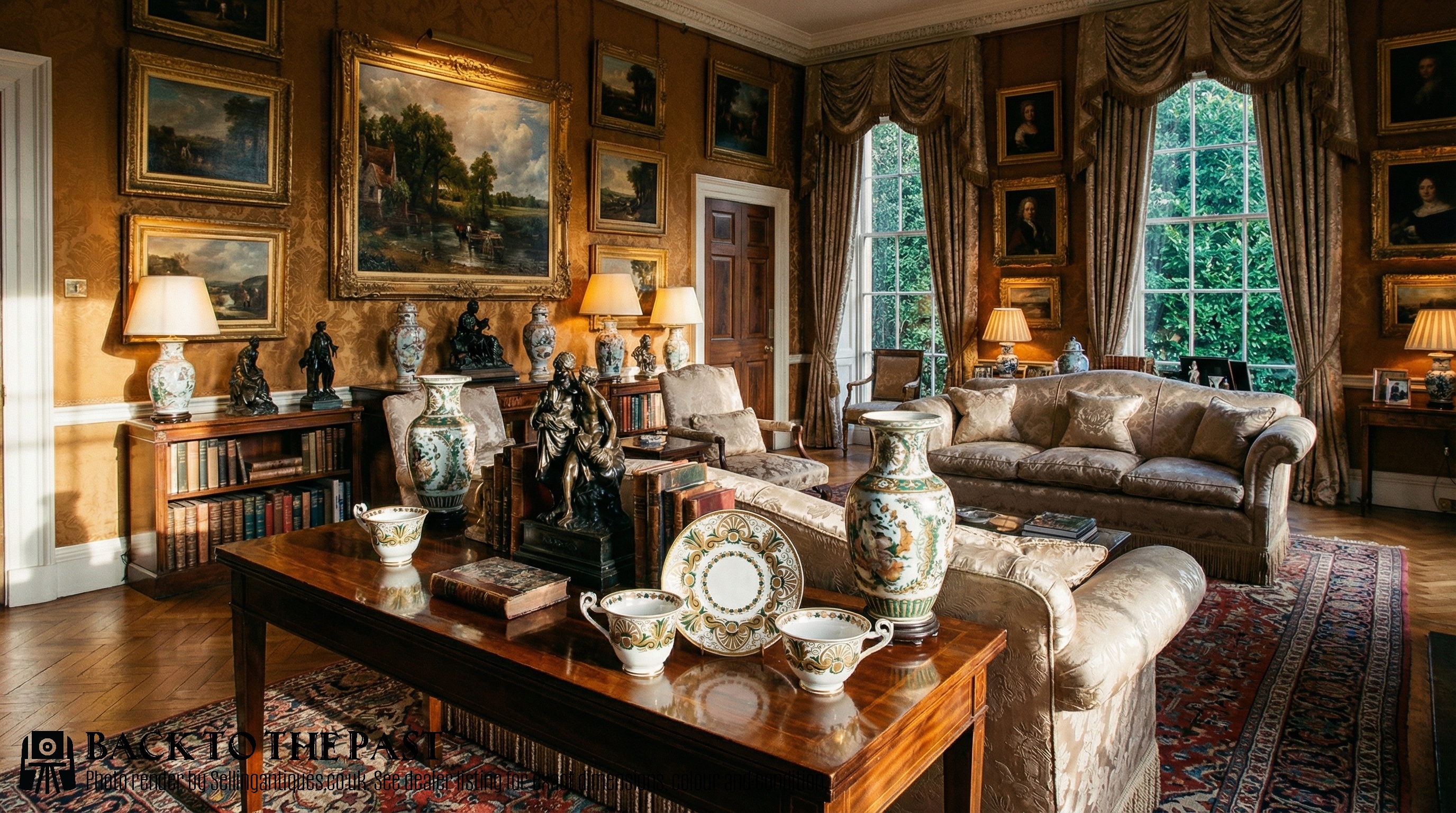
Gilded Ceramic Tea Trio
When you search for a gilded ceramic tea trio, you are looking at matched sets of a teacup, saucer and sometimes a plate, enhanced with gold decoration. The pieces span periods from the eighteenth century through the Regency era to Edwardian and Art Deco times.
On this page, you will most frequently encounter cabinet trios and tea sets originating from English makers in porcelain and bone china. These formations typically include hand-painted motifs paired with extensive gilding.
How they were made
Potters shaped these vessels using porcelain or bone china before applying a smooth porcelain glaze. Artisans then added hand-painted enamel details alongside gold leaf and gilt applications.
The objects underwent multiple firings to fix the glaze and adhere the gold gilding securely to the ceramic body. Many items relied on skilled hand-brushing for their fine decorative lines.
Listings span the eighteenth century, Regency period, Victorian era, Edwardian period, and Art Deco times.
What varies in quality
Quality in a gilded ceramic tea trio rests primarily on the precision of the hand-painted brushwork and the richness of the gold leaf application. Finer pieces demonstrate superior control over the enamel pigments and more intricate potting.
The integrity of the porcelain glaze and the crispness of the moulded shape also separate standard factory output from premier cabinet pieces. Subtlety in design and well-preserved gilding indicate higher-tier manufacturing.
A H & R Daniel·Newhall porcelain·Derby porcelain·Worcester porcelain·Royal Worcester·Davenport·Spode·Wileman Foley Shelley·Gladstone potteries
The Gilded Ceramic Tea Trio Glossary
- Trio
- A set comprising a teacup, a matching saucer and a side plate designed for tea service. This grouping forms the standard unit for individual use in many antique collections.
- Cabinet trio
- A decorative set intended primarily for display in a cabinet rather than for daily service. These items often feature higher levels of hand painting and gilding.
- Bone china
- A type of soft-paste porcelain incorporating animal bone ash for added strength and translucency. It provides a bright white base for enamel and gilt decoration.
- Gilding
- The application of gold leaf, paint or powder to the surface of the ceramic. This technique highlights rims, handles and painted scenes.
- Flight Period
- A specific era in the history of Worcester porcelain associated with high artistic quality and distinctive mark variations. Pieces from this time are prized by collectors.
Gilded Ceramic Tea Trio: Frequently Asked Questions
What is a tea trio?
A tea trio consists of three matching ceramic pieces: a teacup, a saucer and a side plate. These sets were designed for individual use during formal tea service.
They appear across various periods, showing how table settings evolved from the eighteenth century onwards.
How were these sets used?
These sets served tea in domestic settings or stood on display in glass cabinets to show off household wealth. Cabinet trios were frequently kept as decorative art rather than everyday tableware.
Their survival reflects careful handling by generations of owners who valued the painted surfaces.
How do I date a tea trio?
Dating relies on maker marks, ceramic bodies, and stylistic indicators such as Regency shapes or Edwardian patterns. Examining the type of porcelain glaze and gilding technique also helps place an item in its correct era.
Comparing pieces against documented factory timelines clarifies their period of manufacture.
What is the difference between porcelain and bone china?
Porcelain is a hard ceramic fired at high temperatures from specific clays, while bone china includes bone ash to achieve greater translucency and whiteness. Both materials provide a smooth ground for enamel painting and gold leaf.
Makers selected each material based on the desired weight and delicacy of the finished vessel.