

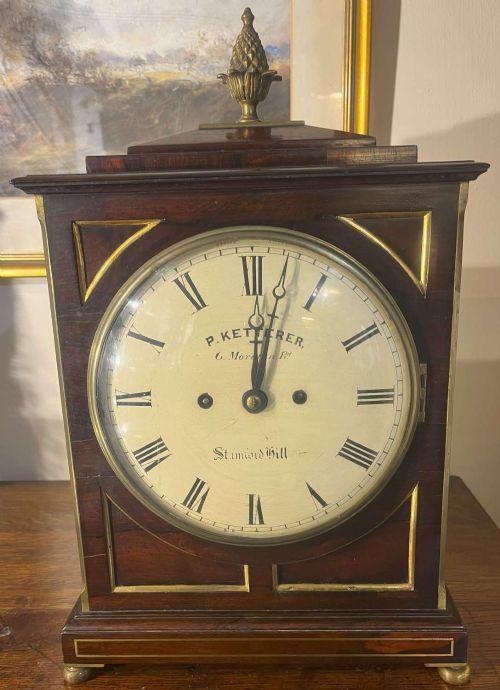
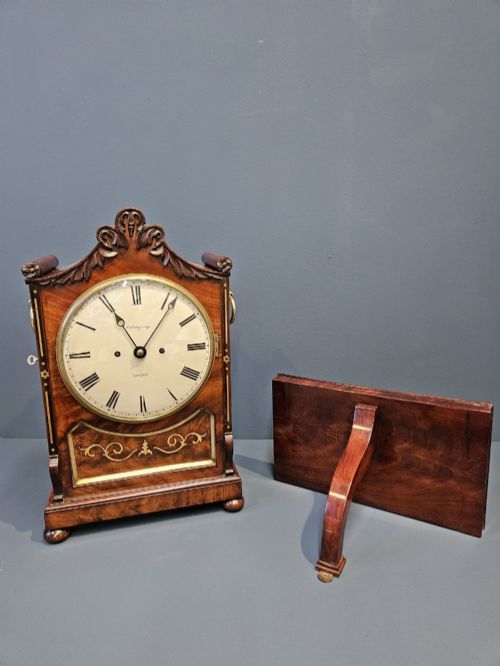
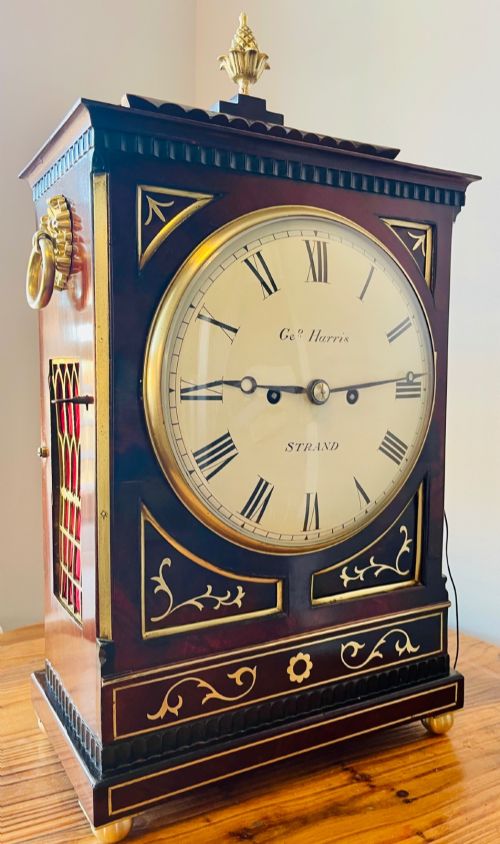
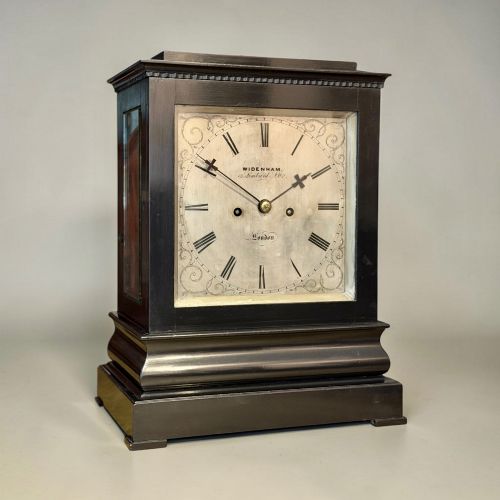


Regency Fusee Table Clock
A regency fusee table clock brings precision engineering and architectural mahogany or bronze cabinetry straight to the mantelpiece.
Regency Fusee Table Clock
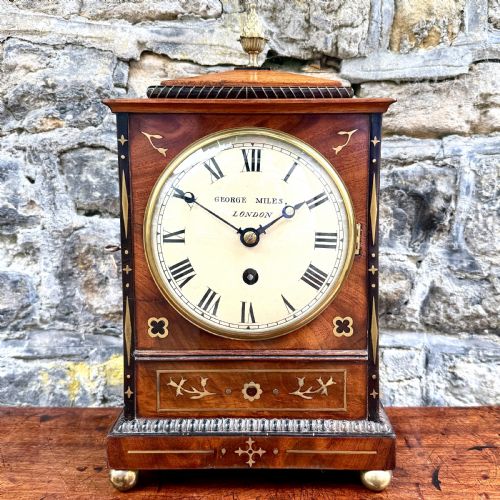
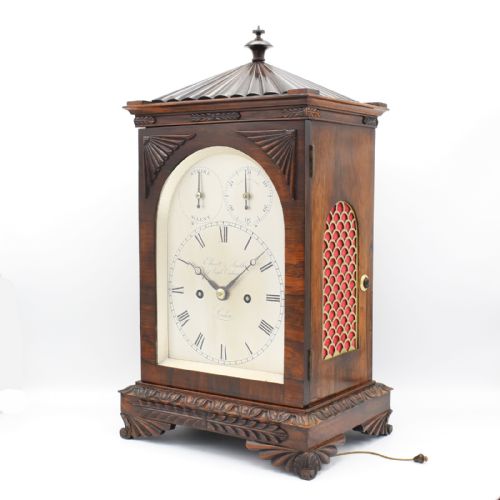
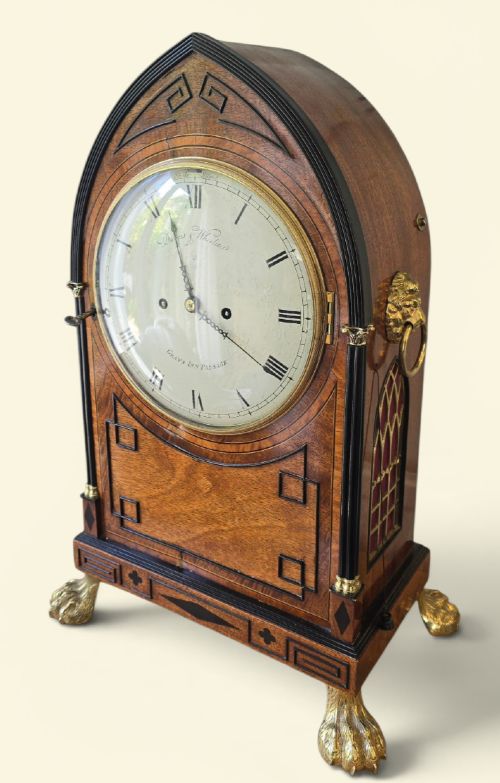
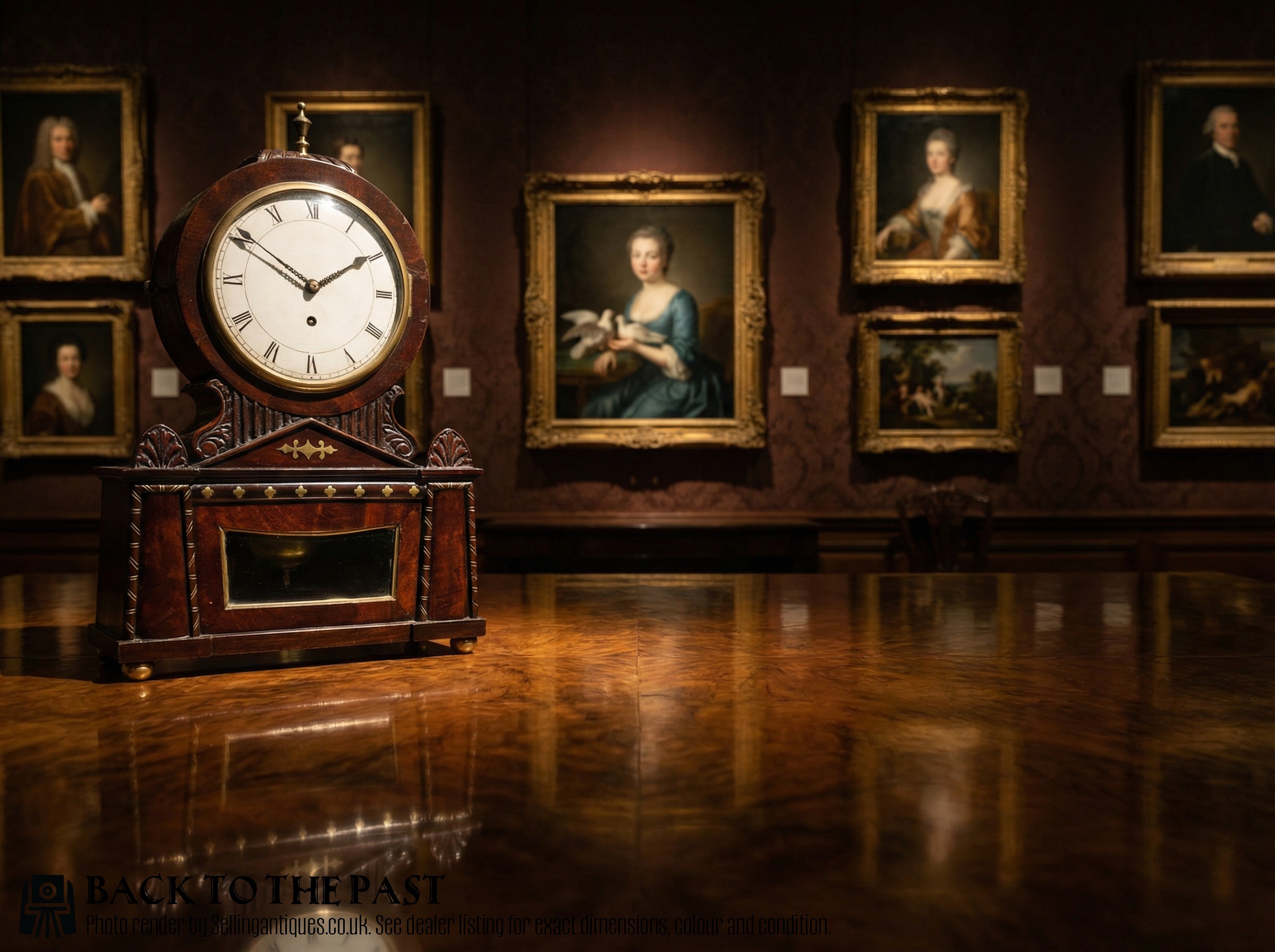
A regency fusee table clock is typically housed in a striking mahogany, ebonised wood, or rosewood case, frequently designed with architectural forms such as the lancet top, pad top, or balloon shape. These domestic timepieces serve both as functional timekeepers and sculptural objects for libraries, drawing rooms, and hallways.
The objects listed under this search phrase span the Georgian, Regency, and Victorian periods, with many originating from notable London makers. Pieces range from simple timepiece movements to complex examples featuring striking or repeating mechanisms.
Most examples rely on traditional timber cases, though occasional variations include green marble with gilt mounts or patinated bronze cases. Collectors encounter both single fusee and twin fusee configurations driving the internal mechanisms.
Evaluating Quality
Quality in these clocks rests heavily on the reputation of the maker inscribed on the dial or movement, with signed London workshop pieces generally commanding higher regard than provincial examples. The crispness of the timber carving, the delicacy of brass sound frets, and the integration of gilt or ormolu mounts also set superior pieces apart.
Internal complexity dictates a tier of distinction, moving from standard single fusee timepieces to twin fusee striking mechanisms, repeating systems, or unusual year-going movements. The preservation of the original dial signatures and untampered brass gear trains further differentiates standard examples from exceptional survivals.
Regency Fusee Table Clock Retail Price Guide 2026
Typical asking prices for regency fusee table clock among the pieces listed under this phrase on Sellingantiques today, from the lower quarter to the upper quarter. They describe what is for sale here now, not the wider market.
Some nineteenth-century owners relied on repeating mechanisms to count the hours in the dark by simply pulling a cord.
Widenham of London·Barwise, London·Ellicott & Smith·Desbois & Wheeler·Spurge Dunmow·Cording of London·John Barwise of London·Wilkinson Leicester·Barrett London·J Kingerley Manchester·Thomas Connold of Alysham·Taylor of London·Pennington of Camberwell·Budgen Croydon·William Hardy London·Berguer of the Strand·McCabe London·John Leroux·John McGregor Wick
The Regency Fusee Table Clock Glossary
- Fusee
- A conical pulley connected to the mainspring by a cord or chain, designed to maintain constant driving power as the spring runs down. This ingenious mechanical device ensures the clock maintains steady timekeeping over its running period.
- Bracket Clock
- A portable domestic clock historically designed to sit on a wall bracket or table surface. Despite the name, many examples function purely as freestanding table or mantel clocks.
- Lancet Top
- A distinctive Gothic revival or Regency case shape featuring a pointed, arched top resembling a lancet window. This silhouette remains a signature form among nineteenth-century mahogany mantel clocks.
- Silvered Dial
- A brass clock face treated with silver powder to create a matte, reflective metallic surface that contrasts sharply with dark engraved numerals. These dials provide a clean, legible face behind the glass bezel.
- Repeating Movement
- A mechanism that sounds the last hour or quarter-hour on demand when a cord or lever is activated by the user. This complication allowed owners to check the time audibly in total darkness.
Regency Fusee Table Clock: Frequently Asked Questions
What is a fusee movement?
A fusee is a conical pulley that moderates the pull of the mainspring, ensuring even force is delivered to the gear train as the spring unwinds.
This clever mechanism significantly improves the timekeeping accuracy of antique table clocks.
Where were these clocks placed?
They were designed as portable domestic timekeepers for prominent rooms such as libraries, drawing rooms, and hallways.
Owners typically placed them on sturdy tables, mantelpieces, or dedicated wall brackets.
What is a bracket clock?
A bracket clock is a portable spring-driven timepiece originally built to rest upon a matching wooden wall bracket.
Over time, the term expanded to describe similar portable table and mantel clocks housed in wooden cases.
How can I tell the period?
Period is determined by examining the case architecture, timber selection, dial materials, and signature styles like Regency or Georgian.
Maker signatures and engraved movement details also help narrow down the precise decade of manufacture.