
Regency Furniture Chest
Regency furniture chest options bring domestic scale and figured timber together, offering functional storage shaped by early nineteenth-century design.
Regency Furniture Chest
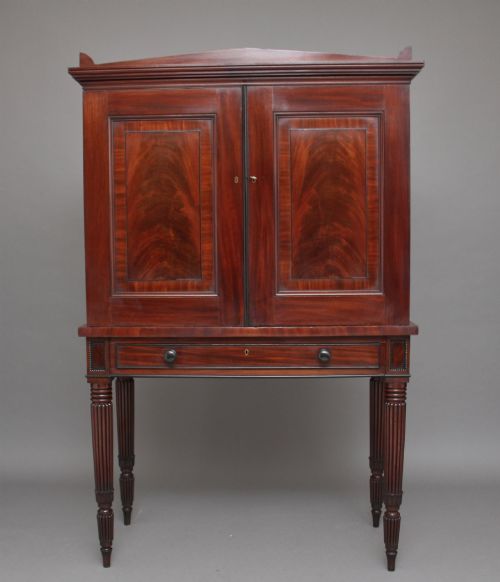
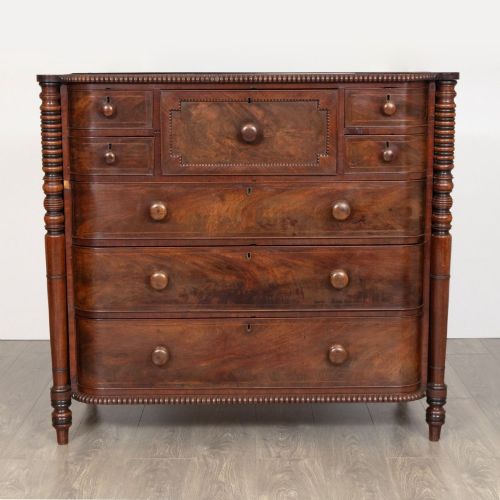
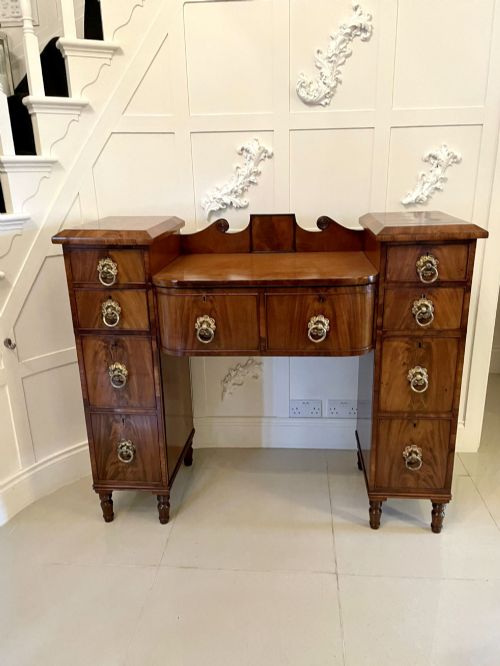
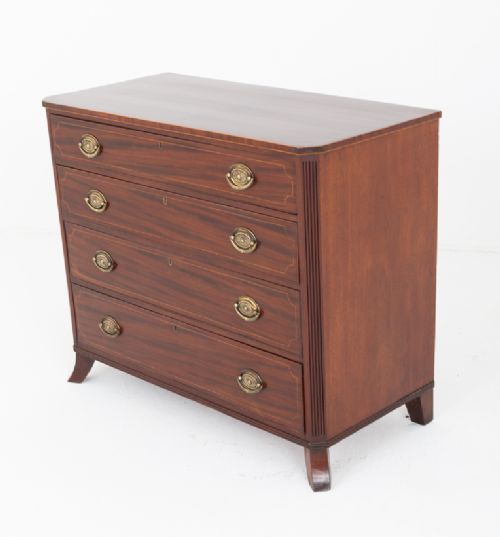
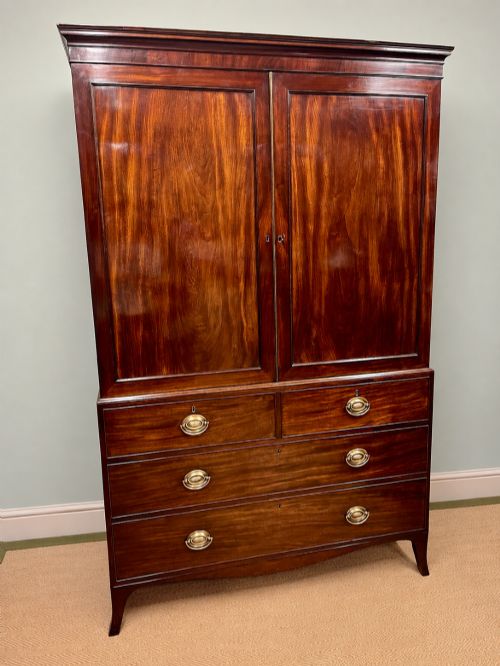
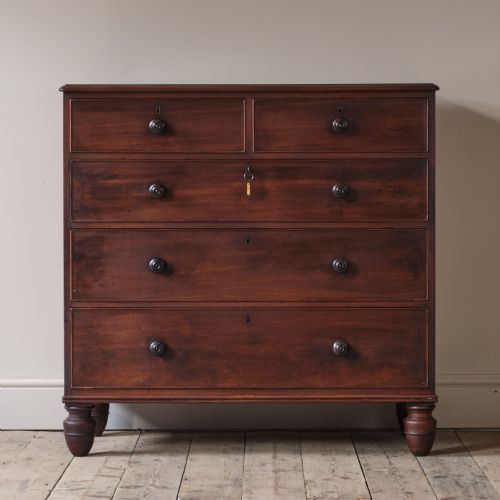
A regency furniture chest typically takes the form of a chest of drawers, linen press, or bow front chest designed to organise interior spaces. These pieces emerge predominantly from the Regency, George IV, and William IV periods, alongside related Georgian and nineteenth-century examples.
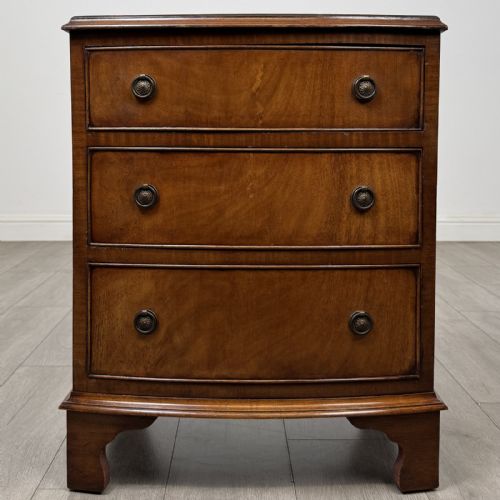
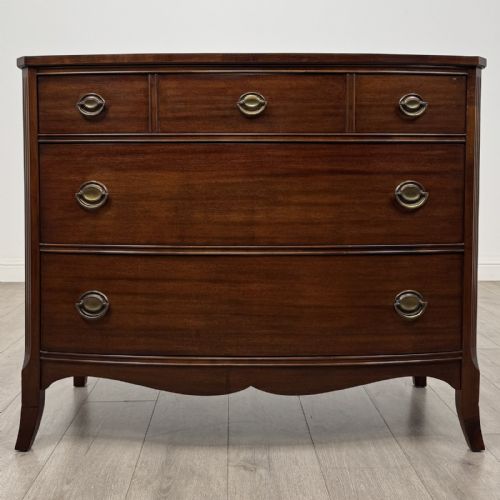
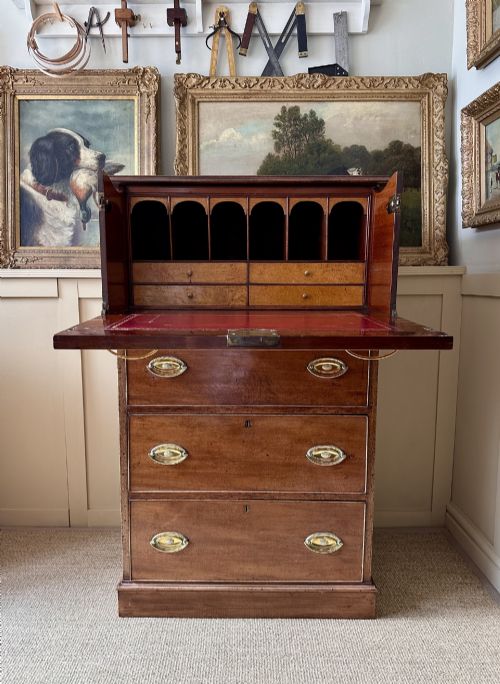
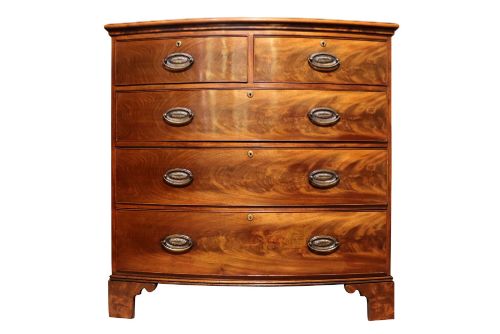
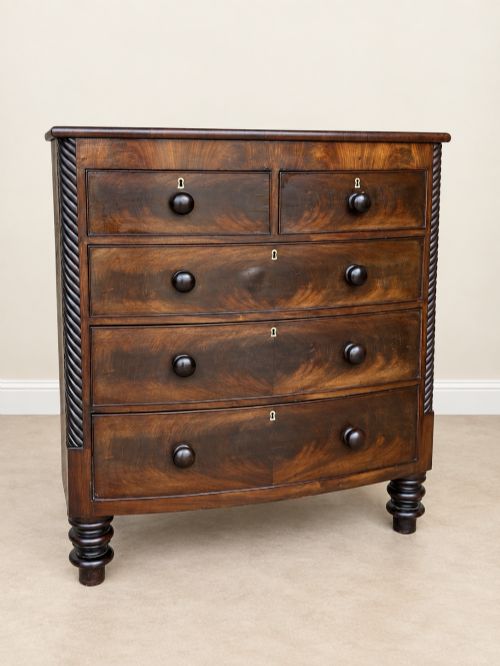
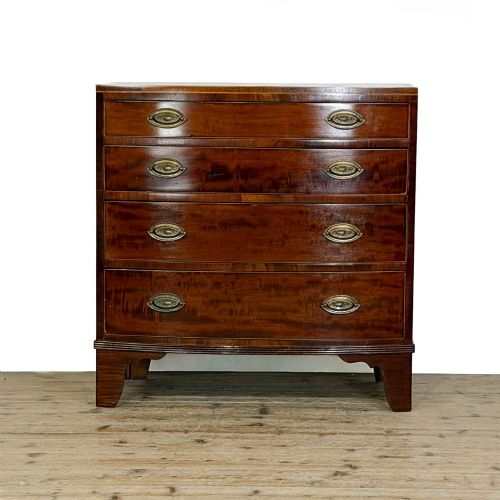
The most common form on this page is the mahogany bow front chest of drawers, often featuring multiple graduated drawers and flame mahogany veneer. Buyers also encounter taller chest on chest configurations, secretaire cabinets, and specialised storage such as teapoys and press cupboards.
Materials and Construction
Makers built these pieces primarily using solid mahogany and oak for structural integrity, applying flame mahogany and rosewood veneers to primary display surfaces. Satinwood and pollard oak also appear as decorative timbers, while brass fittings provide functional hardware.
Cabinetmakers employed techniques such as precise drawer graduation, curved bow front framing, and secret drawer integration to balance utility with visual refinement. Timber selection focused on figured grain patterns, particularly on drawer fronts and top panels.
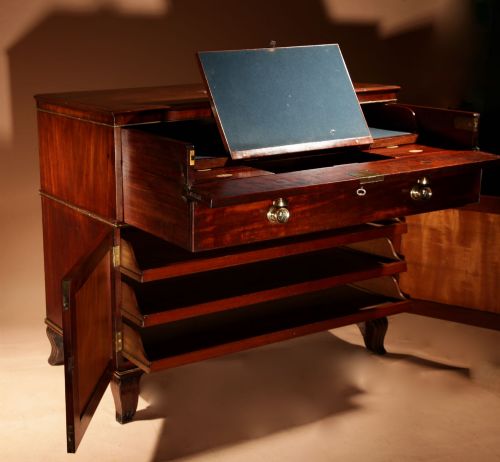
Several pieces include secret drawers hidden within their framing, built to safeguard small valuables from curious eyes.
Assessing Quality and Execution
Quality rests upon the selection of timber veneers and the precision of the cabinetwork, where figured flame mahogany or pollard oak indicates superior material choice. Finer examples display harmonious proportions, particularly in narrow or small-scale bow front designs.
The integration of secondary details, such as working keys, brass handles, and secondary wood interiors like oak, distinguishes higher tier items from standard production. Construction depth is visible in the smooth graduation of drawers and the crisp execution of curved fronts.
T G Seddon·George Oakley·Gillows
The Regency Furniture Chest Glossary
- Bow front
- A convex curved front elevation that softens the rectangular profile of a chest.
- Flame mahogany
- A distinct timber veneer exhibiting a flamed or mottled grain pattern prized for its decorative movement.
- Linen press
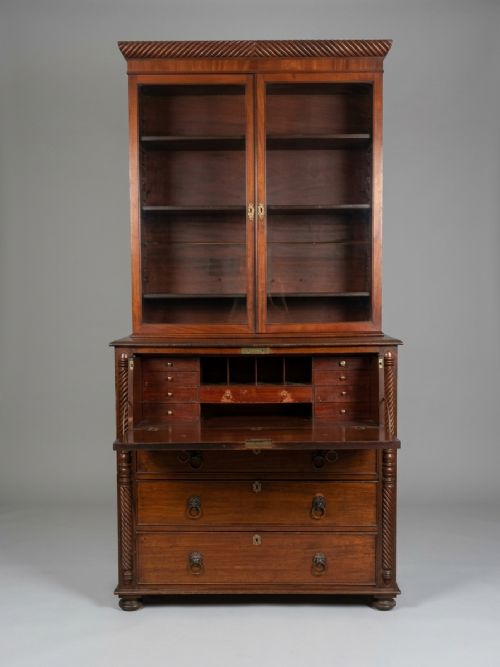
- A tall storage piece featuring upper cabinet doors enclosing sliding trays above a base of drawers.
- Teapoy
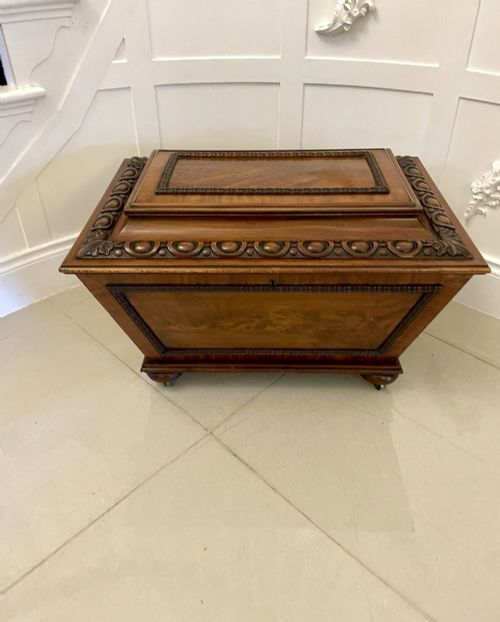
- A small box or chest supported on a pillar and base, originally designed to store loose tea leaves.
- Secretaire
- A cabinet or chest incorporating a fitted writing drawer with a drop-down front.
Regency Furniture Chest: Frequently Asked Questions
What is a regency furniture chest?
A regency furniture chest is a storage piece from the early nineteenth century, most commonly built as a chest of drawers or linen press in mahogany or rosewood.
These items combine domestic practicality with the curved lines and figured veneers characteristic of Regency and Georgian cabinetmaking.
What woods were used for these chests?
Mahogany served as the primary timber, often enhanced with flame mahogany veneer for decorative visual impact. Rosewood, oak, and pollard oak also appear frequently in the construction of drawers and specialised storage.
Cabinetmakers occasionally integrated satinwood for contrasting details within specific compartments.
How were linen presses used?
Linen presses provided dedicated storage for household textiles, garments, and folded linens within upper shelving or sliding trays. The lower chest of drawers offered additional space for smaller apparel.
These dual-purpose pieces stood as substantial storage items in domestic interiors.