
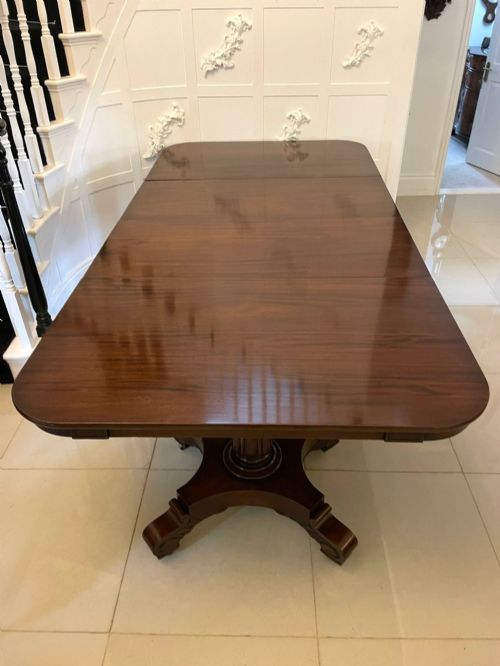
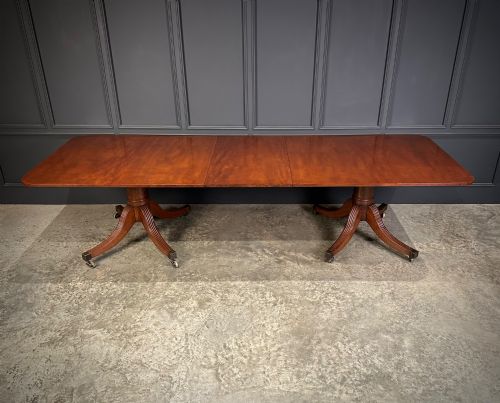
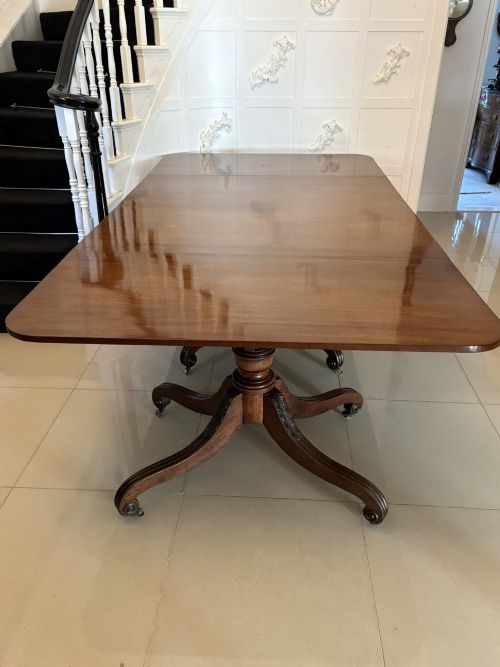
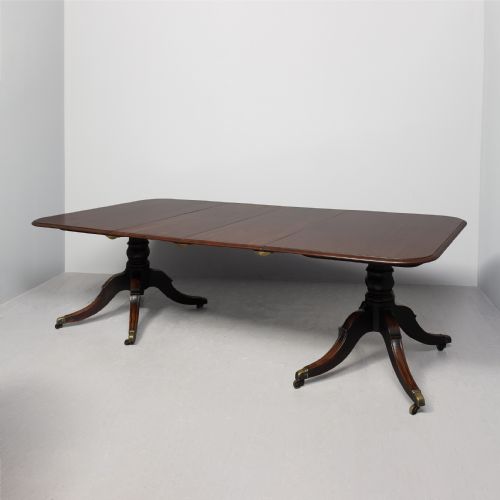
Regency Extension Table
A regency extension table is a adaptable dining piece designed for gatherings, combining solid timber construction with clever leaf systems.
Regency Extension Table
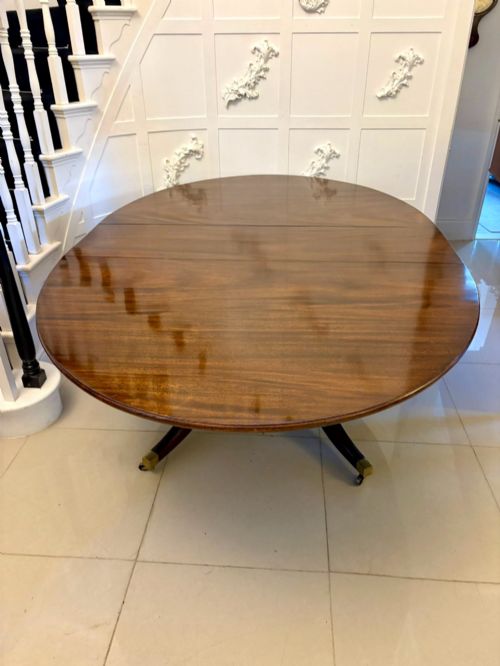
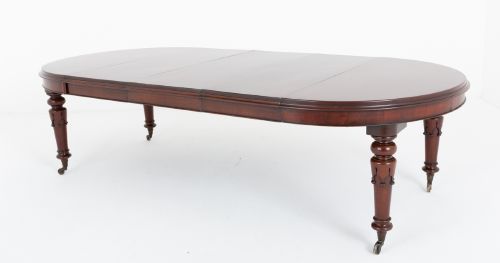
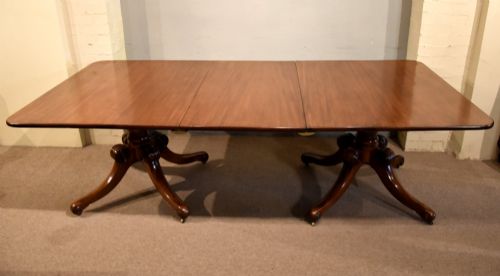
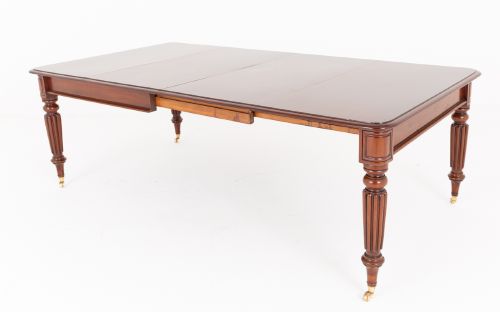
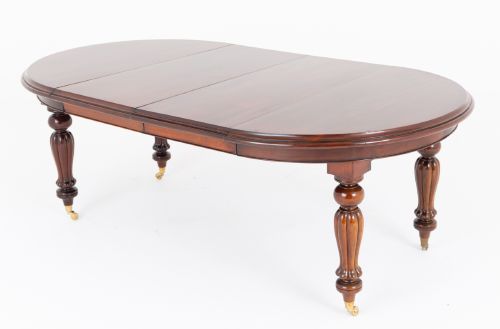
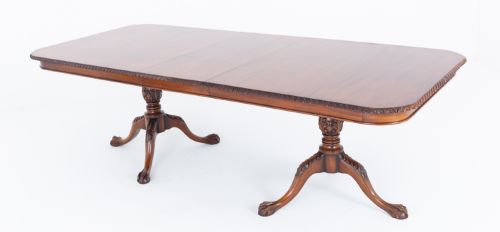
A regency extension table is a formal dining piece designed to expand for larger company through the addition of removable leaves or a mechanical frame. These pieces originate primarily from the nineteenth century, encompassing periods such as the Georgian, Regency, and William IV eras, alongside later revival interpretations.
How they were made
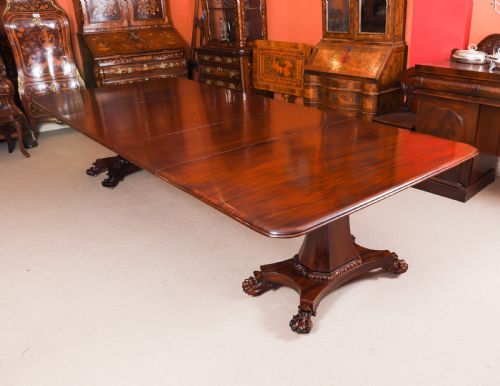
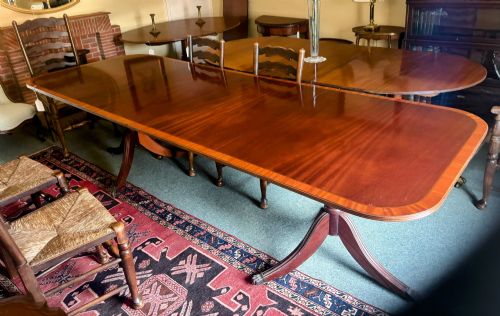
Makers utilised dense timbers such as mahogany and rosewood, frequently selecting figured grain varieties for top surfaces to create visual depth and warmth. Satinwood inlay occasionally provides contrast against the darker body of the timber.
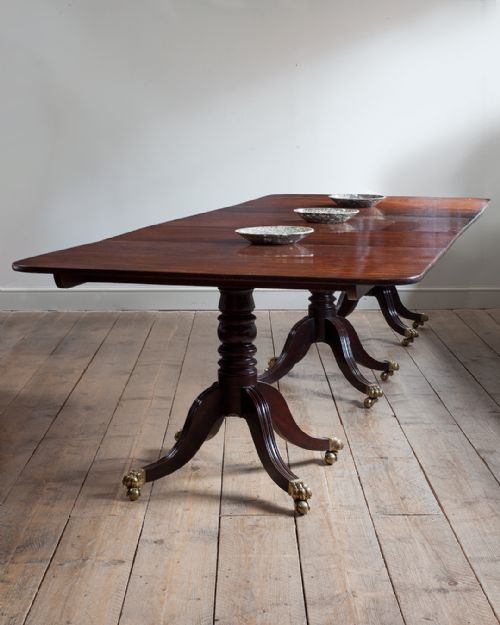
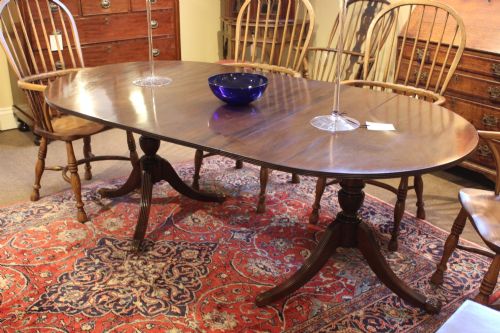
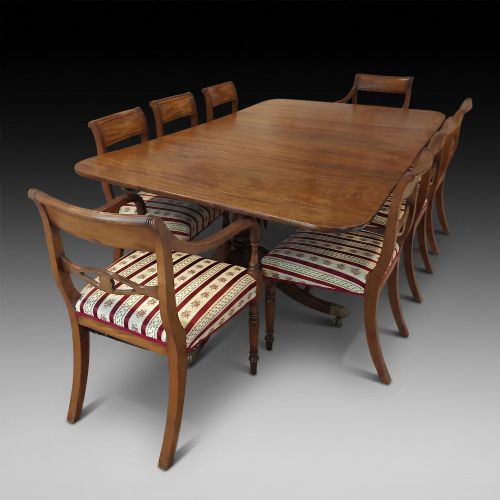
Construction relied on heavy central pedestals or pillar supports, sometimes split-base or multi-pillar designs, paired with brass mechanisms and castor fittings to facilitate smooth movement when extending the top.
Some grand dining tables are so long they require up to five separate leaves just to reach their full banquet capacity.
What varies in quality
Quality rests upon the selection of timber figures, the precision of the pedestal turning, and the stability of the extending mechanism. Tables featuring multiple pillars and high seating capacity demonstrate superior proportion and structural ambition.
The integration of original leaves and the crispness of any inlaid detail distinguish higher workshop output from standard production or later revival pieces.
Gillows
The Regency Extension Table Glossary
- Pedestal
- A central column support resting on splayed legs, commonly found in multi-pillar dining tables. This structure allows legroom around the perimeter.
- Leaf
- A removable section of timber inserted into the table top to increase its overall length. These components allow the table to expand or contract according to requirements.
- Satinwood
- A pale, highly figured timber utilised for contrasting inlay work on furniture surfaces. It adds decorative detail to borders and panels.
- Twin pillar
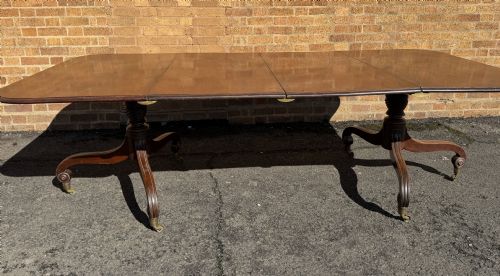
- A configuration utilising two independent pedestal supports beneath the top. This arrangement provides balance for medium length extending formats.
Regency Extension Table: Frequently Asked Questions
How do I extend a regency extension table?
These tables typically separate at the centre or pull apart along runners to allow the insertion of extra wooden leaves. The mechanism relies on parallel tracks or steady pedestals that maintain alignment.
Once the leaves are dropped into place, secure latches or brass clips underneath lock the sections together to create a stable surface for dining.
What is the difference between twin and triple pillar tables?
Twin pillar tables feature two pedestal supports and generally suit medium to large dining rooms, accommodating around eight to twelve diners comfortably. They provide ample legroom without sacrificing stability.
Triple pillar tables incorporate a third central support to bear the weight of much longer tops. These grander formats are built to seat sixteen or more guests.
Are these tables suitable for everyday dining?
Many examples are designed with versatile proportions and practical scales that function well in daily domestic settings. Removing the extra leaves allows the table to occupy less space when large gatherings are not required.
Care should be taken to protect the polished timber surface with heat mats and placemats during daily meals to preserve the finish.
How can I tell a period table from a revival piece?
Period tables from the nineteenth century display genuine signs of age in the timber grain, hand-cut joinery, and the wear patterns on brass castors. The construction methods reflect historical workshop practices.
Revival pieces, produced later in the nineteenth or twentieth centuries, often utilise standard machine tooling and uniform timber finishing that lack the distinct character of early examples.