
Regency Entry Table
A regency entry table brings architectural precision and rich mahogany or rosewood grain into a hallway.
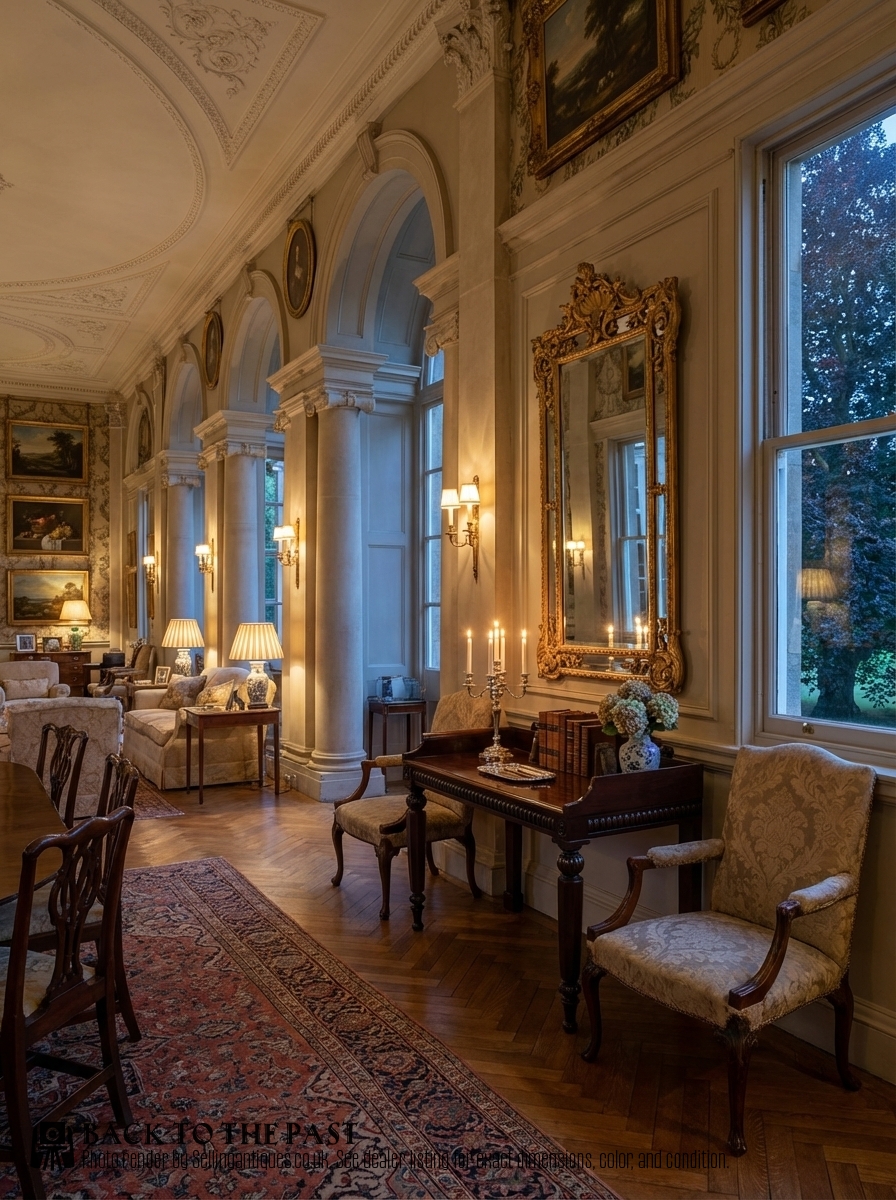
Regency Entry Table
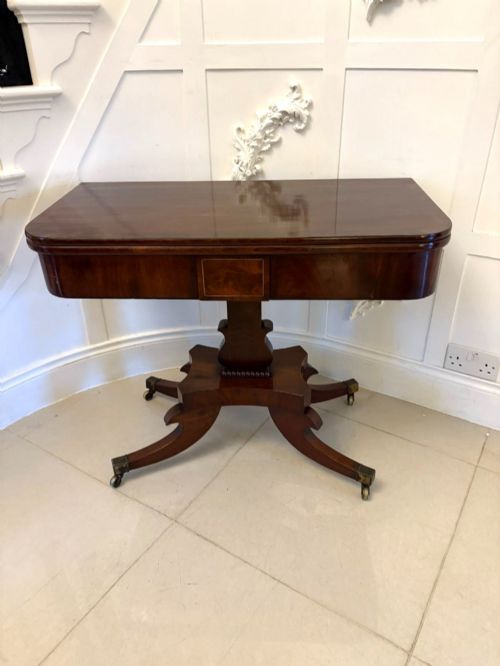
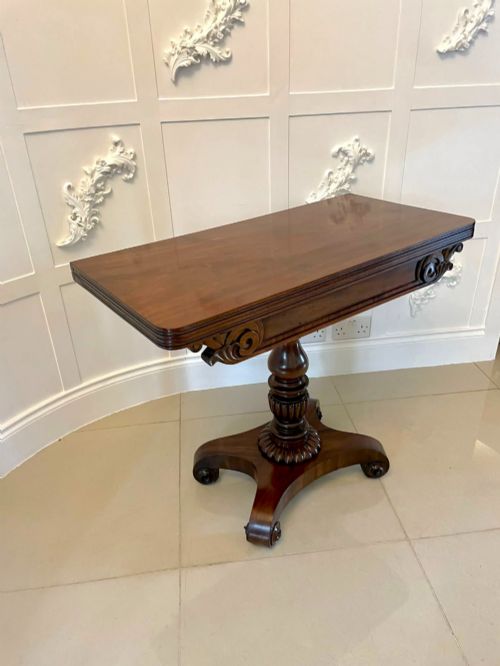
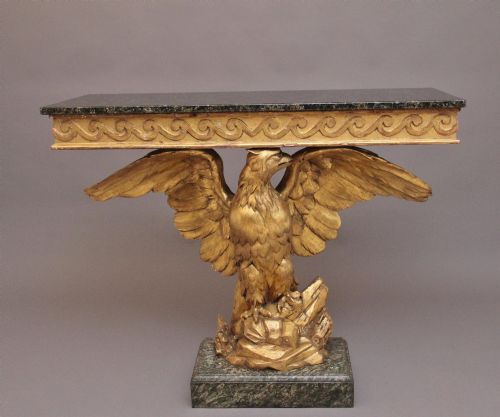
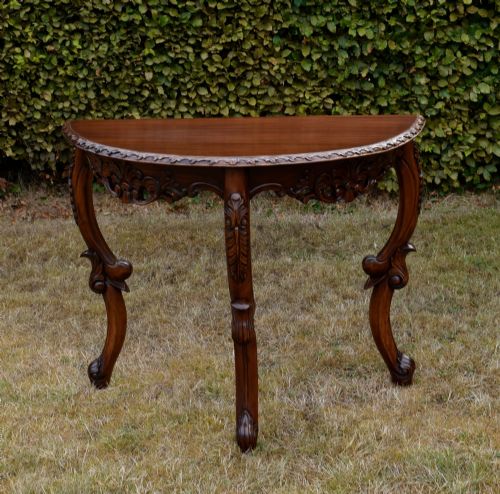
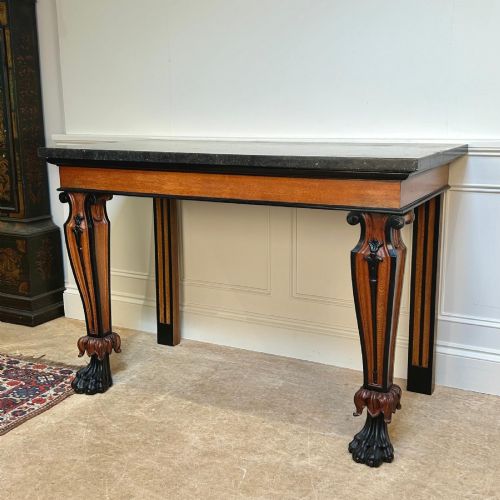
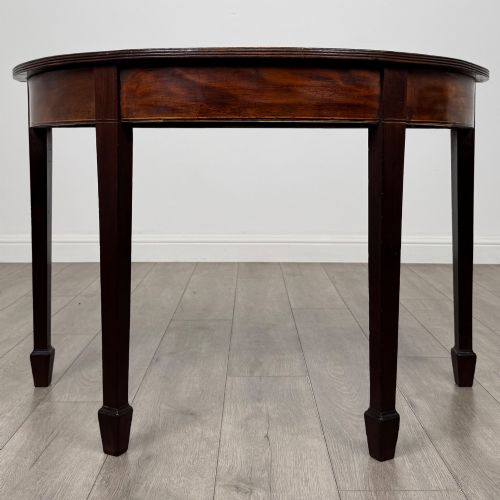
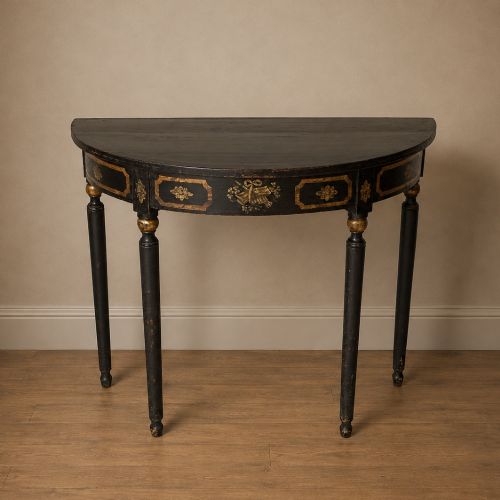
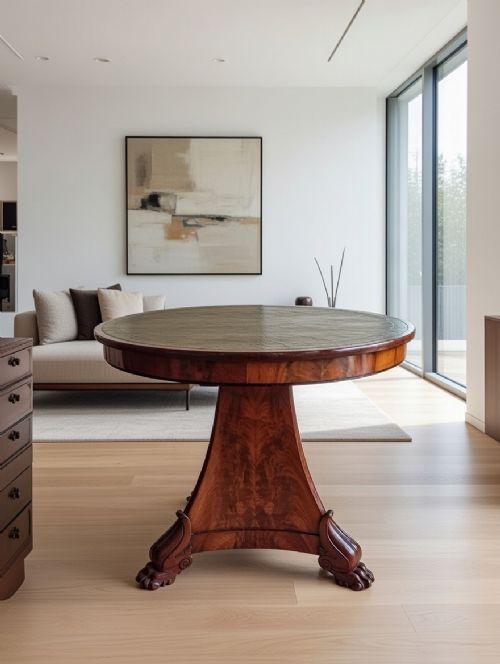
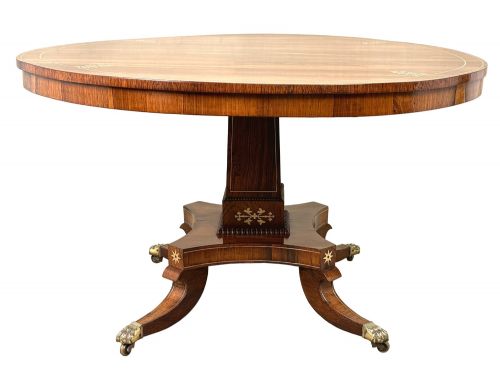
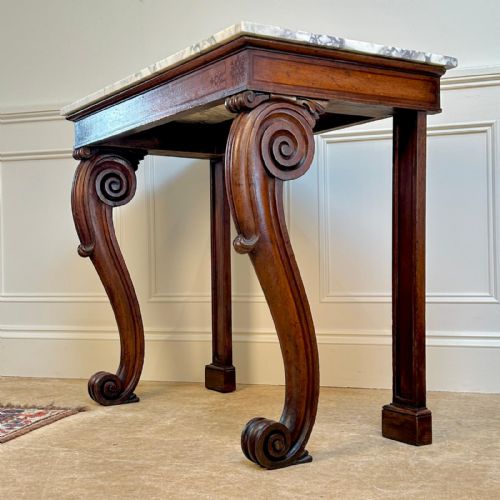
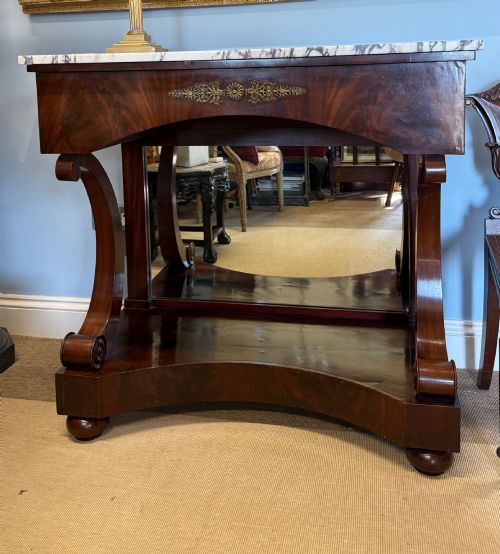
Makers and craftsmen of the period favoured practical hallway forms such as the demi-lune, rectangular console, and circular centre table. These pieces often incorporate marble tops, brass inlays, or parcel gilding to reflect light in narrow spaces.
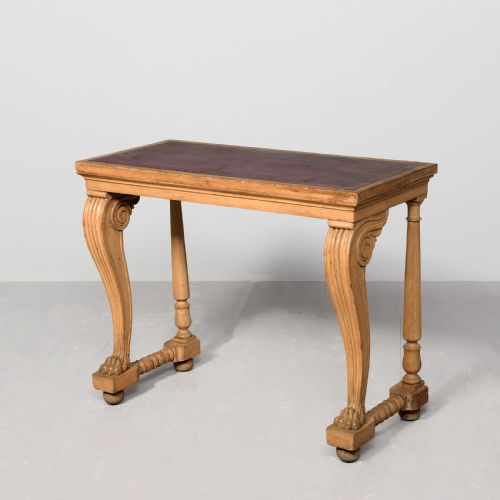
The selection ranges from formal mahogany and rosewood designs to oak country house pieces and later revival styles. Buyers encounter both linear neoclassical forms and more robust William IV interpretations.
Materials and Construction
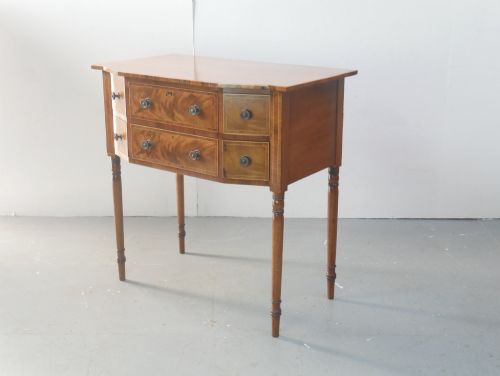
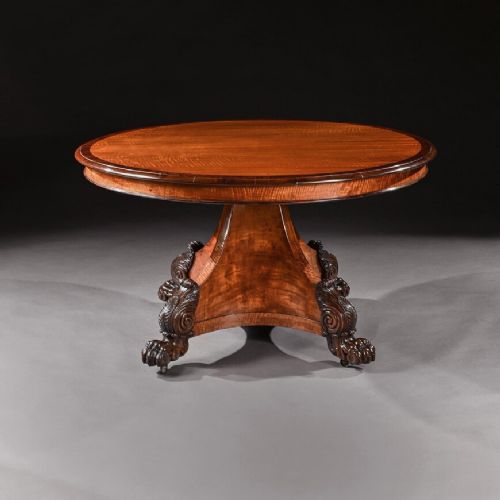
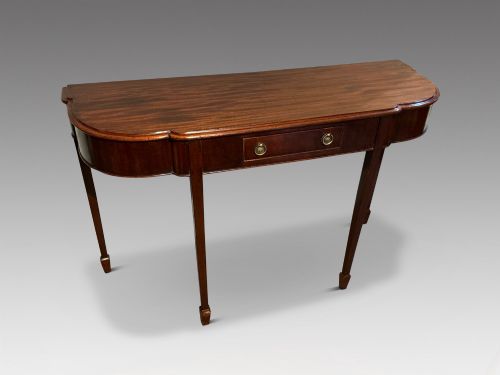
Cabinetmakers utilised dense timbers such as figured mahogany, flame mahogany, pollard oak, and rosewood for structural integrity and visual depth. These woods were frequently polished to a high sheen, highlighting natural grain patterns.
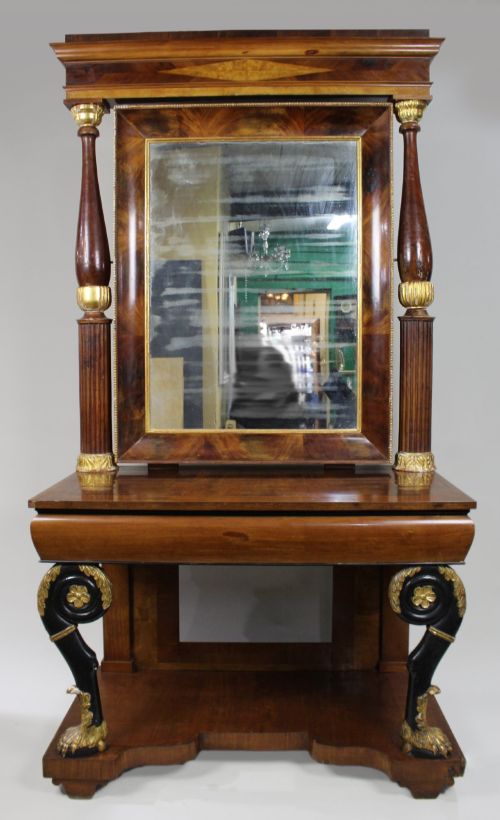
Surface decoration relies on contrasting materials including marble tops, brass inlay work, and parcel gilt highlights. Structural elements often combine solid timber frames with finely carved giltwood or painted wood details.
Some tables include hidden drawers once reserved for calling cards and visiting gossip.
Judging Quality
Quality rests on the selection of timber veneers and the crispness of carved or gilded details. Superior examples display thoughtful matching of flame mahogany or rosewood grains across the primary surfaces.
Integration of secondary materials dictates overall refinement, particularly the thickness and finish of inset marble slabs and the precision of brass inlay. Finer pieces demonstrate harmonious proportions between the timber base and any applied decorative elements.
Peters of Genoa·James Mein of Kelso
The Regency Entry Table Glossary
- Demi-lune
- A half-moon shape used for console and side tables. This profile allows the furniture to sit flush against an entryway wall while occupying minimal floor space.
- Parcel gilt
- Woodwork partially covered in gold leaf to accentuate carved details. It contrasts sharply with dark rosewood or painted surfaces.
- Gueridon
- A small circular table on a central pillar and base. These pieces frequently function as centre tables in larger halls.
- Pier table
- A table designed to stand beneath a wall pier or mirror. They share many characteristics with standard console tables.
Regency Entry Table: Frequently Asked Questions
What is a regency entry table?
A regency entry table is a hallway furnishing designed during the early nineteenth century to provide a surface for lamps or decorative objects. These tables typically feature classical proportions, architectural symmetry, and rich timber surfaces.
They appear in various formats including console, side, and centre tables. Many incorporate marble slabs or brass detailing suited to formal entrance spaces.
How do you style an entry table?
Styling an entry table involves balancing functional items with decorative objects that complement the timber grain and period details. Placing the table against a wall or beneath a mirror creates a structured focal point in a hallway.
Keeping the surface uncluttered allows the mahogany, rosewood, or marble top to remain visible. Taller elements like lamps or ceramic jars add height without crowding the space.
How do I identify a regency table?
Identifying a regency table requires examining the timber selection, such as figured mahogany or rosewood, alongside neoclassical design motifs like reeded legs or brass inlay. Proportions tend to be balanced and architectural.
Construction methods and material combinations provide further clues to the period. Comparing the piece against standard forms like the demi-lune console helps confirm its era.
Where should an entry table go?
An entry table belongs in a hallway, foyer, or large landing where it can greet visitors upon arrival. Console and demi-lune versions sit flat against a wall to preserve walking paths.
Circular centre tables require a wider open space to allow movement around the perimeter. Placing the table near a light source enhances the polished wood finish.