




Narrow Wall Table
A narrow wall table brings proportion and surface to a tight hallway or compact room without stealing floor space.
Narrow Wall Table
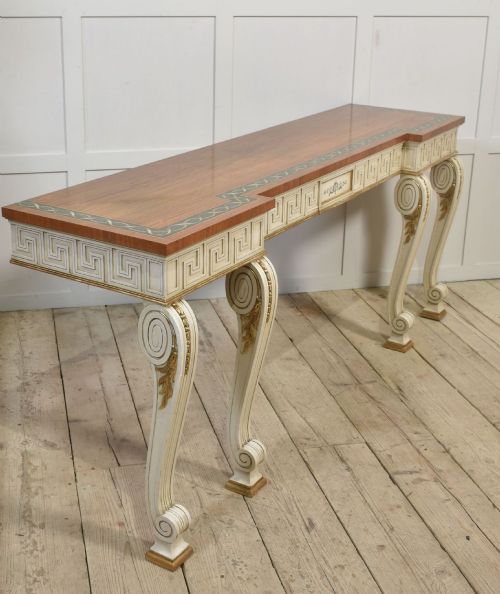
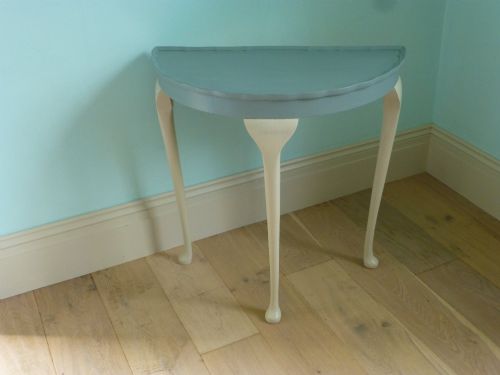
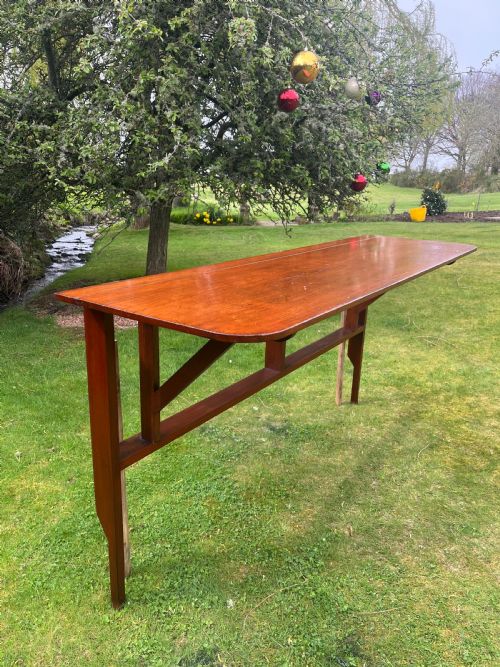
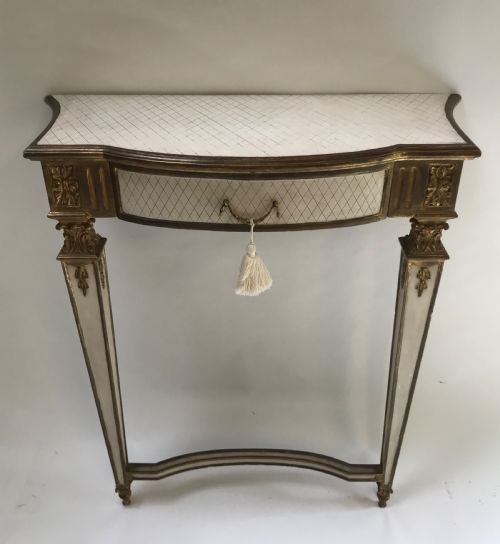
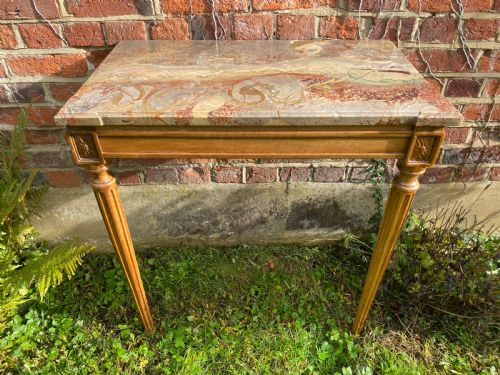
A narrow wall table sits flush or close against vertical surfaces, serving as a console, pier table, or hall table depending on its proportions. These pieces appear in forms ranging from demi-lune shapes to breakfront designs.
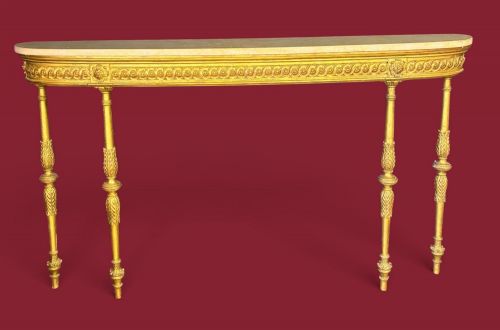
The pieces on this page span the eighteenth century, nineteenth century, and early twentieth century, taking shape through styles such as Neoclassical, William IV, Queen Anne, and Georgian Revival.
Makers and workshops constructed these tables to fit narrow circulation spaces, often pairing them with pier mirrors or placing them beneath windows.
How they were made
Craftsmen built these tables using timber such as mahogany and walnut, alongside painted wood surfaces and structural brass elements. Workshops frequently applied giltwood and gilding to highlight carved details.
Many examples incorporate marble tops, requiring sturdy timber or giltwood framing to support the stone weight. Artisans also utilised hand-painted decoration across timber and gesso.
Several tables were built specifically narrow enough to survive the bustling carriage traffic and tight corridors of historic country houses.
What varies in quality
The distinction between standard production and finer execution lies in the sharpness of carved detail and the weight of the materials. Solid mahogany or substantial giltwood frames demonstrate superior construction compared to simpler painted timber.
Fitted marble tops show variations in thickness, veining quality, and how cleanly the stone seats within the wooden or gilded rebate. Hand-painted surfaces also differ in depth and execution across periods.
The Narrow Wall Table Glossary
- Console table
- A table supported by wall brackets or legs, designed to stand against a wall. These pieces often feature decorative front legs with a flat rear edge.
- Pier table
- A table designed specifically to stand against the wall space between two windows, frequently paired with a matching mirror above. Such tables typically feature narrow proportions.
- Demi-lune
- A half-moon shape used for table tops and frames, allowing the piece to sit tightly against a wall. This curved form was popular for hall and console tables.
- Breakfront
- A piece of furniture where the central section projects forward from the flanking sections. This configuration adds architectural depth to narrow wall furniture.
Narrow Wall Table: Frequently Asked Questions
Where should I place a narrow wall table?
These tables suit hallways, landings, and narrow reception rooms where standard furniture protrudes too far into pathways. They provide a practical surface for post, keys, and lighting.
Positioning one beneath a mirror or artwork helps anchor the wall visually. Their shallow depth keeps walkways clear while adding a defined decorative focal point.
How do I identify a Neoclassical console table?
Neoclassical pieces feature symmetrical lines, classical motifs, and restrained ornamentation drawn from ancient Greek and Roman architecture. Look for straight tapered legs, fluting, and painted or gilded details.
These designs emerged strongly during the eighteenth and nineteenth centuries, often prioritising geometric balance over heavy carving.
What is the difference between a console and a pier table?
A console table historically relied on wall brackets for part of its support, whereas a pier table stood independently on legs designed for the wall space between windows. Over time, the terms became largely interchangeable in the antiques trade.
Both forms share the characteristic narrow depth required for placement flat against a wall.