

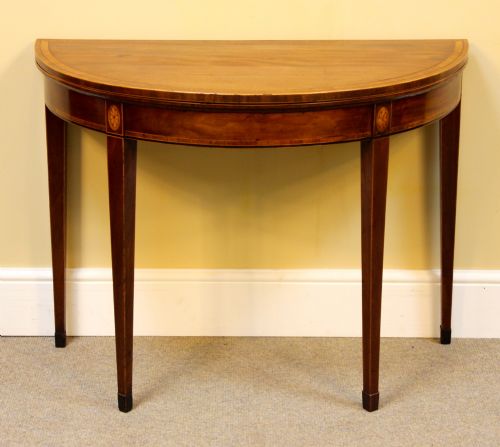
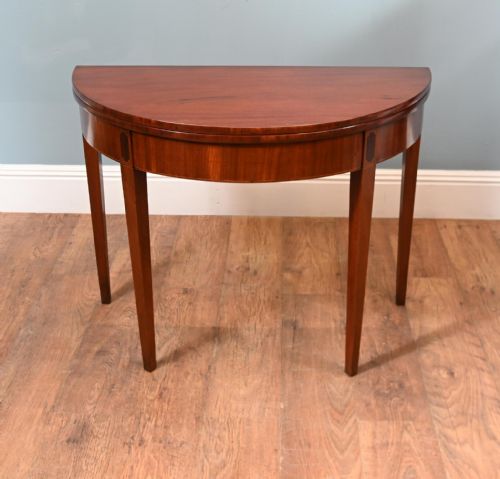


Regency Demilune Card Table
These regency demilune card table pieces combine clever folding tops with half-round shapes to furnish sophisticated rooms.
Regency Demilune Card Table
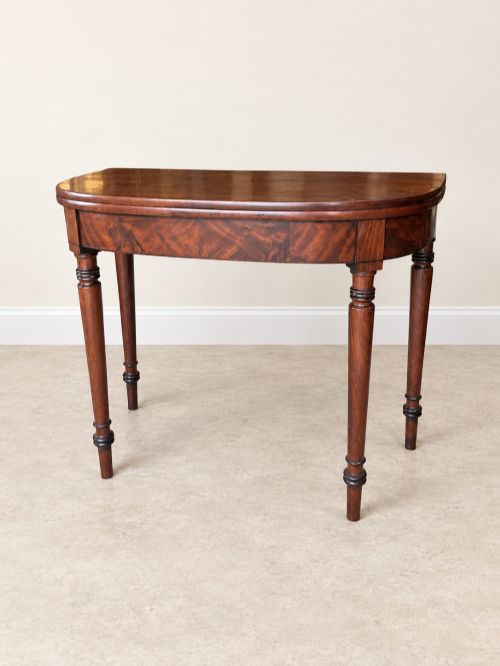
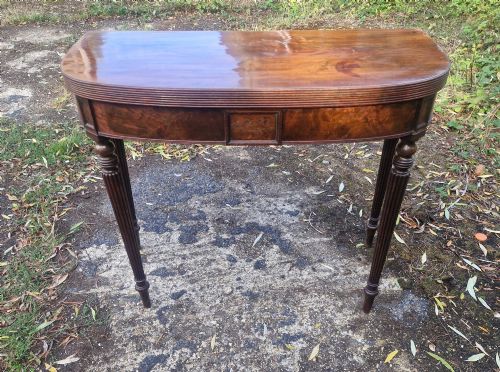
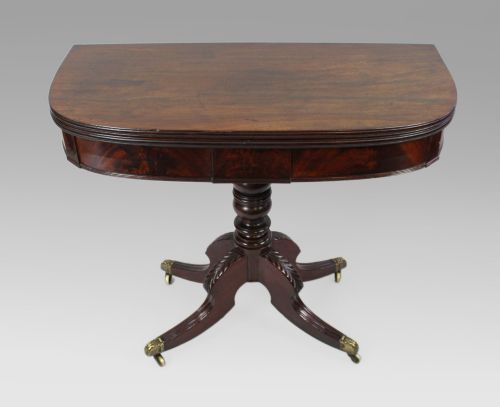
When searching for a regency demilune card table, buyers encounter half-round, D-shaped, and bow-front folding pieces designed for games, tea, and console use. Most examples date from the Regency and early nineteenth-century periods, showing the characteristic restrained elegance of Georgian and George IV furniture design.
The form typically involves a hinged top that folds open to double the surface area, often concealing a small storage well beneath. These versatile tables function equally well against a wall as side tables or pulled into the centre of a room for entertaining.
Materials and construction
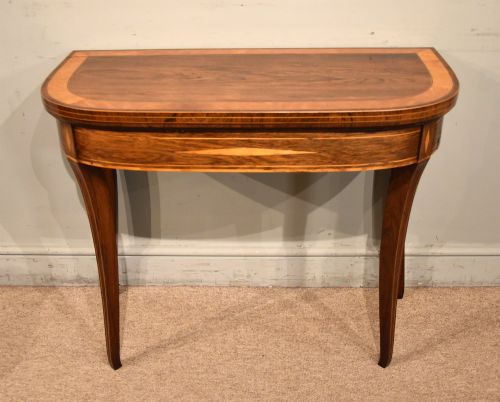
Cabinet makers relied heavily on rich timbers such as mahogany and rosewood, frequently selecting flame mahogany veneer for visual depth. Details were enhanced using contrasting woods like satinwood, boxwood, and ebony, often applied as delicate stringing or elaborate inlay.
Brass mounts and subtle stringing details provided polished accents to the structural woodwork. These materials were shaped to the distinctive D-form curves demanded by the style, requiring precise carpentry for the folding mechanisms.
Many a polite evening of Regency whist began with the crisp snap of a demilune leaf unfolding.
Judging quality and execution
The distinction between standard examples and superior pieces rests on the choice of timber and the precision of the inlay. Finely figured veneers and crisp boxwood or satinwood stringing elevate a piece above simpler variants constructed with plain mahogany.
Proportion and the execution of the D-shaped curve dictate visual success. Master workshops demonstrated superior handling of the folding action and leg joinery, ensuring stability whether the top is closed as a console or opened for games.
Gillows
The Regency Demilune Card Table Glossary
- Demilune
- Half-moon shape, describing tables with a straight back edge and a rounded front designed to stand flat against a wall.
- Card table
- A folding table specifically built for playing games, featuring a baize-lined interior surface when opened.
- Flame mahogany
- A highly decorative veneer cut from timber where the grain creates a distinctive flickering flame pattern.
- Stringing
- Inlay work using thin strips of contrasting wood, such as boxwood or ebony, to outline edges and panels.
Regency Demilune Card Table: Frequently Asked Questions
How do you date a card table?
Dating relies on identifying period characteristics in the timber, leg style, and construction methods.
Early nineteenth-century examples often incorporate flame mahogany veneers and delicate satinwood or boxwood inlay work.
Were these tables used for dining?
These tables served primarily for card games, tea service, and general display as console or side furniture.
The folding top allowed households to save floor space while maintaining a formal surface for entertaining guests.
What woods were commonly used?
Mahogany and rosewood form the primary structural and surface timbers across these listings.
Cabinet makers added contrasting visual interest using boxwood, satinwood, ebony, and decorative flame veneers.