
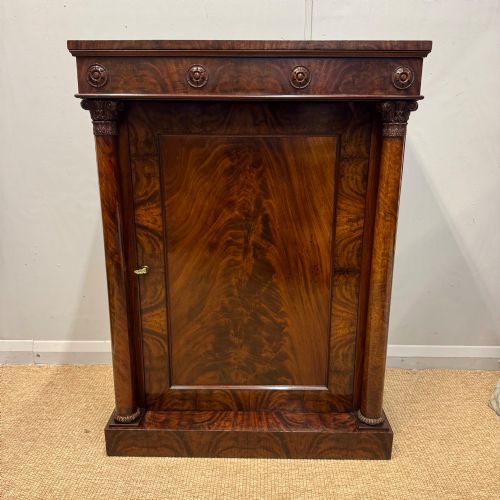
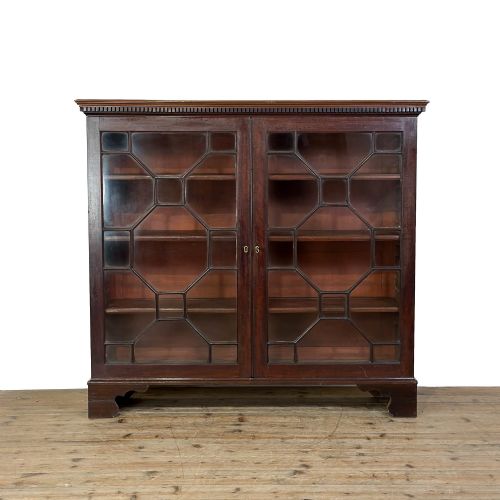
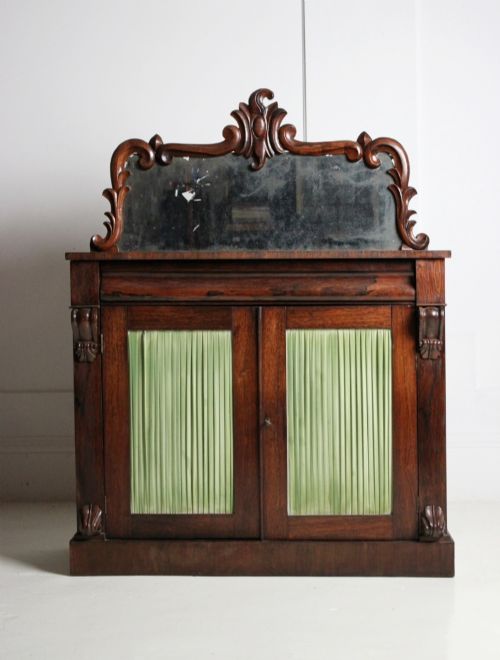
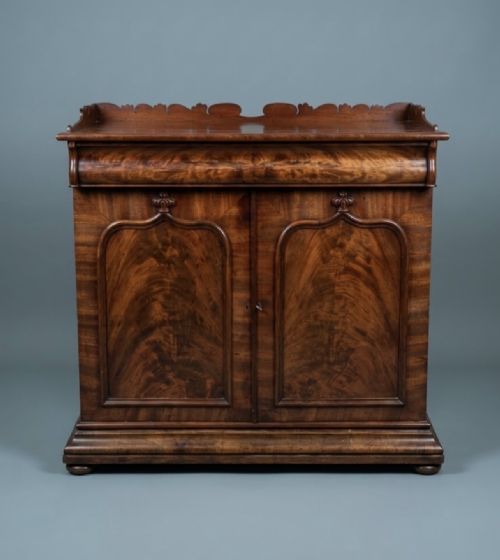
Regency Cupboard Side Cabinet
A regency cupboard side cabinet brings architectural order and rich timber grain to a room, offering practical storage disguised as elegance.
Regency Cupboard Side Cabinet
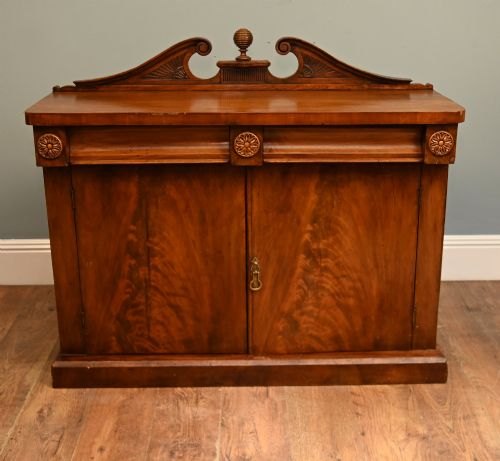
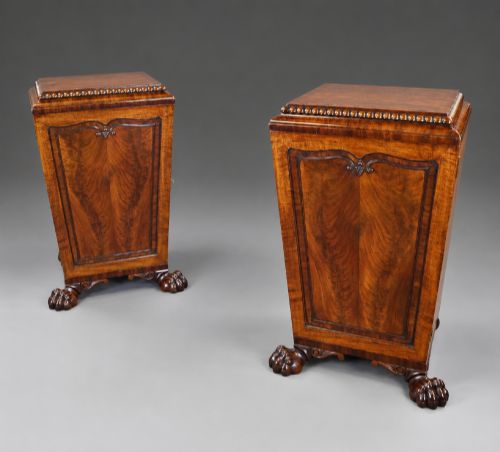
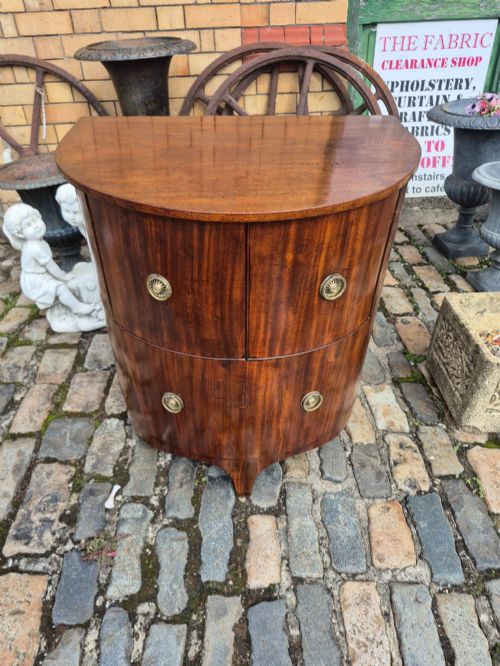
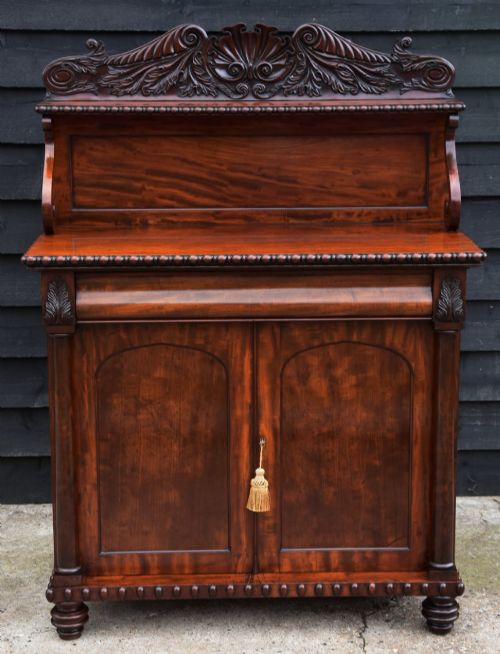
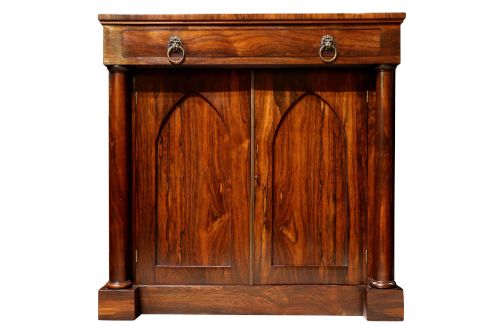
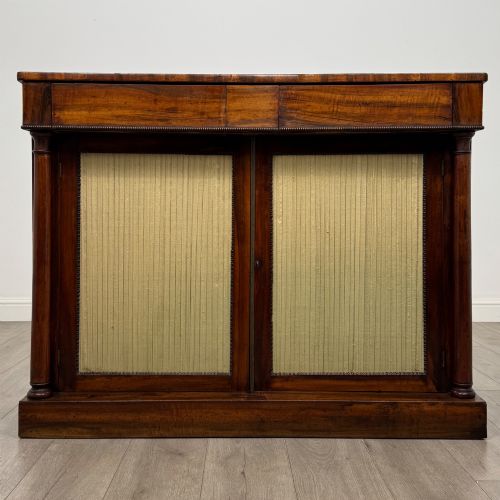
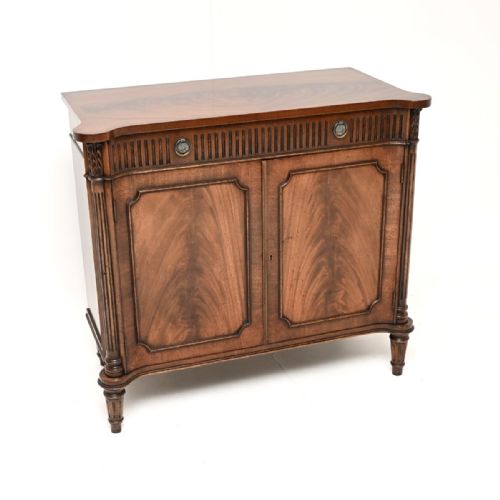
A regency cupboard side cabinet is a low storage piece designed for the parlour, dining room or bedroom during the early nineteenth century. These items span compact bedside cupboards to larger breakfront chiffoniers fitted with shelves and panelled doors.
The versions most common here belong to the Regency and William IV periods, constructed in rich timbers designed to anchor a wall. They function as both display surfaces and enclosed storage for books, linen or china.
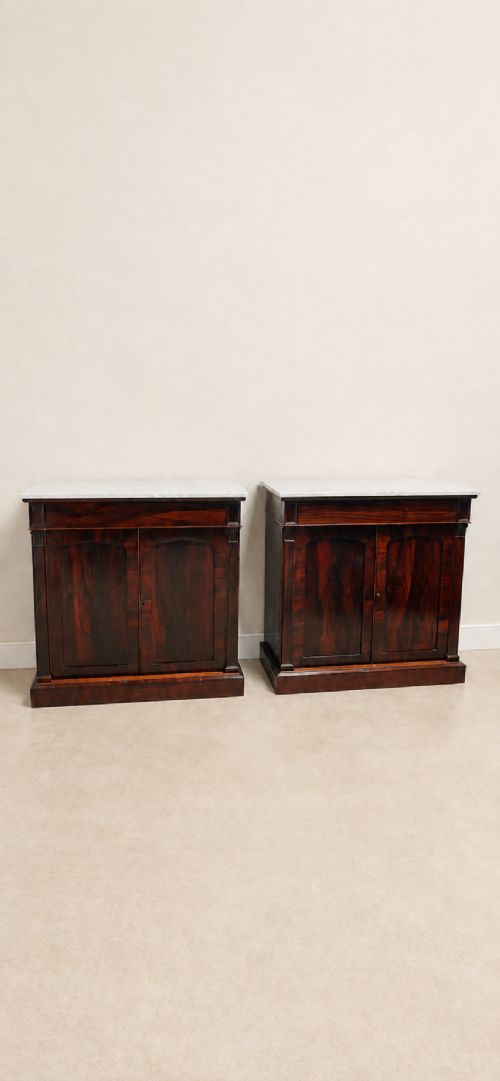
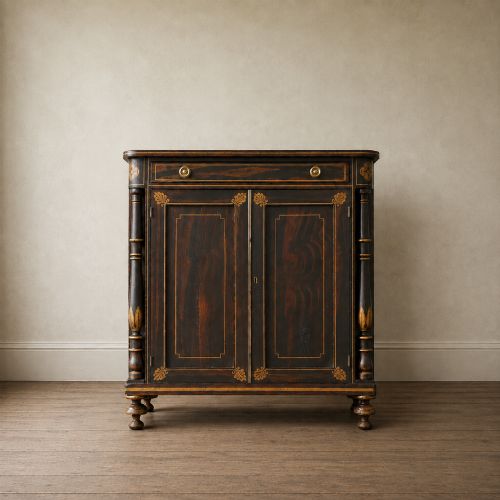
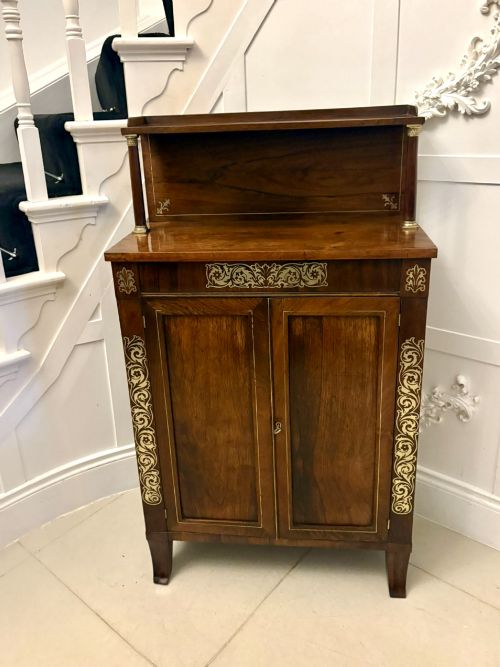
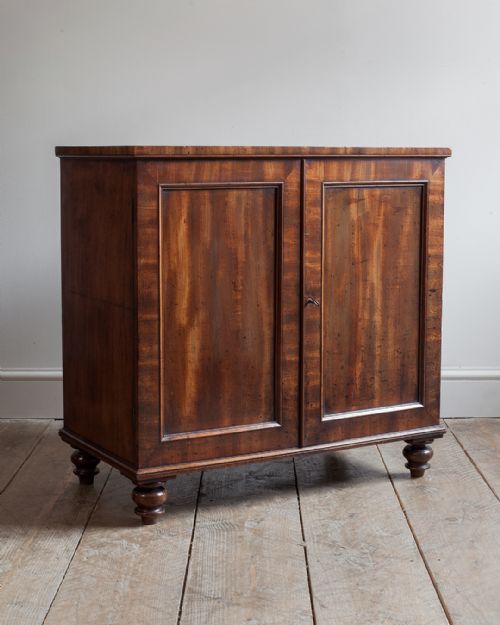
Makers of the era drew on Neoclassical and Gothic idioms, producing side cabinets that range from austere mahogany carcases to highly decorative rosewood pieces with brass inlay.
How they were made
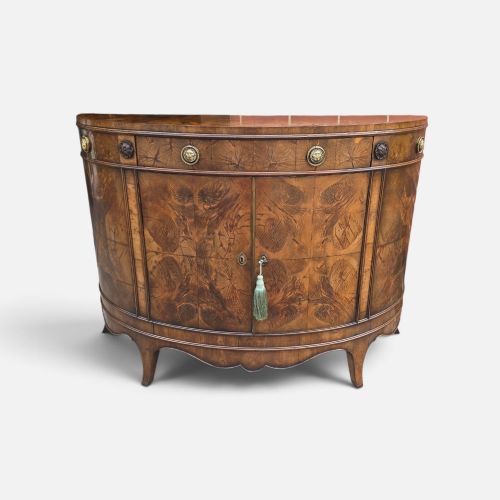
Cabinet makers utilised solid timbers alongside veneers, selecting figured mahogany, rosewood, amboyna and goncalo alves to create striking surface patterns. Flame mahogany veneer and satinwood banding added depth and contrast to door panels and friezes.
Brass was employed extensively for inlay, grilles, handles and gallery rails, often contrasting sharply against dark tropical hardwoods. Pine and oak served as secondary timbers for internal carcases, drawer linings and backboards.
Joinery techniques included fine dovetailing for drawers and mortise-and-tenon framing for doors, ensuring structural stability across seasonal changes in temperature and humidity.
Listings feature woods like rosewood, mahogany, amboyna, and goncalo alves across the Regency, Georgian, and Victorian periods.
What varies in quality
The selection of timber grain largely dictates the standing of a piece, with book-matched flame veneers and carefully chosen rosewood marking out superior workshop production. Lesser examples rely on plain, unfigured boards and simpler construction methods.
Proportion and balance define the aesthetic success of these cabinets, where finer items maintain harmonious dimensions between the top surface, door panels and plinth base.
Gillows·Louis Constantin Le Gaigneur
The Regency Cupboard Side Cabinet Glossary
- Chiffonier
- A low cabinet originating in the early nineteenth century, typically featuring shelves above enclosed cupboards or fabric-backed doors. They served as versatile sideboards in dining rooms and parlours.
- Pier cabinet
- A narrow cabinet specifically built to stand against the wall space between windows. These pieces often utilised glass or mirrored doors to reflect light.
- Flame mahogany
- A veneer cut from the fork of a mahogany tree that produces a distinctive flickering flame pattern. Cabinet makers reserved this timber for prominent drawer fronts and door panels.
- Goncalo alves
- A dense exotic hardwood with striking dark brown and golden-brown contrasting markings. It appeared frequently in high-status Regency furniture.
- Secretaire
- A writing drawer that pulls down to reveal a fitted interior of small drawers and pigeonholes. This hybrid form combined the utility of a desk with the storage of a cabinet.
Regency Cupboard Side Cabinet: Frequently Asked Questions
What is a regency cupboard side cabinet used for?
These cabinets served multiple domestic functions, from holding table linen and silver in a dining room to storing books or bedside items in private chambers. Their flat top surfaces also provided a convenient stage for lamps, clocks and decorative objects.
In modern interiors, they adapt readily to similar tasks, offering concealed storage while occupying minimal floor space compared to larger sideboards.
How do I tell a regency piece from a later copy?
Examine the secondary timbers inside the drawers and carcase, as nineteenth-century pieces typically use hand-sawn oak or pine rather than modern plywood or machine-cut deal. Hand-cut dovetails and timber shrinkage patterns also offer reliable clues to genuine period manufacture.
Hardware fixings, such as hand-turned screws and original brass locks, further help establish the age and authenticity of the cabinet.
Where should I place a side cabinet in my home?
A side cabinet fits naturally against a dining room wall, a hallway, or a drawing room where it can display ornaments on top while keeping clutter hidden below. Smaller bedside versions work well beside a bed or in a tight alcove.
Because many of these pieces feature finished backs or sit low against the wall, they do not disrupt the sightlines of a room.
What is the difference between a chiffonier and a side cabinet?
A chiffonier is a specific type of side cabinet that traditionally incorporates a raised shelf superstructure supported by small pillars above the main body. Standard side cabinets generally feature a simple flat top without tiered shelving.
Both forms belong to the broader family of Regency and nineteenth-century low storage furniture.