

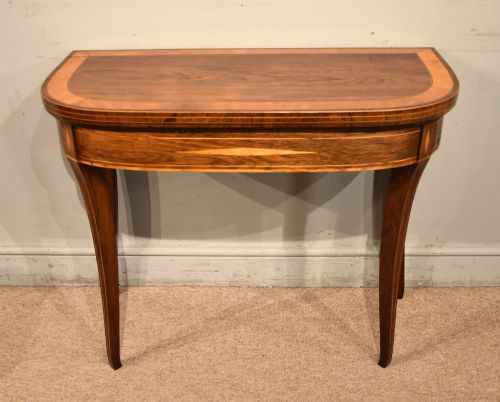
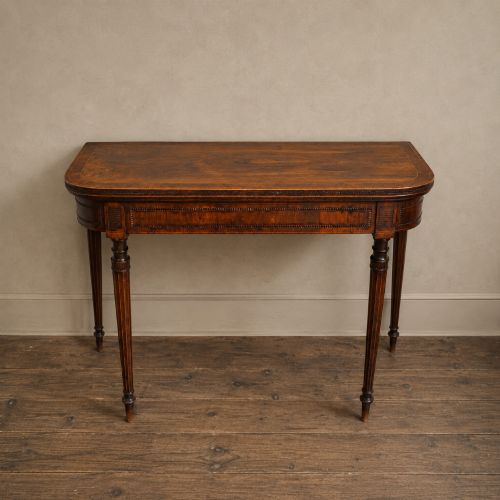
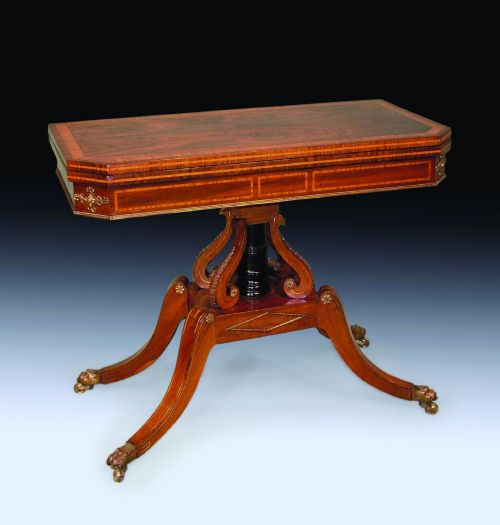
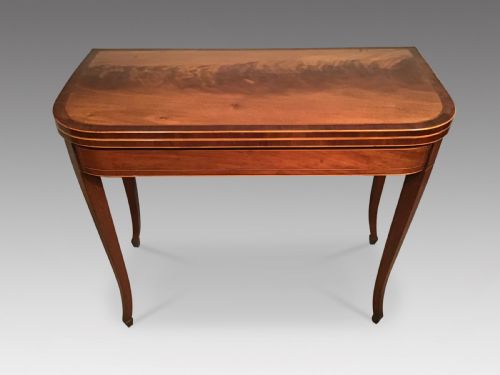


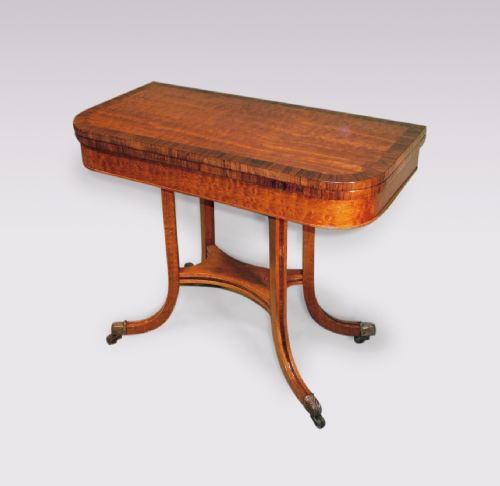
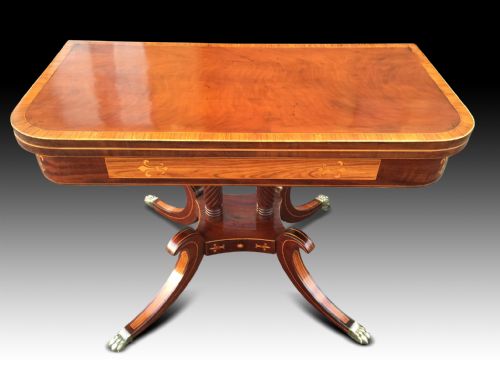


Regency Crossbanded Card Table
A regency crossbanded card table combines clever folding surfaces with contrasting timber borders, offering an elegant centrepiece that collectors prize for period interiors.
Regency Crossbanded Card Table
A regency crossbanded card table is a form of furniture designed for parlour games and tea, featuring a hinged top that folds over to reveal a playing surface. You will frequently encounter mahogany and rosewood examples from the nineteenth century, Georgian, and Regency periods.
The inventory on this page includes card tables, tea tables, games tables, and combined card and games tables. These items originate from the eighteenth century, the Regency era, 1800, 1850, and the George IV style.
Most pieces date to the nineteenth century and the Regency period, showing variations from simple mahogany frames to elaborate rosewood and satinwood constructions. Makers such as William Trotter of Edinburgh also appear in records for specific tea tables.
How they were made
Cabinet makers built these tables using solid timber frames overlaid with fine veneer, applying contrasting timbers such as satinwood, burr yew, and rosewood for the characteristic crossbanding along the edges. Brass details and intricate inlay work frequently accent the structural mahogany or rosewood bodies.
Support systems vary between traditional legs and scroll pedestal bases, depending on the specific nineteenth century or Regency workshop design. The folding tops rely on precise joinery to ensure the surface sits flush in both closed console and open game configurations.
Regency Crossbanded Card Table Retail Price Guide 2026
Typical asking prices for regency crossbanded card table among the pieces listed under this phrase on Sellingantiques today, from the lower quarter to the upper quarter. They describe what is for sale here now, not the wider market.
One Scottish maker thoughtfully ensured that tea drinkers and card sharks used the exact same piece of furniture.
What varies in quality
The choice of secondary timbers and the precision of the veneer work dictate the overall refinement of a piece, separating standard workshop output from exceptional cabinet work. Contrasting borders in satinwood, burr yew, or rosewood demand high skill to align cleanly with the primary grain of the mahogany or maple.
Proportion and base construction also distinguish the range, as tables resting on scroll pedestal bases or featuring complex inlay demonstrate greater ambition from the maker. The crispness of the turning and the integration of brass mounts reveal the maker's attention to detail.
William Trotter of Edinburgh
The Regency Crossbanded Card Table Glossary
- Crossbanding
- A strip of veneer applied to the border of a table top so that its grain runs perpendicular to the main surface. This technique creates a distinct visual frame around the central timber.
- Rosewood
- A dense, dark exotic hardwood prized for its rich grain patterns and dark coloration. It frequently serves as the primary exterior timber on Regency examples.
- Satinwood
- A luminous yellowish timber used for contrasting stringing and inlay work. Cabinet makers utilised it to highlight borders and geometric motifs.
- Birdseye maple
- A decorative veneer marked by small circular figures resembling bird's eyes. It provides a striking contrast when paired with darker woods like rosewood.
- Scroll pedestal base
- A carved central support curving outward toward feet, often seen on nineteenth-century tables. This design replaced traditional four-leg configurations to allow more legroom during card games.
Regency Crossbanded Card Table: Frequently Asked Questions
What is a regency crossbanded card table used for?
These tables served primarily as dual-purpose furniture for the home parlour, functioning as side or console tables when folded shut. During the evening, the top flipped open to provide a stable surface for card playing or tea service.
In modern interiors, they continue to function well in hallways or living rooms where space is at a premium, offering surface area without a large permanent footprint.
How do I identify the Regency period?
Regency pieces typically date from the early nineteenth century and draw inspiration from classical Greek, Roman, and Egyptian motifs. You will notice dark woods, brass mounts, and architectural pedestal bases rather than the lighter satinwood and cabriole legs of earlier Georgian furniture.
Crossbanding and contrasting stringing remain common decorative elements that help define the aesthetic of this era.
What woods were used to make them?
Mahogany and rosewood form the primary body and surface timbers for the vast majority of these tables. Cabinet makers accented these darker woods with lighter veneers like satinwood, burr yew, and birdseye maple.
Brass also appears frequently as inlay or as structural hardware on pedestal bases and feet.
How do card tables and tea tables differ?
Card tables and tea tables share similar folding top mechanisms, but their intended domestic uses often dictated their internal surfaces. Card tables frequently feature baize or lined interiors for playing games, whereas tea tables were designed to hold porcelain services.
Many surviving examples served both functions interchangeably, leading makers to classify them as combined card and games tables.