





Regency Chair on Castors
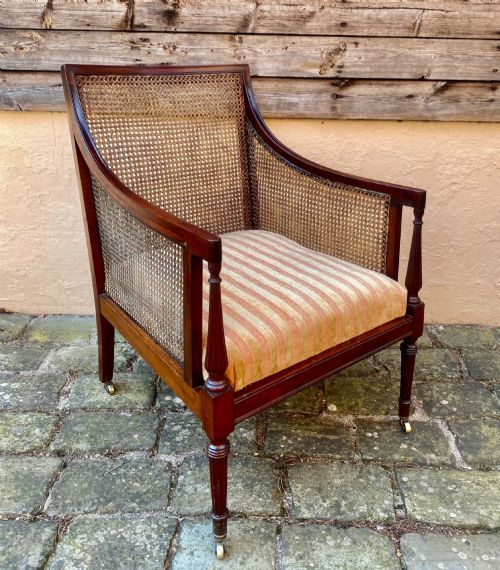
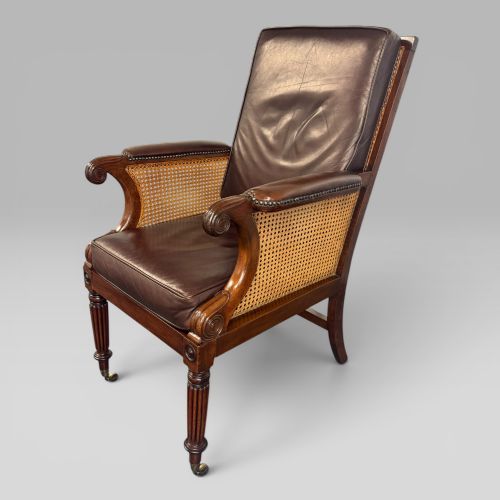
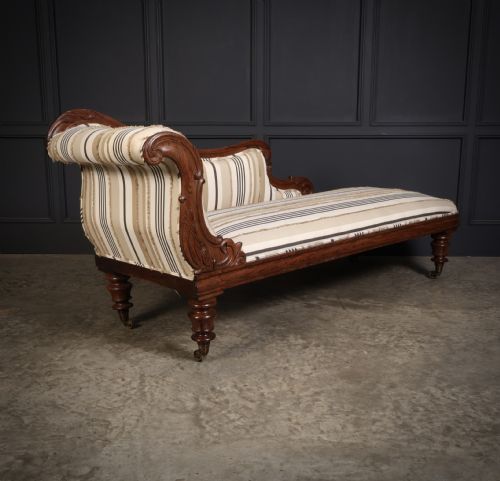
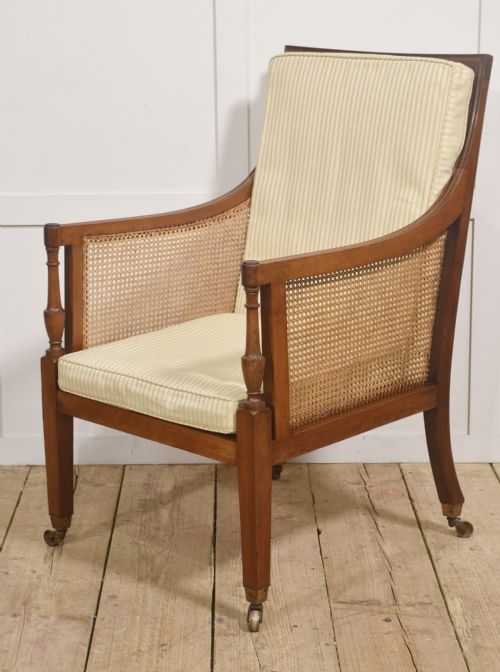
These regency chair on castors selections bring mobile seating into a room, offering library armchairs, bergères, and chaises longues mounted on brass fittings.
Regency Chair on Castors
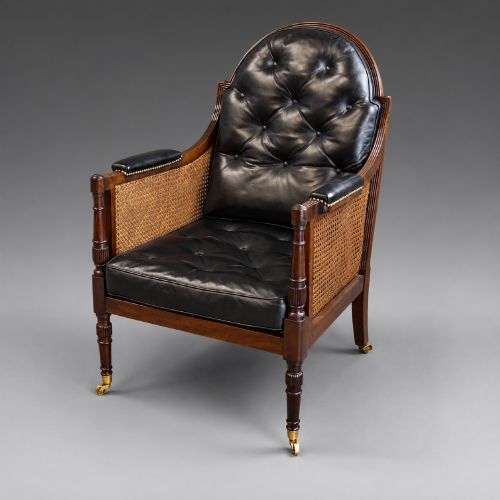
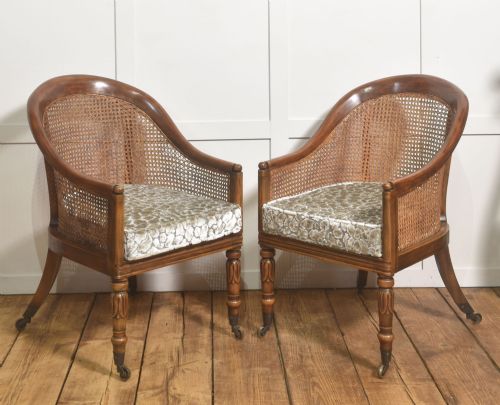
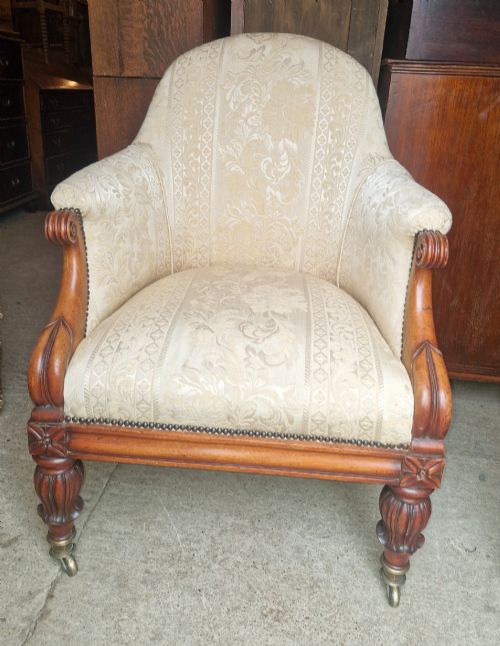
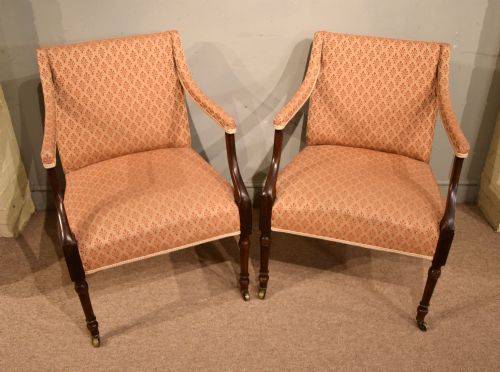
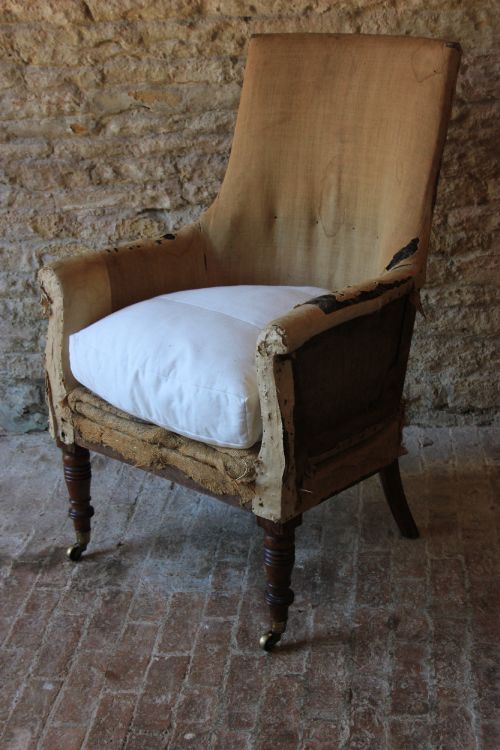
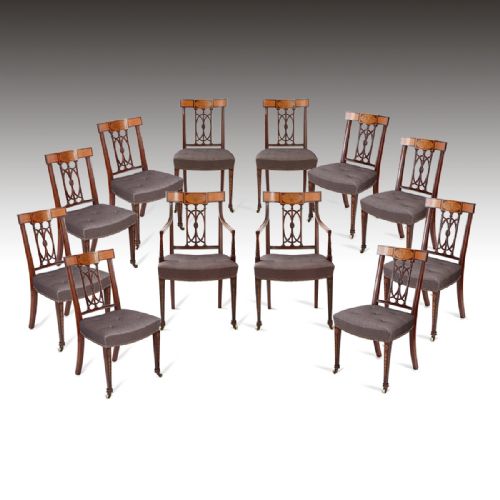
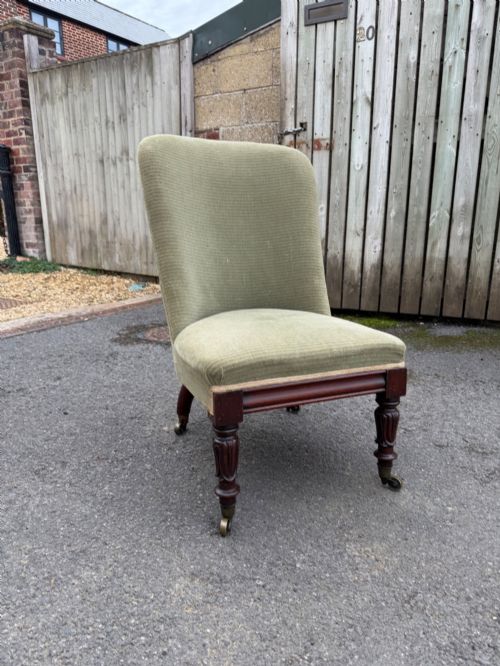
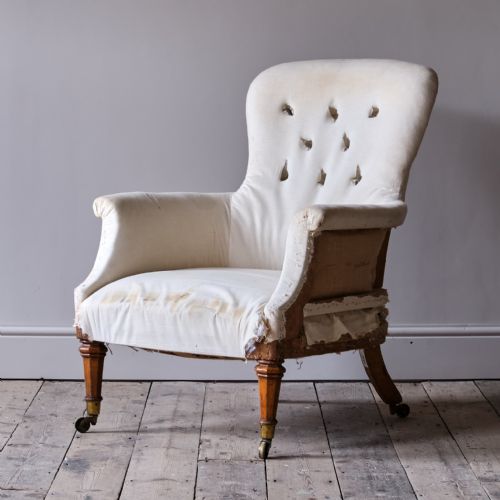
A regency chair on castors is a mobile seating form primarily encountered in library armchairs, bergères, and dining chairs from the Regency, George IV, and William IV periods. These pieces combine heavy timber frames with functional brass wheels underneath to allow easy movement across carpets and wooden floors. Library armchairs and bergères dominate the selection, featuring generous proportions, caned or upholstered backs, and robust frames designed for comfort.
The materials span mahogany, rosewood, and simulated rosewood, paired with upholstery in fabric, leather, velvet, and hessian. Makers constructed these chairs to serve specific domestic tasks, such as reading, writing at desks, or resting in libraries and parlours. The inclusion of castors marks them out as functional furniture engineered for repositioning within grand domestic spaces during the nineteenth century.
Materials and construction methods
Cabinetmakers built the frames of these chairs using dense timbers like mahogany and rosewood, selected for structural strength and rich grain. Turned, reeded, or carved wooden members form the arms, legs, and back supports, often incorporating lyre motifs, spoon backs, or X-frames. Caning was woven tightly into open frames for bergères, while upholstered versions relied on webbing, stuffing, and textile coverings secured with brass tacks.
Brass castors were fitted to the base of the legs, sometimes attached via small wooden cups or sockets to bear the weight of the heavy timber frames. Joinery relied on traditional mortise and tenon techniques, ensuring stability despite the movement permitted by the wheels below. Makers like Gillows and Daws applied precise turning and carving to these structural elements, balancing decorative elegance with everyday durability.
Regency Chair on Castors Retail Price Guide 2026
Typical asking prices for regency chair on castors among the pieces listed under this phrase on Sellingantiques today, from the lower quarter to the upper quarter. They describe what is for sale here now, not the wider market.
The furniture spans the Georgian, Regency, William IV, and Victorian periods, highlighting evolving seating styles.
Distinctions in craftsmanship and form
The quality of a regency chair on castors rests upon the crispness of the timber carving, the elegance of the proportions, and the integrity of the original frame construction. Pieces exhibiting well-drawn lines, balanced reeding, and finely turned members command greater respect than simpler, utilitarian examples. The presence of secondary timbers and the refinement of the brass castors further separate standard production pieces from workshop highlights.
Makers' attribution also influences standing, with documented work from firms like Gillows, Miles & Edwards, or Daws demonstrating superior joinery and thoughtful ergonomic design. The retention of original caning, secondary woods, and period upholstery materials adds depth to an evaluation. Ultimately, harmony between the timber frame, the upholstery design, and the smooth operation of the undercarriage dictates the standing of each piece.
Gillows·Miles & Edwards·Daws·Minter
The Regency Chair on Castors Glossary
- Bergère
- An enclosed upholstered armchair with a wooden frame, where the back and sides are frequently filled with cane work. This French-inspired form became a staple of English Regency libraries.
- Castor
- A small wheel mounted on a swivel attached to the foot of a chair or day bed. It permits smooth rolling movement across floors.
- Reeding
- Parallel convex mouldings carved directly into the surface of wooden legs or arms. It provides a classical linear texture popular during the Regency era.
- Lyre arm
- An armchair arm shaped in the profile of an ancient stringed instrument. This decorative carved element defines specific library seating from the period.
- Simulated rosewood
- Painted or stained timber, often beech, treated to imitate the deep grain and contrasting colour of genuine rosewood. It offered a decorative finish at a reduced material cost.
Regency Chair on Castors: Frequently Asked Questions
How do I identify a Regency period chair?
Regency chairs display classical motifs, reeded woodwork, and dense mahogany or rosewood frames. Proportions tend to be generous and architectural.
Look for distinctive details like lyre fronts, scroll arms, and integrated brass castor wheels.
Where were these armchairs used?
These chairs were placed in libraries, studies, and drawing rooms of large nineteenth-century homes. Their mobility made them practical for shifting near fires or desks.
They served readers, writers, and those seeking comfortable daytime rest.
Can I use a chaise longue daily?
A nineteenth-century chaise longue provides sturdy day bed seating supported by timber frames and castors. Their durable construction suits regular interior placement.
Upholstery and internal webbing determine daily comfort and support levels.