



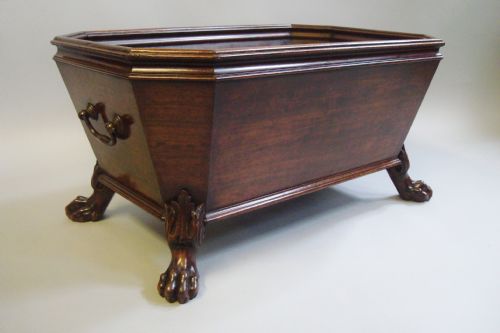

Regency Carved Planters
Regency carved planters bring botanical display into formal rooms through classical timberwork and metal liners.
Regency Carved Planters
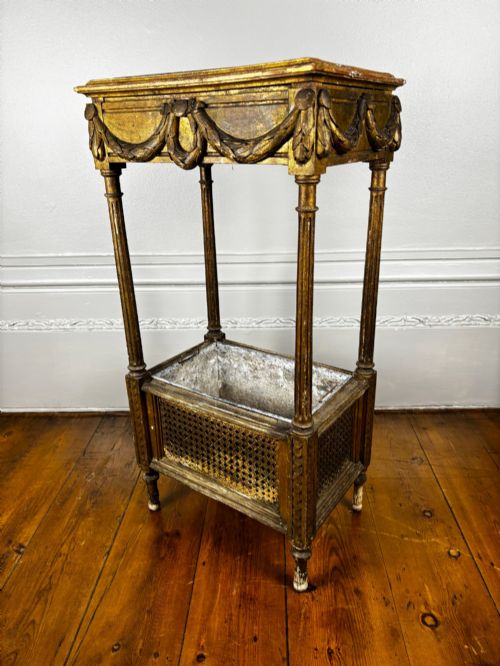
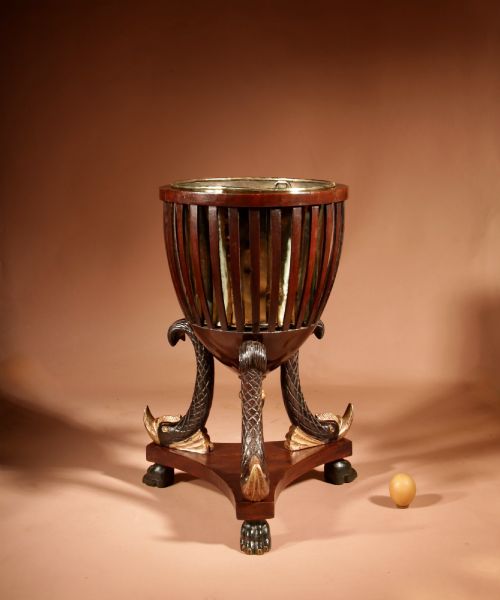
When buyers search for regency carved planters, they seek decorative vessels and stands designed to hold growing plants or cool wine within domestic interiors. These objects merge horticulture with interior decoration, taking the form of monumental urns, multi-tiered stands, and lidded jardinieres.
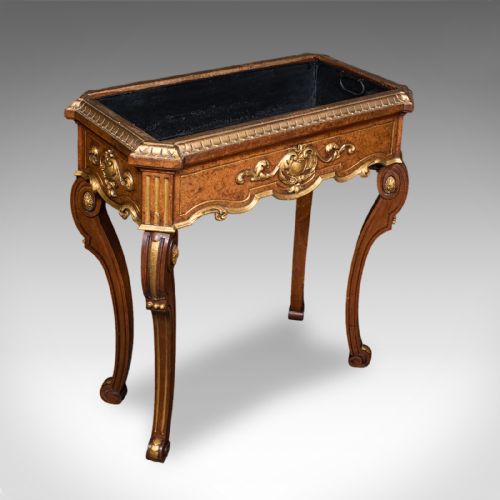
The pieces appearing on this page span the 19th Century, Regency, and Georgian eras, reflecting the classical tastes of the period. Forms range from low open wine coolers adapted for greenery to tall plant stands and marble-topped jardinieres.
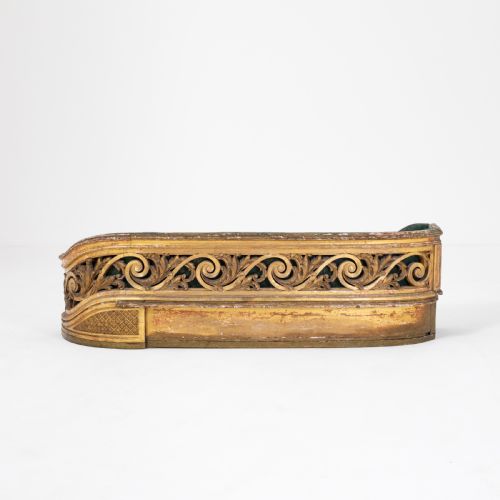
Originating from English, French, Dutch Empire, and Regency Anglo-Indian workshops, these items demonstrate international design dialogues. Walnut, mahogany, rosewood, and padouk predominate, often enriched with giltwood, ebonised wood, and ormolu mounts.
Materials and construction
Cabinetmakers utilised dense hardwoods such as mahogany, walnut, rosewood, and padouk, carving them with classical motifs like reeding, acanthus leaves, and fluting. Timber frames were constructed with meticulous joinery to support the heavy weight of soil, damp plants, and water.
Regency Carved Planters Retail Price Guide 2026
Typical asking prices for regency carved planters among the pieces listed under this phrase on Sellingantiques today, from the lower quarter to the upper quarter. They describe what is for sale here now, not the wider market.
The selection includes forms from English Regency, French Empire, Dutch Empire, and Regency Anglo-Indian design traditions.
Distinguishing quality
Quality in these vessels rests upon the crispness of the carving and the selection of figured timber veneers. Superior examples display deeply chiselled foliage and harmonious proportions rather than mechanical repetition.
The integrity of the interior lining and the survival of original metal mounts separate utilitarian items from grand decorative commissions. Finer pieces integrate secondary materials like marble and ormolu with precise craftsmanship that withstands close inspection.
The Regency Carved Planters Glossary
- Jardiniere
- An ornamental receptacle or pot for holding plants or flowers. These items sit upon floors or tables as decorative centrepieces.
- Ormolu
- Gilded bronze used for decorative mounts on furniture and decorative arts. The technique involves applying a gold amalgam to a bronze base.
- Campana
- A bell-shaped vessel form derived from classical antiquity. Such shapes appear frequently in urns and wine coolers.
- Torchere
- A tall stand designed to support a light, vase, or plant. Examples often feature slender carved shafts terminating in tripod or platform bases.
- Padouk
- A heavy tropical hardwood prized for its reddish hue and durability. Cabinetmakers utilised it in Regency Anglo-Indian furniture.
Regency Carved Planters: Frequently Asked Questions
What is the difference between a jardiniere and a wine cooler?
While both share deep cylindrical or urn-like forms designed to hold contents safely, wine coolers were constructed to chill bottles in ice or water. Jardinieres served primarily to display potted plants within interior reception rooms.
Over time, many open wine coolers were adapted for botanical use because their lead or metal linings handled damp soil effectively.
Where were these planters placed in a period home?
These decorative stands and vessels occupied prominent positions in drawing rooms, antechambers, and formal dining spaces. Tall plant stands highlighted specimen flora near windows, while large urns stood upon floors or tables.
They functioned as architectural elements that brought natural forms indoors during the winter months.
How do I care for timber planters today?
Protect wooden surfaces from moisture by placing waterproof saucers inside metal or wooden liners before adding potted plants. Wipe away condensation promptly to preserve the polish and prevent timber warping.
Apply traditional wax sparingly to maintain the natural lustre of mahogany and walnut without building up heavy residues.
How can I tell a Regency piece from a later revival?
Examine the timber shrinkage, secondary woods used in internal construction, and the hand-cut nature of joinery marks. Regency pieces exhibit the distinct weight and patination of genuine 19th-century cabinetmaking.
French Rococo Revival and later copies often display heavier machine tooling and different construction methods beneath the surface.