

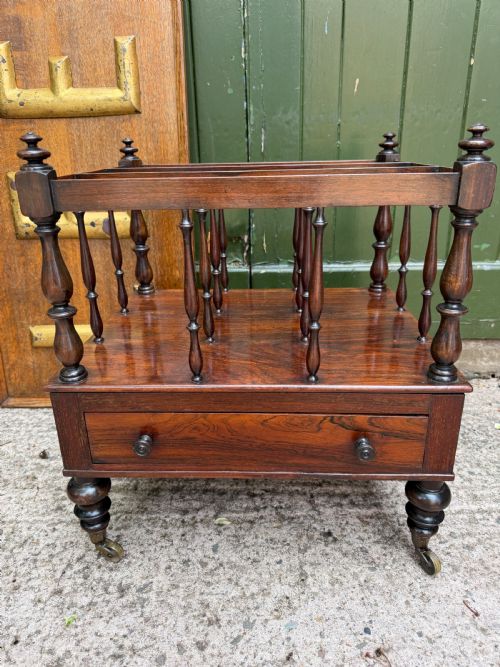


Regency Canterbury
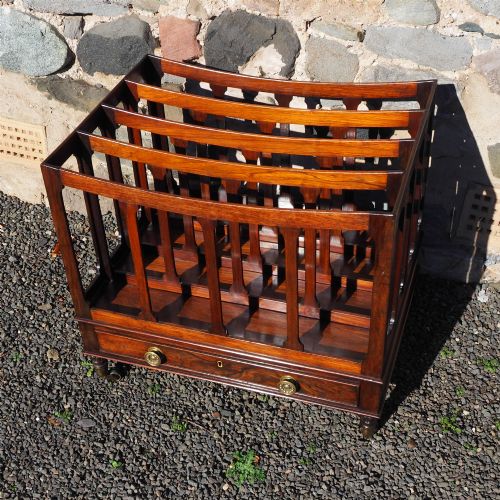
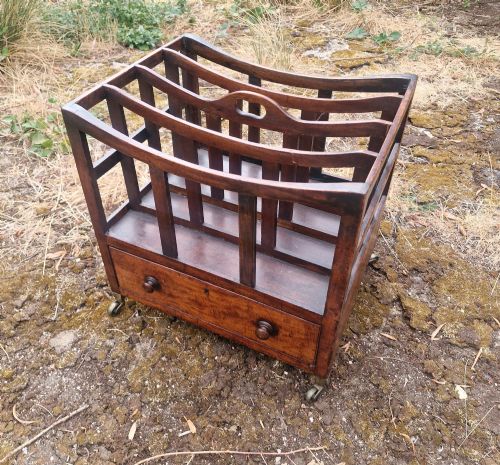
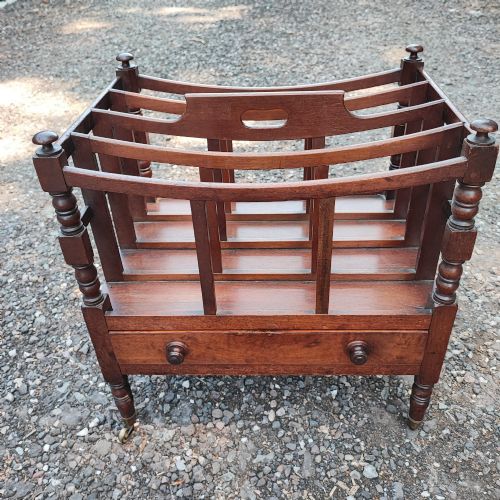
A regency canterbury is a low, multi-tiered stand built to hold sheets of music, newspapers, and periodicals near the fire.
Regency Canterbury
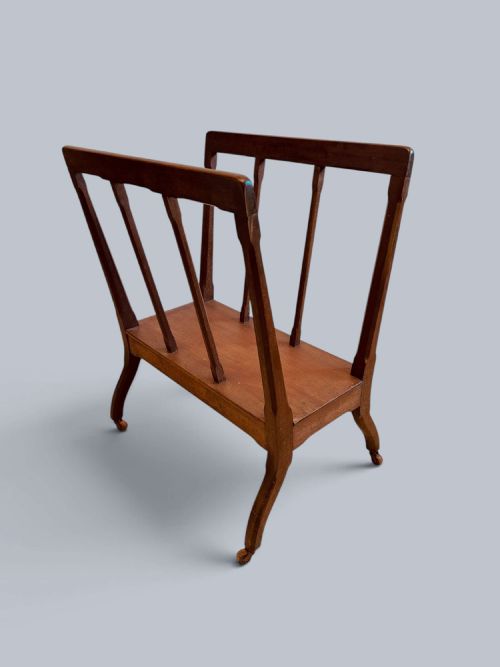
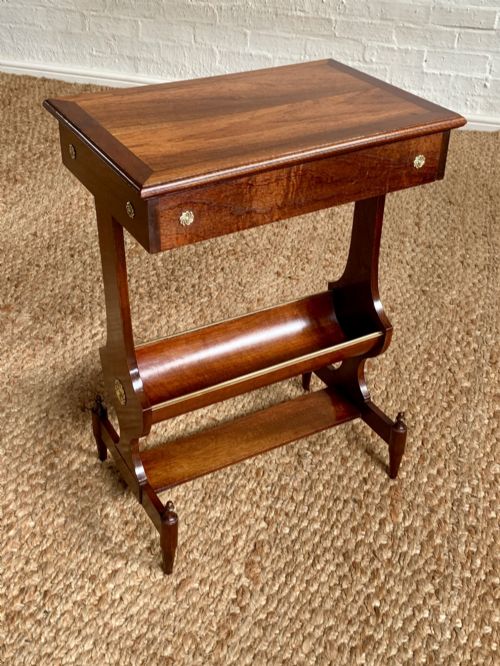
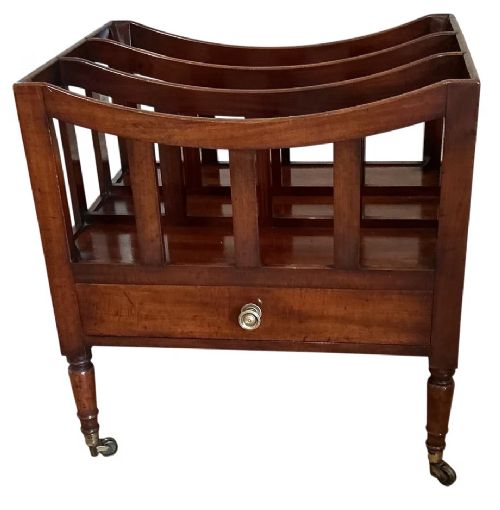
When you search for a regency canterbury, you encounter low, compartmentalised stands designed to hold folios, sheet music, and newspapers. The pieces on this page span the Regency, Georgian, and Victorian periods, including later revivals.
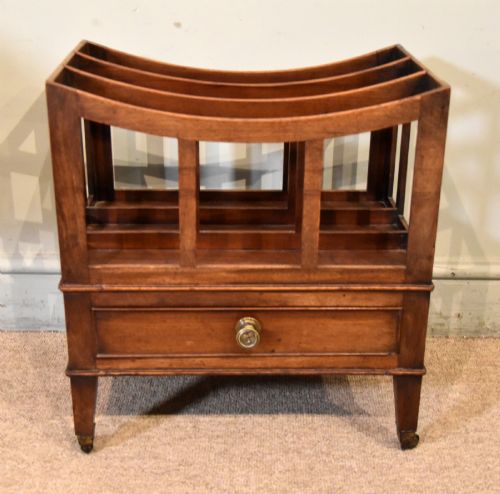
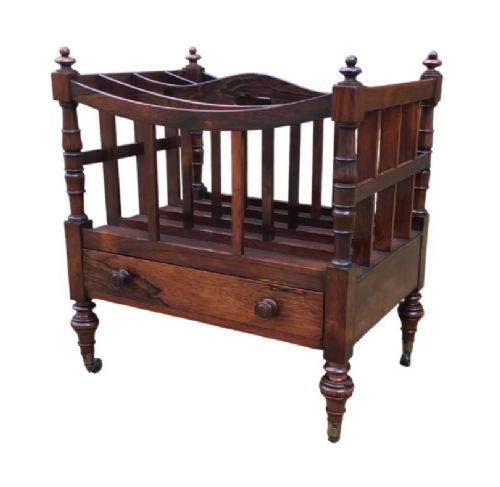
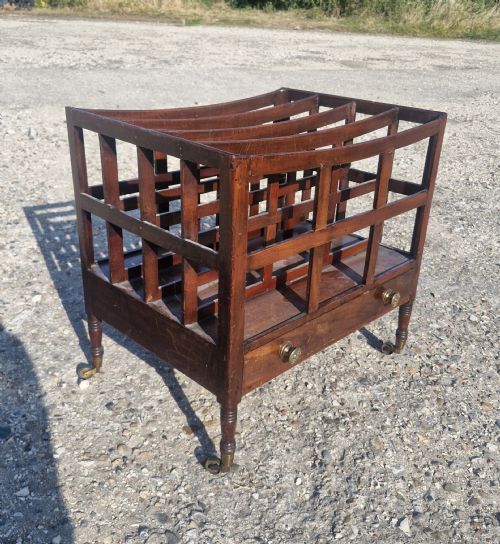
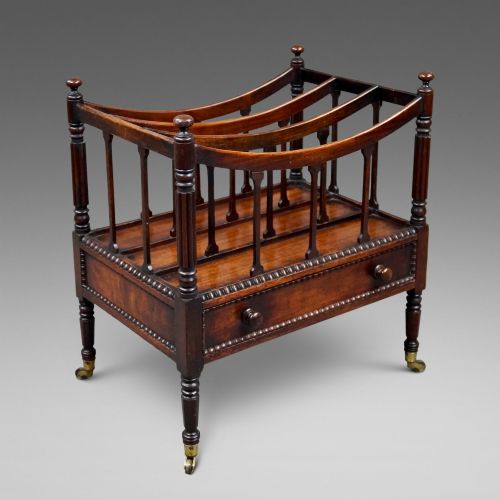
Mahogany and rosewood dominate the forms, frequently resting on turned legs fitted with castors to allow easy movement across a room. Many examples incorporate a single drawer beneath the slatted dividers, offering storage for smaller items.
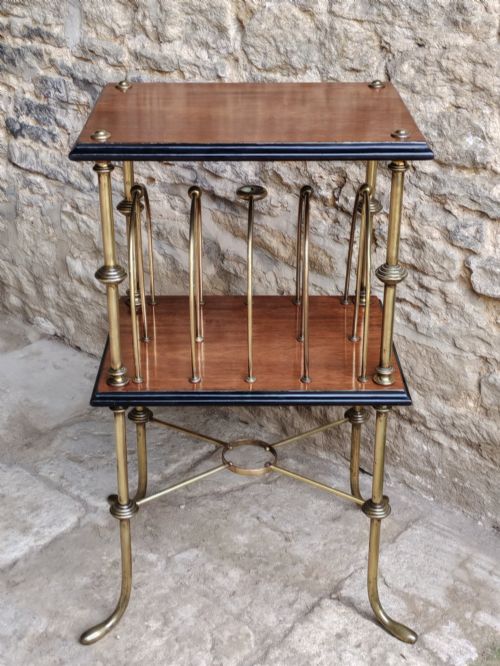
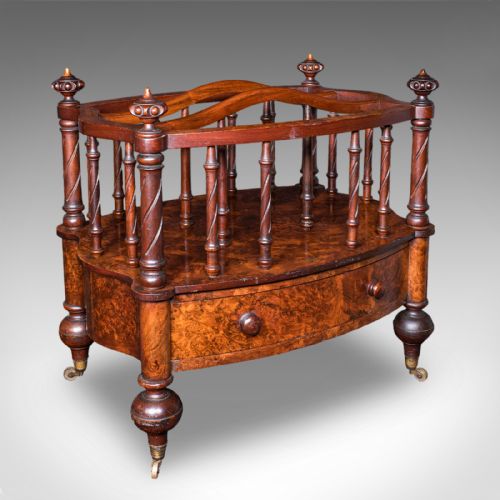
The most common formats include boat-shaped bodies and multi-division racks, occasionally combined with music stands, reading ledges, or etagere shelving.
Materials and construction
Cabinet makers built these pieces primarily using solid mahogany and rich rosewood veneers, sometimes highlighting the timber with contrasting brass details or delicate inlay. Burr walnut also appears among the finer selections.
Slatted dividers form the upper tiers, constructed to support upright folios and newspapers without warping under weight. Turned and fluted legs connect to the main body, often terminating in brass castors.
Regency Canterbury Retail Price Guide 2026
Typical asking prices for regency canterbury among the pieces listed under this phrase on Sellingantiques today, from the lower quarter to the upper quarter. They describe what is for sale here now, not the wider market.
Listings feature mahogany, rosewood, burr walnut, and brass across Regency, Georgian, and Victorian periods.
What separates the finest pieces
Quality rests in the crispness of the turned woodwork, the choice of timber figure, and the integration of functional drawers. Superior pieces show thoughtful proportions and careful matching of rosewood grain or mahogany flame.
The sophistication of the joinery on the slatted dividers and the presence of original brass castors distinguish workshop pieces from more utilitarian examples.
The Regency Canterbury Glossary
- Canterbury
- A low stand with upright partitions, originally used for holding sheet music or books.
- Folio
- A large sheet of paper folded once, or a book made from such sheets, which these stands were built to store.
- Etagere
- A set of open shelves for displaying small objects, sometimes incorporated into the upper section of a stand.
- Whatnot
- A piece of furniture consisting of a set of open shelves for displaying small articles, closely related in form to multi-tiered stands.
- Castor
- A small wheel mounted on a swivel, fitted to the base of legs to allow smooth movement across the floor.
Regency Canterbury: Frequently Asked Questions
What is a regency canterbury used for?
These stands were originally designed to hold sheet music, folios, and unbound books close to an instrument or fireplace. Today, they serve a similar purpose for contemporary magazines and newspapers.
The compartmentalised top keeps reading material upright and sorted, while the lower drawer holds smaller accessories.
How do I spot a true period piece?
Look for construction methods appropriate to the early nineteenth century, such as hand-cut dovetails in the drawer and traditional timber shrinkage. Mahogany and rosewood were the primary woods utilised during the core periods.
Examine the castors and fixings for age and wear consistent with the era. Secondary timbers inside drawers should match the expected materials of the workshop origin.
Are all canterburys fitted with drawers?
Many examples feature a single drawer beneath the slatted rack, but numerous variations exist without this addition. Open-front low tables and boat-shaped stands often omit the drawer entirely to maintain a lighter profile.
The inclusion of a drawer usually depends on the specific model type and the workshop that produced it.
How do I care for rosewood and mahogany?
Keep the timber away from direct heat sources and strong sunlight to prevent the grain from drying out or fading. Gentle dusting with a dry cloth preserves the polished surface.
Occasional application of appropriate wax maintains the lustre of the wood without building up heavy residues.