

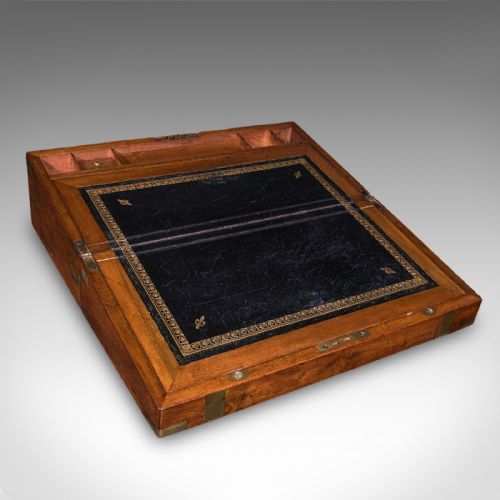


Regency Campaign Box
A regency campaign box is a portable piece of officers' furniture designed for travel, combining solid timbers and brass mounts to endure long journeys.
Regency Campaign Box
A regency campaign box serves officers on the move, designed for storage and writing during military service across the empire. These items arrive in forms such as writing slopes, trunks, and chests intended to pack down securely for transit.
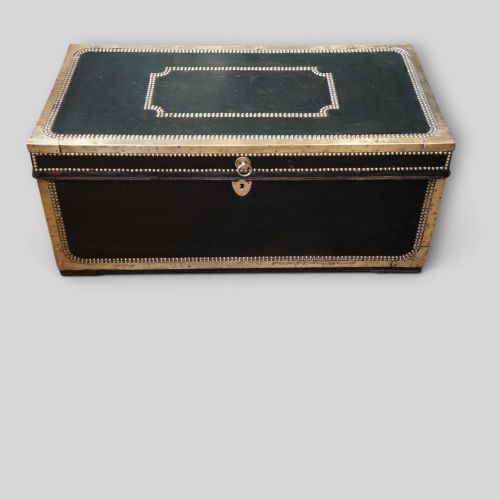
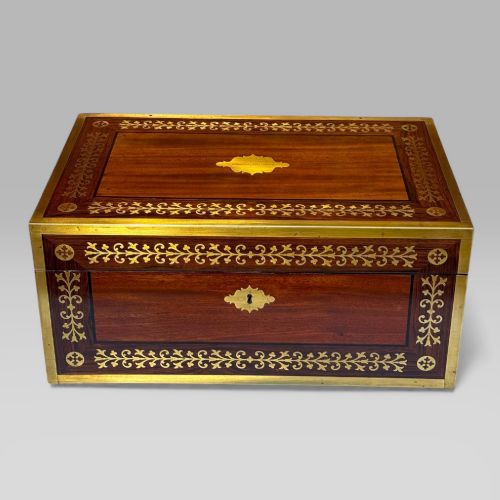
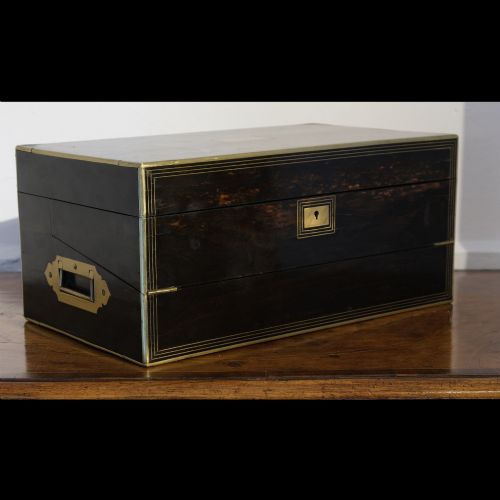
The most frequent finds on this page are writing slopes and brass-bound trunks dating from the early nineteenth century. Mahogany, rosewood, and leather predominate, often finished with flush brass handles and corner brackets to protect the wood.
Pieces span writing boxes, stationery cases, and larger camphor wood chests. Each format reflects the specific needs of travel, keeping documents, correspondence, and personal belongings ordered on board ship or in garrison.
Materials and construction
Cabinet makers built these pieces using dense hardwoods like mahogany, rosewood, walnut, and coromandel to withstand the rigours of transit. Secondary timbers were chosen for stability, while camphor wood offered natural protection against insects in tropical climates.
External brass binding, corner mounts, and recessed carrying handles protected the edges from heavy impacts. Leather coverings and studwork added another layer of durable defence against moisture and rough handling.
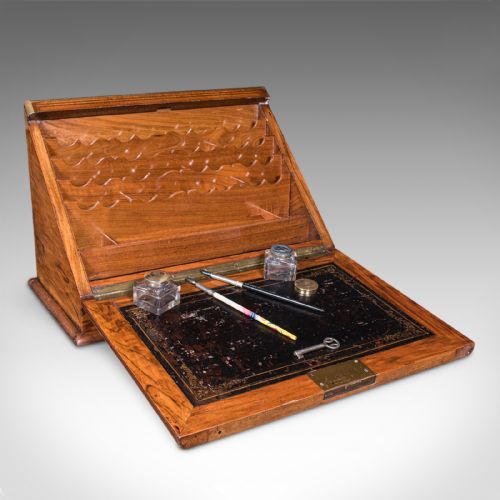
Internal compartments often featured secret drawers, folding desks, and specialised slots for inkwells and pens. Joinery relied on tight tolerances to prevent warping as the climate shifted during travel.
Listings feature eighteenth and nineteenth century periods, utilising brass, rosewood, leather, mahogany, walnut, and coromandel across writing slopes and trunks.
Assessing quality and craftsmanship
The distinction between tiers rests on the precision of the brass work and the integration of mounts into the timber. Superior pieces display hand-cut flush fittings where the metal sits level with the polished wood surface.
Internal complexity sets finer writing slopes apart from basic transport trunks. The presence of well-fitted secret drawers, high-grade veneers like coromandel or inlaid brass stringing, and intact original leather surfaces elevate a box.
Proportion and the integrity of the original hardware dictate overall merit. Even utilitarian trunks show superior grade when the iron or brass binding remains crisp and the locking mechanisms retain their original keys.
Samuel Pratt·Chapple & Sons
The Regency Campaign Box Glossary
- Campaign furniture
- Portable furniture built for military officers on active service, characterised by dismantling parts, folding mechanisms, and protective brass corners. These items allowed officers to maintain standard living conditions while on the move.
- Writing slope
- A portable box with an angled writing surface that folds down to reveal a fitted interior for paper and ink. They often contain hidden compartments for secure document storage.
- Flush handle
- A metal handle recessed into the surface of a trunk or box so it does not project beyond the wood. This design prevents snagging during loading and transport.
- Camphor wood
- An aromatic timber frequently used for campaign chests due to its natural insect-repellent properties. It protected stored uniforms and papers from moths in humid environments.
- Secret drawer
- A hidden compartment concealed behind removable partitions or triggered by a secret spring mechanism. Officers used them to secure currency and confidential dispatches.
Regency Campaign Box: Frequently Asked Questions
What is a campaign box?
A campaign box is a piece of portable furniture made for military officers travelling on duty during the Georgian and Victorian eras. These boxes were built to withstand rough transport while providing organised storage for writing materials or personal items.
They utilise robust timbers and protective metal hardware to survive long voyages and field conditions. The design prioritizes durability and space-saving efficiency above all else.
How were writing slopes used?
Writing slopes served as portable desks for officers and gentlemen writing letters or official reports while away from home. The hinged lid opened to create a slanted writing surface lined with leather or velvet.
Inside, compartments held inkwells, nibs, and stationery. Many included hidden drawers to keep confidential papers secure during transit.
What woods are most common?
Mahogany and rosewood appear most frequently in these listings, offering dense grain and deep natural tones. Walnut and coromandel also feature in higher-end pieces intended for domestic or senior officer use.
Camphor wood is standard for large trunks, chosen specifically because its strong scent deterred insects in tropical climates. Iron and brass provide the necessary structural reinforcement across all timber types.
How do I date a campaign piece?
Dating relies on examining the construction methods, hardware styles, and timber choices recorded in the piece. Early nineteenth-century examples often feature hand-cut dovetails and heavy brass corner mounts without machine stamps.
Maker plaques, initials stamped into the leather, and specific brass locking mechanisms also help narrow down the decade of production. Stylistic shifts between Regency and later Victorian periods provide further chronological clues.