

Regency Buffet
A regency buffet brings architectural discipline and rich timber grain to a dining room, offering disciplined storage for serving ware and silver.
Regency Buffet
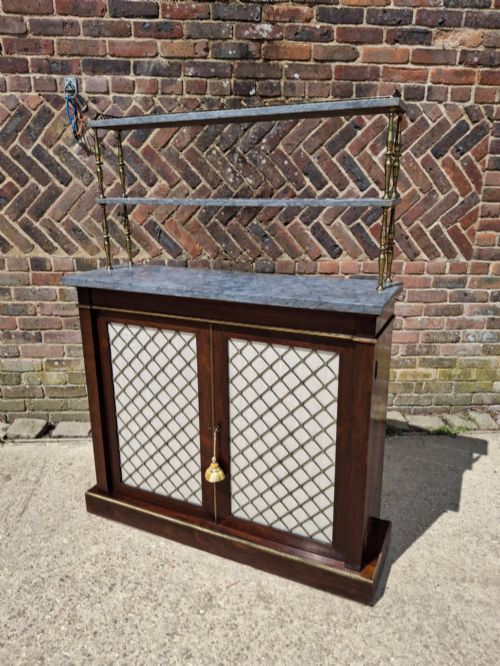
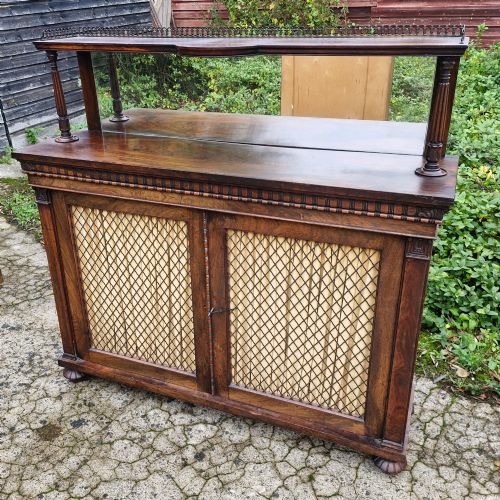
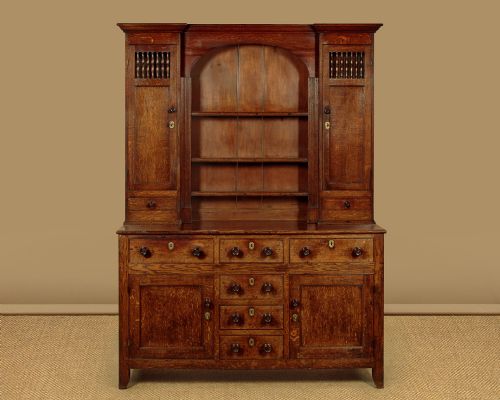
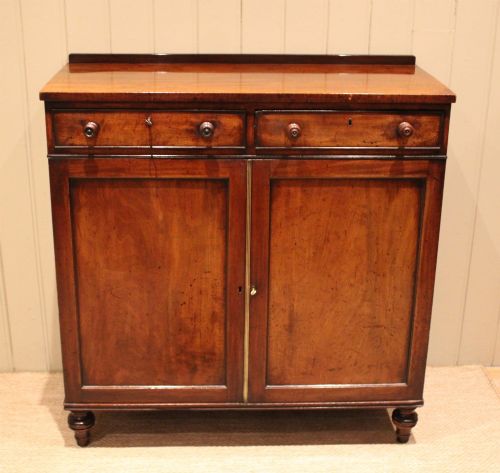
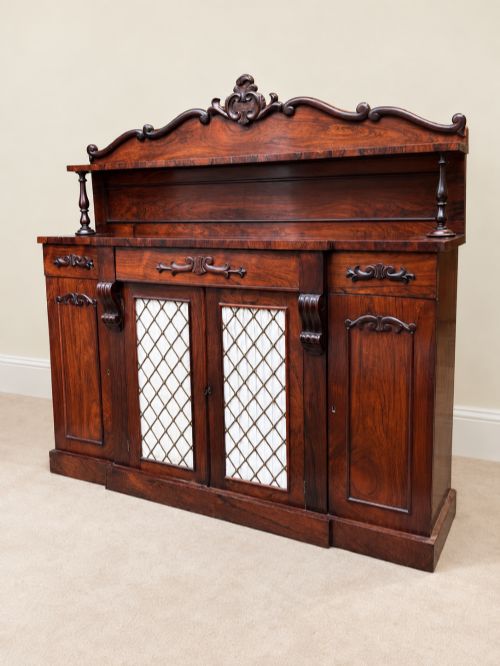
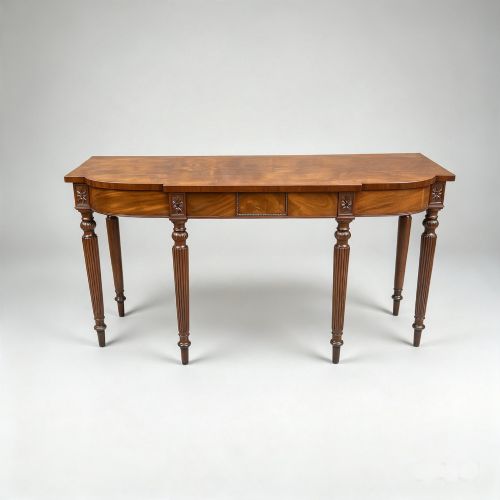
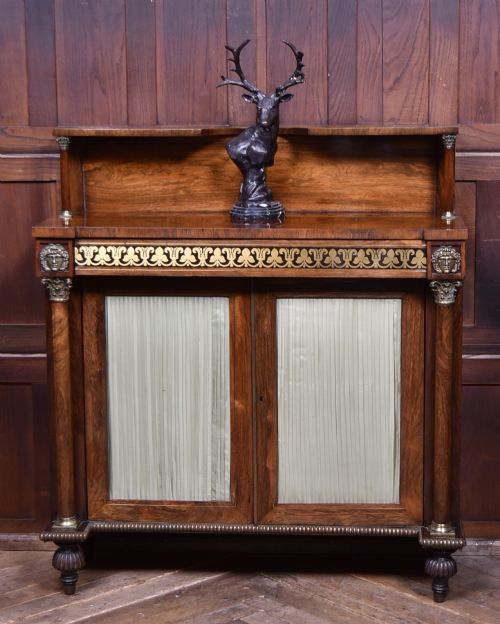
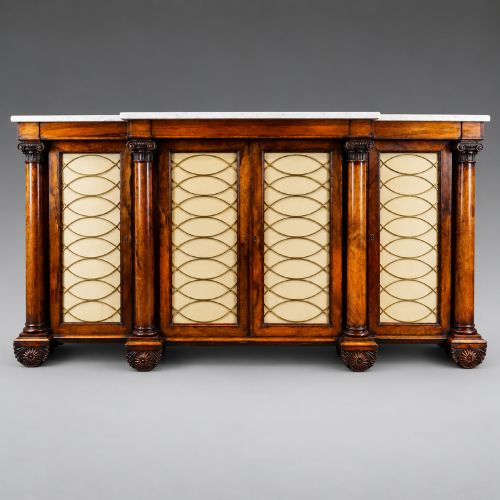
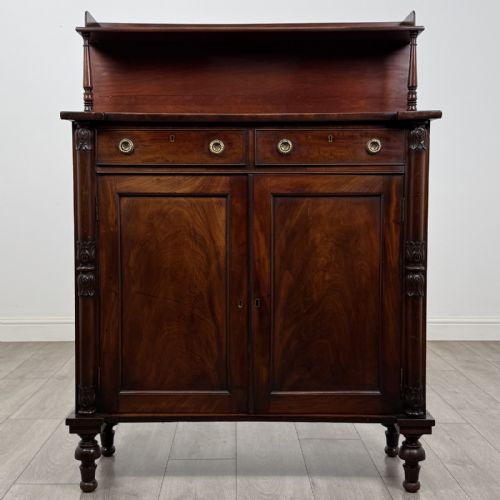
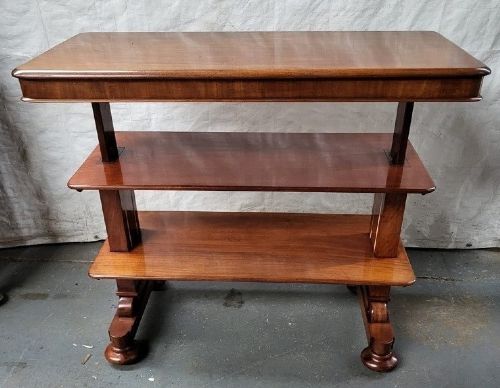
When you search for a regency buffet, you encounter substantial serving furniture built to anchor formal dining spaces, predominantly taking the form of sideboards, pedestals, and multi-tiered dumb waiters. These pieces originate chiefly from the nineteenth century, spanning periods from George III through William IV, alongside later revivals.
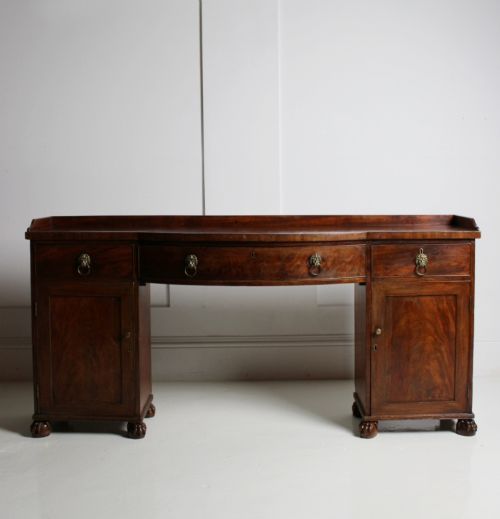
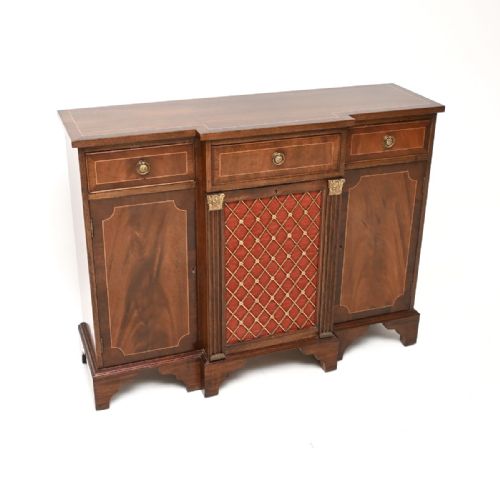
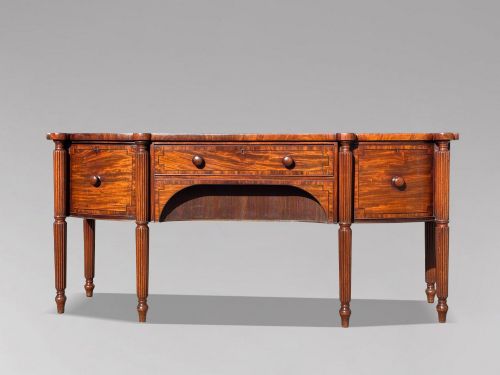
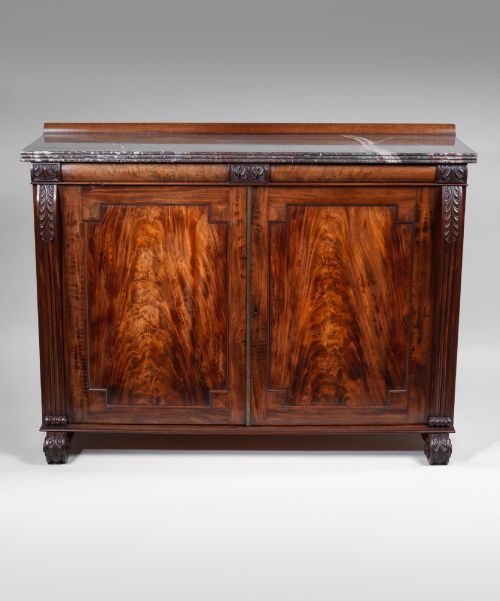
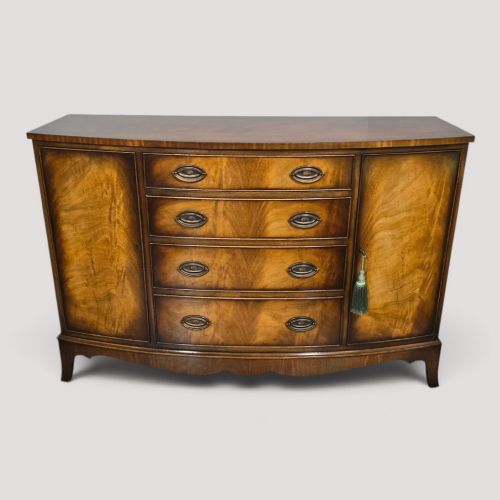
The most common examples on this page are bow-fronted or breakfront sideboards fashioned from rich mahogany, often displaying figured veneers and brass inlay. Alongside these stand smaller side cabinets, chiffoniers, and tiered serving tables designed for practical hospitality.
Makers and cabinetmakers of the era employed architectural lines, such as lion paw feet and classical pedestals, to give the furniture a monumental presence. Whether configured as a metamorphic buffet or a simple serving table, each piece reflects the functional demands of elite dining rooms.
Timbers and Construction Techniques
Cabinetmakers relied heavily on solid mahogany and flame mahogany veneer, selecting timber for deep grain patterns and warm natural colour. Boxwood stringing and brass inlay frequently accent the primary wood surfaces, adding linear definition to drawer fronts and tabletops.
Secondary structural elements incorporate sturdy framing, while specialised variations utilise rosewood, marble tops, and lacquered finishes. Joinery follows rigorous period traditions, ensuring the robust construction necessary for heavy serving pieces.
Regency Buffet Retail Price Guide 2026
Typical asking prices for regency buffet among the pieces listed under this phrase on Sellingantiques today, from the lower quarter to the upper quarter. They describe what is for sale here now, not the wider market.
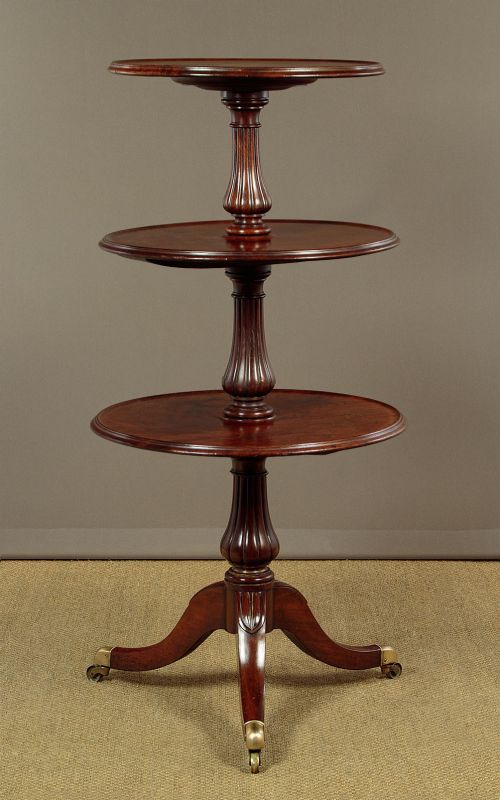
Some dumb waiters feature rotating tiers designed to pass port without awkward reaching across the mahogany.
Distinctions in Craftsmanship
The grading of a piece depends largely on the selection of timber figures, such as symmetrical flame mahogany veneers, matched against simpler straight-grain alternatives. Finer examples display meticulous brass inlay and carved details like lion paw feet rather than plain turned supports.
Proportion and structural integrity also separate standard production from master workshops. Pieces retaining original hardware, balanced brass galleries, and clean internal joinery command greater appreciation among collectors.
The Regency Buffet Glossary
- Breakfront
- A cabinet or sideboard whose central section projects forward from the flanking cupboards. This design creates visual depth and breaks up the long line of the piece.
- Dumb waiter
- A tiered serving stand fitted with rotating or fixed circular trays used for holding dishes without servants present. These pieces typically feature multiple graduated shelves supported on a central pillar.
- Flame mahogany
- A veneer cut from the fork of a mahogany tree where the grain twists to resemble flickering flames. It produces a highly decorative, highly figured surface.
- Chiffonier
- A low cabinet or sideboard developed in the nineteenth century, often featuring enclosed shelving beneath. They serve as compact storage units for dining rooms and parlours.
- Stringing
- Thin inlay lines of contrasting timber or light boxwood set flush into darker wood surfaces. This technique outlines drawers and panels to create geometric borders.
Regency Buffet: Frequently Asked Questions
What is a regency buffet?
A regency buffet or sideboard is a formal dining room serving piece designed to hold silver, linen, and serving dishes.
These items date predominantly from the early nineteenth century and feature classical proportions and rich timber veneers.
How were dumb waiters used?
Dumb waiters stood beside dining tables to hold extra plates, glasses, and wine bottles during private meals.
Guests or hosts could access items independently without requiring servants in the room.
How do I identify a William IV piece?
William IV furniture typically displays heavier, bolder proportions than earlier Regency designs, often incorporating deep carved mahogany and robust scroll supports.
Carved details tend to be more substantial, reflecting the transitional taste towards Victorian solidity.
Where should I place a sideboard?
Sideboards suit dining rooms, grand hallways, or living spaces where linear surface area and enclosed storage are required.
Their substantial presence anchors a room, making them ideal for displaying lamps, ceramics, or serving silver.