
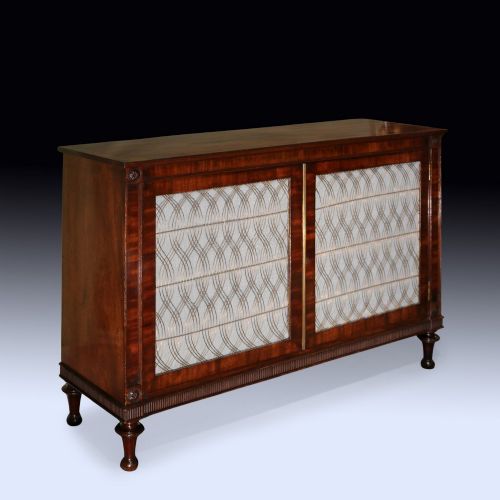


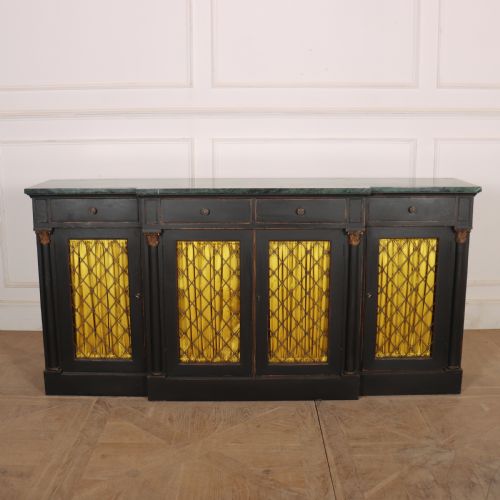


Regency Brass Mesh Sideboard
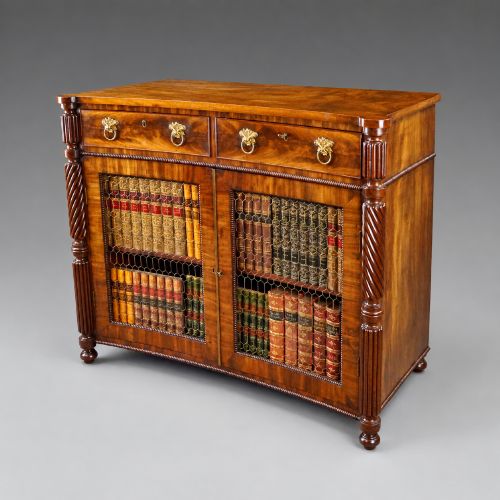
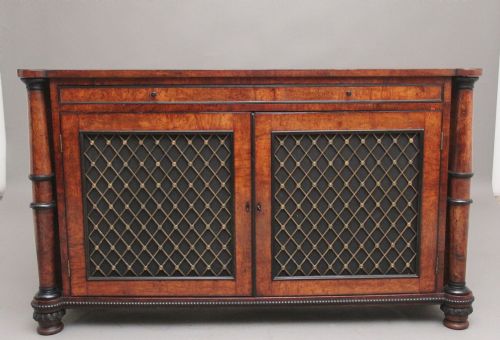
A regency brass mesh sideboard brings architectural refinement to a room through crisp timber work and fine metalwork screens.
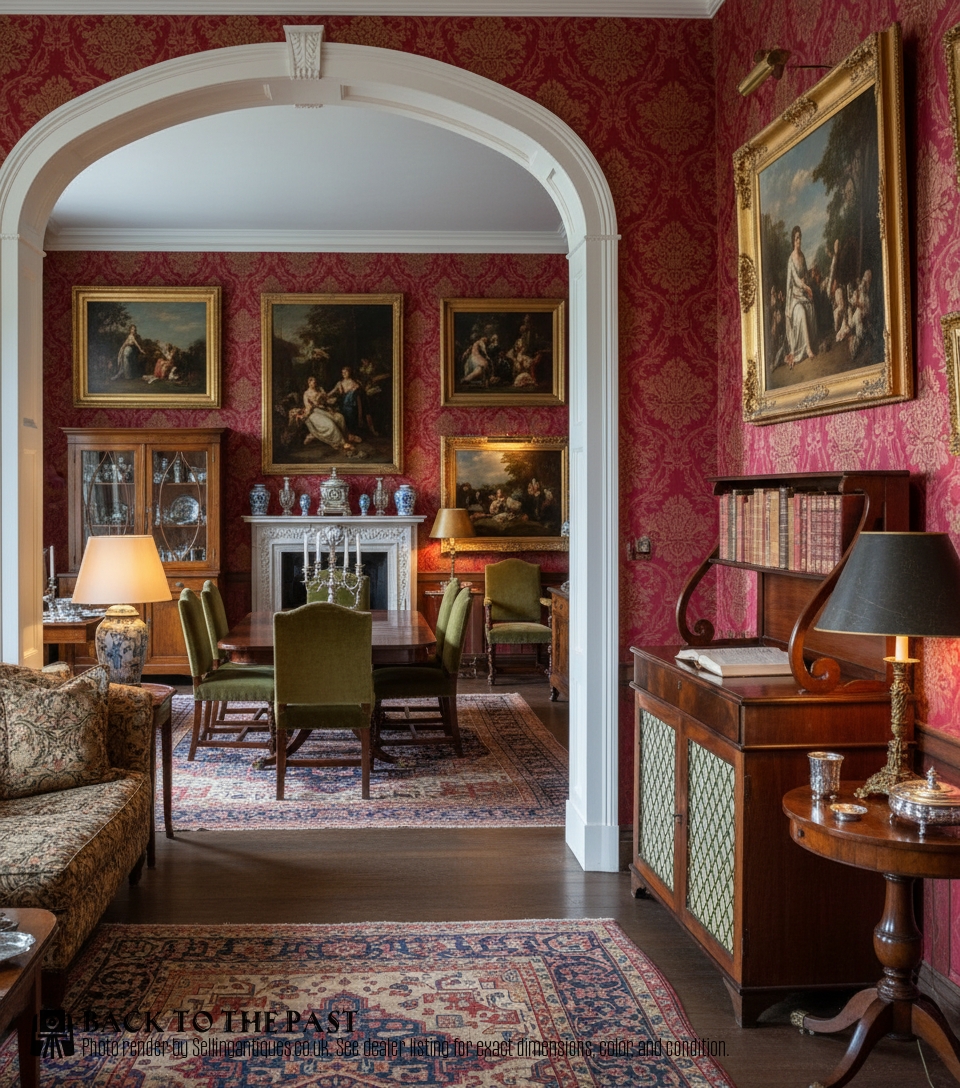
Regency Brass Mesh Sideboard
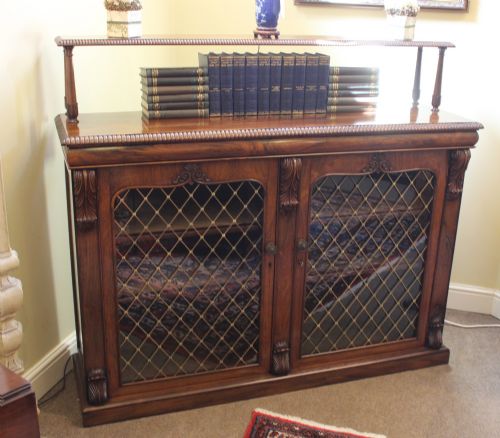
A regency brass mesh sideboard usually appears as a low cabinet, chiffonier, or side cabinet designed to house books, silver, or linens while displaying them partially behind woven metal screens. These pieces span the nineteenth century and later revival periods, bringing distinct timber grain and structured storage into a dining room or drawing room.
The selections on this page draw from the nineteenth century, including the Regency and William IV eras, alongside later nineteenth and twentieth century interpretations like Victorian and nineteen-thirty pieces. Forms range from mahogany and rosewood sideboards to pollard oak, walnut, and painted breakfront dresser bases.
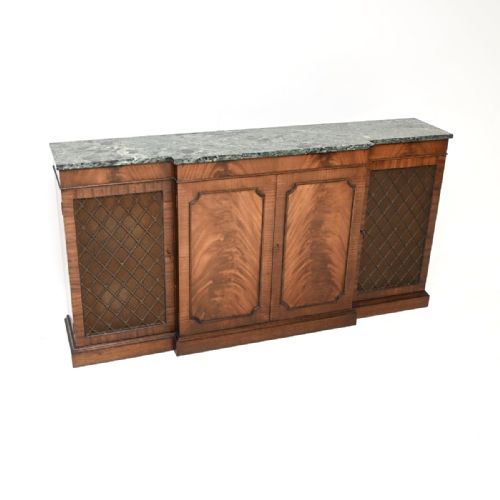
Buyers will encounter two-door cabinets and chiffoniers featuring distinctive brass grilles or mesh panels, sometimes paired with marble tops, fabric linings, or silk backgrounds. This variety reflects both original Regency workshops and later cabinetmakers working in established classical traditions.
Materials and construction methods
Cabinetmakers built these pieces using dense hardwoods such as mahogany, rosewood, and pollard oak, often accented with ebony details or set beneath marble tops. Timber selection dictated the character of the piece, with figured grains providing visual movement across large flat surfaces and door panels.
Fine brass wire mesh or grilles were fitted into wooden cabinet doors to secure contents while allowing visibility and air circulation. Skilled artisans frequently lined the interiors or backed the mesh with fabric or silk, adding texture and colour behind the metalwork.
Listings feature mahogany, rosewood, pollard oak, and walnut cabinets spanning the nineteenth century through nineteen-thirty revival styles.
Factors that distinguish finer pieces
Quality rests upon the selection of timber veneers and solid stock, where well-figured rosewood or pollard oak displays superior depth compared to plainer grain. The crispness of the brass mesh assembly and the precision of the door fit also signal the skill of the original workshop.
Structural integrity and the preservation of original elements, such as marble tops and silk or fabric linings, separate standard examples from those of higher distinction. Cabinet proportions and the subtlety of classical mouldings further define the upper tier of these pieces.
The Regency Brass Mesh Sideboard Glossary
- Chiffonier
- A low cabinet featuring shelves or enclosed storage, popular during the nineteenth century. It frequently incorporates glazed or brass mesh doors for displaying dining silver or books.
- Breakfront
- A cabinet or sideboard whose central section projects forward from the flanking sections. This configuration creates architectural depth and breaks up long expanses of timber.
- Pollard oak
- Timber taken from trees that have been pollarded, producing a dense, knotty grain pattern with rich figuring. Cabinetmakers prized this wood for its decorative surface movement.
- Grille
- A decorative lattice of metal wire or bars fitted into furniture doors. In these pieces, brass forms the mesh pattern to screen cabinet interiors.
- William IV
- A British design period spanning the 1830s characterised by heavy classical proportions and robust mahogany or rosewood construction.
Regency Brass Mesh Sideboard: Frequently Asked Questions
Where should I place a sideboard?
These cabinets suit dining rooms, living spaces, or hallways where low storage and display surface are useful. Their shallow depth allows them to sit comfortably against walls without crowding a room.
Positioning the piece away from direct sunlight protects vulnerable timber veneers and interior fabrics such as silk from fading over time.
How do I care for timber and brass?
Maintain the wood surfaces by dusting regularly with a soft, dry cloth and applying natural wax sparingly when the finish appears dry. Avoid commercial polishers containing silicone.
Clean brass mesh gently with a dry brush to remove dust accumulation without disturbing the delicate wire strands or any fabric backing behind the door.
What is the difference between a sideboard and a chiffonier?
Sideboards generally offer longer horizontal surfaces intended for serving food or displaying larger decorative objects in dining spaces. They often feature multiple cupboards and drawers.
Chiffoniers are typically more compact side cabinets that combine lower enclosed storage with upper display functions, making them adaptable for drawing rooms and smaller interiors.
How do I date a nineteenth-century cabinet?
Dating relies on examining construction techniques, timber choices, and stylistic markers such as Regency curves or later Victorian proportions. Secondary woods inside the cabinet often provide clues to the period.
Compare the hardware, such as hinges and brass mesh fixings, with known period examples to confirm whether components remain original to the piece.