

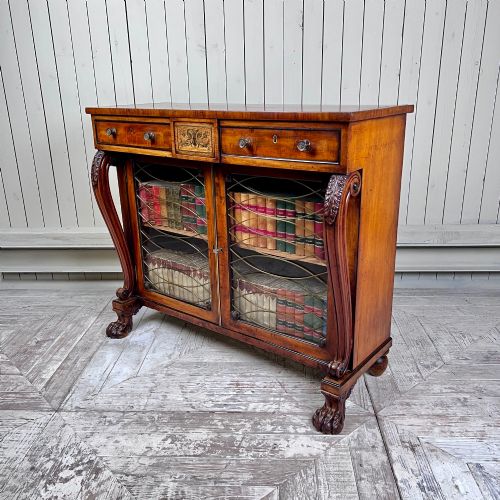
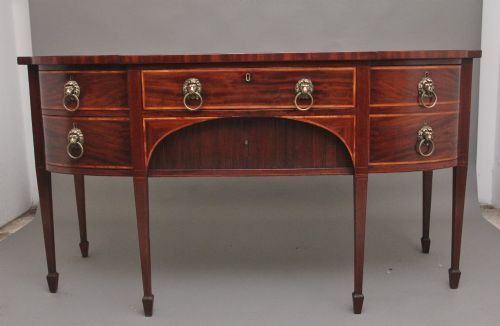
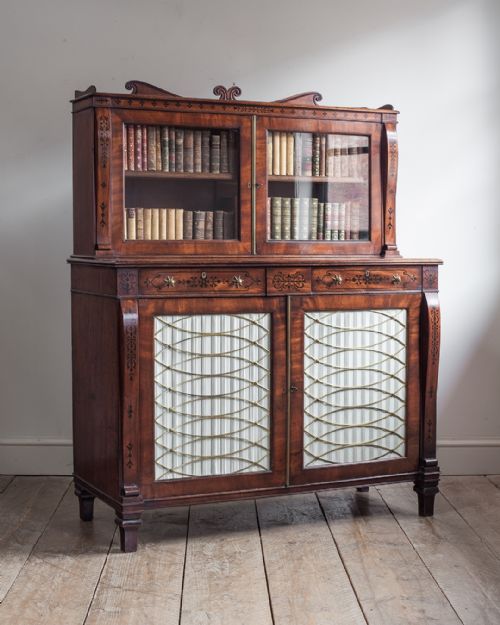

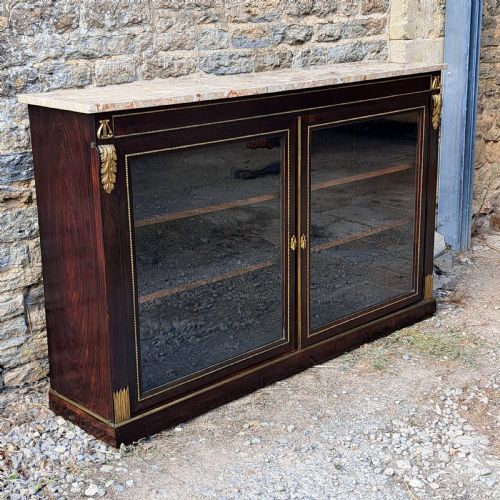


Regency Brass Inlay Credenza
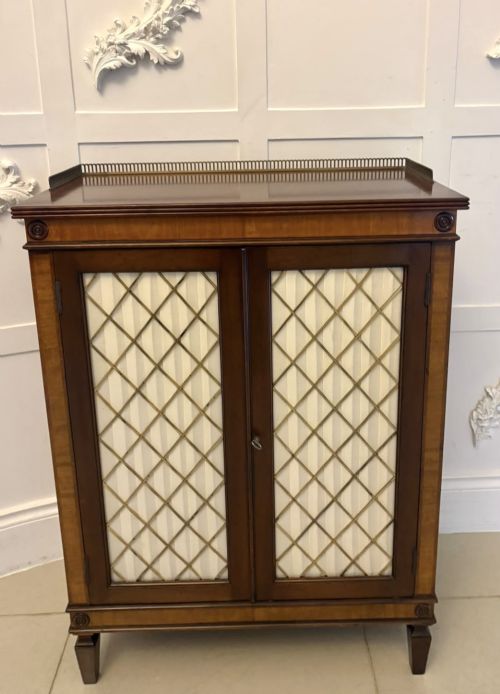
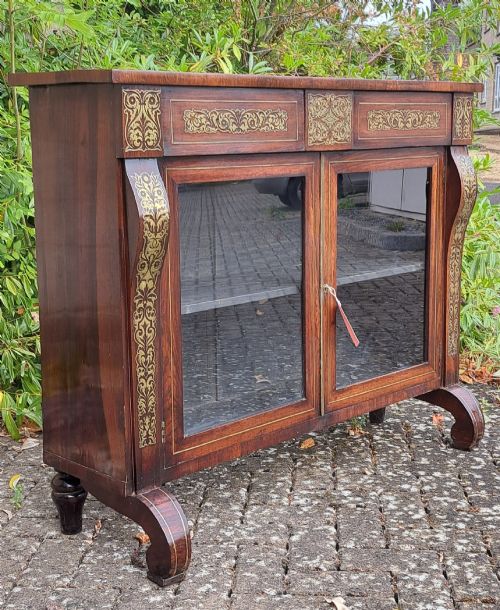
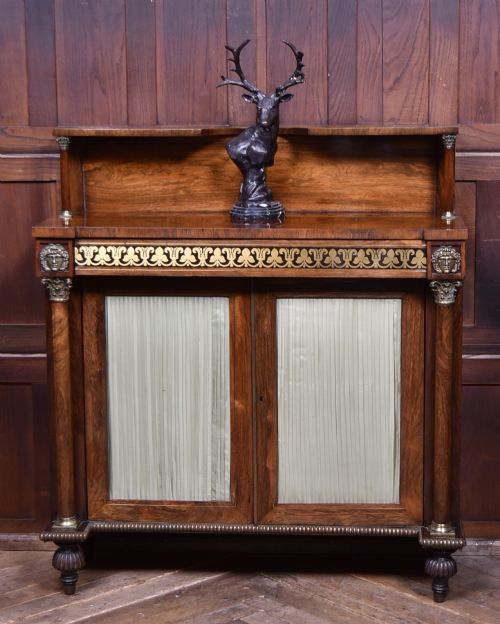
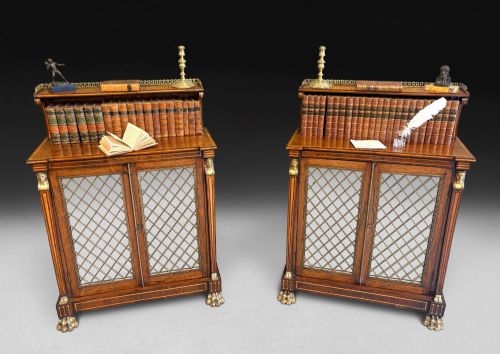
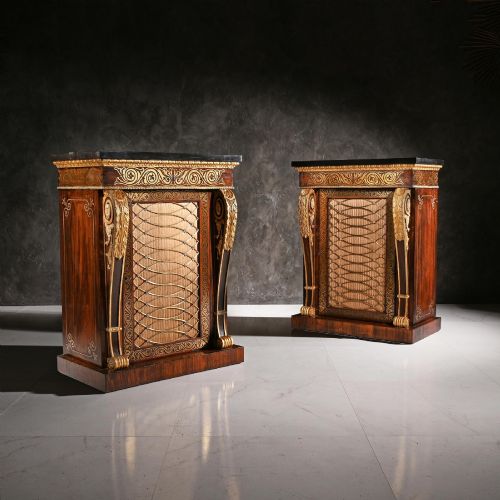
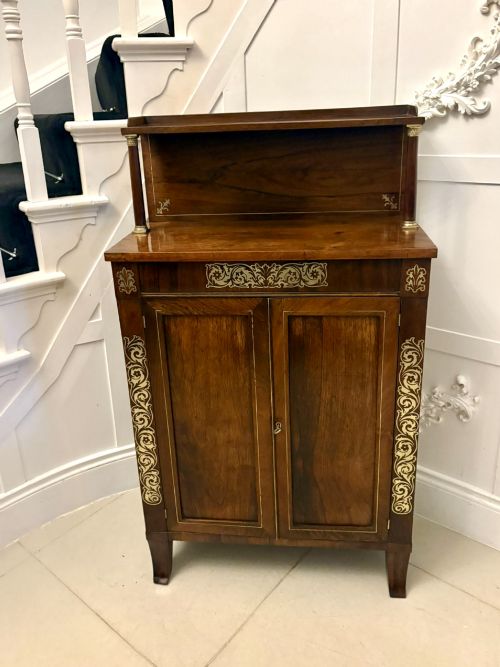
A regency brass inlay credenza brings sharp neoclassical lines and rich timber tones into a room.
Regency Brass Inlay Credenza
A regency brass inlay credenza encompasses sophisticated low cabinetry designed for formal reception rooms, drawing rooms and libraries. These pieces emerge primarily from the Regency and wider nineteenth-century periods, alongside later revival interpretations.
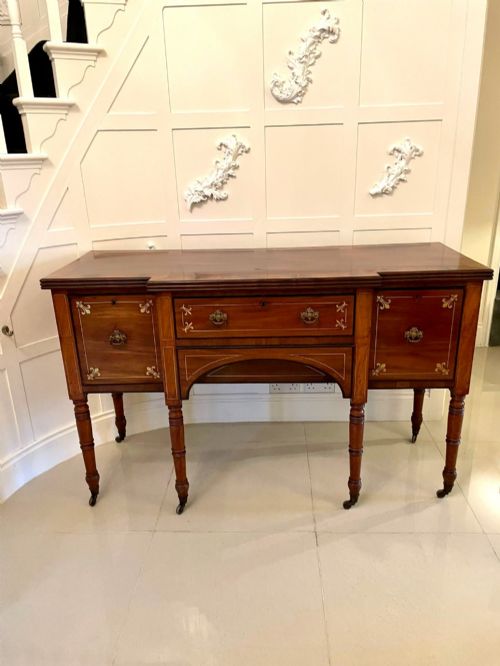
Origins span authentic Regency production around eighteen-twenty through to Georgian Revival pieces dated to nineteen-thirty. Sideboards, consoles and open bookcases complete the selection available to the buyer.
Materials and Construction
Cabinet makers utilised dense, richly figured hardwoods such as rosewood, mahogany, palisander and amboyna as the primary carcase foundations. Boxwood and ebony frequently provided contrasting stringing alongside the signature metallic embellishments.
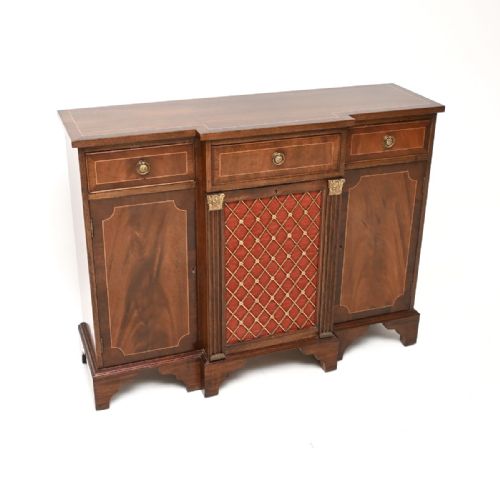
Brass formed the intricate inlay and marquetry patterns set flush into the timber surfaces, often accompanied by glazed doors, fabric-backed grilles and marble tops. Simulated rosewood surfaces also appeared during the period to replicate costlier exotic timbers.
Regency Brass Inlay Credenza Retail Price Guide 2026
Typical asking prices for regency brass inlay credenza among the pieces listed under this phrase on Sellingantiques today, from the lower quarter to the upper quarter. They describe what is for sale here now, not the wider market.
Some nineteenth-century makers cleverly simulated rosewood on humble timber bases to satisfy fashionable tastes without the exotic import costs.
Assessing Quality and Execution
The precision and complexity of the brass inlay work dictate the upper tier of execution, separating standard production from master workshops. Sharply rendered brass motifs integrated smoothly into the timber grain show superior hand-cut craftsmanship.
The choice and figuring of the underlying veneers define visual depth, with richly grained rosewood and amboyna commanding distinction over plain mahogany or simulated finishes. Cohesion in proportions and the original survival of glass, fabric and brass mounts complete the distinction.
Louis Constantin Le Gaigneur·John McClean
The Regency Brass Inlay Credenza Glossary
- Credenza
- A low dining or reception room cabinet used for display and storage. It typically sits lower than a traditional sideboard.
- Chiffonier
- A compact sideboard or cabinet featuring shelves or a small bookcase superstructure on top. The form gained widespread popularity during the Regency period.
- Marquetry
- Decorative patterns created by fitting thin pieces of wood, brass and other materials onto a structural carcase. Brass inlay forms a distinct subset of this technique.
- Palisander
- A dense, heavily figured exotic hardwood akin to rosewood. Cabinet makers prized it for its dark grain patterns.
- Breakfront
- A piece of furniture where the central section projects forward from the flanking wings. This creates architectural depth and visual weight.
Regency Brass Inlay Credenza: Frequently Asked Questions
What is a regency brass inlay credenza used for?
These cabinets served as elegant storage and display furniture in formal dining rooms and drawing rooms. They held dining accessories, books and decorative objects.
Today, they function as striking focal points in modern living spaces, offering surface display areas and enclosed storage capacity.
How do I identify a Regency period piece?
Authentic Regency items typically date from the early nineteenth century and exhibit neoclassical design elements. Look for clean architectural lines, specific timber choices like rosewood, and precise brass stringing.
Revival pieces from later decades often imitate these characteristics but differ in timber preparation, construction joints, and secondary wood usage.
How should I care for rosewood and brass?
Maintain stable indoor humidity levels to prevent timber movement and veneer separation. Keep the surfaces away from direct sunlight and excessive heat sources.
Clean the timber with a soft, dry cloth and apply occasional appropriate wax. Polish brass cautiously to avoid disturbing the surrounding wood grain.
Where did these cabinets originate?
British cabinet makers produced the majority of these pieces during the Regency era and the subsequent nineteenth-century revivals. Workshops in London and regional centres drove the design trends.
Influences drew heavily from classical Greek, Roman and Egyptian motifs, translated through contemporary Regency aesthetic standards.