
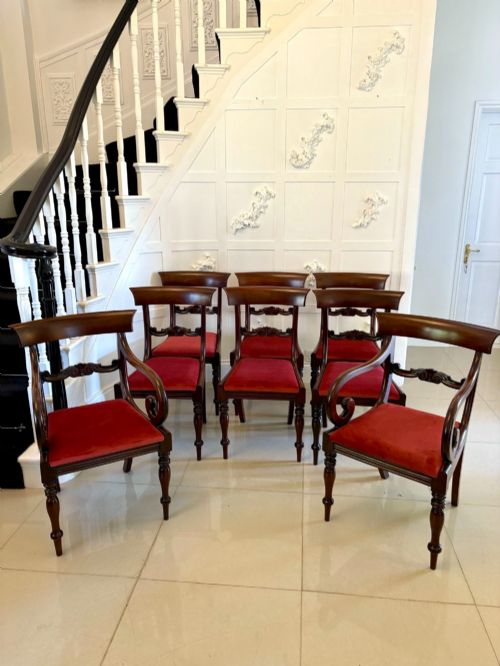
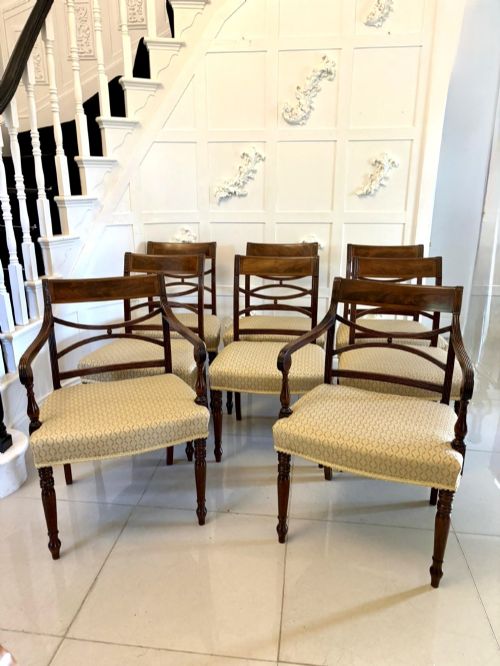
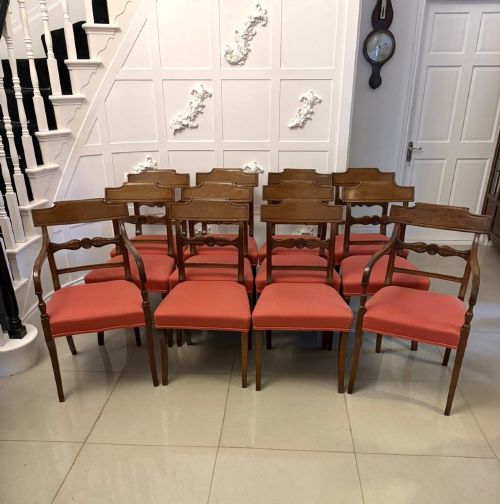
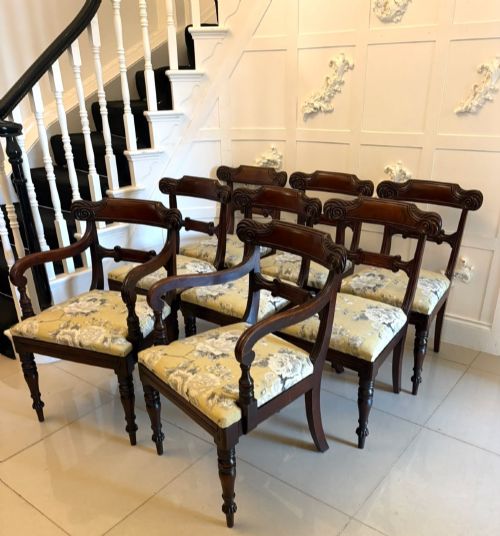
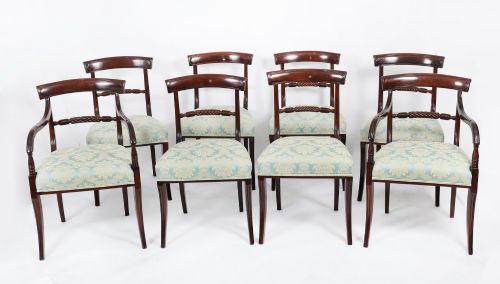
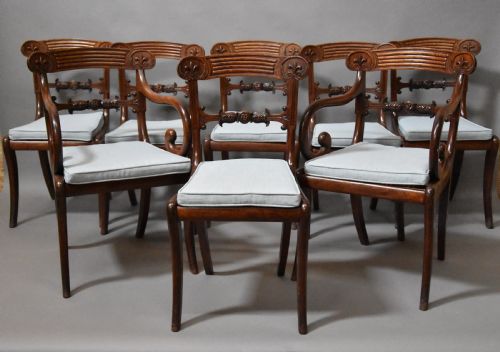
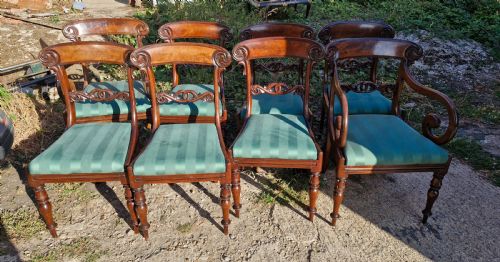
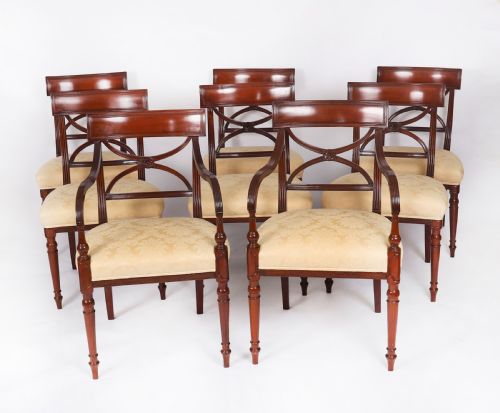
Regency Armchairs and Side Chairs
Regency armchairs and side chairs combine classical lines with rich mahogany and caning, offering both formal presence and practical comfort for the home.
Regency Armchairs and Side Chairs
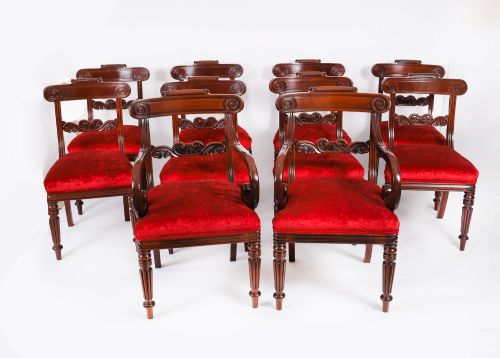
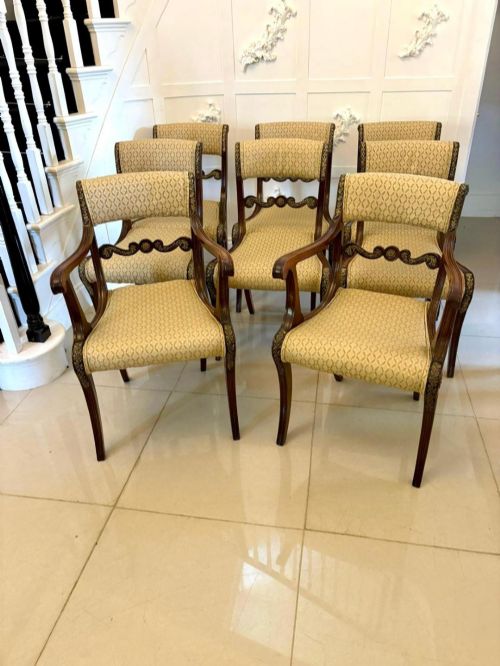
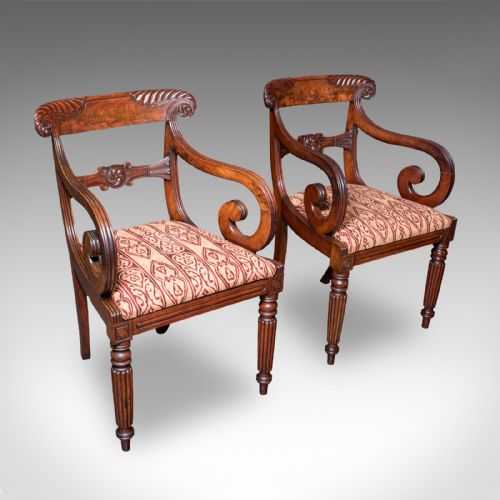
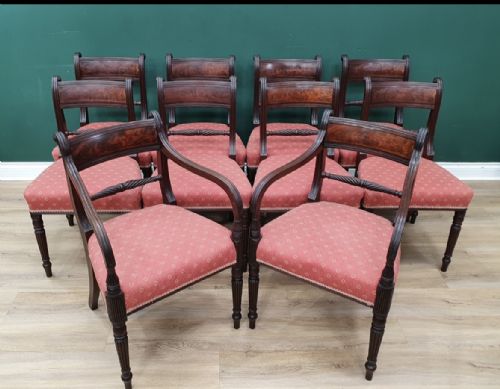
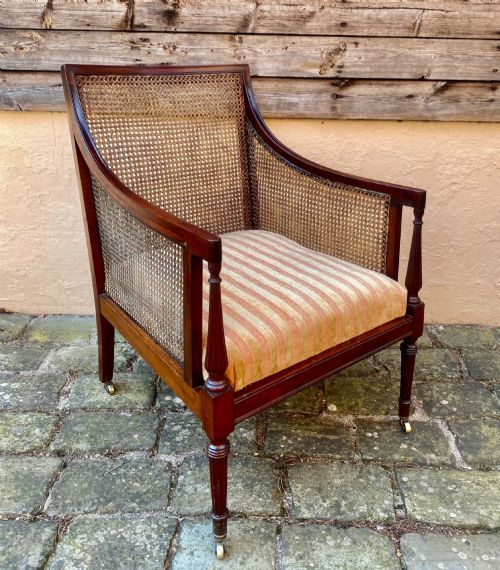
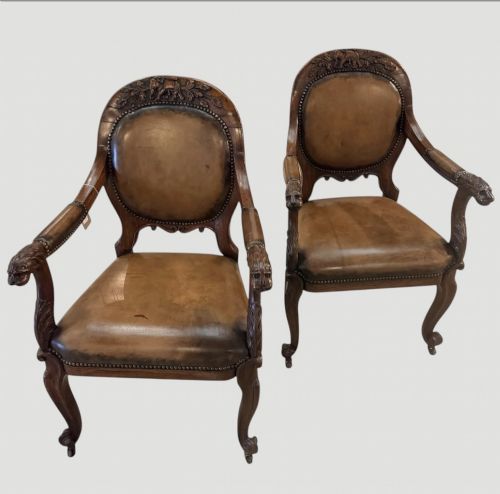
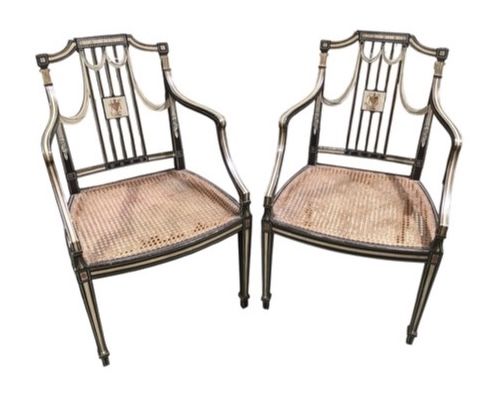
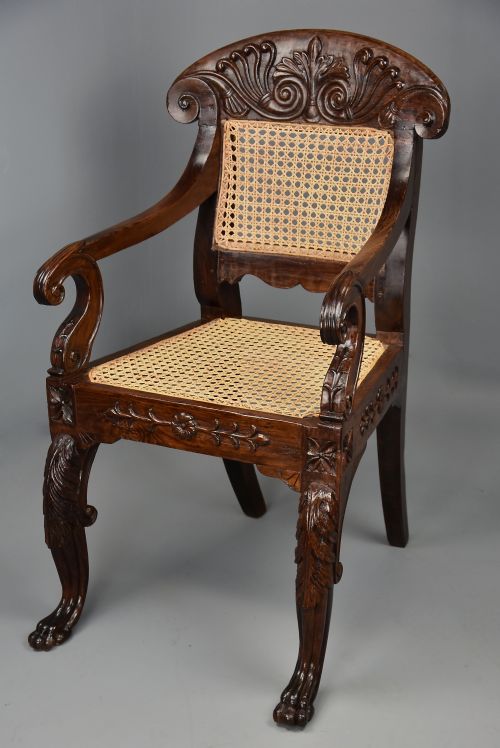
Regency armchairs and side chairs appear most frequently as matched sets of dining chairs, alongside single library armchairs and pairs of reception seats. These pieces range from formal dining rooms to domestic libraries, taking the form of bar back designs, open armchairs, and caned bergères.
The materials and styles span the nineteenth century, including Georgian and William IV periods, alongside later revival pieces. Mahogany predominates among the wood choices, often paired with brass, leather, velvet, and cane to create distinct seating forms.
How they were made
Cabinetmakers constructed these frames primarily in solid mahogany, frequently utilising flame mahogany veneers and satinwood inlay to achieve decorative contrast. Ebonised details and brass mounts further accentuate the timber structures on select pieces.
Seating surfaces incorporate cane panels, traditional upholstery fabric, leather, or velvet over webbing and stuffing. Skilled joinery secures the bar backs, carved splats, and sweeping arms to withstand daily domestic use.
Listings feature mahogany, rosewood, padouk, satinwood, brass, leather, velvet, and cane across the nineteenth and twentieth centuries.
What varies in quality
The refinement of the carving and the figure of the mahogany grain distinguish finer examples from standard production. Crisp detailing on bar backs and sophisticated inlay indicate superior workshop output.
Originality of components and surface preservation affect the standing of each set or individual chair. Retained caning, early upholstery materials, and intact structural timber separate preserved period pieces from later replacements.
The Regency Armchairs and Side Chairs Glossary
- Bergère
- An enclosed upholstered armchair with closed sides, typically featuring cane panels. This form often includes loose squab cushions for the seat.
- Carver
- A term for an armchair, traditionally used at the head of a dining table to match a set of single side chairs.
- Bar back
- A horizontal top rail shaped like the crossbar of a chair, characteristic of many nineteenth-century dining seats.
- Padouk
- A dense tropical hardwood with reddish tones, utilised in Anglo-Indian furniture production during the period.
- Neoclassical
- A style drawing inspiration from classical antiquity, marked by restrained ornamentation and symmetrical proportions.
Regency Armchairs and Side Chairs: Frequently Asked Questions
What is a carver chair?
A carver chair is an armchair designed to match a set of single side chairs, traditionally placed at the ends of a dining table. These pieces provided additional comfort for the host.
In sets of dining chairs, collectors typically find two carvers accompanying six, eight, or ten single chairs.
What wood was used most?
Mahogany served as the primary timber for these chairs, valued for its strength and deep colour. Cabinetmakers selected figured varieties, such as flame mahogany, for decorative impact.
Other materials like rosewood, padouk, and satinwood appear on specific regional and hybrid designs.
Can I mix side chairs and armchairs?
Historically, dining sets combined matching side chairs with a pair of matching armchairs for the table ends. This arrangement maintained visual harmony while offering varied seating.
Matching the wood and period style allows different pieces to sit together cohesively.
How do I care for cane seats?
Caned panels require gentle cleaning with a damp cloth and occasional conditioning to prevent the natural fibres from drying out. Avoiding excessive weight or sharp pressure protects the woven strands.
Keeping these chairs away from direct heat sources preserves the elasticity of the cane.