
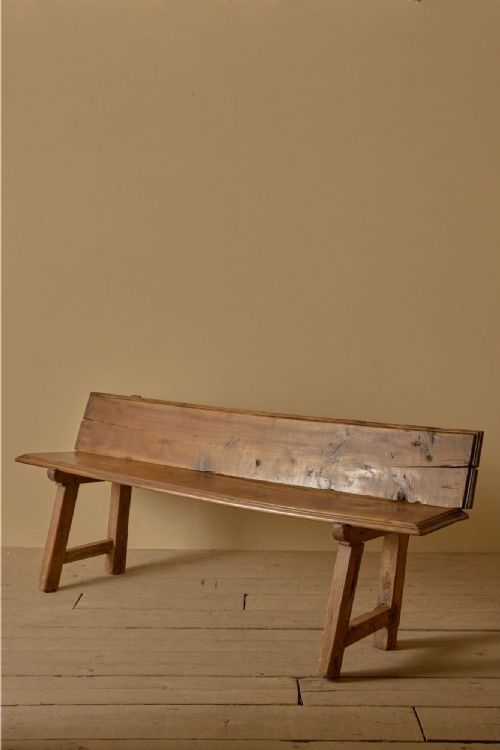
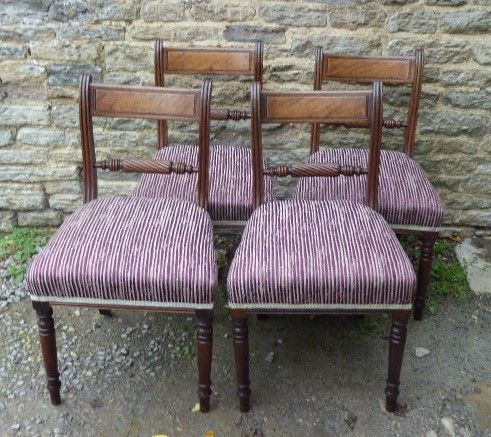
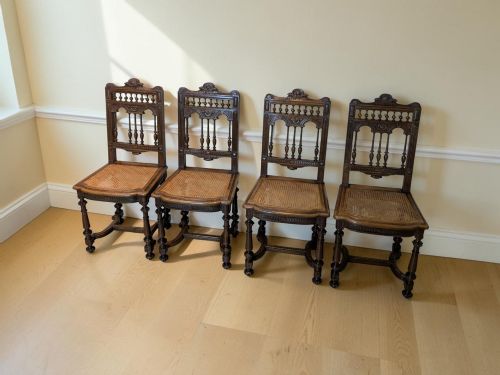
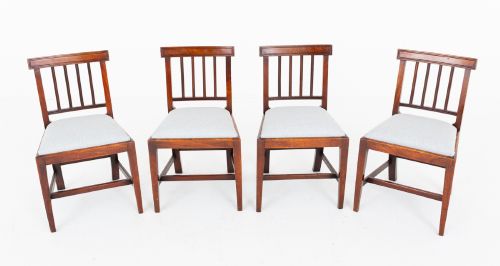
Brown Wooden Dining Seats
These brown wooden dining seats bring together centuries of craftsmanship, offering sturdy seating for the home through mahogany, oak, and elm forms.
Brown Wooden Dining Seats
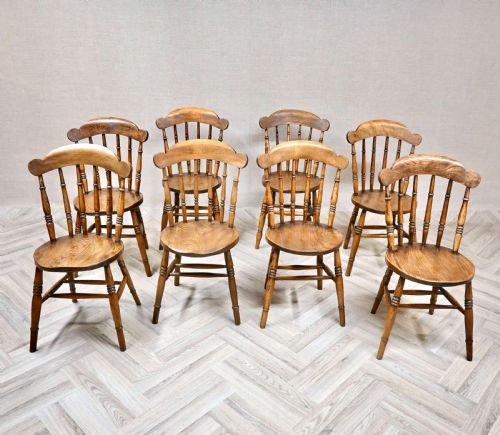
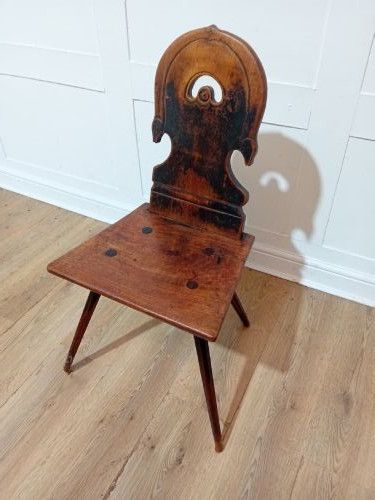
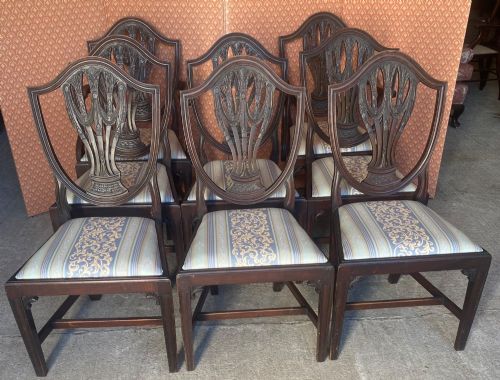
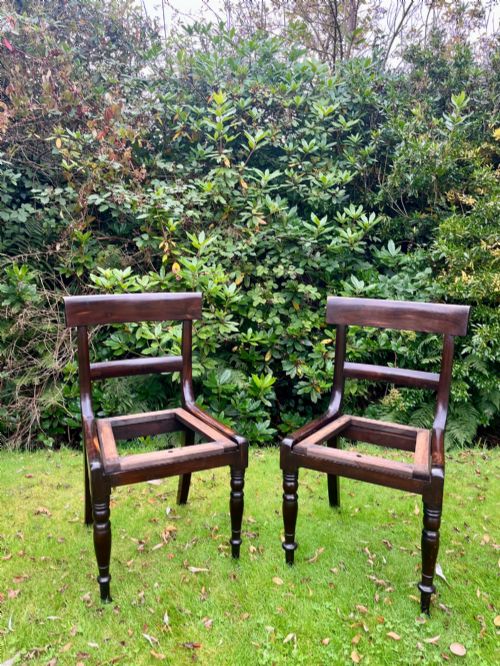
When searching for brown wooden dining seats, buyers encounter a diverse selection ranging from formal Georgian and Regency mahogany chairs to rustic Victorian elm and ash country kitchen seating.
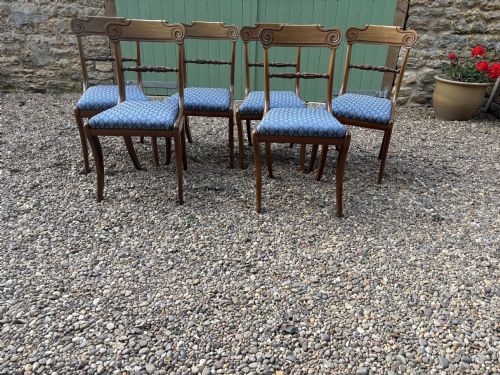
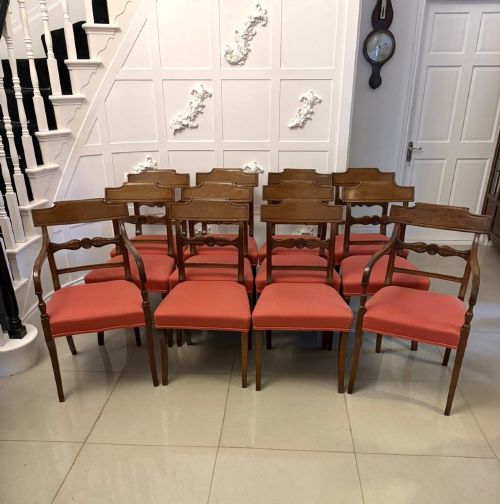
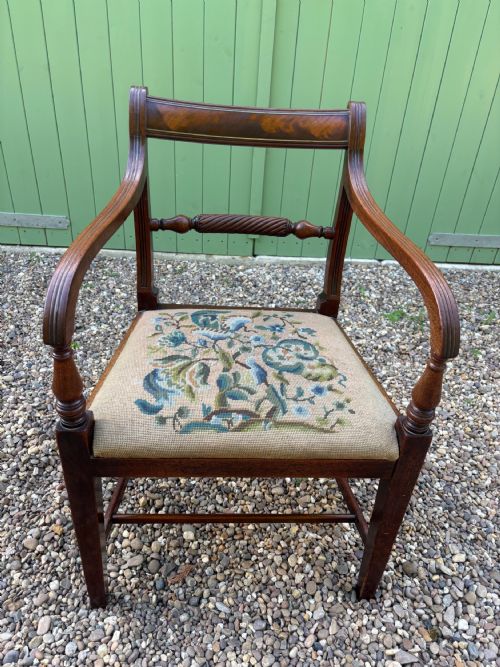
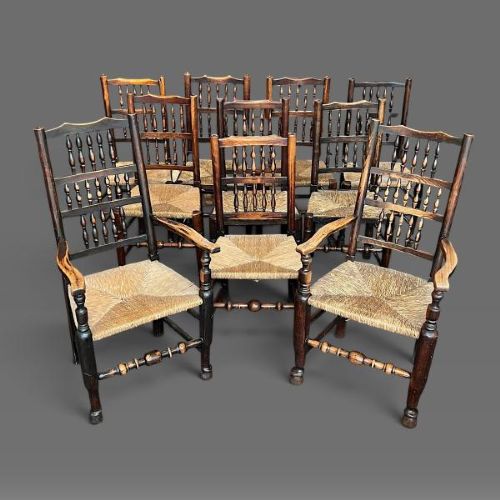
The most common examples on this page are dining chairs, often appearing in sets of various sizes, alongside supportive armchairs, benches, and hall chairs dating from the eighteenth century to the early twentieth century.
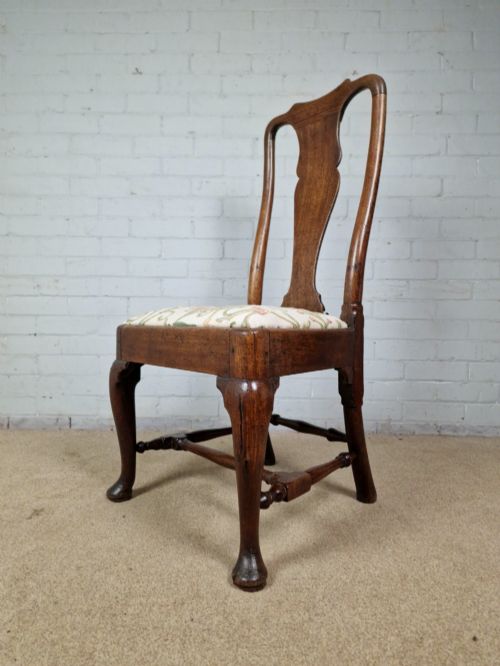
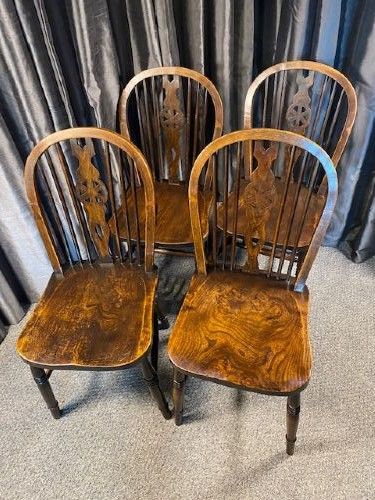
These pieces reflect distinct eras of domestic life, moving from the refined carved splat backs of the Georgian period to the sturdy spindle backs and Windsor forms of farmhouse and tavern interiors.
Materials and construction methods
Cabinet makers and country joiners utilised timbers such as dense mahogany, resilient oak, pliable elm, and flexible ash, often combining different woods within a single chair to balance structural strength with appearance.
Joinery techniques ranged from fine cabinet-making involving pierced splats and inlaid details for formal dining sets to steam-bending and turning used for country Windsor and ladder-back kitchen seating.
Listings feature brown wooden dining seats spanning multiple centuries, from eighteenth-century Georgian designs to early twentieth-century Edwardian and utility pieces.
Determinants of quality
The standard of a piece depends heavily on the selection of timber and the precision of its joinery, where well-figured mahogany and tightly fitted joints distinguish high-end urban furniture from utilitarian country items.
Originality of components, the crispness of carved details like bar backs or Gothic supports, and the integrity of the frame separate standard workshop production from superior examples.
The Brown Wooden Dining Seats Glossary
- Carver
- An armchair designed to match a set of smaller single dining chairs, traditionally placed at the head of the table.
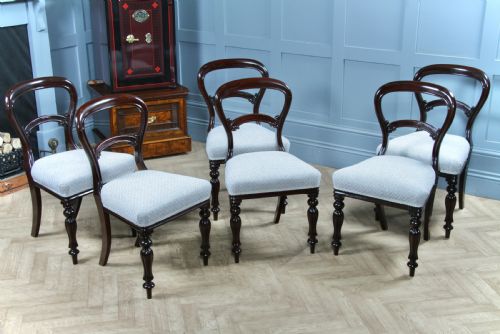
- Balloon back
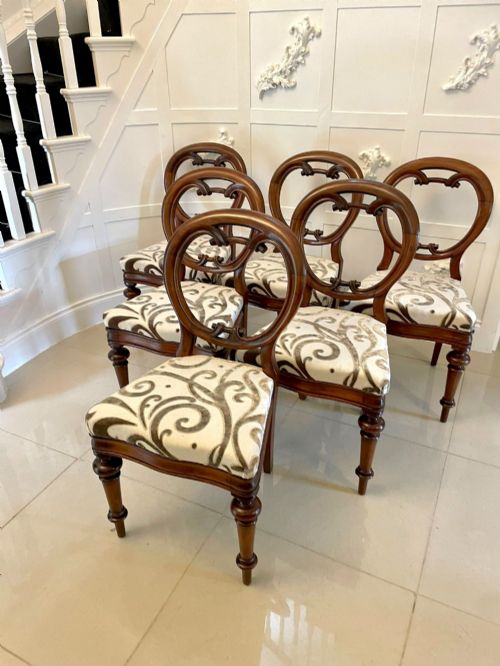
- A rounded, oval-shaped chair back design that became popular during the Victorian era for mahogany dining seats.
- Windsor
- A traditional wooden chair built with a solid saddle-shaped seat into which the legs and back spindles are directly wedged and tenoned.
- Splatt
- The central vertical strip of wood in the back of a chair, often shaped, pierced, or carved in Georgian designs.
Brown Wooden Dining Seats: Frequently Asked Questions
How do I care for antique wooden seats?
Keep wooden chairs away from direct heat sources and sudden humidity changes to prevent the timber from splitting or joints from drying out. Regular application of suitable wax helps maintain the lustre of the polished surface without building up excessive residue.
Check the tightness of joints periodically, especially on country chairs that experience heavy daily use. Gentle handling prevents unnecessary strain on original structural components.
Can I mix different styles around a table?
Combining different chair styles creates an eclectic dining arrangement that reflects individual taste rather than strict period accuracy. Pairing simple farmhouse benches or wheelback chairs with formal mahogany singles adds visual interest to a room.
Matching timber tones or similar seat heights helps unify a mixed collection of dining seats around a single table. Scale and proportion remain important considerations when grouping diverse chairs together.
How do I identify a Georgian chair?
Georgian chairs typically feature dark mahogany timbers, carved details such as pierced splats, and sturdy cabriole or straight legs. The proportions are balanced, reflecting the classical design influences of the eighteenth century.
Construction methods from this period often involve hand-cut tenons and pegged joints rather than modern adhesives. Maker marks or subtle tool signatures can occasionally be found underneath the seat rails.
What is a Windsor chair?
A Windsor chair is a distinct type of wooden seating constructed by inserting turned spindles and legs directly into a thick, carved wooden seat rather than using a traditional framed back. They were widely produced in country workshops using local timbers like elm, ash, and beech.
These chairs are recognised for their robust construction and ergonomic curved comb or bow backs. Their practical design made them staple furniture in kitchens, taverns, and farmhouses.