
Refectory Table with Stretcher
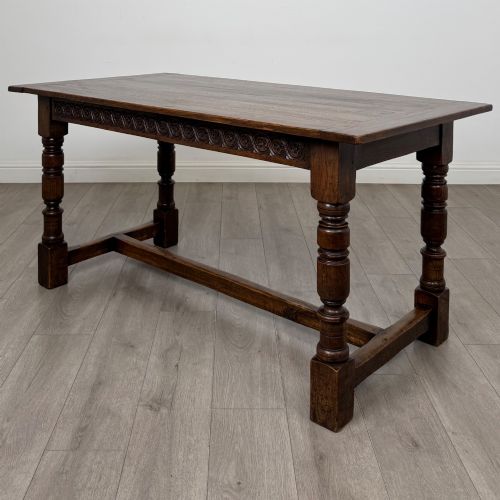
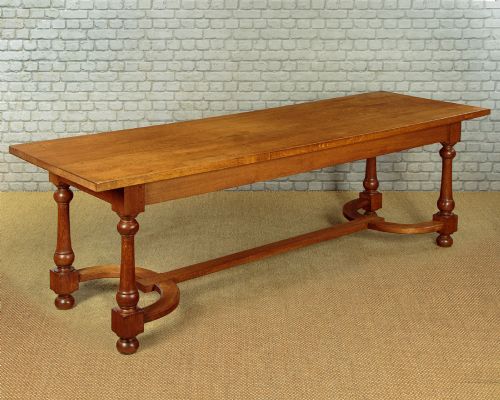
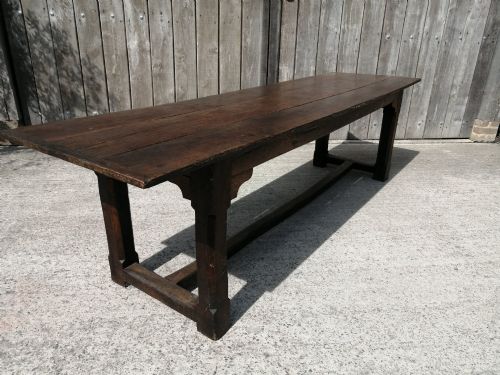
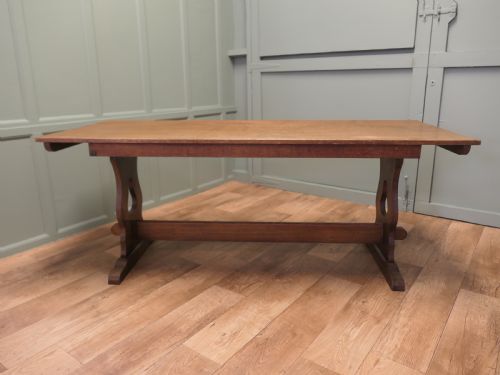
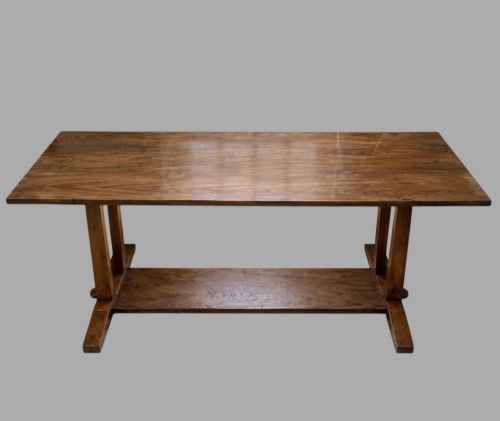
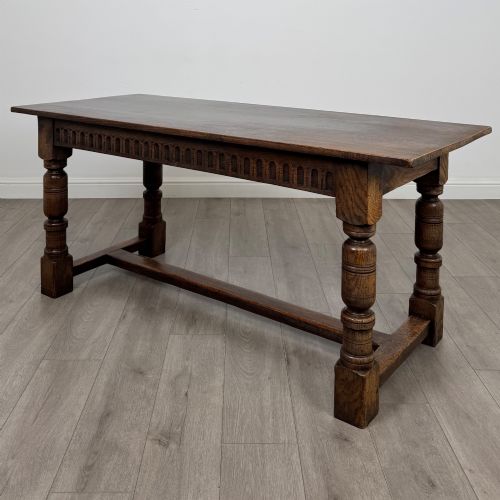
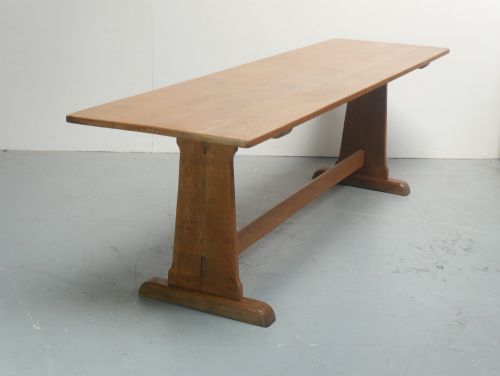
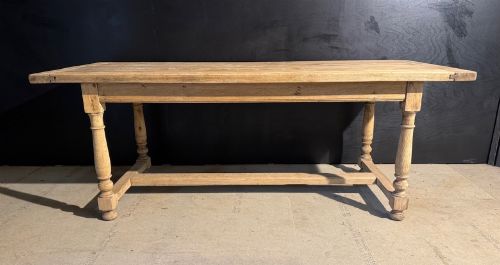
A refectory table with stretcher is a long dining timber surface built with structural underframing, offering sturdy utility and timeless presence for communal meals.
Refectory Table with Stretcher
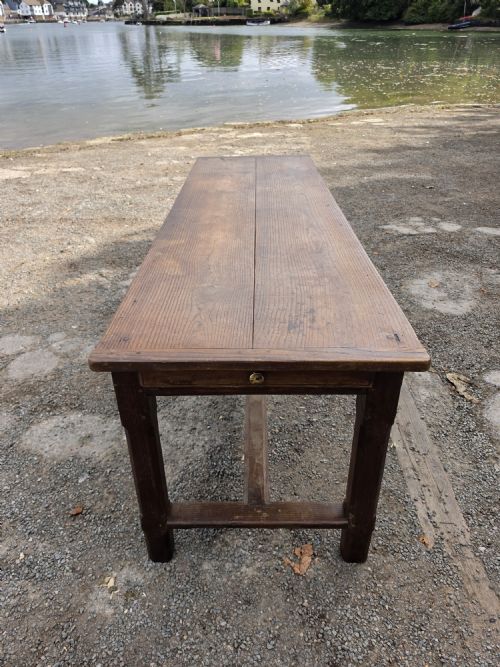
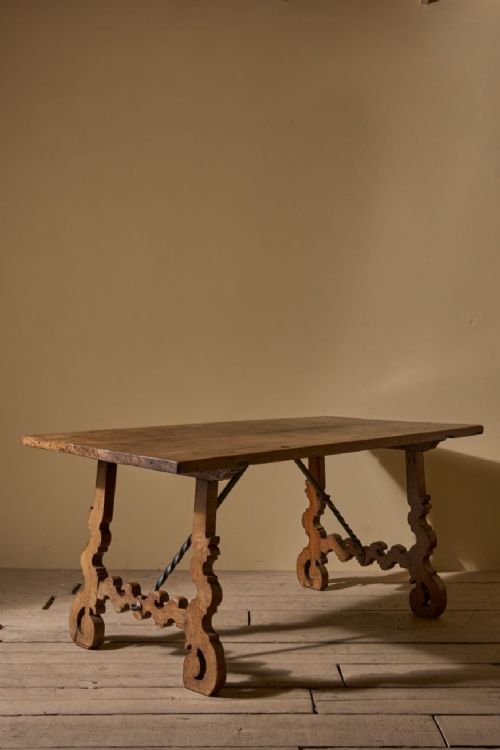
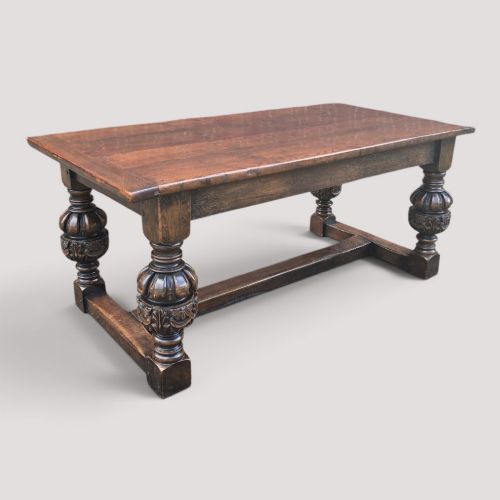
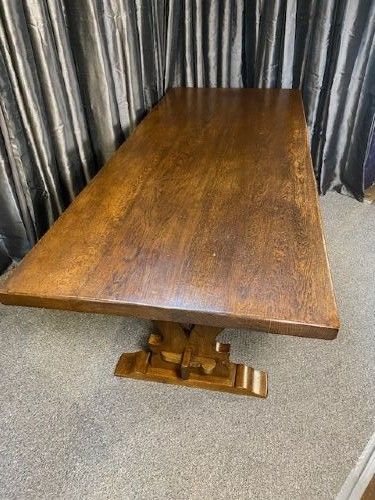
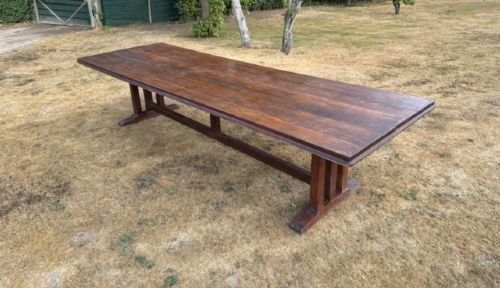
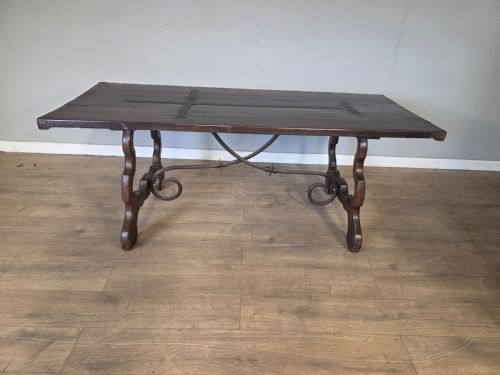
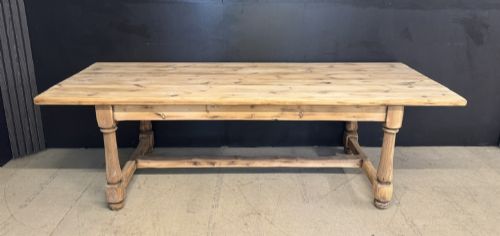
A refectory table with stretcher brings together heavy plank tops and robust underframing designed for communal dining across centuries of domestic life. When you examine this selection, you encounter forms ranging from early seventeenth-century solid walnut Spanish examples to nineteenth-century oak and pine dining boards.
You are most likely to meet nineteenth-century oak and pine variants alongside twentieth-century farmhouse adaptations, though earlier seventeenth-century and eighteenth-century specimens appear in both walnut and oak. Each version relies on stretcher bars to brace the legs against lateral movement, ensuring structural stability under heavy daily use.
How they were made
Carpenters constructed these tables using dense timbers such as oak, walnut, pine, cherrywood, ash wood, and mahogany, selecting each for its specific grain and load-bearing capacity. Planks were joined side by side to form expansive tops, occasionally restricted to three main boards in formal English pieces.
Structural integrity depended heavily on underframing, utilising wooden rails or wrought iron stretchers fixed between the legs to prevent outward splaying. Joinery methods relied on traditional pegging and mortise and tenon joints, while secondary woods like pine appeared in regional farmhouse variants.
Listings feature oak, pine, cherrywood, walnut, ash wood, and iron as primary structural materials.
What varies in quality
The grade of a refectory table rests upon the integrity of its timber selection, evident in whether a top consists of wide, solid planks or secondary boards. Superior examples display honest surface wear and patination developed over centuries, rather than manufactured distressing.
Construction details dictate the tier of craftsmanship, distinguishing simple vernacular pine kitchen boards from precisely joined English oak or Spanish walnut tables. The robustness of the stretcher arrangement and the harmony of proportion between the legs and the top separate utilitarian workshop output from accomplished cabinet work.
The Refectory Table with Stretcher Glossary
- Stretcher
- A horizontal beam connecting the legs of a table to provide lateral support and stability. These components appear in wood or wrought iron across various regional styles.
- Plank top
- A table surface constructed from multiple long boards joined edge to edge. Earlier formal examples often limit this construction to three wide boards.
- Draw leaf
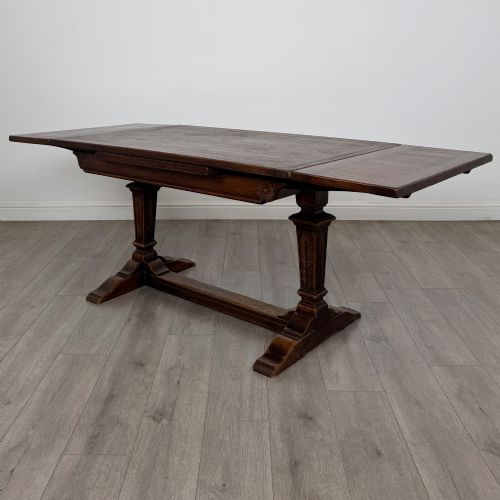
- A dining table mechanism featuring concealed extension leaves beneath the main top that pull out from each end. This design allows the surface length to increase when needed.
- Patina
- The surface sheen and colour depth developed on timber through age, handling, and wax polishing. Good original examples exhibit deep, natural lustre without modern chemical interference.
- Refectory
- A term originally describing the dining hall of a monastery, later applied to long, narrow tables suited for communal meals.
Refectory Table with Stretcher: Frequently Asked Questions
What is a refectory table?
A refectory table is a long, narrow dining table traditionally built for communal dining halls in monasteries and large estates. These surfaces rest on sturdy legs braced by horizontal stretcher bars for added stability.
Over time, the form entered domestic architecture as farmhouse and kitchen tables, maintaining the signature elongated proportions and robust underframing.
How do I use a refectory table today?
These tables serve primarily as large dining room or kitchen surfaces, accommodating multiple guests along their extended lengths. Their sturdy stretcher construction makes them well suited for daily family life.
Beyond dining, they function effectively as serving tables or large library desks in spacious rooms, utilising their substantial depth and length for work or display.
What woods were used for these tables?
Cabinet makers and carpenters utilised local hardwoods and softwoods depending on the region and period. Oak and walnut appear frequently in formal English and Spanish pieces, offering dense grain and structural strength.
Pine, cherrywood, ash wood, and mahogany also feature across regional French, English, and Victorian farmhouse variants, often paired with iron stretchers for additional reinforcement.
How do I tell seventeenth-century tables from later copies?
Early seventeenth-century pieces display authentic signs of hand tool work, pegged joinery, and deep natural patination developed over centuries of use. The timber species, such as solid Spanish walnut or early English oak, align with period workshop practices.
Examinations of the underside and stretcher joints reveal construction methods distinct from later nineteenth-century revival items or twentieth-century rustic interpretations.