




Reeded Leg Tilt Table
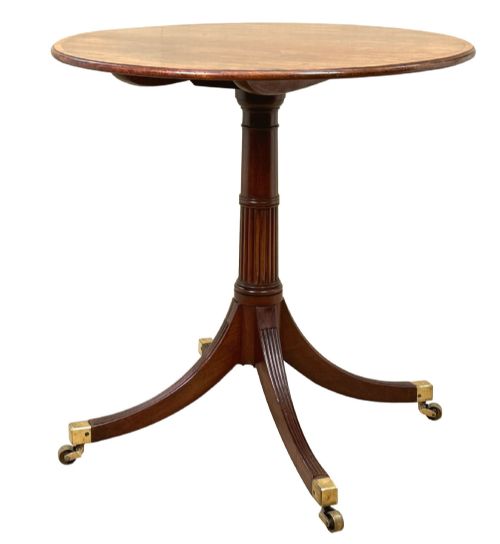
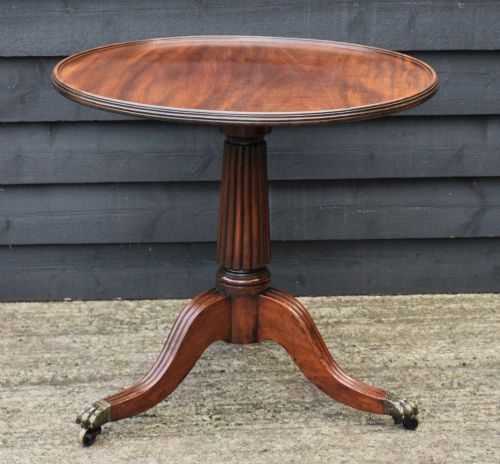
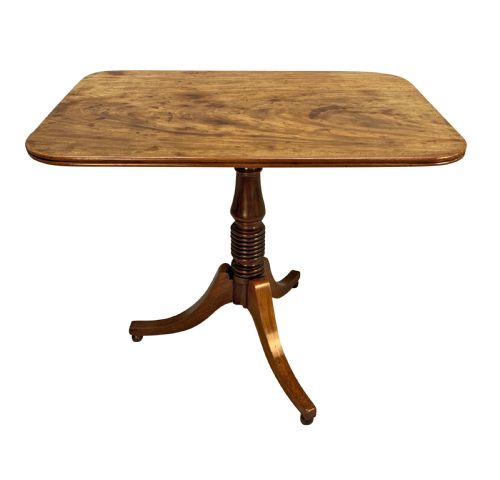
These reeded leg tilt tables are versatile timber tables designed to tilt upright when not in use, spanning the Georgian, Regency, and Victorian periods.
Reeded Leg Tilt Table
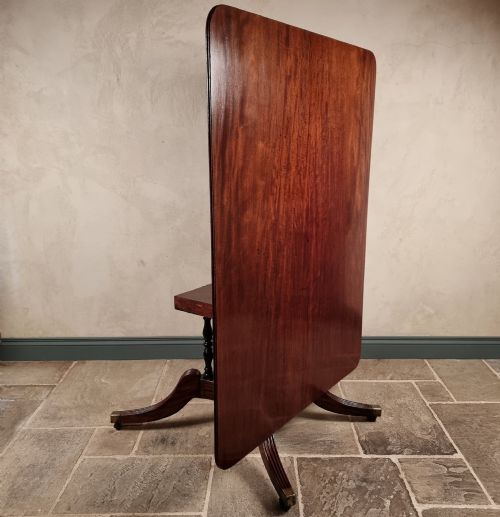
When you search for a reeded leg tilt table, you are looking at practical furniture designed to tilt upright against a wall when floor space is needed. The pieces seen here span the Georgian, Regency, and Victorian periods, alongside later revivals.
You are most likely to meet mahogany versions, including Cuban and plum pudding varieties, shaped as side tables, dining tables, breakfast tables, and wine tables. These range from small tripod wine tables to large pedestal dining tables seating several people.
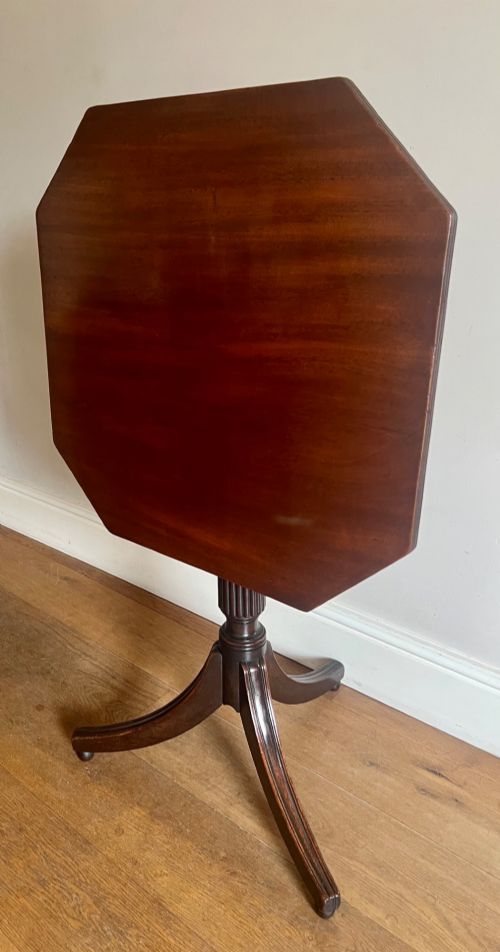
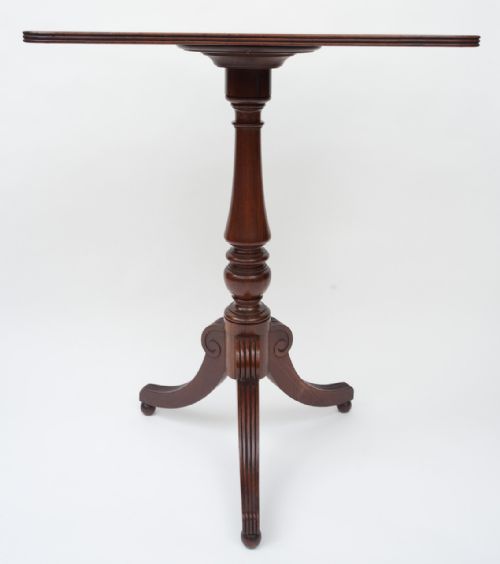
The defining characteristic of these examples is the carved reeding along the legs or pedestal supports, a detail prominent in Regency and George III design.
How they were made
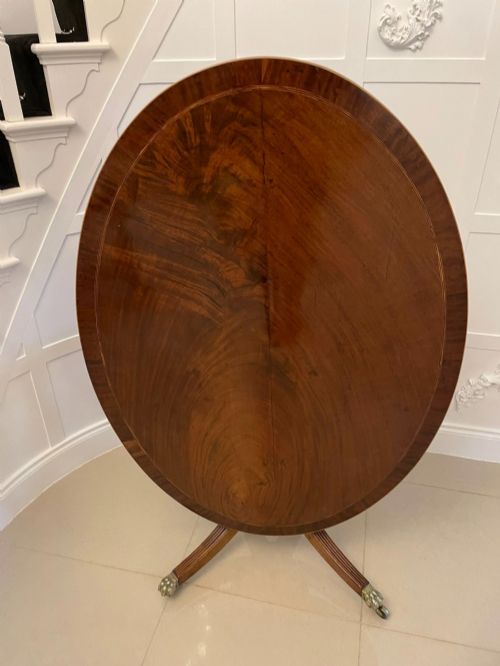
Cabinet makers utilised dense timbers such as mahogany, rosewood, goncalo alves, and satinwood, often selecting figured veneers and crossbanding to enhance the surface. Brass fittings, including castors and tilt mechanisms, add both function and structural support.
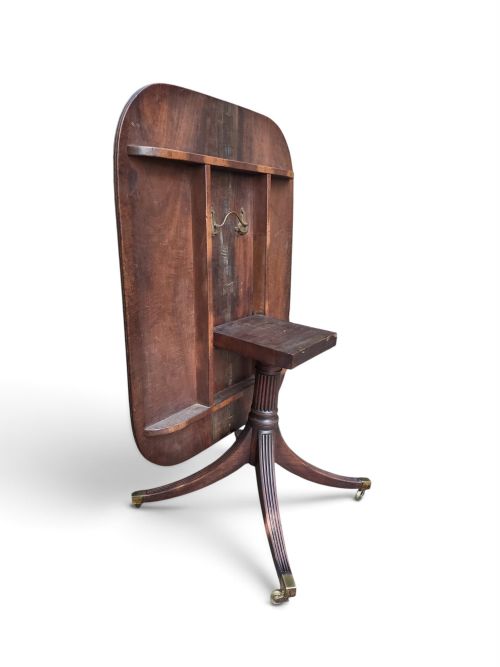
Turning and carving shaped the central pedestals and tripod legs, with reeding applied through careful parallel gouging to create slender vertical mouldings. Tops were hinged to tilting blocks, allowing the surface to fold flat against the central column.
Reeded Leg Tilt Table Retail Price Guide 2026
Typical asking prices for reeded leg tilt table among the pieces listed under this phrase on Sellingantiques today, from the lower quarter to the upper quarter. They describe what is for sale here now, not the wider market.
The listings span the Georgian, Regency, and Victorian eras, utilising mahogany, rosewood, goncalo alves, and satinwood.
What varies in quality
The distinction between standard examples and the finest works lies in the selection of the timber and the crispness of the carving. Richly figured mahogany, such as plum pudding varieties, and precise reeding indicate higher craftsmanship.
Proportion and stability also separate the tiers of quality, where well-balanced pedestals and tightly fitted tilt mechanisms ensure the table functions smoothly without wobble.
James Mein·Gillows
The Reeded Leg Tilt Table Glossary
- Tilt top
- A tabletop mounted on a hinged mechanism that pivots to a vertical position. This allows the furniture to be stored compactly against a wall.
- Reeded
- A decorative moulding consisting of parallel convex strips resembling bundled reeds. It is frequently carved into table legs and pedestals.
- Crossbanded
- A border technique where thin strips of veneer are laid around the perimeter of the tabletop with the grain running at right angles to the centre. This frames the primary timber.
- Tripod table
- A small freestanding table supported by a single central pillar resting on three legs. They appeared frequently in Georgian and Regency parlours.
Reeded Leg Tilt Table: Frequently Asked Questions
How do I tilt the table top?
Most examples use a brass catch or release pin beneath the top that locks the surface in a horizontal position. Lifting or sliding this mechanism allows the surface to pivot safely back against the central column.
Ensure you support the weight of the timber with one hand while operating the catch to avoid sudden movement.
Were these used for dining?
Smaller formats served as wine tables or occasional surfaces, while larger pedestal breakfast tables and oval dining tables accommodated multiple guests.
Many tilt tables were cleared and moved aside after meals to reclaim floor space in principal rooms.
How do I care for mahogany surfaces?
Maintain the timber by applying natural beeswax periodically and buffing it with a soft cloth. Avoid placing tables in direct sunlight or near heat sources to prevent the wood from drying out.
Use coasters and placemats to protect the polished finish from moisture and heat marks.
How can I tell a Regency table from a Georgian one?
Georgian pieces often display classical proportions with straightforward mahogany grain and simpler tripod bases. Regency examples lean towards bolder classical motifs, utilising brass inlays, goncalo alves, rosewood, and distinct reeded leg carvings.
Construction methods also shift over time, moving from heavier timber frames toward lighter, more decorative pedestal designs.