
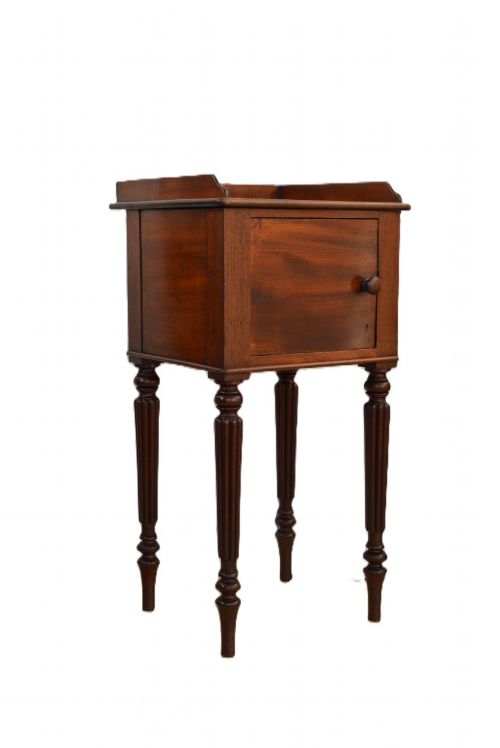
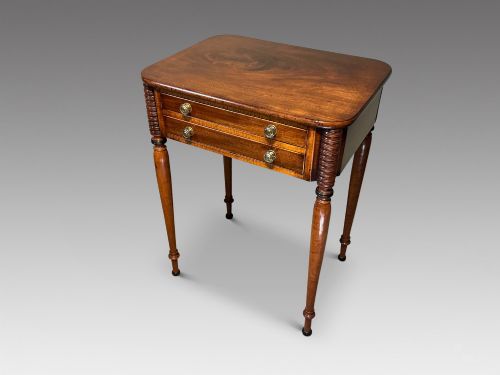


Reeded Leg Nightstands
Reeded leg nightstands bring architectural detail and functional surface space to the bedroom, grounding your scheme with classical reeding.
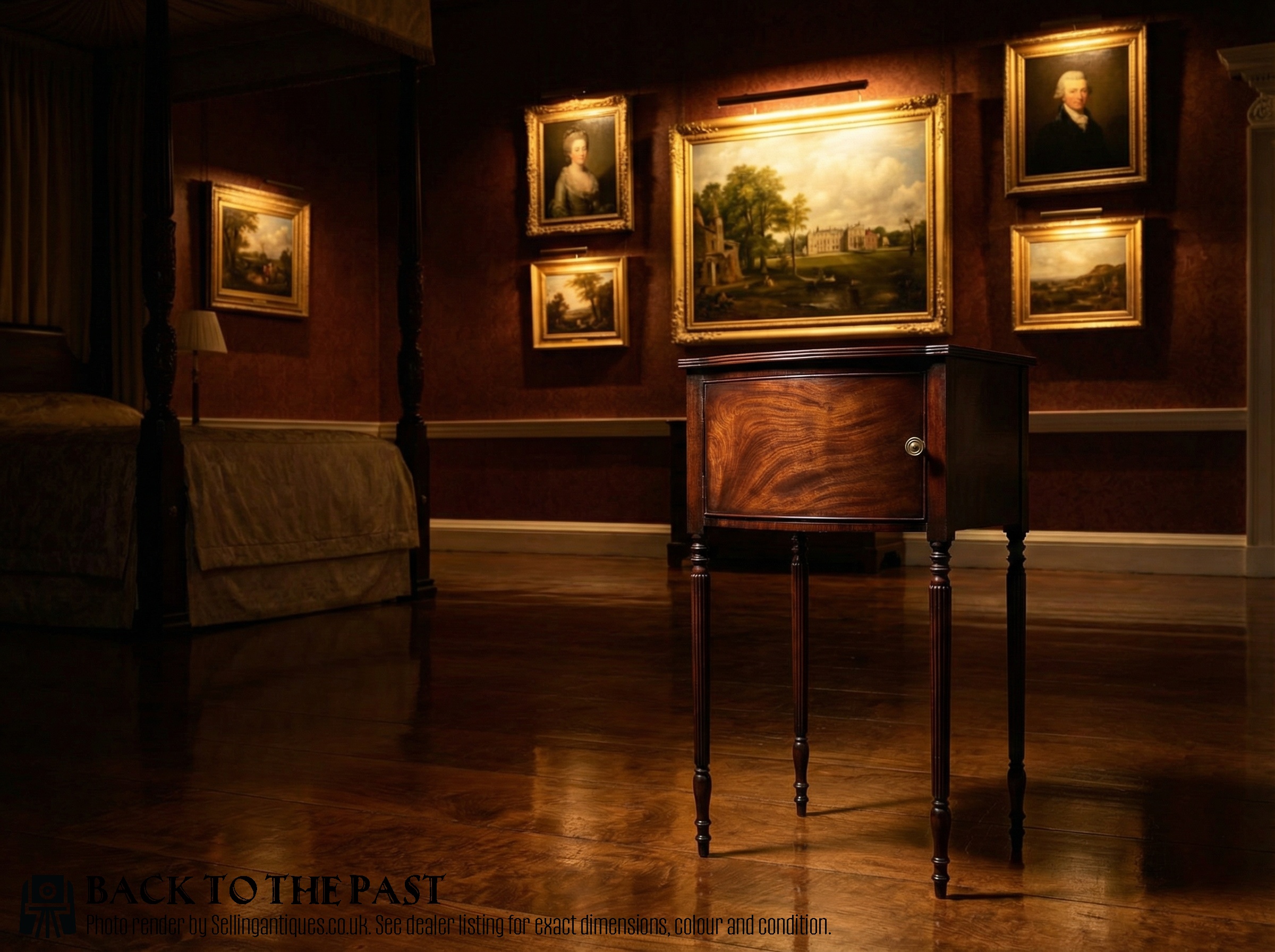
Reeded Leg Nightstands
When you search for reeded leg nightstands, you are looking at small bedside storage and display pieces defined by vertically carved cylindrical legs. The selections on this page span the eighteenth and nineteenth centuries, with periods like Regency and Georgian appearing alongside Edwardian examples.
Bedside cabinets and cupboards form the core of what you will encounter, often accompanied by work tables and occasional pieces that serve the same compact footprint. These items originate from British and American workshops, translating neoclassical motifs into practical bedroom furniture.
The aesthetic leans heavily on British cabinetmaking traditions, where turned and carved vertical reed details echo ancient architectural columns. You will find single cupboards and matched pairs designed to sit neatly beside a bed.
How they were made
Makers constructed these pieces primarily from solid mahogany and satinwood, frequently applying decorative veneer to drawer fronts and cabinet doors. Brass hardware such as small knobs or pulls adds functional contrast to the dark timber surfaces.
Maple appears alongside mahogany in regional variants, providing lighter internal contrast or contrasting crossbanding. Artisans hand-carved the characteristic vertical reeding into the timber legs using gouges and parting tools before finishing the wood with wax or polish.
Some work tables secretly harboured velvet bags for sewing, doubling as the earliest known fabric catch-alls.
What varies in quality
The sharpness and depth of the hand-carved reeding separate standard cabinetwork from superior examples produced by prominent workshops. Crisp detailing on the legs indicates skilled labour rather than mechanical uniformity.
Timber selection dictates the overall visual impact, with figured mahogany and finely grained satinwood commanding greater appreciation than plain secondary woods. Construction integrity, such as traditional drawer joinery and intact brass fixtures, completes the hierarchy of quality.
Gillows
The Reeded Leg Nightstands Glossary
- Reeding
- Parallel convex moulding carved into timber to resemble a bundle of reeds or classical columns. This decorative treatment softens the vertical lines of table and cabinet legs.
- Pembroke table
- A small drop-leaf table with hinged flaps on either side, often featuring a single drawer and slender legs. These versatile tables served various domestic functions in bedrooms and sitting rooms.
- Work table
- A small occasional table equipped with a drawer or fabric bag intended for sewing and needlework. They date predominantly from the Georgian and Regency periods.
- Dumb waiter
- A tiered set of revolving or stationary circular shelves supported on a central pillar and legs. This form provided supplementary surface space for serving food or holding objects.
- Veneer
- A thin slice of figured wood applied over a more stable secondary timber base. This technique allowed cabinetmakers to display striking grain patterns without using solid expensive wood throughout.
Reeded Leg Nightstands: Frequently Asked Questions
What is a reeded leg nightstand?
These are compact bedroom tables and cabinets featuring vertically carved cylindrical legs known as reeding. They provide bedside storage while incorporating classical architectural details.
The listings on this page include nineteenth-century bedside cabinets and work tables that fulfil this exact description.
How do I date a reeded leg piece?
Dating relies on timber choices, construction methods, and stylistic cues from periods like the Georgian and Regency eras. Mahogany and satinwood predominate in the earlier pieces.
Examining drawer joinery and hardware helps establish whether a piece belongs to the eighteenth century or later Victorian periods.
Are these pieces strictly for the bedroom?
While contemporary usage places them beside beds as nightstands, many original forms functioned as work tables or end tables. Their compact dimensions suit various rooms as occasional surfaces.
You can easily use them in a hallway or living room alongside seating.
What woods were used for these cabinets?
Mahogany is the primary timber found in these listings, offering a rich dark hue and strong grain. Satinwood and maple also appear, providing lighter tones and decorative contrast.
Craftsmen often combined these timbers with brass fittings to complete the design.