




Reeded Leg Console Table
A reeded leg console table brings linear elegance to a hallway or reception room, offering a sturdy surface shaped by Regency and Victorian cabinet-makers.
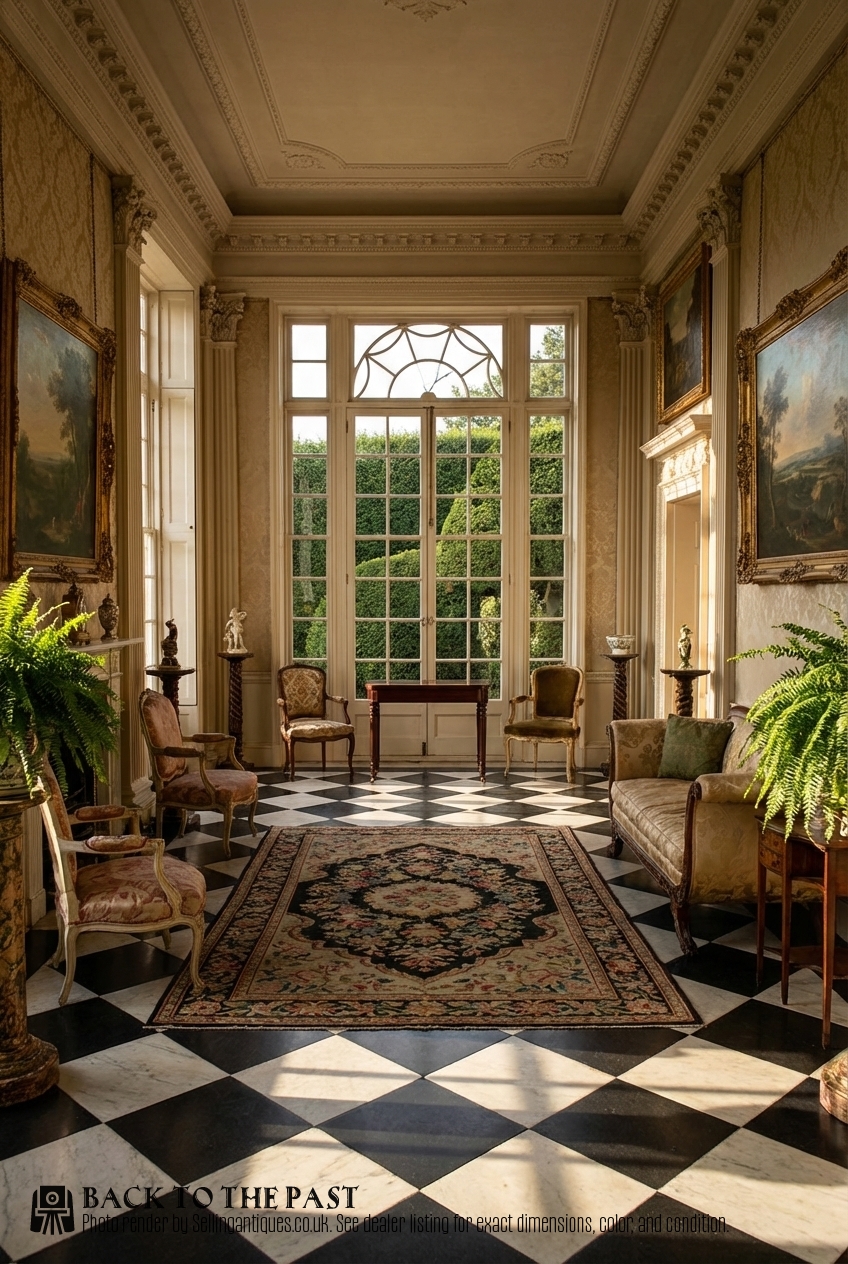
Reeded Leg Console Table
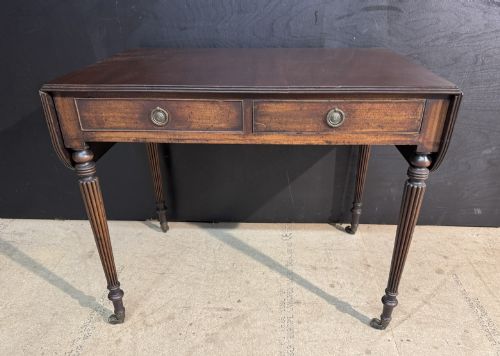
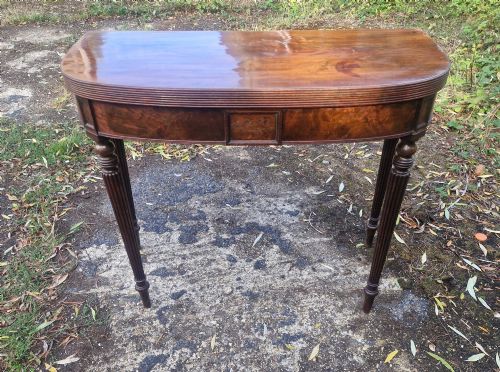
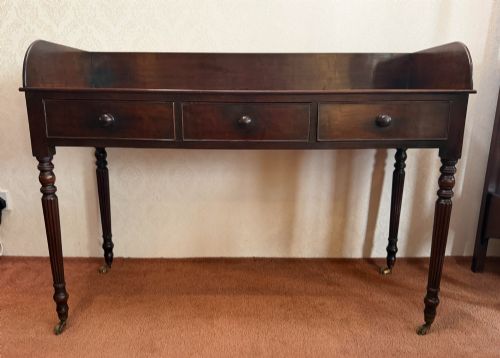
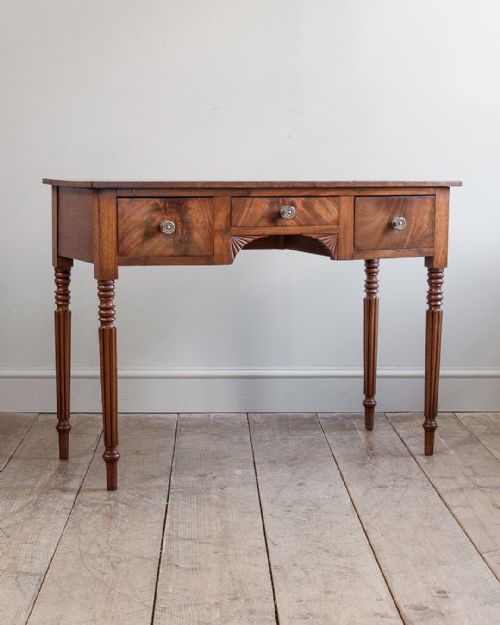
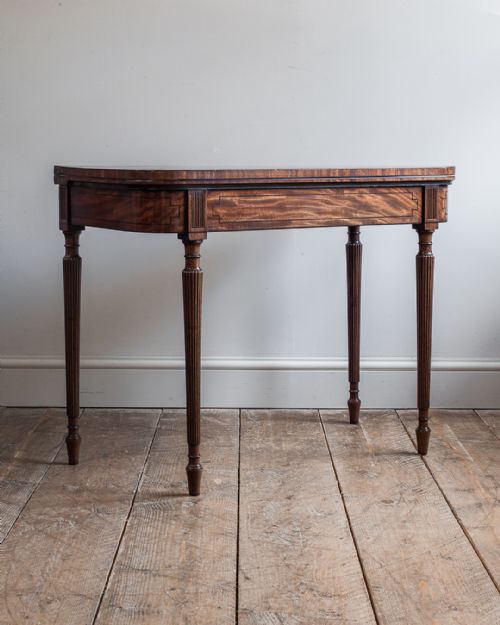
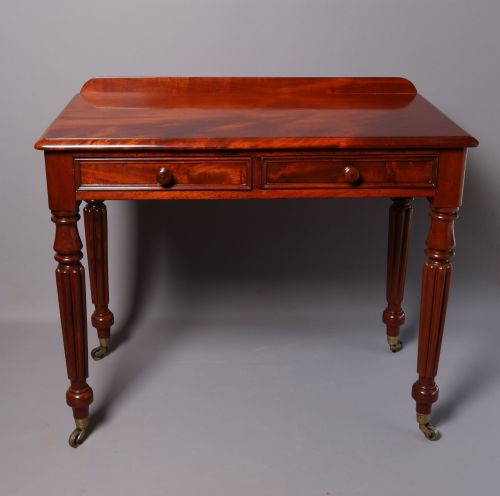
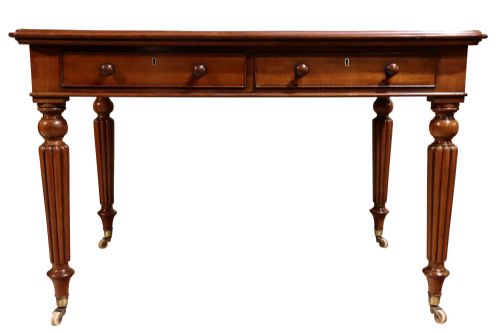
When you search for a reeded leg console table, you encounter tables built primarily during the Georgian, Regency, and Victorian periods. These pieces appear as side tables, serving tables, D-shaped tea tables, and writing desks alongside dedicated console forms.
The version most commonly met on this page is the mahogany console or side table dating from the early nineteenth century, particularly pieces carrying Regency or George IV stylistic traits. Makers often shaped them as D-ends or demi-lune forms designed to stand flush against a wall.
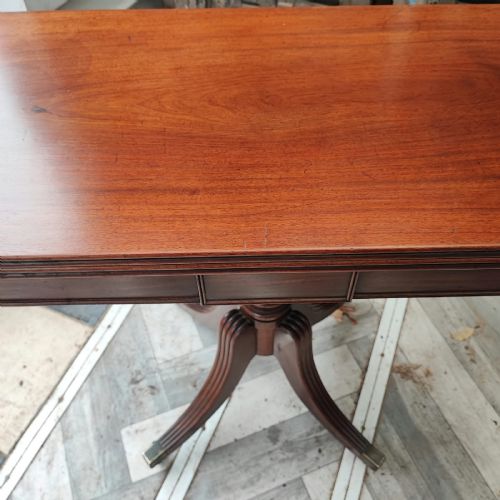
Makers also produced related forms such as sofa tables, Pembroke tables, and card tables featuring the same characteristic turned vertical supports. These formats span the eighteenth century through to Victorian and later revival periods.
Materials and construction
Cabinet-makers relied heavily on mahogany as the primary timber, sometimes enhanced with wood veneer, boxwood inlay, ebony banding, or walnut cross-banding. Secondary woods provided structural stability inside drawers and carcases.
Workers shaped the distinctive linear vertical fluting on the supports using specialised gouges and turning lathes. Craftsmen also incorporated brass mounts, leather writing surfaces, and ceramic castors depending on the specific domestic function.
Reeded Leg Console Table Retail Price Guide 2026
Typical asking prices for reeded leg console table among the pieces listed under this phrase on Sellingantiques today, from the lower quarter to the upper quarter. They describe what is for sale here now, not the wider market.
Periods represented span from eighteenth-century Georgian designs through Regency and Victorian eras to twentieth-century revivals.
Judging execution and finish
The distinction between ordinary utility items and superior pieces rests on the crispness of the turned fluting and the selection of figured timber. Finely executed linear carving shows sharp, uniform channels without splintering or softening along the grain.
Proportion and secondary detailing elevate specific examples, such as tight matching of wood veneers across drawer fronts and the integration of substantial brass hardware. Workshop attribution, particularly connections to notable firms of Lancaster and London, reflects higher standards of cabinet-making.
Gillows of Lancaster and London
The Reeded Leg Console Table Glossary
- Reeded
- Decorated with parallel convex mouldings that resemble bundled plant stems. This surface treatment appears frequently on table legs and pillar supports.
- Console table
- A table designed to be fixed against a wall, traditionally supported by brackets or legs at the front. These pieces serve as decorative surfaces in hallways and living spaces.
- Demi-lune
- Having a half-moon or semicircular shape. Tables with this footprint fit neatly against flat walls.
- Turnover top
- A table leaf hinged to fold open and double the surface area. This mechanism appears on card tables and tea tables.
- Sofa table
- A rectangular occasional table designed to stand in front of a sofa. They typically feature drop leaves and double pedestals or trestle ends.
Reeded Leg Console Table: Frequently Asked Questions
What is a reeded leg console table used for?
These tables provide a narrow surface for displaying decorative items, lamps, or mirrors in hallways and reception rooms. Their shallow depth allows them to sit against walls without obstructing pathways.
Historically, similar tables doubled as serving surfaces or card tables when paired with folding or turnover tops. Today, buyers use them to anchor narrow spaces while adding period character.
How do I identify a Regency console table?
Regency pieces typically display classical restraint, balanced proportions, and dark timbers such as mahogany. Distinctive design markers include brass stringing, ebony banding, and turned reeded or sabre legs.
Many pieces from this era reflect neoclassical influences popular during the early nineteenth century. Construction details such as hand-cut dovetails in the drawers help confirm the period.
Can I use a console table as a desk?
Many surviving console and side tables feature built-in drawers suitable for stationery and writing materials. Tables described as writing or side tables often accommodate a chair underneath.
Original leather inserts and two-drawer configurations indicate that a table served writing functions in a library or boudoir. Check the clearance height beneath the apron to ensure comfortable seating.
How do I care for antique mahogany furniture?
Maintain the wood finish by dusting regularly with a soft, dry cloth and avoiding placement near direct heat sources or strong sunlight. Excessive dryness causes timber to shrink and split.
Apply high-quality beeswax occasionally to nourish the grain and preserve the lustre. Avoid silicone-based polishes that build up residue and dull the surface over time.