
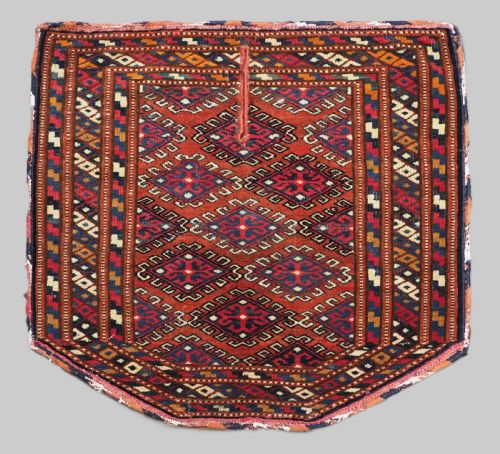
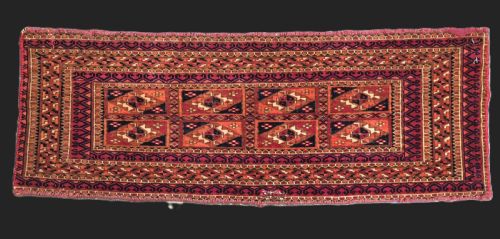
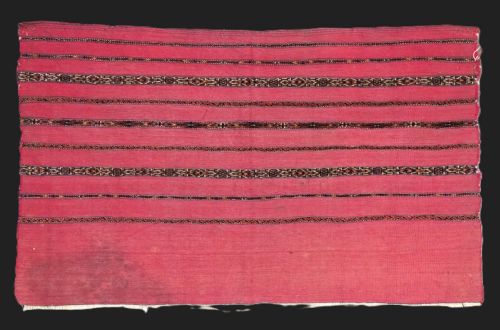


Red Turkmen Carpet Panel
A red turkmen carpet panel delivers deeply saturated madder tones and precise tribal geometry that transform plain walls into focal points of ancient nomadic artistry.
Red Turkmen Carpet Panel
A red turkmen carpet panel comprises fragments and complete faces of nomadic utility bags, tent bands, and animal trappings originating from Central Asian tribal groups such as the Tekke, Yomut, Ersari, and Saryk. Buyers searching this phrase look for portable expressions of tribal heritage that function as rich wall hangings or decorative textiles.
The most common iterations encountered on this page are torba faces, chuval faces, and mafrash panels woven across the nineteenth century. These items represent structural segments of larger nomad furnishings, prized for their portability and intricate woolwork.
How they were made
Weavers relied on hand-spun wool foundation and pile yarns, frequently enriched with touches of cotton, linen, and silk for detail work. These fibres were dyed using natural dyestuffs that yielded deep crimson, madder red, and secondary accent hues.
The construction involves dense knotting and flatweave techniques executed on portable horizontal looms set up across the Central Asian steppes and oases.
Nomadic weavers packed entire households into portable bags, leaving modern walls decorated with what was once camel luggage.
What varies in quality
Quality rests in the precision of the drawing, the crispness of the gul motifs, and the depth of the natural dye palette. Superior examples demonstrate rigorous symmetry, finely balanced proportions, and tight knot density that holds intricate geometric lines sharp.
The handled handle and visual resonance distinguish exceptional tribal weaving from standard utilitarian output. Pieces showing confident draughtsmanship and uncluttered secondary ornaments achieve greater aesthetic impact.
The Red Turkmen Carpet Panel Glossary
- Gul
- A primary octagonal or medallion motif repeated across Central Asian carpets. Each tribal group utilised distinct gul variants to signal lineage and cultural identity.
- Chuval
- A large tent storage bag produced by nomadic tribes. Faces of these bags survive as decorative wall panels.
- Torba
- A smaller utility storage bag used within the nomad tent. These horizontal rectangles display concentrated tribal designs.
- Mafrash
- A rectangular storage chest panel or bedding bag face. They frequently exhibit banded flatweave or piled geometric layouts.
- Asmalyk
- A triangular wedding camel trapping created for ceremonial transport. These decorative panels feature specialised symbolic imagery.
Red Turkmen Carpet Panel: Frequently Asked Questions
How were these panels used originally?
Nomadic tribes utilised these textiles to store household goods, bedding, and clothing inside portable tents. They formed the functional faces of bags strapped to camels or tent poles.
Over time, weathering or division separated these decorated faces from their original cloth backs, leaving portable segments prized for their visual artistry.
How should I hang a carpet panel?
Mounting these textiles safely requires distributing the weight evenly across the upper edge using a padded wooden support or professional conservation Velcro attachment. Avoid puncturing the wool structure directly with nails or clips.
Displaying the panel away from direct sunlight preserves the natural dyes and maintains the integrity of the antique wool fibres.
How do I tell different tribal designs apart?
Tribal attribution relies on the specific geometry of the primary guls, the secondary ornaments, and the border configurations. Yomut designs often incorporate hooked motifs and distinct borders, while Tekke pieces favour regular rows of guls.
Palette choices also offer clues, as different regions and tribes mastered unique shades of madder red, ivory, and deep brown.