

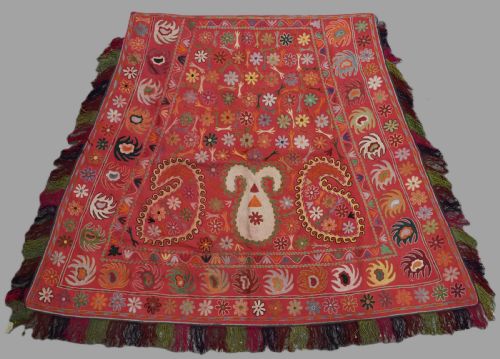


Red Tribal Saddle Rug
When you search for a red tribal saddle rug, you are looking at utilitarian nomadic textiles woven for practical transport across rugged terrain.
Red Tribal Saddle Rug
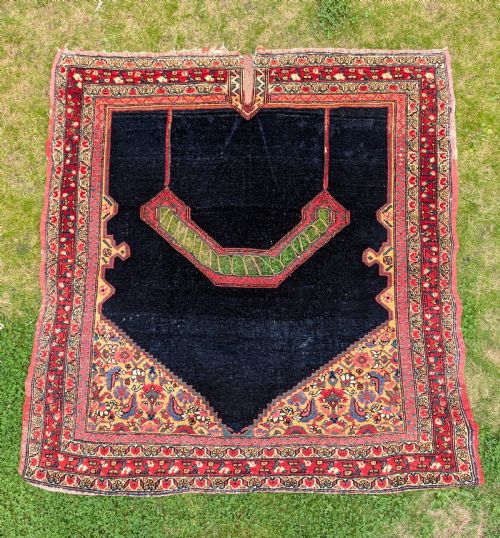
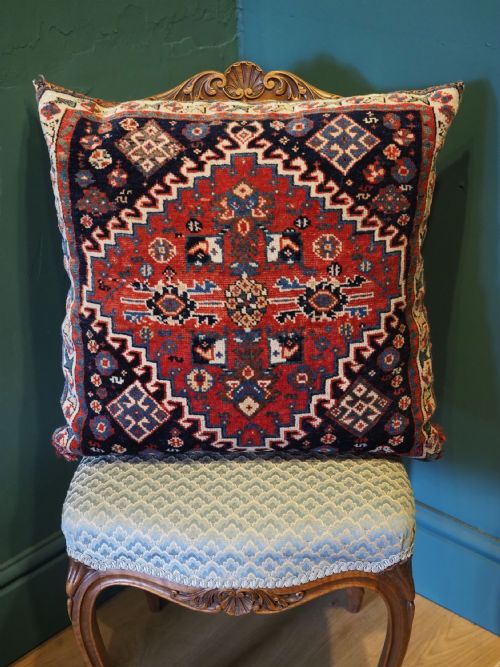
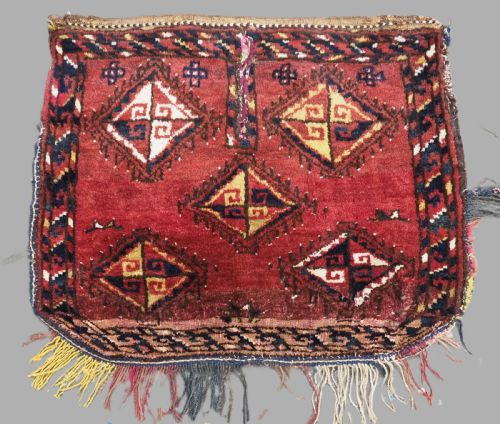
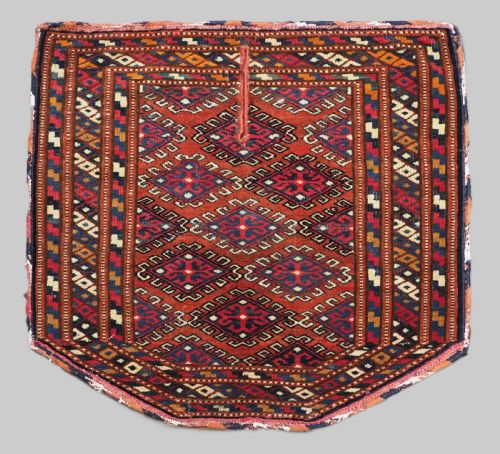
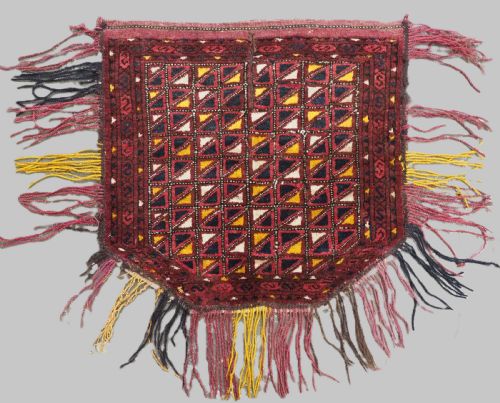
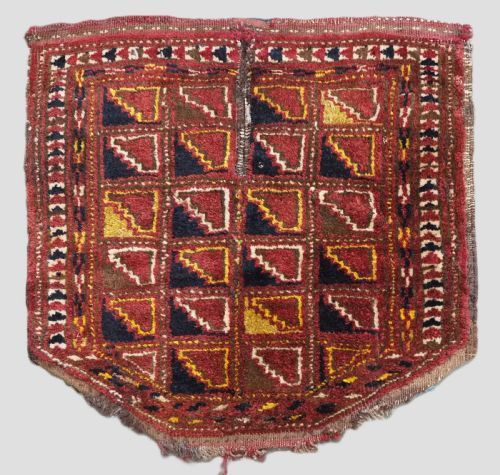
A red tribal saddle rug encompasses utilitarian pieces made by nomadic and village weavers across Persia, Central Asia, and the Caucasus during the nineteenth and early twentieth centuries. These textiles served practical functions on pack animals, functioning as complete saddle bags, half faces, or ceremonial horse covers.
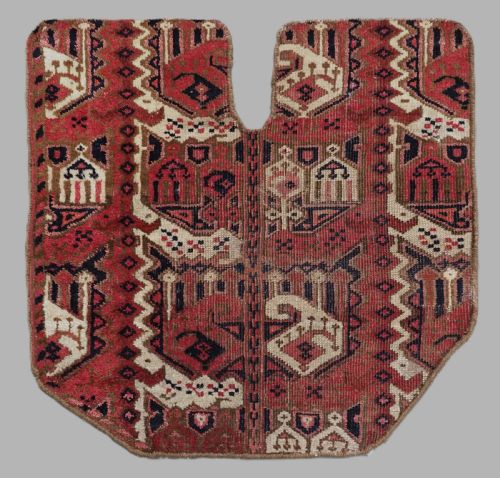
The pieces appearing on this page span several decades, originating from regional groups such as the Afshar, Qashqai, Shahsavan, Ersari, and Yomut Turkmen. Buyers encountering this selection will find formats ranging from intact double saddle bags to flattened bag faces and decorative covers intended for transport.
Nomadic weavers utilised local materials suited for daily utilitarian wear, incorporating geometric motifs and tribal patterns that identified specific tribal lineages. Surviving examples demonstrate the dual purpose of heavy-duty transport gear and expressions of local weaving traditions.
Materials and construction methods
Construction relies heavily on hand-spun wool combined with natural dyes to create durable pile or flatweave surfaces. Weavers incorporated cotton for structural foundations and occasionally integrated metal elements, silk, or leather into specific regional items.
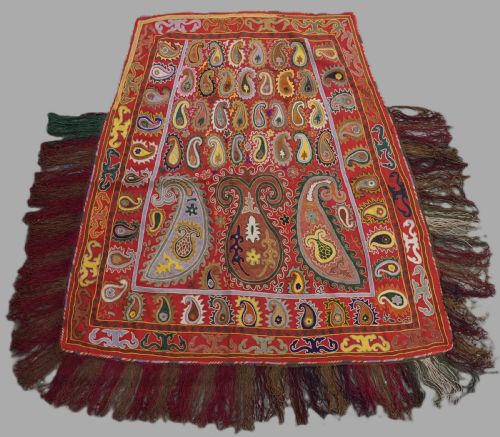
Techniques varied between pile weaving and flatweave methods such as soumak, alongside supplementary embroidery found on ceremonial horse covers from Uzbekistan. These methods provided the structural strength required for functional daily use on animals while accommodating intricate tribal patterns.
Listings span nineteenth and early twentieth-century production, utilising wool, natural dyes, and flatweave structures across multiple nomadic groups.
Factors determining quality
Quality in these textiles depends upon the handling of wool, where lustrous and resilient fibre reflects careful selection and preparation by the weaver. The depth and saturation achieved through natural dye use further distinguish finer regional examples from simpler utility pieces.
Structural integrity also separates individual examples, seen in the tightness of the weave, the preservation of original plain weave backs or tassels, and the clarity of the geometric design. Completeness, such as intact pairs or full sets of saddle bags, elevates the standing of a textile within its group.
The Red Tribal Saddle Rug Glossary
- Khorjin
- A traditional nomadic double saddle bag designed to be thrown over an animal's back for carrying possessions during migration. These items feature two pouches connected by a central web.
- Soumak
- A flatweave technique involving wrapping weft threads over warp threads in a continuous sequence to create a sturdy, textured surface. This method produces durable structural designs without a raised pile.
- Gul
- A repeating medallion or octagonal motif characteristic of Turkmen and Central Asian tribal weaving traditions. Each design often signifies a specific tribal affiliation or clan.
- Chuval
- A large storage bag used within nomadic tents for bedding and household goods. These pieces typically display multiple rows of guls across the face.
- Boteh
- A stylised floral motif resembling a pear or curved almond shape found frequently across Persian tribal weaving. It remains one of the oldest decorative patterns in textile history.
Red Tribal Saddle Rug: Frequently Asked Questions
How do I distinguish between different tribal styles?
Tribal attribution relies on specific structural characteristics, colour palettes, and repeating motifs unique to each region. Turkmen pieces often display deep red fields with characteristic guls, while Persian groups like the Qashqai or Afshar utilise distinct geometric formats and varied secondary dyes.
Examining the weave structure and edge finishes also helps identify whether a piece originated from Caucasus workshops, Anatolia, or South-West Persia.
Are these pieces complete saddle bags or fragments?
The selection includes both complete double saddle bags joined by a central web and individual bag faces that were separated over time. Complete sets and intact pairs represent the original utilitarian form used by nomadic weavers.
Single bag faces or half bags are common survivals where the reverse plain weave web has worn away or been cut down during past use.
How should I care for a historic saddle rug?
Proper care involves gentle vacuuming without a rotating brush to remove dust from the wool fibres. Keeping the textile out of direct sunlight prevents natural dyes from fading over time.
Professional textile conservation cleaning should be utilised when deep maintenance is required, avoiding standard household detergents or excessive water.