


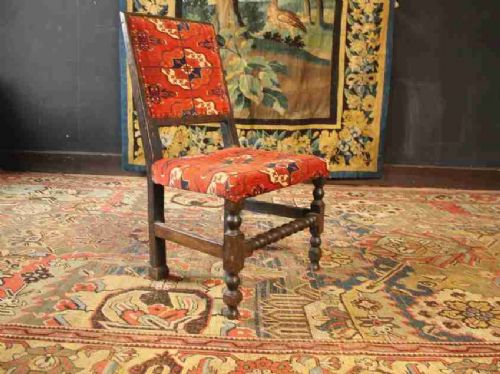


Red Tapestry Chair
A red tapestry chair brings together robust timber frames and rich textile needlework across Victorian, Georgian and Edwardian periods.
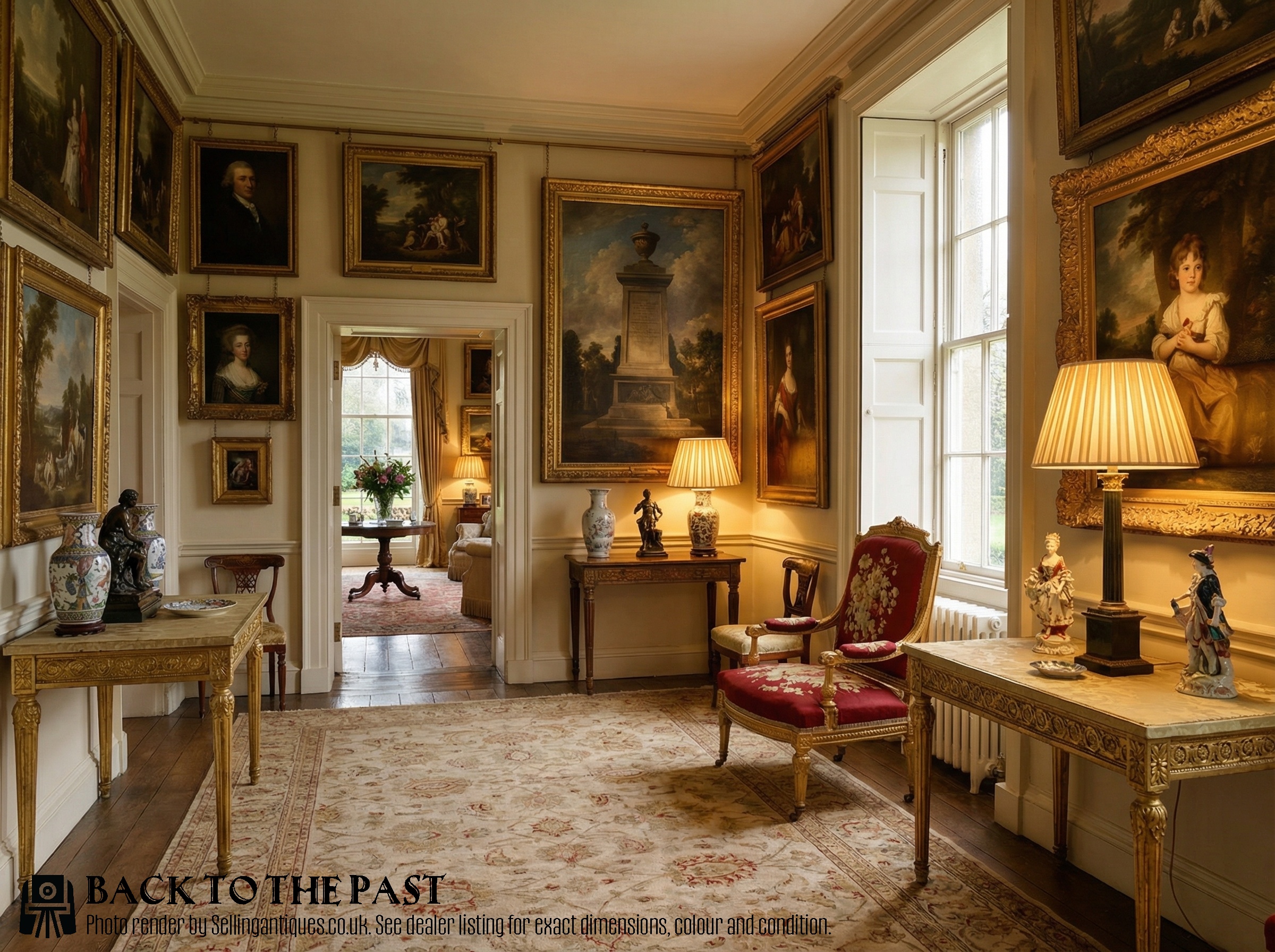
Red Tapestry Chair
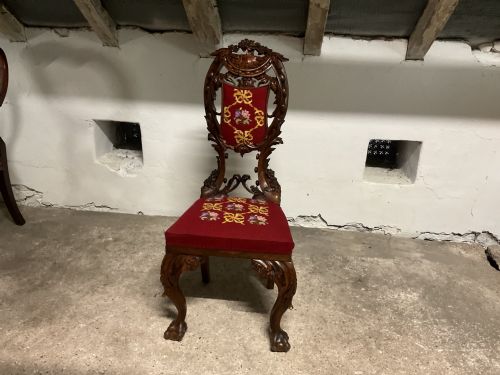
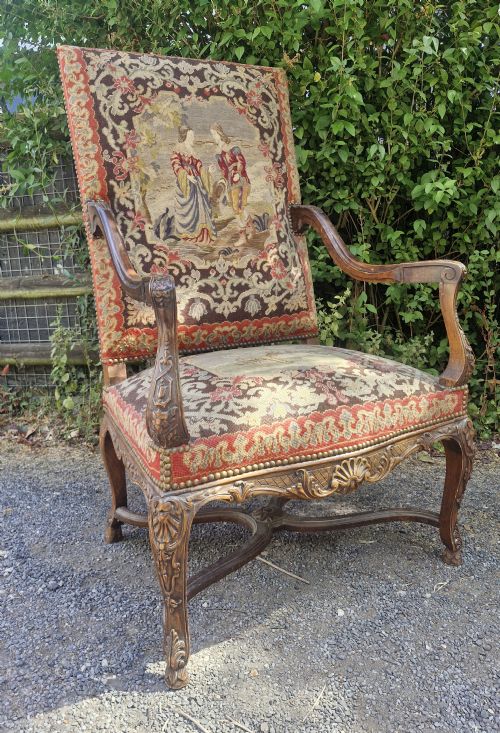
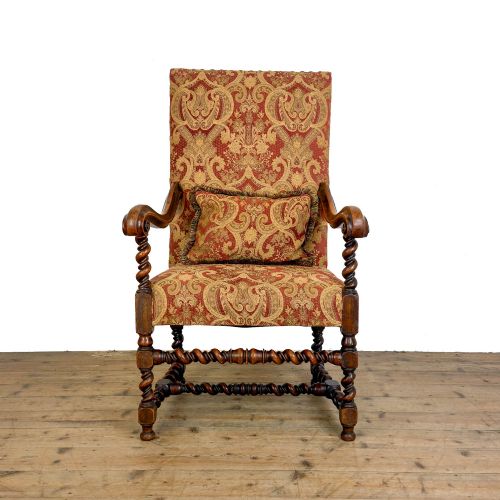
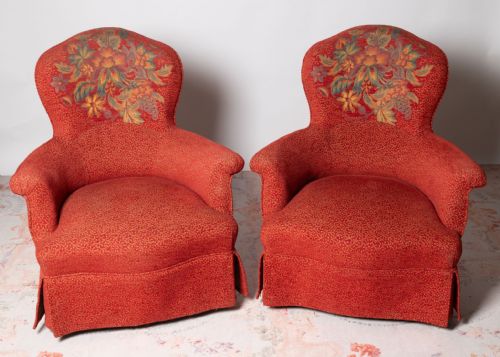
A red tapestry chair combines structural wooden seating with woven or needleworked textile covers in shades of red. You will encounter various forms here, including nineteenth-century armchairs, nursing chairs, side chairs, and occasional seats.
The pieces span multiple historical periods, notably the nineteenth century, Victorian era, and Edwardian period, alongside earlier Georgian and seventeenth-century examples. The woodwork ranges from simple oak and beech to mahogany, walnut, and giltwood.
Armchairs and occasional chairs dominate the selection, often featuring upholstered seats and backs covered in wool tapestry or hand-stitched needlepoint. Buyers also find pairs and sets alongside single library, salon, and desk chairs.
How they were made
Frames are constructed from solid timbers such as mahogany, walnut, oak, and beech, frequently shaped with carved details or turned supports. Joinery relies on traditional methods appropriate to periods spanning from the seventeen-hundreds through to the twentieth century.
Upholstery incorporates wool tapestry, needlework, and fabric covers secured over internal padding. Brass accents and gilded finishes appear on specific revival and French-influenced frames to add decorative detail.
Red Tapestry Chair Retail Price Guide 2026
Typical asking prices for red tapestry chair among the pieces listed under this phrase on Sellingantiques today, from the lower quarter to the upper quarter. They describe what is for sale here now, not the wider market.
Several pieces include signed artist needlework, proving that previous owners enjoyed leaving their literal signature on the furniture.
What varies in quality
Quality rests in the fidelity of the timber frame carving, the integrity of the wood joints, and the fineness of the textile work. Hand-stitched needlepoint and original period tapestry covers show distinct artistry compared to later replacements.
Proportion and architectural presence separate standard utility seating from high-status salon and library pieces. Maker attribution and documented provenance elevate specific Victorian and Georgian examples above anonymous production.
White, Allom & Co.·Holland & Sons·Howard & Sons
The Red Tapestry Chair Glossary
- Tapestry
- A heavy textile woven with decorative designs, frequently utilised for historic chair upholstery. It provides both durable surface texture and complex pictorial or geometric patterns.
- Needlework
- Hand-stitched embroidery executed on canvas mesh, often seen on nineteenth-century chair backs and seats. Skilled needlepoint displays tight, uniform stitches and sophisticated colour blending.
- Carved Giltwood
- Timber coated with a thin layer of gold leaf over a prepared surface, creating a bright metallic finish. It appears on decorative nineteenth-century revival frames.
- Fauteuil
- An open-armed wooden armchair originating in France, featuring upholstered back and arm pads. Beech and walnut examples frequently display carved cabriole legs.
- Nursing Chair
- A low-seated Victorian chair designed to allow comfortable sitting while holding an infant. They often feature upholstered backs and short turned legs.
Red Tapestry Chair: Frequently Asked Questions
What periods do these chairs come from?
The selection spans from seventeenth-century oak pieces through Georgian and Regency designs to extensive Victorian and Edwardian manufacturing. Later twentieth-century examples also appear.
Each era contributes distinct frame silhouettes and upholstery methods, allowing collectors to match specific historical interiors.
Are the tapestry covers original?
Some pieces retain their handworked original needlework and wool tapestry covers from the nineteenth and early twentieth centuries. Other frames have received later period-appropriate textile replacements.
Examination of the stitching and fabric wear helps determine whether the upholstery dates to the construction of the wooden frame.
How do I identify a nursing chair?
Nursing chairs feature notably low seats positioned closer to the floor than standard parlour or dining seating. They are typically paired with an upholstered back designed for comfortable posture.
Victorian examples frequently combine mahogany or walnut frames with floral tapestry covers.
Where should I place a side chair?
Side chairs function effectively in hallways, bedrooms, and studies as occasional seating rather than primary lounge furniture. Their compact proportions allow them to fit against walls or beside desks.
Mahogany and oak variations complement both traditional and eclectic modern room layouts.