






Red Suzani Tapestry
These red suzani tapestry pieces bring vibrant Central Asian needlework into a room, offering rich textures and traditional motifs that ground a modern interior.
Red Suzani Tapestry
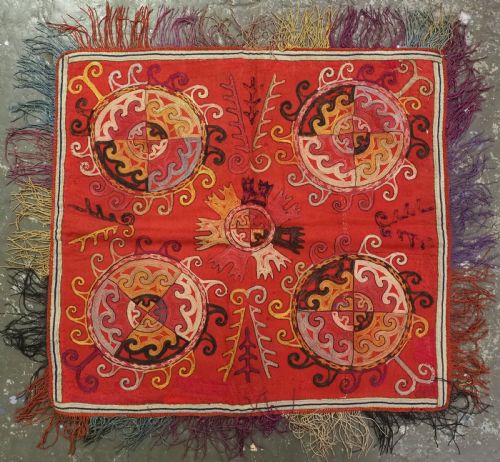
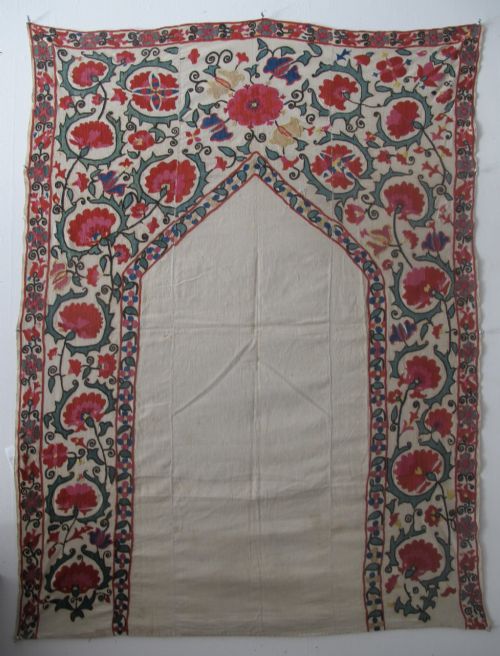
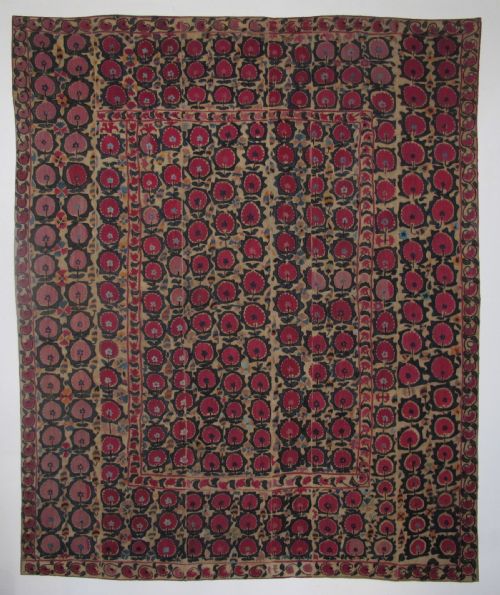
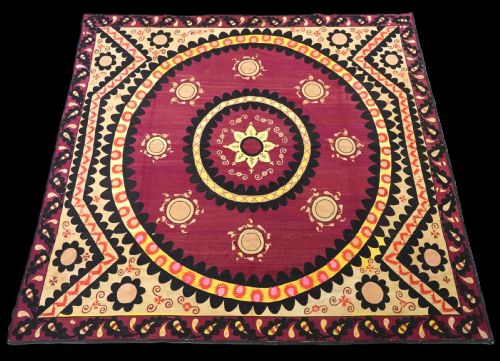
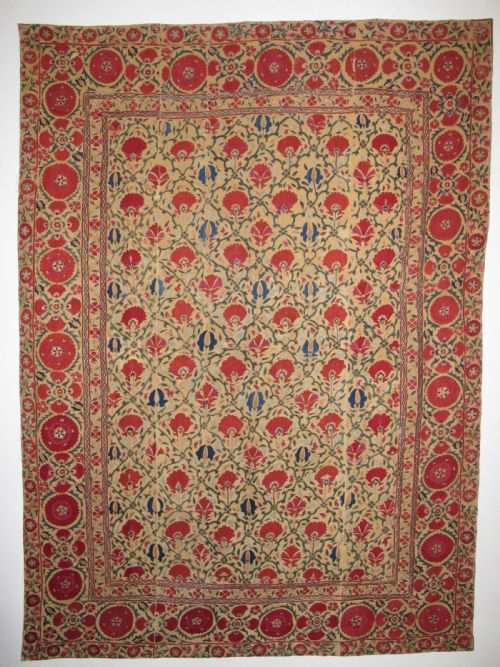
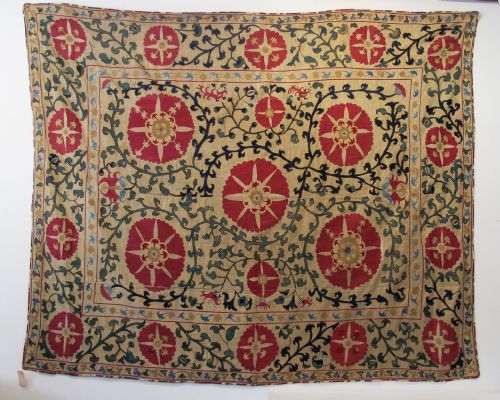
A red suzani tapestry is a hand-embroidered textile originating primarily from Uzbekistan and surrounding Central Asian regions, created as dowry items, wall hangings, or ceremonial covers. The pieces available span from the mid-nineteenth century through the early twentieth century, reflecting diverse regional styles such as Bokhara, Tashkent, Shakhrisabz, and Samarkand.
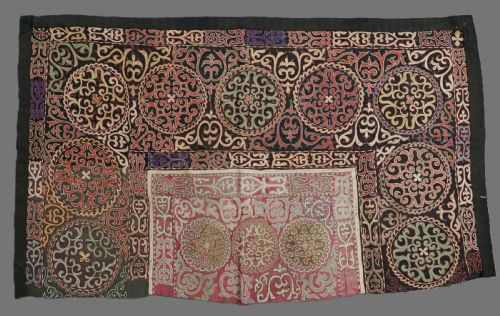
Buyers most frequently encounter floral designs, architectural patterns, and central star motifs worked onto foundational fabrics. These textiles include full-work examples, smaller 'nim' suzanis, and tribal pieces associated with groups like the Lakai and Kyrgyz communities.
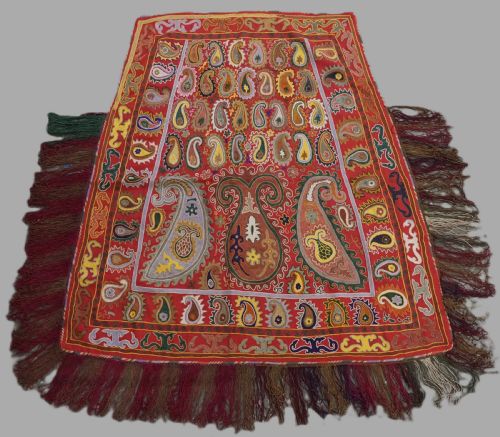
Objects range from complete wall hangings and domestic covers to specialised items like horse or saddle covers and kilim-woven hybrids. Each piece carries the distinct regional aesthetic of Central Asian traditional folk art.
Materials and construction
Makers utilised cotton, silk, and wool as the foundational textiles and embroidery threads for these hangings. Silk thread provides the luminous surface detail seen in floral and geometric motifs, while cotton and occasionally wool serve as the durable backing ground.
Techniques combine fine needlework with traditional weaving methods, including pieces constructed from multiple joined strips of fabric. The embroidery ranges from detailed outlining to dense full-work coverage that obscures the underlying cloth.
Red Suzani Tapestry Retail Price Guide 2026
Typical asking prices for red suzani tapestry among the pieces listed under this phrase on Sellingantiques today, from the lower quarter to the upper quarter. They describe what is for sale here now, not the wider market.
Several textiles include repurposed horse and saddle covers, proving that Central Asian nomads believed even their mounts deserved fine embroidery.
Assessing quality and depth
Quality rests on the density of the embroidery work and the complexity of the regional design, such as the full coverage found in Tashkent palak pieces versus simpler layouts. The finesse of the silk needlework and the harmony of the faded red ground tones distinguish finer examples.
The integrity of the foundation fabric and the preservation of the original hand-stitched details influence the character of each textile. Regional attribution and specific tribal provenance also contribute to the distinction of individual pieces.
The Red Suzani Tapestry Glossary
- Palak
- A heavily embroidered suzani type characterised by a dense field design that frequently incorporates a central star or sunburst motif. This style represents some of the most intensive needlework from Tashkent and surrounding workshops.
- Nim-Suzani
- A smaller scale version of the standard suzani, translating literally to half suzani. These compact pieces were practical for domestic spaces while retaining the intricate embroidery of larger formats.
- Ilgich
- A specific type of dowry embroidery produced for wall hanging by tribal groups such as the Lakai. They display distinct geometric and stylized patterns rooted in nomadic traditions.
- Tush Kyiz
- An elaborate embroidered wall hanging traditionally made by Kyrgyz women for a bride and groom's yurt. These items feature symbolic botanical and zoomorphic designs celebrating family and fertility.
Red Suzani Tapestry: Frequently Asked Questions
How were suzanis used originally?
These textiles served practical and ceremonial roles within Central Asian nomadic and settled households. Families utilised them as wall hangings, bedding covers, and ceremonial items during weddings and major life events.
They formed an essential part of a bride's dowry, demonstrating the textile skills and status of the maker. Hung inside yurts or houses, they provided insulation and aesthetic warmth to the living space.
How do I hang a textile safely?
Mounting a historic textile requires weight distribution across the entire top edge to prevent localized stress on the fabric. Conservation framing or stitching a cotton sleeve to the back for a concealed rod are standard methods.
Keep the hanging away from direct sunlight and heat sources to protect the natural dyes and silk fibres. Gentle rotation and occasional inspection help maintain the condition of the material over time.
How do I identify different regional styles?
Regional attribution relies on the specific palette, scale of motifs, and embroidery density unique to cities like Bokhara, Samarkand, or Tashkent. Tashkent pieces often show expansive palak layouts with deep red grounds, while tribal works from the Lakai feature compact geometric compositions.
Examining the backing material and the types of stitches used provides further clues to origin. Comparing the motifs against documented regional examples clarifies the likely provenance of each piece.
What does full work mean?
Full work refers to embroidery that covers almost the entire foundation fabric, leaving little to no background cloth visible. This intensive technique demonstrates a high level of labour and skill by the maker.
Pieces described this way typically command attention for their rich texture and saturated visual impact. The density of the stitching also adds physical weight and stability to the textile.