
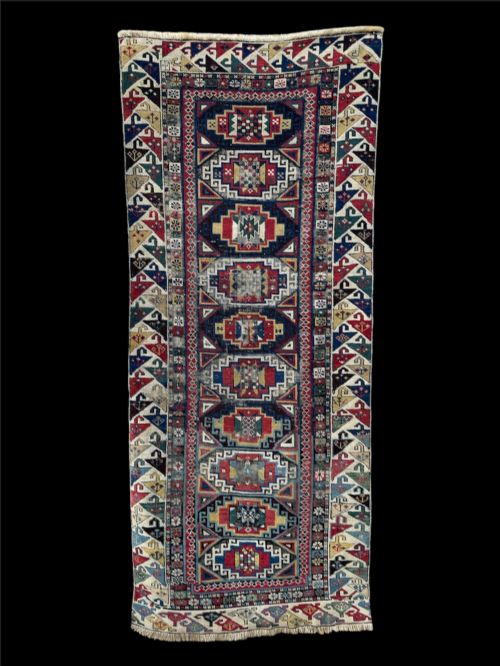
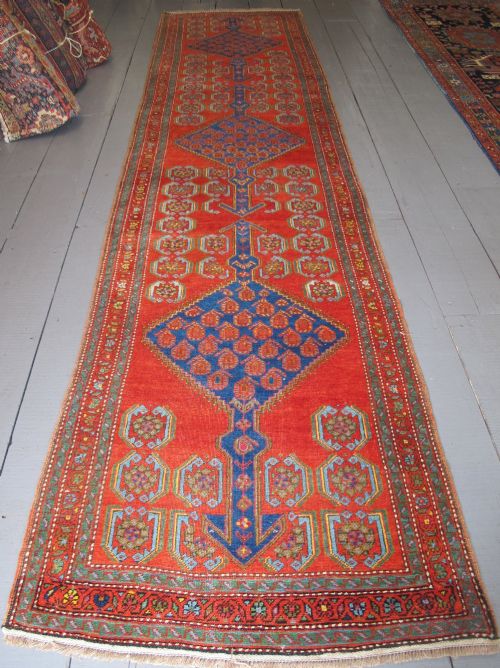


Red Persian Hall Runner
When you search for a red persian hall runner, you find floor coverings woven with wool and natural dyes.
Red Persian Hall Runner
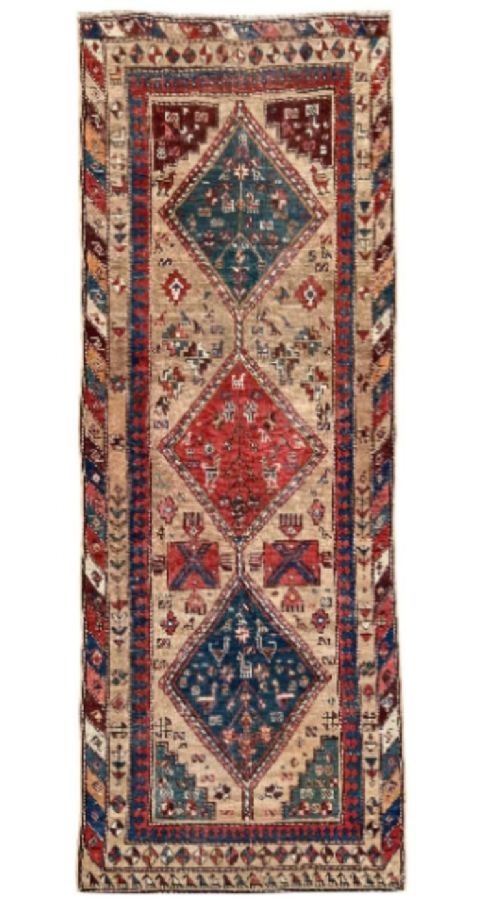
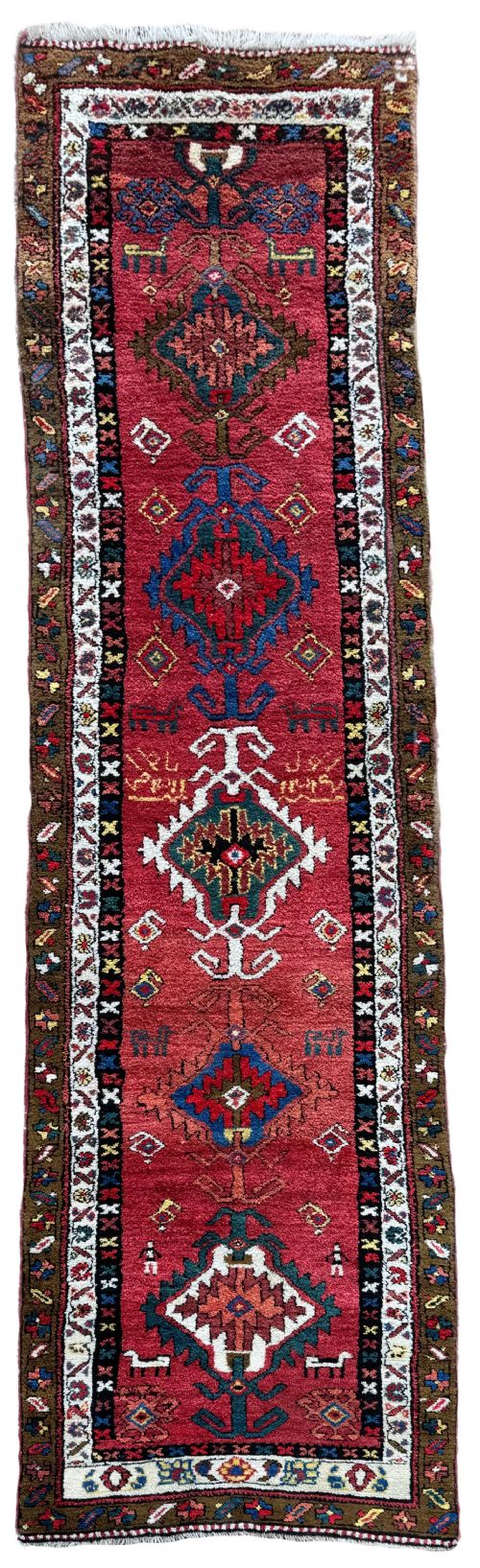
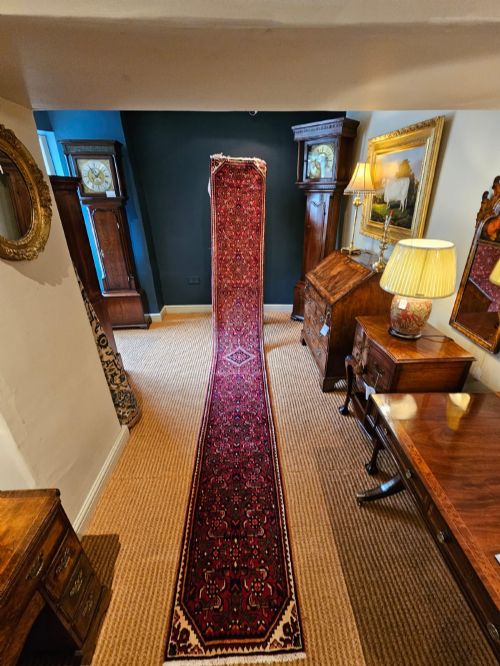
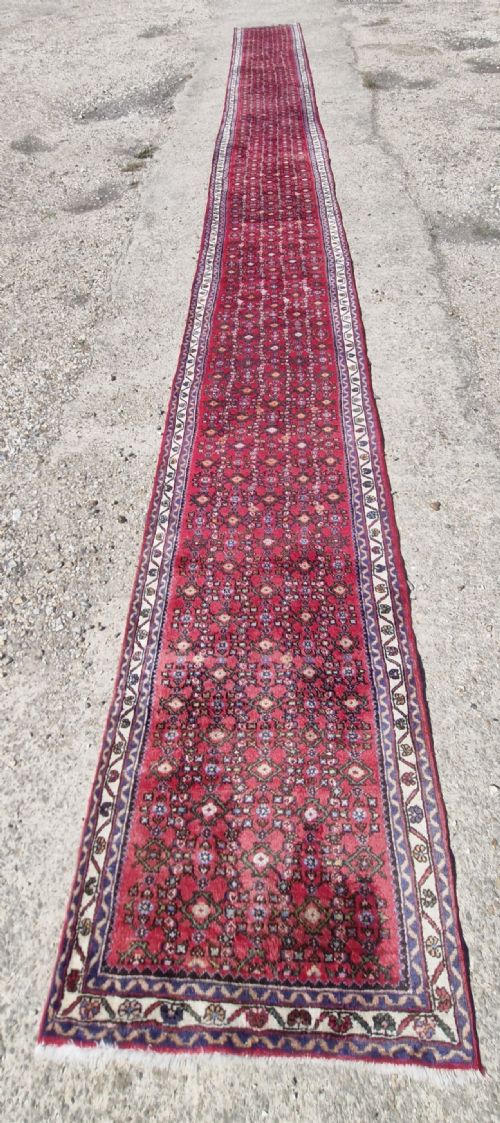
A red persian hall runner is a long, narrow floor covering designed for corridors, landings and hallways. The pieces seen here span periods from the nineteenth century into the twentieth century, taking the form of runner rugs and carpet runners. Origins reach across tribal and traditional Persian workshops, alongside examples from neighbouring regions.
Makers and weavers produced these items in varied lengths, from compact proportions to extensive dimensions reaching past ten metres. They function practically to line narrow spaces while displaying traditional patterns underfoot. The red persian hall runner category encompasses works attributed to Heriz, Kurdish, Bakshaish, Hamadan and other defined weaving traditions.
How they were made
These floor coverings utilise wool foundations and pile yarns, frequently paired with cotton elements in the structural weave. Weavers relied on natural dyes to colour the wool, producing deep reds and contrasting tones that settle as the material ages.
The construction relies on hand-knotting techniques executed on vertical looms. This traditional method creates durable pile surfaces capable of withstanding heavy foot traffic in domestic corridors over generations.
Listings feature wool and cotton materials coloured with natural dyes across nineteenth and twentieth century periods.
What varies in quality
The fineness of the knotting and the complexity of the design define the upper tier of these textiles. Dense knot counts allow intricate geometric and floral motifs to hold their definition sharply along narrow formats.
Condition and integrity of the wool pile separate individual pieces, alongside the depth and persistence of the natural dye colours. Greater consistency in the weave along extended lengths indicates superior craft from the loom.
The Red Persian Hall Runner Glossary
- Runner
- A long, narrow carpet designed specifically for corridors, hallways and staircases. These formats balance length with restricted width.
- Pile
- The upright yarn loops or tufts that form the usable surface of a rug. It is created by knotting wool or cotton onto the warp threads.
- Natural dye
- Colouring matter derived from plants, insects or minerals rather than synthetic compounds. These substances yield complex shades that mellow gracefully over time.
- Warp
- The stationary vertical threads stretched onto a loom before weaving begins. The horizontal weft and knotted pile are built upon this foundational structure.
- Heriz
- A style of rug originating from north-west Persia known for bold geometric medallions and robust structural wool. These pieces often feature large-scale designs adapted for runner proportions.
Red Persian Hall Runner: Frequently Asked Questions
Where should I place a long runner?
These narrow textiles suit hallways, corridors and landings where floor space is restricted. Their elongated proportions guide movement through domestic thoroughfares.
Position them away from direct continuous dampness to preserve the wool fibres and natural dye colours over decades of daily use.
How do I care for an old wool runner?
Regular gentle vacuuming without a rotating brush roll removes grit from the wool pile. Professional cleaning suited to antique textiles maintains the integrity of the natural dyes.
Underlays provide grip on hard floors while reducing friction between the woven foundation and the ground beneath.
What indicates a tribal origin?
Tribal pieces often display asymmetric geometric motifs, spontaneous local colour choices and coarser knotting structures. These characteristics reflect nomadic or village weaving traditions rather than urban workshops.
Such works carry designs passed down through generations within specific regional groups.
How are different regional types distinguished?
Weaving styles vary through distinct border arrangements, colour palettes and specific geometric or floral vocabulary. Heriz runners display bold angular medallions, whereas Kurdish or Hamadan pieces incorporate varied village motifs.
Examining the structure, wool quality and secondary colours helps identify the likely origin.