


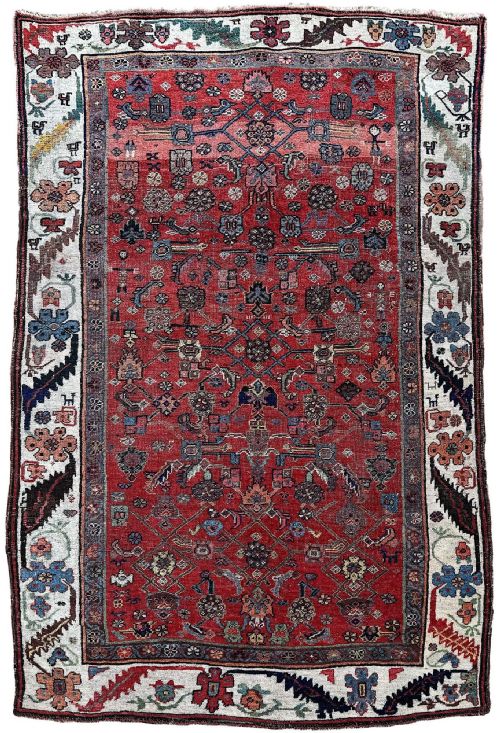
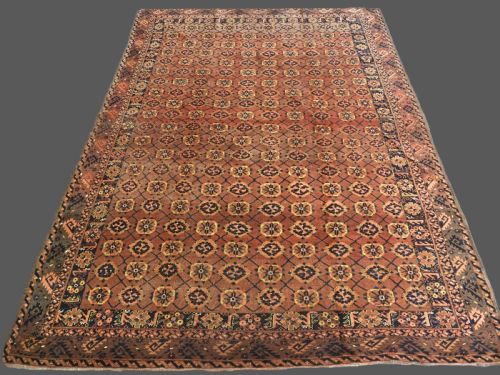
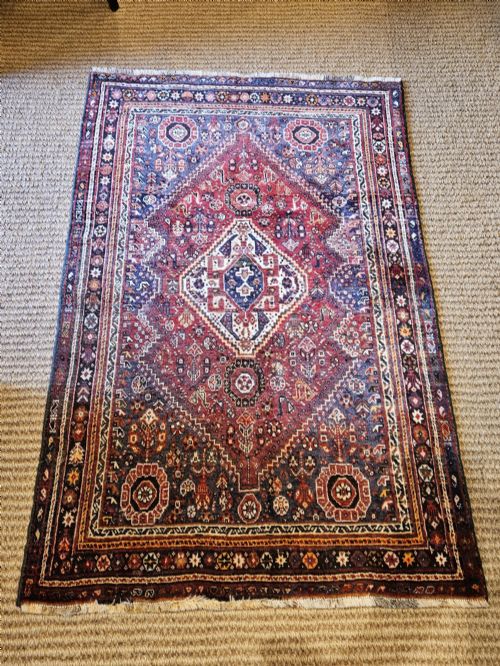
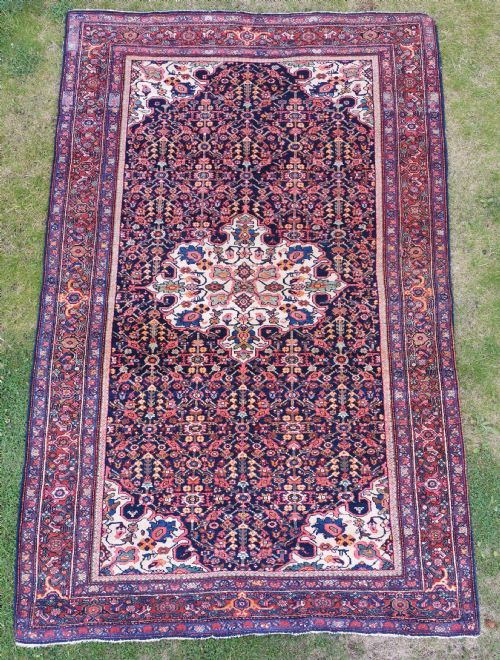
Red Persian Area Rug
These red persian area rug examples bring rich regional history and durable floor coverings into a room.
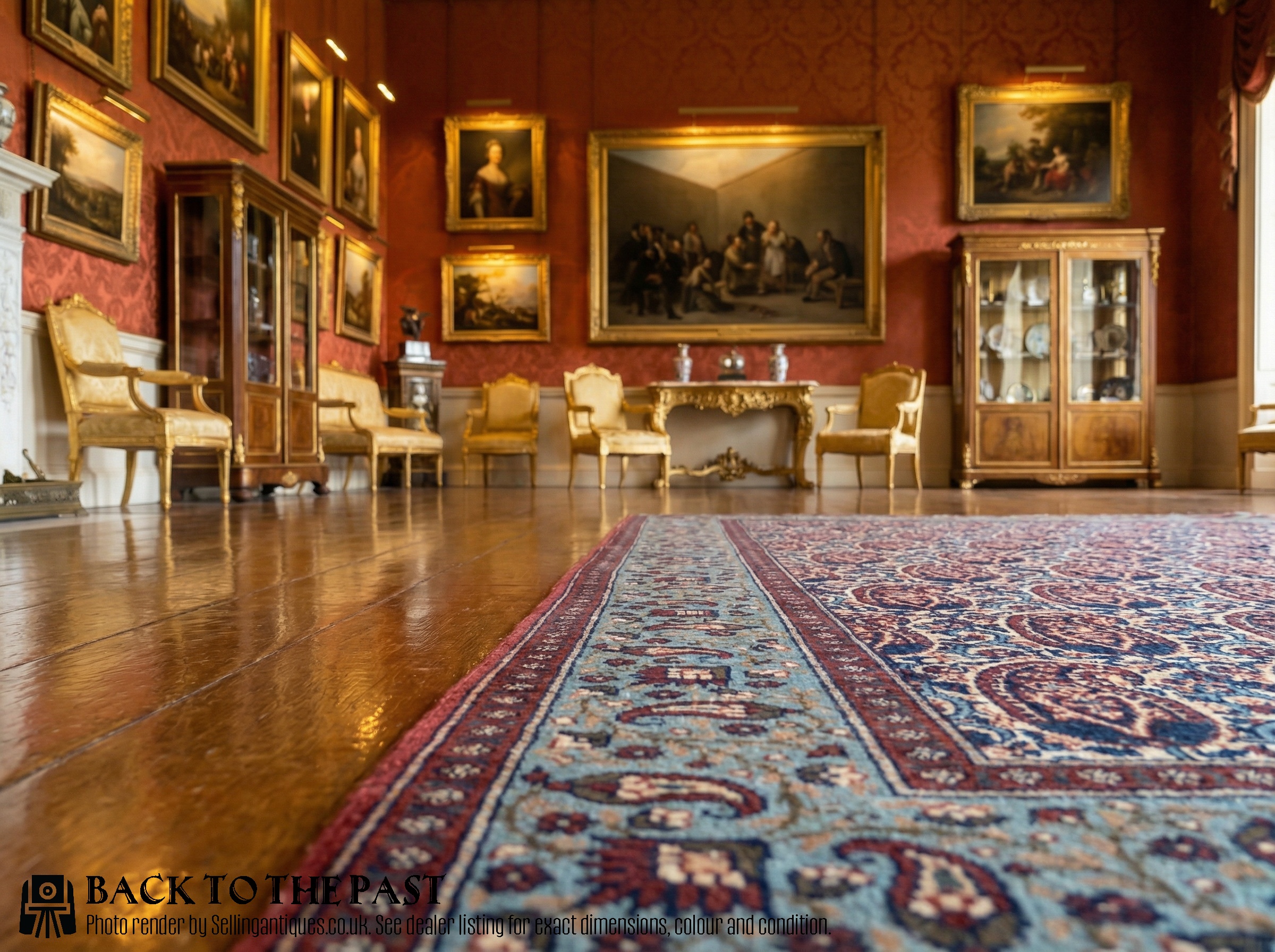
Red Persian Area Rug
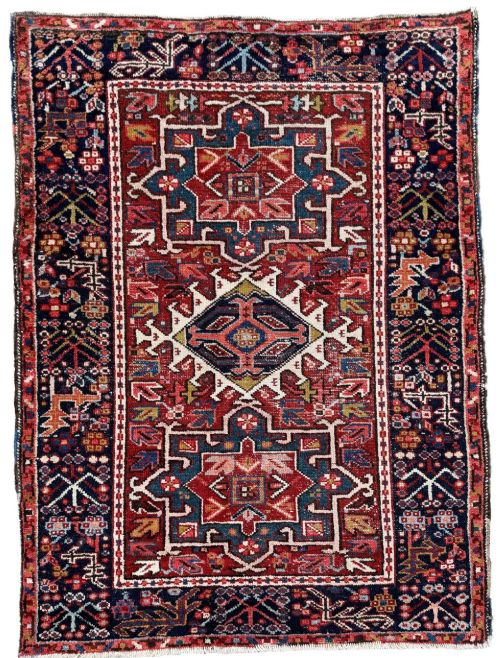
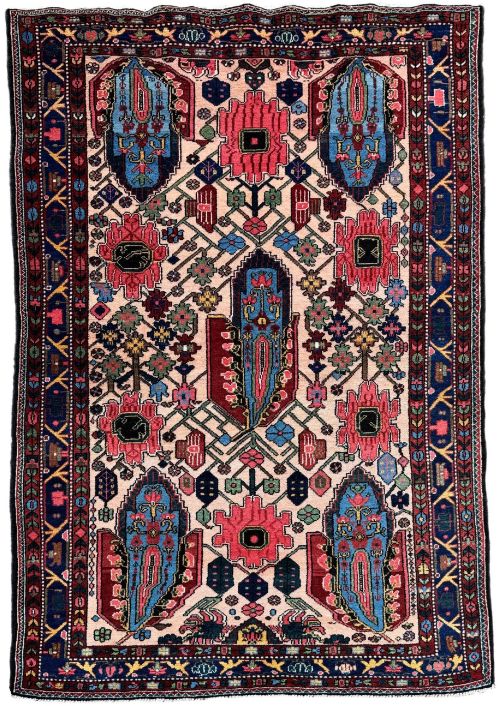
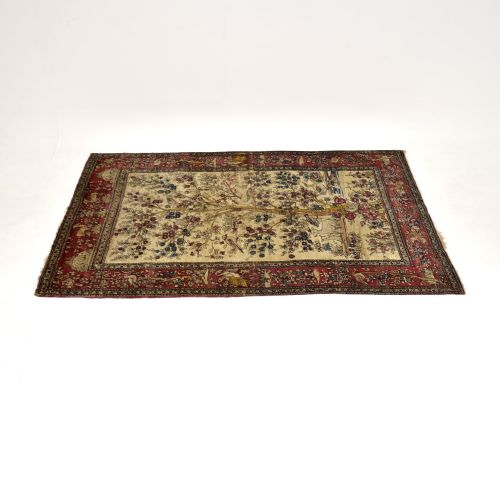
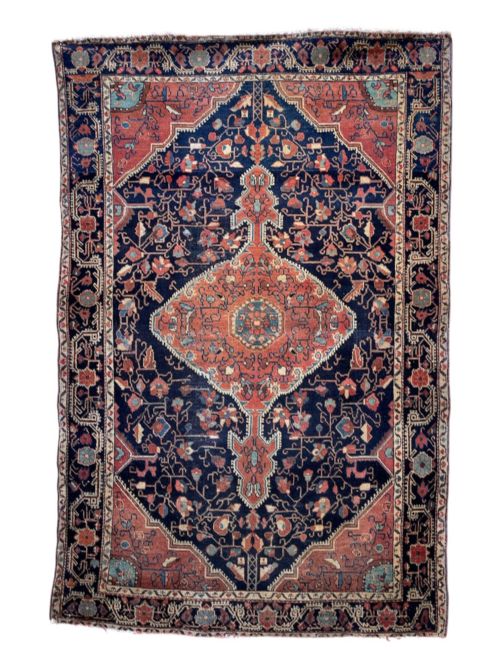
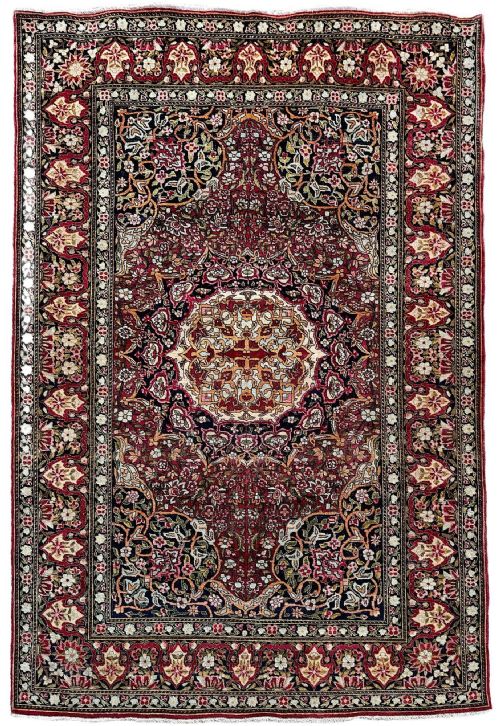
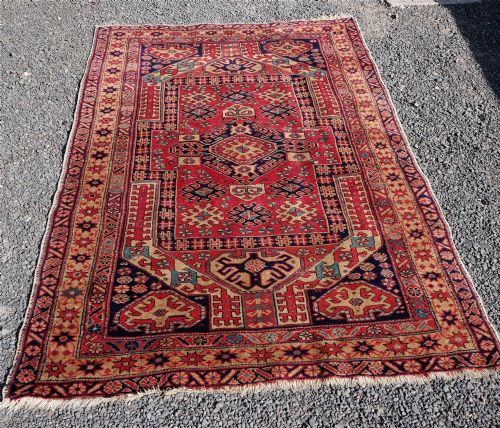
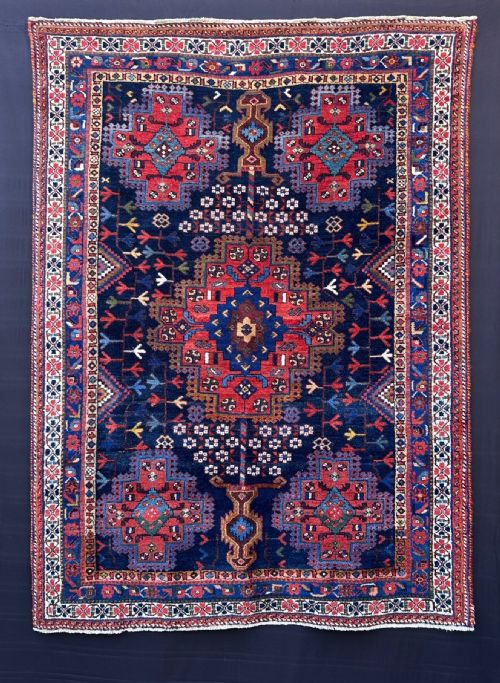
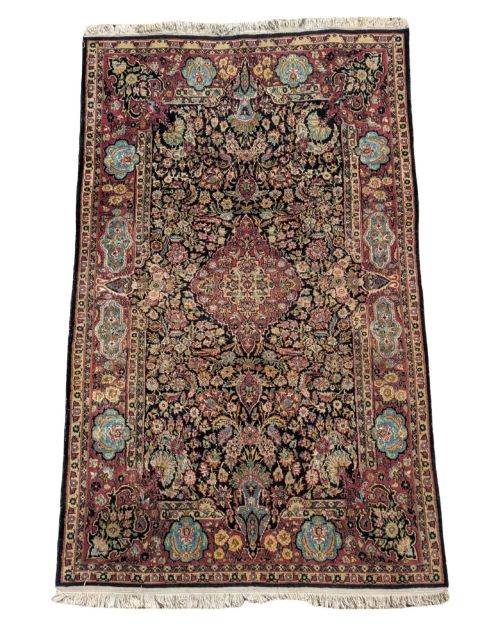
A red persian area rug sits under foot as a textile woven in towns, villages and nomadic tribes across Persia from the nineteenth century to the mid twentieth century. Buyers seeking this phrase find various regional types, including Heriz, Bidjar, Bakhtiar, Afshar and Saroukh, spanning different sizes from hearth rugs to large carpets.
The version most commonly met on this page is the nineteenth century or early twentieth century village or town rug constructed with a wool pile and distinct geometric or floral motifs. These pieces carry the character of traditional weaving regions such as Hamadan, Karaja and Kashan.
Dating ranges from the mid nineteenth century through to the 1930s, encompassing tribal work alongside formal court designs. Each piece reflects the specific weaving traditions of its district, from the robust build of a Heriz to the fine knotting of an Isfahan.
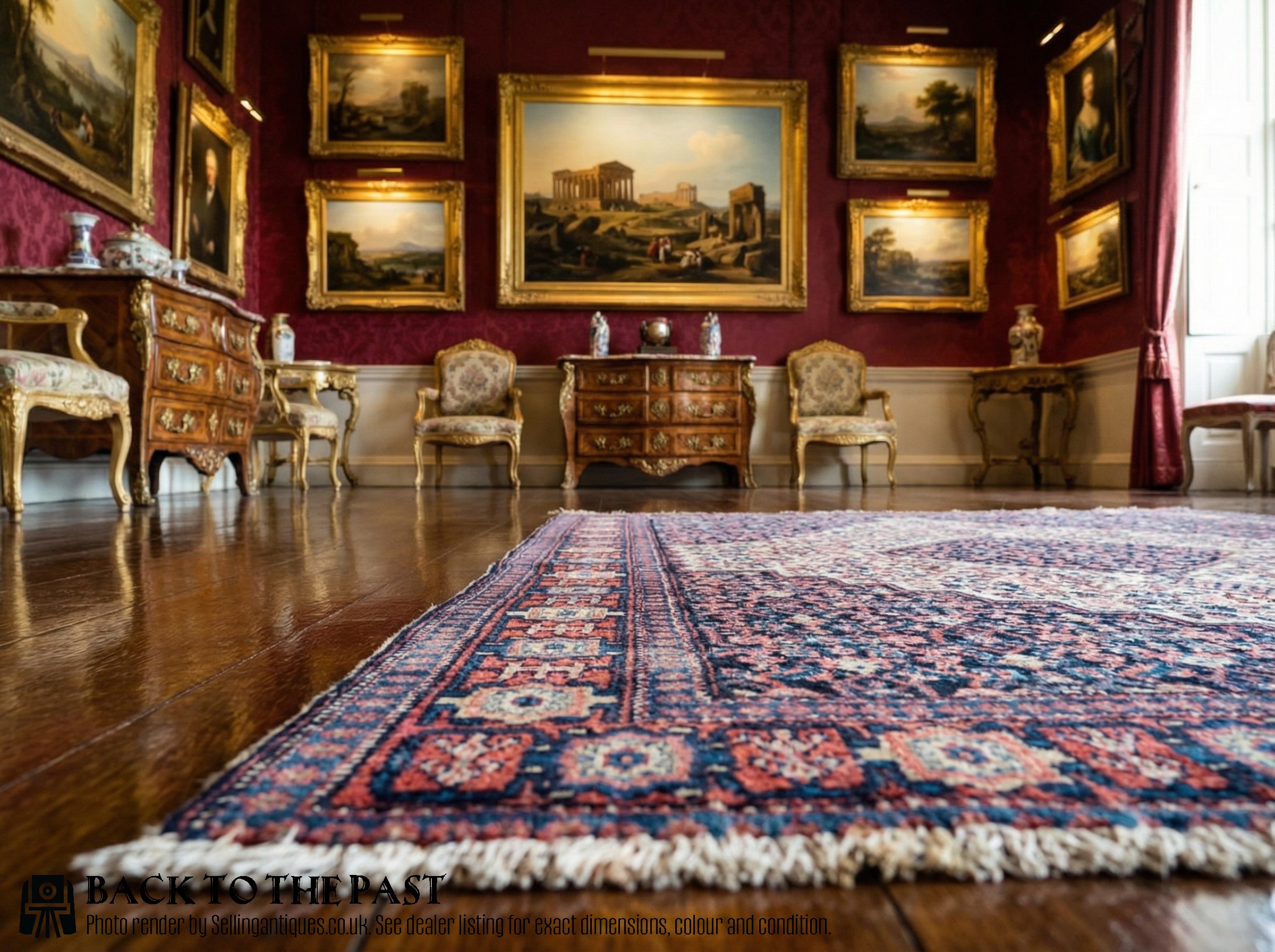
Materials and construction
Makers built these textiles primarily using wool, cotton and occasional silk highlights, relying on hand-spun wool for durability and warmth. Foundations commonly consist of cotton or wool warps and wefts, providing the structural grid for the dense pile.
Weavers knotted the pile by hand onto the foundation threads, often incorporating vegetable and natural dyes that produced deep madder reds, rust backgrounds and contrasting indigo or ivory details. Certain examples feature specific regional techniques such as heavy wool packing or specialised double-weofing.
Red Persian Area Rug Retail Price Guide 2026
Typical asking prices for red persian area rug among the pieces listed under this phrase on Sellingantiques today, from the lower quarter to the upper quarter. They describe what is for sale here now, not the wider market.
Assessing quality
Knot density and the precision of the geometric or floral layout separate finer town carpets from coarser village and tribal work. The handle of the rug, determined by the quality of the wool and the tightness of the beating of the weft, dictates how the textile drapes and withstands foot traffic.
The depth, consistency and ageing of the red dye ground contribute significantly to the visual success of the piece. Superior examples maintain structural integrity across the foundation while displaying harmonious colour saturation without abrupt dye shifts.
Saroukh Mahal·Heriz Carpet·Bakhtiar Rug·Isfahan Rug·Kashan rug
The Red Persian Area Rug Glossary
- Medallion
- A central ornamental design motif placed in the middle of the rug field. This feature often anchors the symmetrical layout of classical Persian carpets.
- Warp
- The vertical foundation threads stretched lengthwise on the loom before weaving begins. Weft threads pass horizontally through these warps to secure the knots.
- Weft
- The horizontal threads passed through the warp threads after each row of knots is tied. Tight beating of these threads creates a firm, durable fabric.
- Pile
- The upright cut ends of yarn that form the usable surface of the carpet. The length and density of this wool surface define the texture under foot.
- Madder
- A natural red dye derived from the root of the Rubia tinctorum plant. This plant source provided the primary red and rust tones found across traditional Persian weaving.
Red Persian Area Rug: Frequently Asked Questions
How do I clean a vintage rug?
Professional specialist cleaning is recommended for antique wool and cotton textiles to protect natural dyes and fragile foundations. Regular gentle vacuuming without a beater bar helps remove grit from the pile.
Avoid harsh chemical treatments or soaking, as traditional dyes can bleed if exposed to incorrect pH levels or excessive moisture during domestic washing.
Where were these carpets made?
Production took place across various regions of Persia, encompassing nomadic tribal camps, agricultural villages and established urban workshop centres. Towns such as Bidjar, Heriz, Kashan and Isfahan each developed distinct local styles.
Nomadic groups including the Afshar, Bakhtiari and various Turkmen tribes also produced recognizable rugs featuring characteristic geometric patterns and palette choices.
How do I date a woven rug?
Dating relies on assessing material characteristics, dye types, structural wear patterns and stylistic conventions associated with specific periods. Natural wool finishes and early aniline or traditional madder dye palettes help establish age parameters.
Structural traits such as hand-spun wool versus machine-spun yarn and the presence of uneven selvedges provide further clues to nineteenth or early twentieth century origins.
Are these rugs suitable for daily use?
Traditional construction using sturdy wool pile on cotton or wool foundations makes these textiles durable for everyday living areas. Heavier village carpets handle moderate to high foot traffic well when placed over a quality underlay.
Placing rugs away from direct, prolonged sunlight helps preserve natural red and rust dye tones over years of domestic enjoyment.